Brexit

Brexit, Trump’s wall, and the cynical inertia of the political class

I had lunch yesterday with a friend from London who brought grim tidings from Albion. Like me, he is an advocate of national sovereignty. He thinks the people of the United Kingdom ought to be allowed to govern themselves. So he, again like me, is an advocate for Brexit. He had no idea what was going to happen with Brexit. Yesterday was a busy day. I also chatted with friends about the crisis at our southern border. All honest people acknowledge that there is a crisis, that thousands upon thousands of people, most without English and without skills, are pouring over the border.

cynical inertia

What the EU will say when Theresa May asks for a Brexit extension

From our UK edition

Now that Parliament has backed an extension to the Brexit process, the ball is effectively in the EU's court. Whether her Brexit deal passes or not, Theresa May will head off to the European Council next week with a demand to delay the UK's withdrawal, which is still scheduled for 29 March. In the last few weeks, officials from the European Commission and the European Parliament have been very vocal about their reluctance to extend Article 50 unless there is clarity about what the purpose of the extension would be. But ultimately, EU institutions do not have the final say on this matter. And if it comes to a point where it is either delay or no deal, they would not want to be seen as forcibly expelling a member state.

The Spectator Podcast: the surrealism of Brexit, three years on

From our UK edition

In Salvador Dalí's Persistence of Memory, several clocks are melting away in a surreal desert scene where a distorted horse-like creature fades into the sand, below a ledge where a pocket watch crawls with ants. The bizarre painting is rather reminds one of the surrealism of the Brexit process, especially after this week. The government has gone into full meltdown mode - it lost yet again on May's Brexit deal (though this time by a smaller margin, only by 149 MPs); ended up whipping against itself on a motion rejecting no deal, where 13 government ministers defied the whip; and just about wrested control of Brexit from the Commons on a vote on Thursday night. Meanwhile, we are two weeks away from 29 March.

Is there a risk Britain will get stuck in the Brexit backstop?

From our UK edition

The prospects of Theresa May’s Brexit deal passing now hinge on what risk there is of the UK being trapped in the backstop against its will. A compelling new legal analysis by Policy Exchange suggests that this risk is significantly lower than thought. Written by three distinguished lawyers—a professor of international law at King’s College London, a former first parliamentary counsel and an Oxford professor—the paper makes clear that the new protections on the backstop have greater force than appreciated. First, the ‘good faith’ obligation in international law is more meaningful than thought.

Brexit explained

As Americans will recall, escaping the arbitrary power of an empire can take years. Now imagine doing it with the French being actively obstructive, George Washington committed to paying the taxation and doing without the representation for a period to be determined by George III, and Washington, having lost the support of his closest advisors, now asking Lord North for help. This is pretty much where Theresa May’s government finds itself after this week’s double defeat in the House of Commons. These are only the latest in an apparently endless sequence of humiliations. There are more to come, but no one knows where they will come from, or when. Frankly, it’s humiliating to have to explain how we got here from the 2016 referendum. But here we are.

brexit explained

Why a Brexit extension spells trouble for the EU

From our UK edition

Now that Theresa May's deal has been decisively defeated again, the message from Brussels has been clear: the Brexit impasse is your problem, not ours. But for all the bluster, don't believe it: the Brexit deadlock is bad news for the EU. Perhaps understandably, there is anger and frustration on the continent over Westminster's rejection of the withdrawal agreement. As a result, the EU is attempting to suggest that an extension to the transition period might not be on offer. This was the implied message in Donald Tusk's reaction to the vote on Tuesday night. The president of the European Council said there must be a 'credible justification for a possible extension'. 'The smooth functioning of the EU institutions will need to be ensured,' he said.

Are things finally looking up for Theresa May?

From our UK edition

Theresa May’s week just got a little less bad. This evening the Government managed to successfully defeat a string of amendments seeking to soften Brexit. A cross-party amendment – tabled by Hilary Benn – to seize control of the Commons next week and hold indicative votes next Wednesday failed. It was defeated by just two votes. Chief Whip Julian Smith could be seen celebrating with a fist bump with fellow whip Chris Pincher. The Government motion to seek an Article 50 extension and delay Brexit passed comfortably. Given that this is a vote Theresa May was forced into giving and one that divides the Conservative party, this result is in no way a Government victory.

The most shocking thing about Trump’s Brexit comments? He’s right

From our UK edition

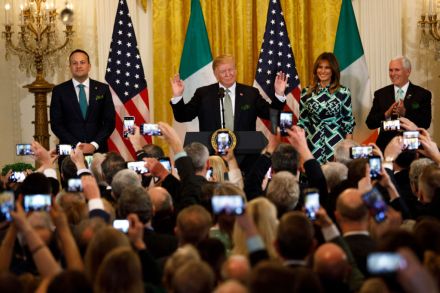
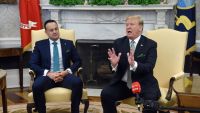
Tune out all the noise around Brexit, and read what Donald Trump said today: ‘I’m surprised at how badly it’s all gone from the standpoint of a negotiation,’ he told reporters at a bilateral meeting with Irish Taoiseach Leo Varadkar. ‘But I gave the Prime Minister my ideas on to negotiate it and I think you would have been successful. She didn’t listen to that and that’s fine, she’s got to do what she’s got to do, but I think it could have been negotiated in a different manner, frankly. I hate to see everything being ripped apart now. I don’t think another vote would be possible because it would be very unfair to the people that won … But I thought it would happen, it did happen, it’s a very tough situation.

The risk of a no-deal Brexit just increased again

From our UK edition

What kind of Brexit delay, if any, would the European Union's leaders sanction, when the Prime Minister asks for one in a week's time, at the next EU Council? Truthfully no one knows. Actually that is only half right. In the implausible event that MPs next week ratify the PM's Brexit deal at the third time of asking, they would grant her a couple of months' postponement of the moment we depart, so that legislative and technical preparations could be completed. Just to be clear, I don't see how she wins. Too many Brexiter and Remainy Tory MPs hate her deal so much that they'll never be intimidated into backing it.

Parliament backs plan to delay Brexit

From our UK edition

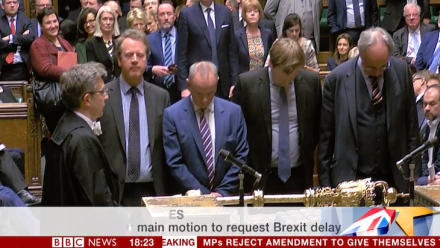
Parliament has backed a plan to delay Brexit. MPs approved a motion to delay Britain's departure from the EU beyond the end of March by 412 to 202. Despite the vote, Britain will still leave without a deal unless one can be struck in the next 15 days, or the EU agrees to an extension. The motion means that if Theresa May's deal passes by next Wednesday, Britain will ask the EU for a short extension. If her deal does not pass, a longer extension will be sought. Theresa May earlier secured a rare Parliamentary victory after MPs rejected an amendment that would have allowed them to take control of Commons business on March 20th away from the Government. This could have handed over time to hold a series of indicative votes on Brexit.

Watch: Donald Trump shoots down Leo Varadkar’s trade deal pitch

From our UK edition

Leo Varadkar is meeting Donald Trump today but the Irish Taoiseach's bid to drum up a trade deal between the EU and the United States has just backfired spectacularly. In their televised chat in the Oval Office, Varadkar told Trump: 'I look forward to talking to you...about trade, and how much I would like to see a trade deal done between the US and the EU. We've done one with Japan, we've done one with Canada - we'd love to strike a deal with the US, too.' But Trump was not impressed: 'OK, well we'll see, because the EU, as you know, has been very tough to deal with, and frankly it has been very one sided for many, many years. So we're changing that around. And we're starting to get somewhere and if we don't we'll win anyway.' Oh dear...

Parliament’s plot to thwart Brexit is complete

From our UK edition

It is time for plain speaking. The stakes are too high for euphemism or obfuscation. Bluntness is required now. And the blunt fact is this: Britain’s parliamentarians are in revolt against the electorate. They are defying the demos. They are pursuing a coup, albeit a bloodless one, against the public. This is what last night’s votes against a no-deal Brexit reveal: that our representatives now refuse to represent us. What else are we to make of the events of the past few days? They voted against Theresa May’s deal, which was a super soft Brexit, unloved by Brexiteers like me. So they don’t want a soft Brexit, clearly. Then they voted against a no-deal Brexit, twice (why give the electorate just one slap in the face when you can give it two?).

Jess Phillips says she would make a good prime minister. I’m not convinced

From our UK edition

On Saturday, the Times published a much-lauded interview with Jess Phillips. As with all her public outings, she comes across as decent, kind, funny, hard-working, honest, and down-to-earth. These are certainly fine qualities to have in an MP. But the interview concluded with Phillips stating that she thought she would be a good prime minister. Many people concurred. This should make us stop and consider whether we’re looking for the right qualities in a potential PM, especially given that we might be seeking a new one sooner rather than later as a result of Theresa May's failure to get her Brexit deal through Parliament at the second attempt.

Meaningful vote 3 in the next seven days

From our UK edition

Theresa May’s extension motion makes clear that she intends to bring her deal back for another vote in the next seven days. The motion states that if a meaningful vote has been passed by the 20th of March, then the government will request a short technical extension to pass the necessary Brexit legislation. (This request would be made at the European Council meeting next Thursday). But if no deal has been passed by the 20th, the UK would request a much longer extension — which would require the UK to participate in the EU Parliament elections. So, it is clear that the government are going to try and pass the meaningful vote between now and the 20th. There is optimism in government that it might be third time lucky for the withdrawal agreement.

Fear and loathing in the lobbies: how the government whipped against itself – and lost

From our UK edition

With just a few minutes to go before the division on the government's motion on no deal, Tory MPs' phones started buzzing. It was a message from the whips, telling them that the free vote they'd been promised since last night was now subject to a three line whip: the strongest possible instruction on how to vote. But there was no further explanation. A message from Chris Pincher, the deputy chief whip, read: 'We are voting no to the amended motion. This is a 3 line whip.' It was sent at 7.31pm. Some Conservatives didn't get this message until they were walking through the lobbies, still believing that, as Theresa May had promised last night, they could make their own decision on how to vote.

The latest government shambles could help May pass her deal

From our UK edition

This evening Theresa May's week went from awful to terrible. After her deal was heavily defeated for a second time on Tuesday night, the Prime Minister had planned to placate MPs by offering them a free vote on whether they wished to try and rule out a no deal Brexit. As Isabel reports on Coffee House, that plan soon backfired. A backbench amendment from Tory MP Caroline Spelman to try and rule out no deal in more explicit terms than the government's motion passed by four votes. At that point, the government changed its voting strategy and whipped its MPs to vote against the motion – effectively voting to keep no deal as an option. This led to much confusion in the voting lobbies.

Tory Brexiteers were wrong not to back May’s useless deal

From our UK edition

Amongst the wrath we should pour upon our elected politicians – yes, especially the Tory Remainers and Labour’s bereft and shameless MPs – let's keep some in reserve for the stoic, hardline, Brexiteers, huh? I’m with them: no deal is better than her deal. I agree. But – and this is the argument I’ve been having with people for the last three weeks, maybe longer – there is no prospect of no deal going through. None whatsoever. You can cleave to the idea of it for as long as you like, but there is not the remotest prospect of it happening. Why do they not understand this? You have to see the world as it is, not as you would like it to be. And yet they seem utterly incapable of that.

Government in chaos after rebel no deal amendment passes

From our UK edition

Theresa May has just suffered another extraordinary defeat, losing on Caroline Spelman’s amendment (which rules out no-deal Brexit under any circumstances) by just four votes. This was not expected. Spelman even tried to withdraw the amendment, but was too late. This Spelman amendment said that the House “rejects the United Kingdom leaving the European Union without a Withdrawal Agreement and a Framework for the Future Relationship.”. This is different to the main motion, which offers a caveat: specifically a declaration that ‘leaving without a deal remains the default in UK and EU law unless this House and the EU ratify an agreement’. The Spelman amendment is not legally binding: it’s a vote expressing the view of the House.