Brexit

Don’t vilify housebuilders for profiting from Help to Buy

From our UK edition

Was Help to Buy a timely market intervention with a valid social purpose or a political gimmick that unintentionally showered housebuilders with taxpayers’ cash? Or both: this isn’t a straightforward question. ‘This government supports those who dream of owning their own home,’ said a statement from Philip Hammond last week. So far the ‘equity loan scheme’ launched by George Osborne in 2013 and now extended until 2023 has underpinned 194,000 home sales, the great majority to first-time buyers in the provinces, while another 300,000 have been supported by a £3,000 savings top-up.

Italians

From our UK edition

For a few years before coming to Italy, I lived in Paris and I cannot tell you the life-enhancing difference I felt as I crossed the frontier from France into Italy in my metallic burgundy Honda Prelude. On arrival at the Italian motorway toll that stifling summer of 1998, I discovered I had no money and that the sun had melted my bank card which I had left on the dashboard. The charming young woman on the toll-gate simply gave me a form to fill in and waved me through with a smile. Isn’t this how we should run the world? I remember once being stopped by two Italian police patrol cars in the dead of night when well over the limit. Instead of them breathalysing me, we started to have a discussion about the Mussolini biography I had written.

It’s time for Mark Carney to come clean about Brexit

From our UK edition

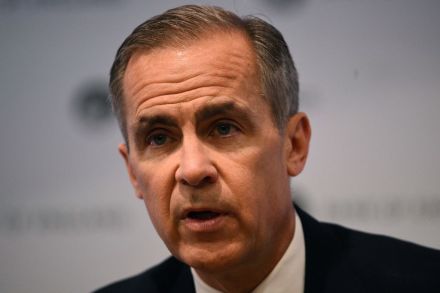
What wonderful powers that Mark Carney, governor of the Bank of England, possesses. At a stroke, he has just succeeded in increasing the size of the economy by three per cent. Well, sort of. Only last November, the Bank of England claimed that a no-deal Brexit could cost the UK economy between 4.75 and 7.75 per cent of growth over a three year period, relative to what would happen under May’s deal. Yesterday, he changed his tune a little, telling the House of Lords economic affairs committee the effect of a no-deal Brexit on the UK economy in three years’ time would be between two and 3.5 per cent smaller than he had previously stated. Why the improvement? It is all, apparently, down to Carney’s clever contingency plans, as well as a few other positive developments.

Why Brexiteers aren’t backing down

From our UK edition

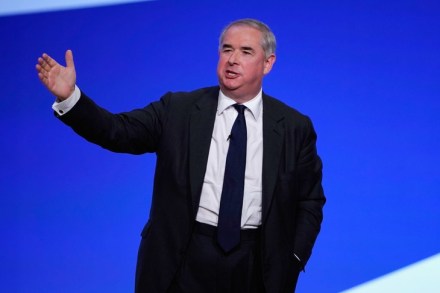
Geoffrey Cox is in Brussels attempting to achieve a breakthrough on the backstop. So far, the Attorney General's efforts have not gone entirely to plan – with the word in Brussels that the first night of talks with Michel Barnier went badly. If Cox cannot win a significant concession on the backstop that will allow him to change his legal advice, there is little chance of Theresa May's deal passing next week. However, even if he is successful in his aim there's a chance it won't be enough to win over Tory eurosceptics. As I write in the i paper, there is an increasing pessimism within the Cabinet that May can pass her deal next week. There are rebels returning to the fold, but at nothing like the speed that would be needed to reverse a 230-vote defeat.

No dealers must dream on: A conversation with Ivan Rogers

From our UK edition

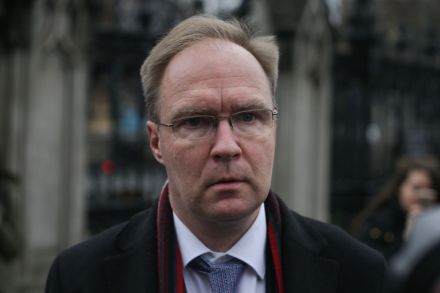
Sir Ivan Rogers was in conversation at the Institute for Government. This is an edited transcript of his thoughts on why no-deal isn't a sustainable outcome, whether there should be a public inquiry into Brexit – and why, when it comes to negotiations, the difficult bit is still to come: Ivan Rogers: Once you get into the trade deal and the economic deal and then associated security and other deals, this is actually the complex bit still to come. It's much more complex and involves much more of Whitehall, and should involve Westminster a lot more than the exercise to date. I'm not disparaging the exercise to date, but that's solely about withdrawal terms and then a rather vague political declaration.

Investing: Why Brexit doesn’t matter and the unexpected impacts it may have on your investments

From our UK edition

The markets are volatile, well at least more volatile than they have been. The FTSE 100 index has already had two days this year where it has moved by more than 2%, in 2017 it only did that once, in the entire year. This has a tendency to make investors cautious and as a result potentially miss out on the benefits of that volatility. History suggests that near term volatility caused by political or economic uncertainty and sentiment has little long term effect on the stock market. The key here is that investing is a long term activity and if you take a long term view you can ignore short term volatility. Of course, this approach comes unstuck if you become a forced seller for any reason at a point where the market has taken a downturn.

Will Theresa May vote for a no-deal Brexit?

From our UK edition

We have a Tory Government and governing party irredeemably split on the biggest question of our age, namely how and whether to leave the European Union. And we have a Labour opposition in a disorderly civil war between backbench MPs and lords on the one hand, and a leadership team under Jeremy Corbyn over a perceived failure to cut the cancer of anti-Semitism from the party – and, perhaps worse than that, the undermining of due process by officials close to Corbyn. In other words, there is chaos on both sides of the Commons, compounded by the collapse to zero in the working majority of Theresa May's administration following those defections to the Independents Group. It is not just the PM of whom it could be said she's in office, but not in power.

Labour’s anti-Semitism crisis can never be solved under Corbyn | 5 March 2019

From our UK edition

If racism is to succeed in corrupting institutions and countries it needs authorisation from the elite. The popular caricature of the racist as a white working-class man, or superstitious east european peasant, or shabby paranoid academic, shows not only class bias, but a lack of understanding that what transforms extremism from poisonous men muttering in corners to political movements with the power to ruin lives, is the authorisation given by leaders and intellectuals. A party can have racist members – as the Conservative party undoubtedly does. But because its leadership is not anti-Muslim their effect is constrained to personal abuse. I don’t mean to diminish it. If my experience is typical, race-based insults are something you never forget.

Theresa May’s bung shows she still doesn’t understand Brexit

From our UK edition

When will politicians learn they can’t just buy off voters? You think they would have twigged this during the EU referendum campaign when the Remain camp’s Project Fear utterly failed to sway the electorate’s feelings about the EU. Every household will be £4,300 worse off, the Treasury claimed, which a) wasn’t true and b) looked to many voters like a cynical bung designed to wean them off their Euroscepticism. Such chattering-class cluelessness was on full display in the aftermath of the referendum too. How could people in regions that have received oodles of EU cash — parts of Wales, the old industrial north of England — turn against the EU, Remainers in London wondered?  And now here comes Theresa May with what looks like another bung.

The lawyers are taking back control of Brexit

From our UK edition

Should the UK’s decision to leave the UK be settled in an argument between seven male white middle-aged Tory lawyers plus one woman of Indian ancestry and - on the other side - a single white middle-aged male Tory lawyer? Because arguably that is what’s happening, in the current off-stage conversation over a possible reform to the Northern Ireland backstop between the Tory Brexit European Research Group’s “star chamber” of eight lawyers, on the one hand, and the attorney general Geoffrey Cox – whose outcome could well decide whether Theresa May’s Brexit deal, with all its massive implications for this nation’s future, is approved in the coming nine days.

10 days to save Brexit

From our UK edition

MPs have 10 days to pass Theresa May’s Brexit deal or calamity strikes, I say in The Sun this morning. May’s deal is far from perfect. But what will happen if it doesn’t pass is truly appalling. If May’s deal hasn’t won a Commons vote by March 12th, the Commons will vote on whether to proceed with no deal. The parliamentary arithmetic is such that no deal will almost certainly be defeated. The next day, parliament will then vote on whether to request an extension from the EU. This vote will almost certainly pass. At this point, the United Kingdom would be in the weakest position it has ever been in this negotiation. Whether to grant an extension or not would be up to the EU and would require all 27 member states to agree.

The myth of the ‘millennial’ Corbyn project

From our UK edition

The myth at the heart of the ‘Corbyn project’ is that it is a grassroots movement of enthusiastic young people. This group, so the theory goes, is disgusted by free markets and longs for industries to be nationalised and collectives of workers to seize control of the means of production. Books have even been written about how the ‘young’ have ‘created a new socialism.’ But if this is true, why does a poll today reveal that support for the newly-formed centrist Independent Group predominantly come from young people? Forty-seven per cent of 18-24 year olds approve of the creation of TIG, with just 14 per cent disapproving of it.

What does Putin really make of Britain’s Brexit mess?

From our UK edition

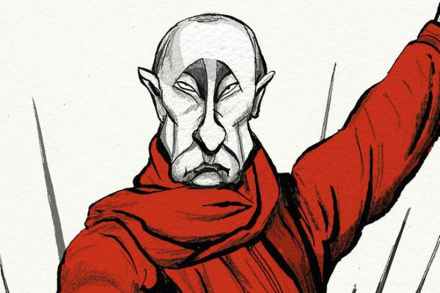
When it comes to Brexit, Britain's friends, neighbours, trade partners and even antagonists are generally united in one thing: wondering what on earth is going on. In Russia, there is a particular cocktail of satisfaction and bewilderment. The satisfaction is predictable. From the Kremlin's point of view, the whole Brexit extravaganza is a gift, regardless of the eventual outcome. Putin's strategy is essentially to divide, distract and demoralise the West, so that either we are sufficiently worn down to strike a deal that grants Russia the status he craves – essentially as hegemon of Eurasia and a fixture in any global negotiations – or else we are so fragmented, feuding and fatigued that he has a free rein.

Letters | 28 February 2019

From our UK edition

It’s now or never Sir: I read with great interest Paul Collier’s suggestion (‘Take back control’, 23 February) that Britain should withdraw Article 50 and remain in the EU as a means of obtaining a better exit at some point in the future. This would be a UK humiliated by the inability of parliament to carry out the clear direction of the voters after nearly three years. A UK so abjectly defeated it would hardly be in any position to build alliances. What EU country would want to endanger its reputation by supporting the country which has been taught such a salutary lesson by the European Commission?

George Eustice resigns – will more Leave-voting ministers follow?

From our UK edition

When the week began, there was speculation that a group of ministers would resign over Theresa May's Brexit stance. The Prime Minister had been warned that up to 22 members of government could quit unless she promised the chance for MPs to extend Article 50 if no deal looks likely. In the end, May blinked and paved the way for such a vote if her deal is rejected in two weeks' time. However, that decision has led to a government resignation that few were expecting. This afternoon George Eustice resigned as Defra minister over May's promise to allow MPs a vote on delaying Brexit if her deal is rejected.

Theresa May can dare to dream that her Brexit deal might pass

From our UK edition

Can the Prime Minister dare to dream that her Brexit deal will pass – perhaps as soon as next week? It is striking how Brexiters from the ERG group are lining up to tell me how reasonable they are trying to be. After well over a hundred Tory MPs failed to vote for Yvette Cooper's amendment last night, which simply captured the PM's u-turn pledge to allow MPs to delay Brexit, one senior Tory texted me to insist this was "more cock up than conspiracy". He said: "Bit of a mess. Nobody expected Cooper to move the amendment. Letwin had said they wouldn’t. People had left the chamber. Others thought the position was to abstain as the government didn’t shout yes and didn’t shout no. Whips didn’t chase people until nearly five minutes in to the vote.

‘I’m not appealing to the nutter vote’

From our UK edition

A woman dressed as a nun is standing outside the London Palladium with a placard, warning about ‘an evening with a religious extremist’. She refers to Jacob Rees-Mogg, who sold all 2,300 seats at the venue in a fortnight — a feat that enraged his critics all the more. The nun eventually found a loudspeaker to address Spectator subscribers, who waved cheerfully as they filed in to the theatre. This stage has played host to entertainers like Bruce Forsyth, Marvin Gaye, Tommy Steele and Jimmy Tarbuck — and now, the backbench MP for North East Somerset, offering an evening of political discussion. We live in strange times. He arrives late, fresh from a meeting with the European Research Group of Tory Brexit MPs, where they had to accept their game was up.

May’s breaking point

From our UK edition

The only certainty in the Brexit process is that there is no certainty. Brexiteers had long sought solace in the fact that, by law, the United Kingdom will leave the European Union on 29 March with or without a deal. But it’s now clear that this is not necessarily the case  —  or even likely. As we have seen this week, Theresa May is not in control of her party any more than Jeremy Corbyn is in control of his. Corbyn has been forced to move towards the idea of another ‘public vote’ on Brexit, though he has no enthusiasm for one, because he fears that if he doesn’t, MPs would leave his party and join the new Independent Group.

Government score an own goal on citizens’ rights resignation

From our UK edition

This evening the government accepted an amendment to ensure the EU citizens’ rights package in the Withdrawal Agreement still stands if the U.K. leaves without a deal. The amendment tabled by Tory MP Alberto Costa won widespread support in the Commons – an endorsement from the Home Secretary and was eventually taken on by No 10. Despite this, Costa will head home this evening having left his role as a Parliamentary Private Secretary for the Scotland Office. Costa tended his resignation earlier today as PPSs are not supposed to put down amendments. I understand Costa was asked whether he still wanted the amendment to be in his name – he said he did and thereby resigned. On a procedural level this is all above board.