Brexit

Why Greeks abhor and applaud Brexit

Pavlos Eleftheriadis is as Anglophilic a Greek as they come. His wife and children are British, and he is a professor of public law at Oxford. But the prospect of Brexit has altered Eleftheriadis’s view of Britain. ‘Psychologically, it’s difficult to accept that half of the society you live in is against the presence of Europeans,’ he says. ‘This came out very strongly, including from the prime minister herself. She said we have to stop the free movement of workers from Europe. It’s her primary objective. This wounds you. You wonder why they say this and what led them to it.’ Eleftheriadis says that he’s never seen a hint of racism or prejudice in professional life. But he’s hedging against the attitudes of the next generation.

athens greeks

MPs must not use May as an excuse to walk into Brexit disaster

From our UK edition

Theresa May has united Westminster. Right across the political spectrum, politicians and journalists agree that her televised statement from No. 10 last night was an epic misjudgement, that seeking to pin public blame on MPs for the failure to agree a Brexit outcome has made it even less likely that they will now reach such an agreement. The PM’s awful statement, it is said, has driven away the very MPs she needs to pass her Withdrawal Agreement next week. Consensus like that deserves scrutiny, because it’s often a cloak under which people can hide inconvenient facts. Consider the assertion that May has alienated MPs who will not now vote for her deal.

Theresa May’s No. 10 intervention backfires

From our UK edition

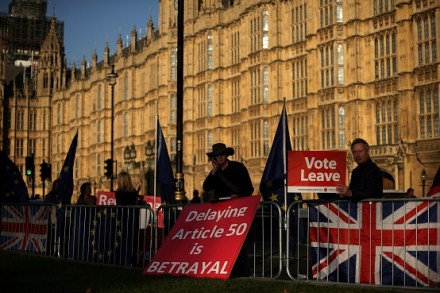
Theresa May heads to Brussels today to plead for an Article 50 extension. The expectation is that EU leaders will only grant one on the condition her deal passes next week on a third vote. This is looking increasingly hard to do following May's No. 10 statement last night. In an address to the nation, the Prime Minister attempted to lay the blame on MPs – rather than herself – for the fact that it is now very unlikely the UK will leave the EU at the end of March. May said it was a matter of deep 'personal regret' to her and went on to add: 'All MPs have been willing to say is what they do not want. I passionately hope MPs will find a way to back the deal I have negotiated with the EU. A deal that delivers on the result of the referendum and is the very best deal negotiable.

Making Brexit thrilling

From our UK edition

The long gestation period of Brexit has allowed authors to plan and write and publish novels in time for the big day. Alan Judd’s Accidental Agent (Simon & Schuster, £12.99) is a spy thriller set during the EU negotiations. Charles Thoroughgood is the head of MI6. The secret service is forbidden from spying on the EU, but when an EU official volunteers information about the negotiations, it seems too good an opportunity to miss. The trouble is, the mole — known only by the code name Timber Wolf — might not actually be real. Thoroughgood investigates the veracity of the source, taking the place of Timber Wolf’s usual contact, and what he discovers unsettles and surprises him.

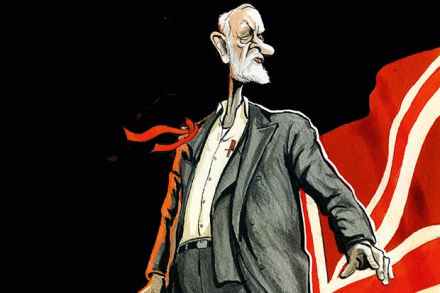
Jeremy Corbyn makes pointless Brexit meeting all about him

From our UK edition

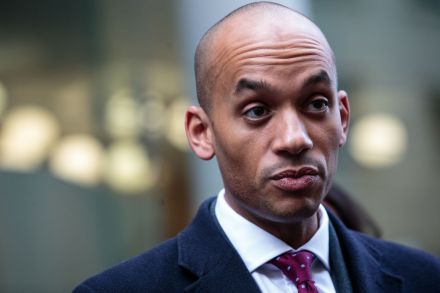
This evening, Jeremy Corbyn walked out of a meeting between opposition party leaders and the Prime Minister about Brexit. The reason for his angry protest had nothing to do with what was being discussed, but his distaste for one of the attendees. Former Labour MP Chuka Umunna was there to represent the Independent Group, and this, according to those present, was too much for the Labour leader to stomach. Labour has since said the the terms of the meeting had changed and that this wasn't what Corbyn had agreed to when he said he would meet the Prime Minister in her office. But this is an impressive own goal, even by the Labour leader's standards.

What Theresa May revealed to Boris Johnson

From our UK edition

In the House of Commons today, Theresa May indicated that she would quit as Prime Minister if the UK hadn’t left the EU by the 30th of June. She was, in effect, suggesting that if MPs vote down her deal again next week, they’ll be making her departure from Downing Street more likely. But this is the opposite of the promise many Tories want her to give. A growing number of senior figures in the party believe that May should say that she’ll go if her deal passes. In other words, vote for the deal and then you can pick a new Prime Minister. They believe that this carrot might entice some Brexiteer rebels to back the deal.

‘Weak, weak, weak’ – May battered from both sides at PMQs

From our UK edition

The Brexit kerfuffle has been so much fun that she wants three more months of it. That was the PM’s message to parliament today. At the start of this rowdy session some members seem to think they could terminate May’s career live on TV. Pete Wishart, the first member called, laid into her mishandling of Brexit and flung three blunt syllables at her, ‘weak, weak, weak.’ This struck the wrong note. Too brutal. And rather cheap to use a phrase coined by Tony Blair to undermine John Major. There was a hint that the PM wishes to retain control of her destiny. She laid special emphasis on her official rank when she said, ‘as prime minister, I am not prepared to delay Brexit any further than 30th June.’ Is that a promise to resign? Good news for May-bashers.

May tries to avoid Tory meltdown by only requesting short Brexit delay

From our UK edition

After much speculation, a furious Cabinet and the threat of another backbench rebellion, No. 10 has finally confirmed what type of Article 50 extension Theresa May will seek at Thursday's EU council summit. Downing Street has said May will not ask for a long delay. Instead, the Prime Minister will seek a brief extension of a couple of months. The source added that May shares the public's 'frustration' at the failure by Parliament to 'take a decision'. May's decision comes after her position looked increasingly under threat were she to seek a long extension - potentially of up to two years. At Cabinet on Tuesday, ministers made clear their displeasure at such a plan.

Why Remainers were shocked by the referendum result, but Leavers less so

From our UK edition

When I quit investment banking in search of daylight in 2014 I thought my life was going to be little easier crunching numbers for political campaigns. It wasn’t to be. Over the last few years, I’ve worked on the Scottish independence referendum in 2014, the 2015 general election, the Scottish Holyrood election in 2016, the EU referendum and the 2017 snap election. What I’ve never been able to wrap my head around through all these campaigns is why we’ve seen so many political upsets. Just why has the political consensus been wrong so often these past five years? When I worked on the Remain campaign, the upending of the consensus – against my own expectations – was a painful experience.

Cabinet ministers clash over length of Brexit extension

From our UK edition

The PM presented choices to the Cabinet for the letter she is expected to write to the EU’s President Donald Tusk requesting a Brexit delay - without nailing down precisely what she will do. That said, her ministers think she will request a delay until 30 June, predicated on her somehow getting her deal ratified by MPs - with an option of an extension to the end of 2020 in the event she ever concedes her own Brexit plan is definitely an ex-parrot (or dead, for the few of you too young to remember Monty Python). May’s hope is that if this delay schedule is agreed as a legally binding text then it would have the effect of amending her deal - such that the Speaker could not then block her holding the meaningful vote for a third time.

Why the DUP are worried about Tory succession | 19 March 2019

From our UK edition

It is the morning after the Bercow before, and it seems pretty much certain that there won’t be a meaningful vote 3 until after the European Council. Whatever is decided there on an extension, should be enough for the government to say that the package is different enough to justify bringing it back for another vote. But there is no point in the government bringing it back for another vote unless it has a chance of winning that vote, and it won’t have that without the DUP. I understand that these negotiations are going relatively well.

May should pledge to resign – it’s not too late to save her legacy

From our UK edition

Allies of Theresa May have long talked about how she wants her legacy to be about more than Brexit. But the brutal truth is that there is no such legacy available to her. Rather, her choice is between being the Prime Minister who got a withdrawal agreement through or the one who had to ask for a long, humiliating extension. If May wants to increase the chances of the former being her legacy and not the latter, then she is going to have to promise to go at some point before the next meaningful vote. Earlier today, one office holder in the ERG told me that if May said she would leave once the Withdrawal Agreement Bill was through the number of Brexiteer rebels would reduce to 20 or so. But it is not just on the ERG side that the prospect of a new prime minister would help.

Britain could be heading for a nine-month Brexit delay

From our UK edition

Nigel Dodds of the DUP has not yet agreed a deal with Theresa May to bring his troop of ten MPs - and some of their Tory ERG Brexiter allies - into her camp for that momentous and precedent-smashing third "meaningful vote" on her Brexit deal. This means as of now the third "meaningful vote" remains the stuff of myth and legend; as I said on Saturday, it may not happen at all, or at least not before the European Union council on Thursday. A minister close to the PM tells me the cabinet expects the EU to grant the UK a Brexit delay of nine months - which would of course require the UK to participate in May's elections to the European Parliament.

Martin Vander Weyer’s stock picks for the post-Brexit era

From our UK edition

The nation certainly needs optimism this week, so what better moment to start building our ‘UK Optimist Fund’ of shares with exciting prospects for the post-Brexit era, for which I invited suggestions last week? I’m grateful to all  respondents but was particularly glad to hear from former minister Edwina Currie — whose stock picks show a penchant for high dividend yields — and this column’s very own veteran investor Robin Andrews, whose market eye has stood Spectator readers in such good stead over the years. Our underlying quest is a serious one. We’re heading into new territory in which businesses will clearly suffer if they previously depended on tariff-free access to European markets.

May under pressure to set an exit date to get her deal over the line

From our UK edition

Is this the week Theresa May sets out an exit date for her departure from No. 10? There is hope in government that this will be the week the Prime Minister passes her Brexit deal. However, the price of her doing so could include a promise to resign before the second stage of negotiations begin later this year. No. 10 are working to try and ensure May passes her deal before this week's EU council meeting where she has to try and seek an Article 50 extension. In a bid to try and do this, ministers have been locked in talks with the DUP all weekend on what could be done to make the deal palatable to them.

Theresa May’s offer to the DUP

From our UK edition

The prime minister’s frantic last attempt to persuade Northern Ireland’s DUP to back her third meaningful vote on Tuesday involves a promise that if the controversial backstop is ever triggered, Great Britain would adopt any new food and business rules that could be forced by the EU on Northern Ireland. This is a high risk offer by Theresa May to NI’s unionist party - which has huge clout with her because without its votes in parliament her government would collapse. As a minister told me, for the DUP to accept the offer it would have to trust that a future prime minister and government would honour the pledge - which cannot be guaranteed even if May legislates for such alignment (because any law can always be repealed).

Sunday shows round-up: Brexit on 29 March is ‘physically impossible’, Hammond says

From our UK edition

Philip Hammond: Leaving the EU on 29 March ‘now physically impossible’... This morning, the Chancellor sat down with Andrew Marr following a week in which his Spring Statement was overshadowed by other events, including a series of critical Brexit votes in the Commons, and an appalling terrorist attack on a mosque in Christchurch, New Zealand. With the government suffering another heavy defeat on its withdrawal deal, this time by a margin of 149 votes, Marr expressed the widespread concern that Brexit may never happen: AM: When are we going to leave the EU? PH: If the Prime Minister’s deal is able to muster a majority this week and get through, then we will need a short extension [of Article 50].

Better than 50:50 chance that the government can get the DUP on board for meaningful vote 3

From our UK edition

This weekend all eyes are on the DUP. As I say in The Sun this morning, if the government can satisfy them, then Theresa May has a chance of winning the vote on Tuesday because of the domino effect that them coming across will set off. But if the DUP won’t come over, there’s no point holding a third meaningful vote. The DUP spent yesterday in intensive talks with senior government figures. I understand that these talks were broadly positive. One Cabinet Minister close to the process tells me that the chances of the DUP backing the deal are ‘a bit better than 50:50. I’d put it at 60:40.