Brexit

Lib Dems are the real Brexit extremists

From our UK edition

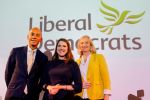
The Lib Dems are now the most extremist party in the UK. They might not look like extremists, being made up of mostly nice, middle-class people from the leafier bits of the nation. But they have just adopted a policy that is arguably more extreme, more corrosive of British values, more counter to the great traditions of this nation, than any other party policy of recent decades.  Yes, this is the new Lib Dem policy to cancel Brexit. At their party conference in Bournemouth the Lib Dems voted overwhelmingly in favour of a policy of ‘stopping Brexit altogether’, in Jo Swinson’s words.

Is Jeremy Corbyn preparing to purge moderate Labour MPs?

From our UK edition

Ahead of the looming general election, moderate Labour MPs are understandably upset by an instruction they say the party has given to suspend the selection of new candidates in seats where the serving MP is retiring or has defected. They've been told the reason is to 'concentrate on the trigger ballot processes' – or the deselection of usually moderate MPs who have alienated activists. See the below email by a Labour official for detail. What moderate MPs fear is that there is tacit support from Labour’s leadership for a purge of MPs from the right of the party.

We are facing the biggest test of British democracy since 1939

From our UK edition

It is almost 11 years to the minute since we reached the eye of the banking-crisis storm. And even though I was right in the middle of it, reporting on it day and night, I feel much more anxious today as I chronicle our political and constitutional crisis. The reason is simple. However egregious the harm to our living standards of the financial shock, markets and economies always bounce, always recover, eventually. Part of the widespread collapse in trust in our leaders stems from how much our living standards suffered and the slowness of the recovery. But a kind of Newtonian law applies: what falls must bounce back.

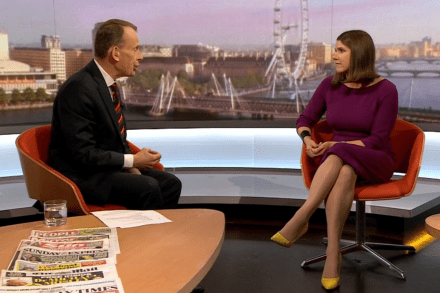
Sunday shows round-up: A Lib Dem government would revoke Article 50, says Jo Swinson

From our UK edition

Steve Barclay - Boris Johnson 'believes in Brexit' David Cameron's memoirs are due to be released this Thursday, with some of the more explosive highlights already seeing serialisation. The Sunday Times has published an extract today that argues that Boris Johnson did not believe in Brexit, and only backed the Leave campaign to win over the Conservative rank and file. The Brexit Secretary Steve Barclay joined Sophy Ridge and immediately refuted the former Prime Minister's claims: https://twitter.com/RidgeOnSunday/status/1173139451788320768 SR: Does Boris Johnson really believe in Brexit? SB: He does! He led the campaign... and the Remain side was expected to win, so the more prudent thing, if someone was looking purely at their career, would have been to back Remain. Boris Johnson...

Why the UK hasn’t presented any specific backstop proposal to the EU

From our UK edition

The EU side regularly points out that the UK government hasn’t presented any detailed proposals on what it wants to replace the backstop with. At a Cabinet committee meeting this week, the Brexit Secretary Steve Barclay set about explaining to ministerial colleagues why this was. As I report in The Sun this morning, He told the Committee that the EU had set three tests for any new proposal. First, it must avoid any infrastructure on the border that would be incompatible with the Good Friday Agreement. Second, it must protect the integrity of the EU’s single market. Third, it mustn’t involve any checks on the island of Ireland. Barclay said that the UK could meet the first two of these tests, but not the third.

Britain’s jobs miracle proves there is no reason to fear technology

From our UK edition

Another week, another set of economic figures that suggest the country is showing remarkable resilience while politics implodes. Rather than fall into recession, as so many predicted, the economy leapt forward in July. We now have the lowest unemployment for 45 years, an extraordinary figure. Income inequality is near a 30-year low. The confidence crisis that politicians are experiencing is not reflected outside of Westminster. There is little evidence to suggest that machines are taking people’s jobs. Instead, they are being used to do low-end tasks, freeing up humans to work in more complex, better-paid roles. We now have machines taking restaurant orders, checking people in at airports and fulfilling other functions inside various businesses.

The Yellowhammer report is nothing like a real contingency plan

From our UK edition

The latest Operation Yellowhammer disclosures put me in mind of a book I read a few years ago describing an unsettlingly plausible zombie outbreak in Britain. When the streets were too full of undead shamblers for the government to ignore, the Home Secretary asked officials who were barricaded in his office for the contingency plan to deal with this apocalypse. He was handed one sheet of A4 on which was simply written, ‘run away screaming.’ I wonder whether Michael Gove had anything much more coherent to rely on when he took up the reins at the Cabinet Office at the back end of July and asked for the latest no-deal arrangements?

Will turning the Tories into the pro-Leave party pay off for Boris?

From our UK edition

An election might still be months away, but the parties have already made their big strategic choices. The Tories and the Liberal Democrats are betting that Brexit is the defining issue of our times and that its pull is strong enough to dissolve longstanding party allegiances. Jeremy Corbyn, meanwhile, is planning on fighting a much more traditional left vs right campaign. His second-referendum policy is almost an attempt to quarantine the issue of Brexit. Since becoming leader, Boris Johnson has reshaped the Tory party in an attempt to make it fit for purpose in an era when politics is defined by Brexit. He has abandoned Theresa May’s tolerance of dissent on this issue.

Blow for Boris as parliament may return early

From our UK edition

The Court of Session’s verdict that prorogation is unlawful is a major headache for Boris Johnson. It makes the Supreme Court’s decision on the matter, and the court will hear the case on Tuesday, much more unpredictable. There is now a significant chance that parliament will have to be recalled. The Supreme Court will hear all the various cases on prorogation at the same time on Tuesday, remember the government won in the High Court in London. But it will adjudicate these cases in line with the law of the court from which they came. So, it will decide the case from the Court of Session according to Scottish Law and the one from the High Court according to English law. This raises the possibility of them deciding it is legal under English law but not Scots.

Brexit is already changing the British economy – for the better

From our UK edition

The government has lost its majority. The constitution has fallen apart. The country no longer has any idea whether it is leaving the European Union or not. Historians and political commentators are queuing up to tell us this is the lowest point in the country's history since the Suez Crisis/Civil War/Dissolution of the Monasteries (delete as applicable). And yet, amid all this chaos and confusion, something else is happening. The economy, slightly surprisingly, is purring along quite smoothly. The explanation? In truth, the EU doesn't make much difference to the economy anymore. And insofar as it does, leaving is a marginal improvement. The City expected the economic data released this week to make grim reading.

Labour will not endorse Remain in a general election

From our UK edition

Very important breaking news. Which is that trade unions, in their TULO meeting with Jeremy Corbyn, have tonight endorsed the Labour leader's position that in a general election Labour should campaign for a referendum that would have a "credible leave option and remain" on the ballot paper. The reason this matters is that those senior members of the shadow cabinet, such as Keir Starmer, Emily Thornberry, John McDonnell and Tom Watson, who want Labour to adopt an unambiguous remain position have been defeated. "It is important that voters who want to leave as well as those who want to remain can vote Labour. What we've rejected is the Trumpian no-deal position of Boris Johnson".

The three numbers that measure Britain’s constitutional crisis

From our UK edition

Here in a few numbers is the measure of the catastrophic mess we are in; caused by failing to resolve how, when and whether we are leaving the EU some 1,174 days after British people voted for Brexit. MPs are being locked out of the Commons chamber for 34 days and nights, because the prime minister does not trust them not to thwart his plans to extract the UK from the EU 'do or die' on October 31. That is an insult to our parliamentary democracy, some would say. Former Prime Minister Theresa May has rewarded 31 of her officials, fellow ministers and MPs. Gongs rank from MBEs to peerages. Almost all have been given to those implicated in various ways in May's failure to achieve the one task she had - to execute the referendum result.

Boris tells Cabinet, ‘I’m the most liberal Conservative PM in decades’

From our UK edition

Anyone expecting today’s Cabinet to have been a bust-up following Amber Rudd’s resignation will have been disappointed. From what I’m hearing, it was a strikingly harmonious meeting. Perhaps this was because most of the meeting was focused on the government’s domestic agenda. On Brexit, I’m told that Boris Johnson said his policy remains unchanged—that he still wanted the UK to leave on October 31st with a deal if possible, but without one if needs be. He said that what he’ll do on 19 October, the day on which the Prime Minister is required by the Benn Bill to request an extension if there’s no deal, will only become clearer nearer the time.

Would Britain really be first in line for a US trade deal?

The animosity between the Trump administration and Europe has not yet damaged military relations, but the same can't be said for economic ties. Negotiations for an EU-US free trade agreement, the Transatlantic Trade and Investment Partnership (‘economic NATO,’ as the organization’s former secretary general, Anders Fogh Rasmussen, had called it), have stalled, perhaps permanently. Negotiations are at ‘a stalemate,’ said EU trade commissioner Cecilia Malmström. The Council went a step further, declaring the mandate for the talks to be ‘obsolete and no longer relevant.’ TTIP’s demise, and the frustration it has caused the Americans, might augur well for another possible transatlantic trade deal.

trade deal

How much collateral damage can the Tory party take?

From our UK edition

Amber Rudd’s resignation has clearly been a blow to the government, but it wasn’t a huge surprise that she went after a week in which many of her closest political allies were booted out of the Tory party. What is more of a surprise is that she accepted a cabinet job with Boris Johnson in the first place. MPs who were being offered jobs when the Prime Minister took over had conversations with Johnson’s top aide Dominic Cummings in which he warned that there would be what he termed ‘collateral damage’ to the Conservative party as a result of his efforts to get Brexit sorted. They can’t believe Rudd didn’t take a step back and think about what that damage would entail. That said, there are nerves about how much more damage the party can take.

Ex-Tory rebels plot to reintroduce Theresa May’s Brexit deal

From our UK edition

The rebel MPs kicked out of the Tory party held a phone conference last night to plot their next move, I understand. The group, now numbering 22 after Amber Rudd’s resignation, is keen to work across the Commons to get a deal past MPs that the European Union would accept, and it wouldn’t be a million miles away from what Theresa May tried – and failed – to get MPs to approve. There’s another meeting today, this time of the group ‘MPs for a Deal’, which is being led by Rory Stewart from the ex-Tory side, and Labour’s Caroline Flint and Stephen Kinnock.

Amber Rudd: why I quit

From our UK edition

From her resignation letter This has been a difficult decision. I joined your Cabinet in good faith; accepting that ‘no deal’ had to be on the table, because it was the means by which we would have the best chance of achieving a new deal to leave on October 31. However, I no longer believe leaving with a deal is the Government’s main objective. The Government is expending a lot of energy to prepare for ‘no deal’ but I have not seen the same level of intensity go into our talks with the European Union who have asked us to present alternative arrangements to the Irish backstop. The updates I have been grateful to receive from your office have not, regretfully, provided me with the reassurances I sought.

Could Boris Johnson cut Northern Ireland loose?

From our UK edition

Boris Johnson is trapped. He has thrown away his working Commons majority by expelling 21 reality-based Conservatives. He gambled on his political enemies doing the thing he wanted them to, vote for an early general election, then appeared surprised when they declined to do so. If he can’t get a Commons vote for that election next week, it seems quite likely he will face a legal requirement to request an Article 50 extension, with no prospect of an election and a new majority before 31 October that could free him from that obligation. How does he get out of the hole he has dug himself?

Remainers may regret not backing an October general election

From our UK edition

So there goes the reputation of Boris Johnson’s henchmen as cunning operators. It has been a bad week for Dominic Cummings and others in the Downing Street bunker who were widely assumed to have gamed every possibility and to have some genius strategy for delivering Brexit by 31 October, in spite of the assembled forces of Remain who are determined to stop them. Clearly, not everything has gone to plan. The Remainers have enjoyed their Battle of Marston Moor. It is Parliamentarians 1, Cavaliers 0. On Monday, a bill seeking to prevent a no-deal Brexit on 31 October will become law – and Boris has been denied his fallback: a general election. But not so fast.

How it feels to be the only Brexiteers in the village

From our UK edition

We are the only Brexiteers in the village. That, at least, is how it feels. Out they come, the far left bullies, on to the streets of Westminster waving their placards and calling for the referendum result to be cancelled. And that is bad enough. But inside the suburban Surrey homes of Middle England the enlightened liberals send out even more hostile vibes. Admit you’re Brexit and you’ll never eat my vegan lasagne again, is the message they transmit. Personally, I’m delighted to be persona non grata at the homes of my more vegan acquaintances, even the dirty ones who eat meat secretly at weekends. Why one should feel bullied in polite company is an anomaly in itself.