Brexit

It’s no surprise that Brexit looks doomed

From our UK edition

I have a friend who insists that he takes little interest in politics. Even so, the other evening he came out with three sentences which take us straight to the heart of our present discontents. 'I'm sick to death of talking about Brexit. Yet I can't stop talking about Brexit. Why don't the politicians just sort it all out?' I told him that he was speaking for about seventy-five per cent of the electorate, but that neither he nor they should get their hopes up. Each day has been bringing a fresh instalment of confusion worse confounded. There is no reason to believe that this will shortly cease. It may be that the darkest hour is just before the dawn. It may also be that darkness has just asked for an extension. All this has at least two unfortunate consequences.

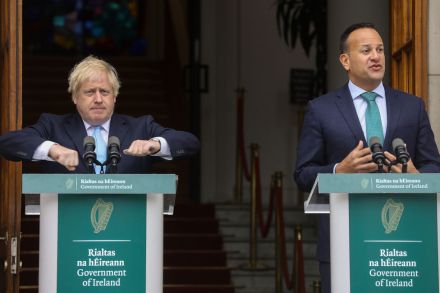
Watch: Leo Varadkar jokes about throwing holy water at Boris Johnson

From our UK edition

If Brexit can’t be sorted out by mere mortals, perhaps the UK and EU need some divine inspiration to break the deadlock. That was perhaps what an Irish priest was thinking when he presented Taoiseach Leo Varadkar with a bottle of holy water this afternoon. But it seems Varadkar had other ideas about what to do with it: Priest: ‘Taoiseach, I know you’re going to New York next week and meeting Boris Johnson, [here’s] a small little bit of added protection for you.’  Varadkar: ‘Do I pour it over him?’ https://twitter.com/skydavidblevins/status/1175049001126768647?

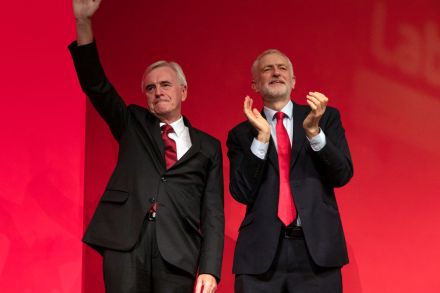
Watch: Jeremy Corbyn dodges Brexit question eight times

From our UK edition

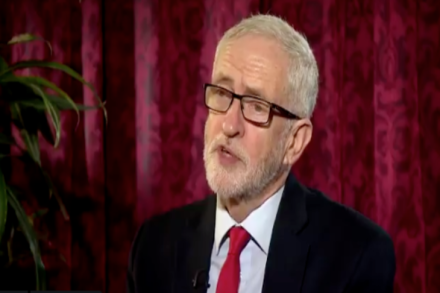
Is Jeremy Corbyn pro Remain or pro Leave? Three years have passed since the EU referendum, but the Labour leader still won't answer that question. In an interview with ITV's Joe Pike, Corbyn was asked eight times whether he now backed leave or remain. And eight times he refused to say: https://twitter.com/joepike/status/1175034010671734784?ref_src=twsrc%5Etfw Joe Pike: “So are you pro Remain or pro Leave” Jeremy Corbyn “I’m pro the British people to have their decision, I’m pro the British …” JP: “You are sitting on the fence Mr Corbyn aren’t you?” JC: “No I’m not sitting on the fence, you keep interrupting me my friend. What I want to say is this. People voted Leave or Remain.

Letters: parliament has a responsibility to stop Brexit

From our UK edition

Parliament’s responsibility Sir: I always enjoy reading the intelligent and outspoken Lionel Shriver. But her latest article (14 September) puts forward an invalid argument. As Ms Shriver points out, no one in the USA seriously argued that the disaster of Trump’s election, and the damage it could cause the country, meant the result should be contested. She compares this with the fact that many in the UK want to overturn the EU referendum result; and concludes from this that our political system is ‘broken’. But had an election been fought here, with one party promising Leave and the other Remain, few would be seriously arguing for the overturn of the outcome — whatever it was. Elections are, rightly I believe, taken more seriously than referendums.

David Cameron would be a winner in Ancient Greece

From our UK edition

David Cameron is convinced he was right to call a referendum and to promise to enact it. Justifiably: there was a huge turnout and a clear winner. That’s democracy. But he has been lashing out because the referendum did not go as he hoped. This whingeing makes him look like a total loser. An ancient Greek in that position would argue he was a winner: he had kept his promise, and therefore reputation, intact. For a Greek, reputation was of the very highest importance because simply doing or being good was not enough: if people did not know about it, what was the point? As a result, Greeks often explained their motive for action in terms of the honour and renown it would bring them.

What Brexiteers can teach Remoaners about good manners

From our UK edition

‘If we are going to Westminster to riot,’ I told my Brexit-voting friends over dinner at the Thai restaurant at our local pub, ‘then we are going to have to work out where to park. I don’t want to get a ticket.’ We shifted our noodles around our plates and chewed our sizzling beef strips thoughtfully. Outside in the country lanes of Surrey, the dark September evening was settling down, the owls hooted, and the screaming Remoaners in their EU berets seemed very far away. ‘Maybe we won’t have to go to London,’ said one of us, a farmer. ‘Yes,’ I said, ‘that’s a good idea. We could just take part in local skirmishes.’ Everyone looked down at their plates. No one seemed very enthusiastic.

Portrait of the week: EU negotiations, genderless babies and Brexit in court

From our UK edition

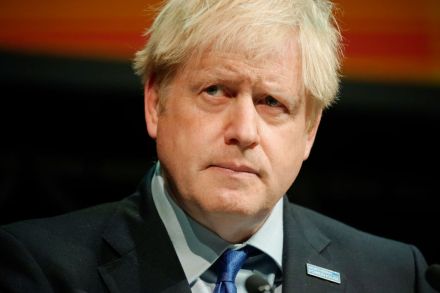
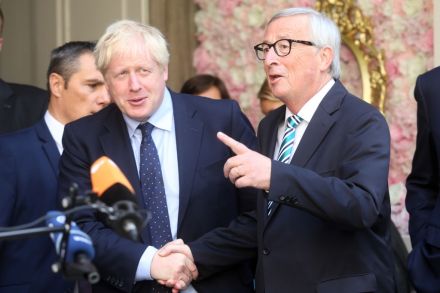
Home ‘I will uphold the constitution, I will obey the law, but we will come out on 31 October,’ Boris Johnson told the BBC, adding that the EU ‘have had a bellyful of all this stuff’. After a lunch of chicken and pollock at the Bouquet Garni in Luxembourg with Jean-Claude Juncker, the President of the European Commission, he found noise from British protesters made it impossible for him to join Xavier Bettel, the Prime Minister of Luxembourg, in an open-air press conference, so Mr Bettel continued on his own, gesturing angrily to an empty podium and saying what a ‘nightmare’ of uncertainty Britain had left Europe in.

The Green party’s Brexit hypocrisy

From our UK edition

William Hazlitt said hypocrisy is the only unforgivable vice. He would surely have a field day with our current crop of politicians. But perhaps the worst of the bunch is Caroline Lucas. The Green MP responded to the Liberal Democrat’s promise to overturn Article 50 without even a further referendum by saying: Lucas is partly correct: the Lib Dem’s policy move is remarkable in its audaciousness. Jo Swinson recently told us that she could never forgive David Cameron for his decision to have an in-out EU referendum, conveniently forgetting the fact that she herself called for such a referendum back in 2008 and that nearly all Lib Dem MPs voted in favour of the EU Referendum Act in 2015.

Judgment day: the danger of courts taking over politics

From our UK edition

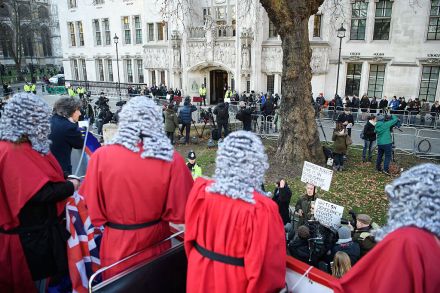
Who runs Britain? When Boris Johnson’s lawyers made their case in front of the Supreme Court this week, defending his right to prorogue parliament, they in effect brought it back to this simple question. This was a controversy for politicians to settle, not courts. Judges, they said, should think twice about ‘entering the political arena’ and unsettling the UK’s ‘careful constitutional and political balance’. He may be the first prime minister to frame the matter so starkly, but no previous prime minister has had to. This is about far more than Brexit. Britain is witnessing political litigation on a hitherto unseen scale. We have a government that has lost a working majority and is being forced by legislation to act against its own central policy.

Why there’s still a chance of a deal

From our UK edition

One of the reasons why Boris Johnson is Prime Minister is that he is an optimist. After the negativity of the May years, the Tory party yearned for some can-do spirit, which he was able to provide. But his relentless positivity has made it difficult to assess how realistic a Brexit deal is. At cabinet on Tuesday he made very bullish noises about the prospects of an agreement being reached. How realistic is this, though? Johnson told the assembled ministers that he’d had a ‘good lunch’ with Jean-Claude Juncker. There were chuckles. More seriously, he pointed out that the EU had shifted from its prior position, which was that the withdrawal agreement could not possibly be reopened and that only the political declaration could be changed.

I was a Remainer – but I now want no deal

From our UK edition

When I told two neighbours that I had become a no-deal Brexiter they physically recoiled from me. ‘You can’t.’ ‘But there’s no other option,’ I said. ‘You can vote Lib Dem,’ they said. ‘But that’s the same as a second referendum. Even if the Lib Dems came to power, the ones who hadn’t voted for them would hate the ones who had.’ Until 2016 I wanted to leave the EU. My thinking was half-baked. There were the silly laws driving farmers mad, the judgments of the European courts and the fact that Brussels hadn’t signed off its accounts for years. So when the chance came to vote to leave, I thought — good. But then I began to look into the consequences.

Why a Brexit deal would make it through Parliament

From our UK edition

It might not feel like it after Monday’s press conference theatrics and the briefings coming out of Brussels, but there is still a chance of a Brexit deal. It should be stressed that it is still odds against an agreement being reached. There has, though, been some shifting in positions in the last few weeks. The EU is now open to reworking the withdrawal agreement in a way that it simply wasn’t a month or so ago. The British government, the DUP and Dublin have all—to varying degrees—moved; meaning that there is now some hope of finding a way to replace the backstop. As one senior British government source puts it, ‘We have moved on SPS. They have moved on consent’. If a deal can be reached, I think it will pass in parliament.

Only the judiciary can save the Tories from themselves

From our UK edition

Boris Johnson is using the conventions of British public life to destroy the British constitution. He is relying on the old understanding that good chaps don't 'go too far' while 'going all the way' himself. He is counting on the judges being frightened of challenging him, while showing no fear as he tramps over and tramps down the lines that once marked the separation of powers. Johnson breaks the rules while insisting that everyone else must obey them. He’s like a criminal who cries with outrage when the police do not follow their procedure to the letter, and the judges should find the courage to treat him as such.

What Jean-Claude Juncker learned from Boris Johnson

From our UK edition

I am told Jean-Claude Juncker learned just one thing from Boris Johnson on Monday in Luxembourg. In the words of one of his colleagues there was "confirmation that the UK (under Johnson) wants more of a border on the island of Ireland than the previous government". Which is the nutshell of the whole of what the PM seeks qua new deal and what the EU’s 27 leaders need to evaluate either as deft compromise or as brutal betrayal of Dublin and the Good Friday Agreement. This dispute harks back to the December 2017 joint agreement between the UK and EU which pledges to prevent the creation of "a hard border including any physical infrastructure or related checks and controls".

Boris Johnson’s frosty reception in Luxembourg

From our UK edition

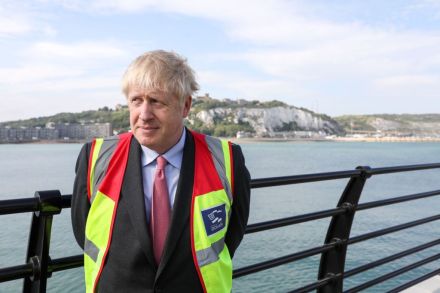
Is Boris Johnson approaching a Brexit breakthrough? That's the question being asked among Conservative MPs after there appeared to be movement last week from the government and DUP that could help to secure a deal with the EU. Today the Prime Minister met with EU commission president Jean-Claude Juncker in Luxembourg to discuss the prospect, over a lunch of pollock and risotto. On the conclusion of the meeting, a No. 10 spokesman said the pair had agreed to step up discussions and for Michel Barnier and Brexit Secretary Stephen Barclay to hold talks on a political level: 'The leaders agreed that the discussions needed to intensify and that meetings would soon take place on a daily basis.

The Lib Dems’ Brexit unicorn

From our UK edition

Lib Dem conference in Bournemouth is proving to be a jolly affair so far. I’m writing this in the garden of the Highcliff hotel, looking out over the Channel that divides the UK from France and, perhaps one day, the European Union. It’s Brexit that’s making the Lib Dems happy as they bustle by. Parties are generally happy when they feel they have a clear line on big issues, and the Lib Dem line on Brexit is now crystal-clear: cancel it. Partly because they expect a big Labour shift towards a clear Remain position, the Lib Dems are now, in headline terms, committed to revoking the Article 50 notification and thus returning UK membership of the EU to its previous permanent status.

Watch: Jo Swinson’s Brexit referendum muddle

From our UK edition

Jo Swinson has said she will never forgive David Cameron for calling the EU referendum in 2016. 'I think so many of the problems that we are facing right now stem from David Cameron’s shocking misjudgement in putting the interests of the Conservative party ahead of the national interest,' the Lib Dem leader told her party's conference in Bournemouth. But Mr S. notes that Swinson hasn't always thought that way about a referendum. Back in 2008, Swinson told the Commons that she backed “a referendum on the major issue of in or out. It’s on the issue of in or out of Europe”. https://twitter.com/adam_heilbron/status/1173398729304543239?