Brexit

What do the Tory rebels want?

From our UK edition

“The crypto-fascists are in charge”. So spoke one of the senior Tories planning to rebel tomorrow against Boris Johnson – which captures in its visceral anger the magnitude of the gulf between the new prime minister and those of his backbenchers who want a no-deal Brexit taken off the table.

Why the far-left really does think there is a ‘coup’

From our UK edition

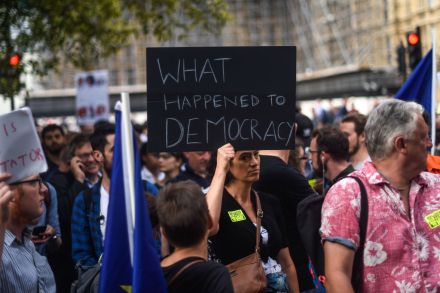
On Saturday thousands of people across Britain demonstrated against Boris Johnson’s recently-announced prorogation of parliament. Despite the heated response it provoked, proroguing parliament is a standard device which over the years has been employed by governments of all stripes. And as parliament was to be suspended for a few weeks during September and October in any case to allow the parties to hold their annual conferences, Johnson’s measure has reduced MPs’ time to prevent a no-deal Brexit by just a few days. In the context of an unprecedented crisis, with the clock ticking down to October 31, the Prime Minister’s act of constitutional sharp practice nonetheless outraged those who demonstrated on Saturday.

How Boris Johnson can deliver a liberal Brexit

For all its ferocious momentum, Boris Johnson’s government is capable of making pretty bad mistakes – as we saw with Priti Patel’s announcement that free movement of people will end with Brexit on October 31. This is a massive problem, if it hasn’t worked out what regime will replace it. As I say in this week’s UK cover story, this decision plunged millions of European Union nationals into uncertainty. The Home Office has only managed to process one million of the three million living in the country. And what would happen to the other two million on October 31? If they change jobs, how would a French baker who has lived here for 30 years distinguish himself from a French baker just off the ferry if he starts a new job?

liberal brexit boris johnson

Poles are in a quandary over Brexit

From our UK edition

At first, Brexit was seen in Poland as a glorious but chaotic farce. As strange as it sounds, three long, grim years after the referendum, the whole thing seemed, to them, like a glorious chaotic farce. Most of them supported Poland's membership of the EU but the irreverent Nigel Farage was more relatable than a bunch of uptight bureaucrats; they could at least imagine having a beer with him. As reality sunk in, and the months ground by, these comical aspects paled. Poles are now as bored hearing about Brexit as many Brits. The national conservative Polish government has been in an interesting position when it comes to Brexit.

A guide to the different sorts of chaos looming over Westminster

From our UK edition

What is going to happen next week in parliament? Most anti-no-deal rebels see it as their last opportunity to block Britain leaving the European Union without a deal, but what they haven't yet agreed on is how best to do it. There are a number of likely scenarios, some of which intertwine with one another, and to show how chaotic the next few days are likely to be, I've drawn up a flowchart of how things might pan out (you can click on the image to view a larger version of the chaos): The most likely parliamentary route is through an emergency debate under Standing Order 24, which the rebels hope they can use to seize control of the order paper. But that route alone is fraught with difficulty.

Tory MPs who vote for the extension legislation will be barred from standing for the party at the next election

From our UK edition

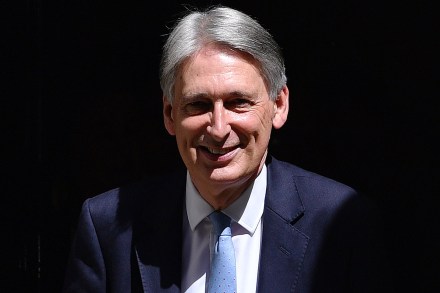
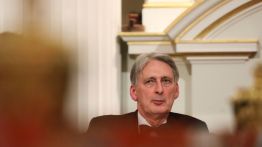
Parliament returns on Tuesday and it is expected that anti no-deal MPs will – with John Bercow’s help – quickly seize control of the order paper. They will then try and rush through a bill designed to stop the UK from leaving the EU without a deal. I report in the Sun this morning that Number 10 will treat these votes as they would a confidence vote with anyone who doesn’t back the government being immediately disqualified from standing for the Tories again. They hope that this will keep some waverers in the government lobby next week. It would mean that if former Cabinet Ministers such as Philip Hammond voted for the legislation, as they intend to, they would be barred from standing for the party again; ending their time as Tory MPs.

Boris Johnson’s Parliament shutdown isn’t unconstitutional

From our UK edition

Has Boris Johnson done a Charles I and shut down Parliament indefinitely? The headlines this week might lead you to think so. 'Uproar as Boris Johnson shuts down parliament to protect Brexit plan', reported the FT. John Bercow called it 'a constitutional outrage'. 'It's tantamount to a coup against Parliament,' raged former attorney general Dominic Grieve. Nicola Sturgeon called it 'a dictatorship'. Yet the reality hardly lives up to the rhetoric. These are the facts: Parliament will return from summer recess on 3 September as planned. Parliament will not sit from mid-September to early October during the three-week party conference season – also as planned and as happens every year.

The UK prime minister hates democracy

I have been literally shaking for the past 24 hours since hearing that Boris Johnson has decided to suspend Parliament until a few days before Britain leaves the EU. By doing this, he is effectively preventing the opposition from blocking a no deal Brexit. Myself and my fellow Remainers who have been fearlessly campaigning for the past three years to get the result of the 2016 EU referendum reversed, signing petitions requesting a second referendum in which we could vote correctly this time, going around social media telling Leave voters how stupid and racist they are, and generally attempting to derail Brexit by any means possible…are utterly STUNNED at how blatantly Boris Johnson so obviously despises democracy.

democracy

The rage against Boris

From our UK edition

This morning, a petition demanding ‘Do not prorogue Parliament’ is doing the rounds. At the time of writing, more than 1.4 million people have signed it. Remainers are very excited. They’re holding the petition up as proof of a mass outpouring of democratic disdain for Boris Johnson’s decision to suspend Parliament for a few more days than is normal. It is no such thing. It looks more like yet another middle-class hissy fit against Brexit and the people who voted for it.  As the petition map demonstrates, the signatories are strikingly concentrated in certain parts of the country, especially the leafy, super-middle-class bits of southern England.

Ruth Davidson takes a pop at David Cameron in her resignation speech

From our UK edition

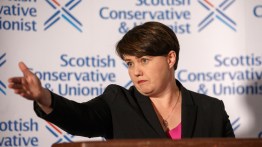
Ruth Davidson’s departure is a blow to the Tory party and the Union. Without her, the Tories will find it even more of a struggle to keep hold of their Scottish seats at the coming Westminster election. At the same time, the removal of such a formidable campaigner will make it that bit easier for the pro-independence parties as they try and win a majority at Holyrood in 2021—something that would almost certainly lead to a second independence referendum. Davidson’s press conference this morning was an understated affair: this was not an emotional goodbye, more a matter-of-fact resignation. I suspect that Number 10 will have been relieved by the fact that Davidson while not hiding her differences with Boris Johnson over Brexit, took no swipes at him.

It’s time for Boris Johnson’s opponents to decide what they want

From our UK edition

Boris Johnson sees method in and admires some of Trump's apparent madness: not the 'send them home' abusive chants about ethnic minority Democrat critics, but the refusal to play by the normal rules of politics or international relations (threatening to nuke North Korea before talking with its despot; imposing new tariffs on China while claiming to want a trade deal; ripping up the international entente with Iran prior to saying just days ago he could be the first US president since the toppling of the Shah to meet an Iranian leader). In case Johnson hasn't noticed, Trump hasn't enjoyed any conspicuous success with what can perhaps best be described as governing through organised chaos – though equally the world hasn't ended. Or at least not yet.

Why it makes sense for Boris Johnson to behave like Donald Trump

From our UK edition

Boris Johnson is being widely accused of subverting the British version of democracy with his plan to suspend or prorogue parliament for four weeks – unprecedented in modern times. His apparent aim is to make it much harder for MPs to take control of the process of when and whether the UK leaves the EU. But in behaving more like a Trumpian president than a British prime minister, he is simply following the logic of the massive constitutional changes that the 2010 and 2015 parliaments perhaps recklessly and thoughtlessly pushed through. These were, of course, the Fixed-Term Parliaments Act and the referendum on whether to leave the EU.

Where are the howls of protest when Anna Soubry appears on the BBC?

From our UK edition

Political debate, as we are forever being told, has become coarser in recent years. But there is a bigger change of which rather less is said. Debate seems to focus less and less on actual arguments and more and more on seeking to deny the legitimacy of those who are speaking. Never mind what they are saying – what right do they have to be granted this forum? This phenomenon is never more prevalent than when Nigel Farage pops up on the television, and Twitter is instantly filled with people demanding to know: “who does he represent?”. “Never elected to UK parliament on the seven occasions he tried and with no sitting MPs hasn't been off my tele for YEARS” one angry Tweeter wants us to know.

Will the no-deal opponents finally get their act together?

From our UK edition

So what now for the opponents of no deal? Boris Johnson has dramatically called their bluff, and as Mr Steerpike reports, not all of them are taking this particularly well. Both proponents and opponents of Britain leaving without a deal are engaged in a political wrestling match, with all the theatrics that entails. Both are working out which parliamentary mechanisms will suit them best. Both are also accusing the other of blocking democracy, pretending not to notice the similarities in their tactics. Neither will admit that the other side has a right to do what it has chosen to, instead preferring to call it a 'constitutional outrage'. The problem for those trying to stop no-deal is that their team isn't working as well as Boris Johnson's.

Full text: Boris’s plan to prorogue Parliament

From our UK edition

Dear Colleague, I hope that you had an enjoyable and productive summer recess, with the opportunity for some rest ahead of the return of the House. I wanted to take this opportunity to update you on the Government's plans for its business in Parliament. As you know, for some time parliamentary business has been sparse. The current session has lasted more than 340 days and needs to be brought to a close — in almost 400 years only the 2010-12 session comes close, at 250 days. Bills have been introduced, which, while worthy in their own right, have at times seemed more about filling time in both the Commons and the Lords, while key Brexit legislation has been held back to ensure it could still be considered for carry-over into a second session. This cannot continue.

Johnson confirms he will prorogue parliament

From our UK edition

Downing Street has just confirmed that the Prime Minister will be asking the Queen to prorogue parliament ahead of a new Queen’s Speech on 14 October. In a letter sent to MPs this morning, Boris Johnson claims that this is a move designed to put a fresh domestic programme before Parliament, writing: 'I therefore intend to bring forward a new bold and ambitious domestic legislative agenda for the renewal of our country after Brexit. There will be a significant Brexit legislative programme to get through but that should be no excuse for a lack of ambition!' The focus in the letter and in briefings from No.10 is on domestic policy, with Johnson explicitly criticising the lack of action from Theresa May.

Europe’s politicians should be terrified of a no-deal Brexit

From our UK edition

Jeremy Corbyn has vowed to use 'all tactics available' to block a no-deal Brexit. The Labour leader is meeting MPs today to try work out how to do just that. But with no deal back in the headlines, are we having the wrong discussion about what it would mean for Britain to leave the EU without an agreement? Most of the focus around a no-deal Brexit has been on the economic pain that will be suffered by various parties, but particularly the UK. Little thought has been given, however, to the political pain. To politicians seeking re-election (for either themselves or their party), small issues can become greatly magnified. Whenever a steel plant or a car factory faces closure, the government comes under pressure to meet with the owners to find a rescue plan.

Justin Welby could be the man to rescue Brexit

From our UK edition

So there is more than one Old Etonian hoping to ride to the nation’s rescue. My first reaction to the news that Justin Welby is involved in plans for a citizens' assembly to find an alternative to a no-deal Brexit was sceptical. Too late for such an initiative. Give Boris a chance to get on with it. Nice idea that the established Church can help us to get beyond political tribalism, but surely doomed to failure. The coming scrap between remainers and the Government is not a place for nice clergymen. Then I remembered: I had the same sort of reaction to the news, over two years ago, that Welby was calling for a cross-party commission to find a way forward. That seemed naïve.

Jeremy Corbyn capitulates in cross-party Brexit talks

From our UK edition

Jeremy Corbyn's cross-party talks to stop a no-deal Brexit have broken up, with opposition leaders and MPs releasing a statement saying they 'agreed on the urgency to act together to find practical ways to prevent no deal, including the possibility of passing legislation and a vote of no confidence'. The Labour leader opened the meeting by saying he would prioritise legislation, rather than a vote of no confidence, which will be kept as a last resort. Calling a vote of no confidence in the first few days of Parliament sitting next week might have been a dramatic way of Corbyn trying to show that he was serious about stopping a no-deal exit and that he does really want a general election, but it is also very unlikely to have succeeded.