Brexit

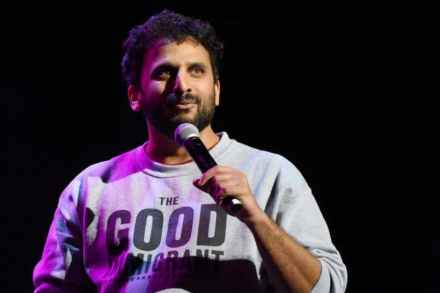
Nish Kumar turns on 'right-wing commentators' who 'can't take a joke'

Nish Kumar was the star turn on Friday at a ‘Brexit and Comedy’ panel discussion in central London. The event was staged by ‘The UK in a Changing Europe’ which describes itself as ‘an independent organisation created to make the findings of academic research easily available.’ Essentially it’s a left-leaning think-tank which behaves like a bereavement circle for distraught Remainers. The host, Professor Anand Menon, asked the three panellists to suggest a joke for Boris. ‘I’d just write him a joke that wasn’t racist. A non-racist knock-knock joke,’ replied Kumar The comic Andy Zaltzman, also on the panel, started to improvise. ‘Knock-knock’. Kumar: Who’s there? Zaltzman: The immigration authorities. Marina
Let's not forget the unintentional heroes of Brexit

A week on from Brexit day, it is worth stopping and reflecting on just how Britain’s departure from the EU actually came about. We’re familiar of course with those from the Leave side who contributed to Brexit. But what about the unintentional heroes of Brexit, those who ensured accidentally that Britain really did leave the EU? On the day we were supposed to leave the EU last March, I bumped into an important member of Tony Blair’s social and political circle in the lobby of a St James’s club. “Are the Tory Spartans holding firm? Are they going to stop May’s deal going through?” he asked. “Yes, quite comfortably I

Boris Johnson's greatest challenge is nothing to do with Brexit

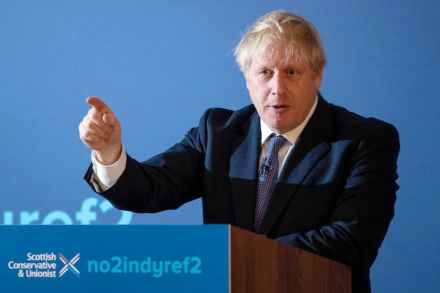
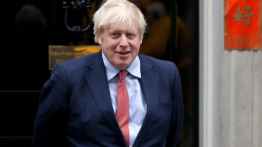
The Scottish papers carry two difficult polls for Downing Street. One, from Survation, puts support for independence at 50/50; another, from Panelbase, has it at 52 per cent in favour and 48 per cent against. The cursed percentages. I say difficult polls for Downing Street rather than Westminster in general because the Union — not Brexit, or terrorism, or northern regeneration — is the number one challenge facing Boris Johnson’s government. I appreciate that I banged on about this as recently as Friday but I intend to keep banging on about it because a) it’s true, and b) I cannot bring myself to care about Nish Kumar. The Prime Minister’s

It's time to pick a side in Boris Johnson's war on the media

Boris Johnson is the first party leader of the media age. Winston Churchill and Michael Foot wrote extensively. But Johnson is a journalist. Before he went into politics, producing Tory commentary and editing this magazine were the achievements that defined him. And yet no modern prime minister has shown a greater determination to limit media scrutiny. Whether it is banning ministers from appearing on the Today programme and Good Morning Britain, or banning them and their special advisers from talking to journalists, Johnson is revealing himself to be a brooding suspicious politician, wholly at odds with his cheeky chappie persona. Even when a terrorist attacked civilians on a London street,

What Macron wants in the post-Brexit negotiations

Since Boris gained his 80-strong majority in the Commons, a chasm has opened up between what the French reckoned they would be able to extract from Britain in the post-Brexit EU negotiations and what Emmanuel Macron will now prioritise. A number of other events have also chastened the French (and Brussels) beyond the election result, such as: Boris’s decision to legislate for no extension to the transition period; the Government’s rejection of Lord’s amendments to the Withdrawal bill; the Chancellor’s message that the nation’s interests come before British business; Washington’s commitment to seal a trade deal with Britain by the end of the year; and London’s decision to begin parallel

Spare us Nish Kumar and the BBC's anti-Brexit sneering

Friday was Brexit day. The day that the largest act of democracy in the history of this country was finally enacted. The day when the wishes of 17.4m people finally became a reality. And how did the BBC, the national broadcaster, mark this extraordinary democratic day? With a sneer, of course. A smug, aloof, bitter sneer at the entire country. Not only did BBC reporters huff and moan at the mass pro-Brexit gathering in Parliament Square, coming off like anthropologists who had happened upon some bizarre, exotic tribe. It also chose that day to push out anti-Brexit nonsense via its kids’ wing, CBBC. Yes, even children must now be subjected

Nissan's post-Brexit plan exposes the limits of Project Fear

Brexit voters are, of course, mostly fools who don’t know what is good for them – in contrast to all those Remain voters with their degrees and analytical skills. But none are so dim-witted as those in Sunderland who, like turkeys voting for Christmas, chose a course of action which will inevitably lead to them losing their jobs at the city’s Nissan plant. Or maybe not. It turns out that Sunderland’s Nissan workers might not be quite so stupid after all. It’s been revealed that the company is looking at a scenario in which it would close its EU plants and transfer production to Sunderland instead, raising its UK output

Lord Kerr’s ‘stupid’ Brexit jibe shows some Remainers have learned nothing

I have always loved the story of Hiroo Onoda, a Japanese soldier who refused to believe the Second World War was over and stayed hiding in the Philippines until his former commanding officer was brought out of retirement and ordered him to surrender. That was in, 1974, 29 years after the end of hostilities. But I wouldn’t bet on the final Remainer holdouts giving up their struggle so quickly. If Lord Kerr of Kinlochard can be gently persuaded out from behind one of the red benches in the House of Lords before 2049 – when he’ll be 106 – I would consider it a triumph of negotiation. It would be

Sunday shows round-up: 'One year is enough' to complete a UK-EU trade deal, says Tusk

Donald Tusk – ‘One year is enough’ to complete trade deal Andrew Marr spoke to the former President of the European Council, Donald Tusk. Boris Johnson’s critics have heaped scorn upon the idea that the UK and the EU can reach a comprehensive free trade agreement without extending the current Brexit transition period past the end of 2020. Tusk however, begged to differ on this: https://twitter.com/BBCPolitics/status/1223929174244691974?ref_src=twsrc%5Etfw DT: One year is enough to finalise our negotiations… We have to demonstrate good will on both sides… Business is business… The campaign is also over. The game is over. The EU was either ‘bogeyman’ or ‘whipping boy’ Tusk lamented how he felt the

Why Australia-style deal is the new Brexit buzzword in government

As the second round of Brexit negotiations loom with the EU, there’s already talk of an early bust-up coming up the track. James reports in his Sun column that the UK and the EU are currently very far apart when it comes to expectations for the trade talks. Figures on the Brussels side believe that they can get the UK to sign up to things – such as a continued role for the European Court of Justice – when Boris Johnson is seeking a much looser arrangement. This distance between the two sides means that figures in government have already begun work on a Plan B in the event Johnson

Will the word ‘Continental’ make a comeback after Brexit?

Feasting on the remnants of my edible Christmas presents during the otherwise frugal month of January, I experienced a frisson when I opened the box of Thorntons ‘Continental’ chocolates. For anyone who grew up in the 1950s, 1960s and 1970s, the word ‘Continental’ carries with it a waft of balmy air from the Mediterranean, a sense of longed-for glamour, pleasure and breakfast on a balcony, unavailable on this rainy, cut-off island. I’m wondering whether, as we leave the EU and return to being a small country across the water from a many-countried, warmer landmass, the word ‘Continental’, and the concept, will come back into use. Do other small countries across

‘We will never return, there is no going back’: the Brexit Day party, as it happened

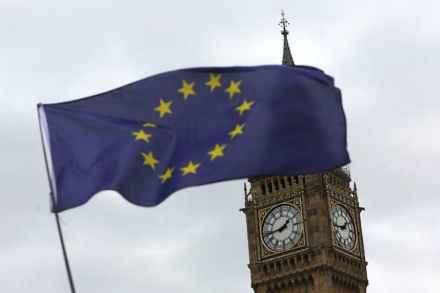
Remainers were there too. The first people I met at the Brexit Day festivities were opposed to the whole idea. I found them on Westminster Bridge, a man and his wife, posing with an EU flag. When the man spoke his voice faltered as if his pet spaniel had just died. ‘I married a German woman. I’ve been brought up to tolerate other cultures and lifestyles.’ I asked which of the many crises outlined by Project Fear would strike us first. ‘Economic slump,’ he said. Will Britain ever re-join? ‘Maybe in two generations.’ A couple with a toddler spotted the EU flag and joined us for a chat. They’d planned

The UK has left the EU

In practical terms, little has changed tonight. Businesses and citizens here will not feel any real difference in the coming weeks and months as they interact with the EU. But in another sense, everything has changed tonight. The UK is now out of the EU and the bar for rejoining will be very high. First of all, a party would have to win an election on a rejoin platform and then, probably, have a referendum. It is hard to imagine a party serious about winning office choosing to reopen this issue in the foreseeable future. Second, there would have to be a national consensus in favour of rejoining. The EU

Oxford college fails to get in the mood for Brexit day

It’s finally Brexit day, but while some are celebrating, others are finding it hard to get into the mood. Perhaps unsurprisingly, Britain’s departure from the EU isn’t going down well in Oxford. As well as flying an EU flag over the Town Hall today, the city is also holding a candlelight vigil for the EU later this evening. Students there are also getting into the spirit. Here’s a university lunch menu from today, sent over by Mr S’s mole at Mansfield College: Mr S fancies Out After 47 Years with a side of Farmers’ Subsidies…

Brexit day is a gloriously muted occasion

Whatever your feelings about Brexit, this day, 31 January, 2020, will be seen as a point in history. It is the day that the UK left the European Union after nearly half a century and set out, once again, on its own. While we may have been through more than three years of parliamentary wrangling, two elections and something akin to a constitutional crisis to get here, the actual day itself is being marked with characteristic understatement – just a little bit. Bongs from Big Ben were ruled out with two weeks to go, a flag display promised as consolation. No one even dreamt of demanding that Westminster Abbey peal

'Bye Bye Brits': European papers herald Brexit day

At 11pm tonight, Britain will finally leave the European Union, after 47 years inside the bloc. And, as expected, many European newspapers chose to mark Brexit day on their front pages. Le Figaro: ‘L’adieu a l’Europe Liberation: It’s time La Croix: See you! Le Monde: Europe enters the unknown Die Welt: The British leave. The Germans suffer El Pais (online): A new era without the UK Berlingske: Bye-bye, Brits Algemeen Dagblad: Farewell Dagens Nyheter De Tijd Gazeta Wyborcza: Brexit – a lesson for Poland Rzeczpospolita: Abandoned Europe The Irish Times: Britain leaves the European Union not with a bang, but a whimper

You can thank Remainers for the hardness of this Brexit

The first chapter of Britain’s Brexit story ends tonight. For some, that’s something to celebrate. For others it means sadness. For most of us, I suspect, emotions are mixed: a bit of relief at the sense of clarity that underpins politics; a bit of optimism that we might all learn from the psychodrama/culture war of 2016-2019; a bit of foreboding about the Brexit dramas still to come. I voted Remain. I believed that despite its flaws (and I know them well: I covered more than 50 EU summits as a reporter, and projects including birth of the euro, the stability and growth pact and the European Constitution) Britain’s long-term interests

The five stages of Brexit grief

It’s been more than three years since the Brexit referendum, and we’re only a day away from actually leaving the EU, but it appears that some of the UK’s residents are still struggling to come to terms with the country’s exit from the European Union. Today, the pollster YouGov released a survey of Remain voters in the UK, in which it asked which of the five stages of grief (denial, anger, bargaining, depression and acceptance) closest described how they feel about the EU referendum result. The options ranged from the rather sanguine, ‘I have come to terms with the fact that the UK will leave the EU’, to full-throated denial,

Will ‘performative Europeanness’ end on Brexit day?

The Rubicon has almost been crossed, the die has almost been cast and whatever other choice phrases from European history spring to mind. As we leave the European Union, to the cheers of the 52 per cent and the tears of the 48, what most interests me as a reluctant Remainer is how, or indeed whether, it will affect our collective national sense of Europeanness. In certain – London, metropolitan – quarters, this somewhat elusive quality has been getting an exhaustive airing and we may well need to brace ourselves for a further mass outbreak of EU flag waving in the coming weeks. One of the most fascinating aspects of