Brexit

Boris Johnson: A mixture of principle and opportunism, just like every politician

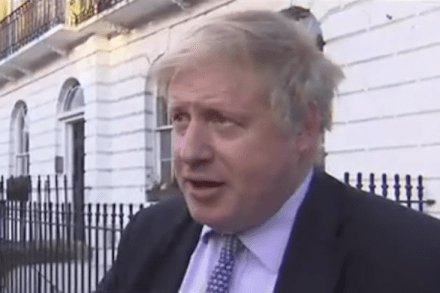
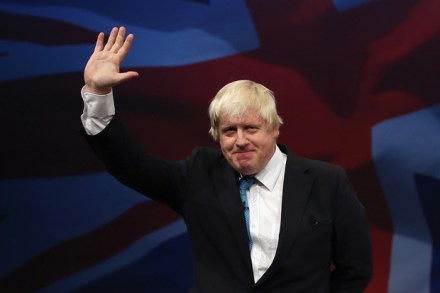
Boris Johnson is a slippery fish, but I don’t think Nick Cohen quite captures him in his blog post earlier today. To accuse him of putting career before country in the EU referendum campaign, as Cohen does, is to fall into the trap of viewing politicians too dichotomously, as if they’re all either men and women of conviction or unprincipled opportunists. Boris, like every front rank politician, is a mixture of conviction and careerism, rather than one or the other. Winston Churchill and Margaret Thatcher are both cases in point. Exhibit A in the case for the prosecution is Boris’s decision to join the Leave campaign. Like many divisive political issues,

Cameron fights back: his full statement on the EU deal

I have spent the last nine months setting out the four areas where we need reform and meeting with all 27 other EU Heads of State and government to reach an agreement that delivers concrete reforms in all four areas. Let me take each in turn. First, British jobs and British business depend on being able to trade with Europe on a level playing field. So we wanted new protections for our economy; to safeguard the pound; to promote our industries – including our financial services industries; to protect British taxpayers from the costs of problems in the Eurozone and to ensure we have a full say over the rules of the single market, while remaining outside

Podcast special: Boris backs Brexit

If Boris Johnson had behaved and backed David Cameron’s ‘in’ campaign, he would have been foreign secretary by the summer. Instead, he chose to join Michael Gove in the ‘out’ campaign – informing the Prime Minister by text message at 4.40pm shortly before informing the reporters who gathered around his house shortly afterwards. So what does this mean for the race, and do we now have a Tory leadership contest running in parallel to the EU Referendum campaign? James Forsyth, Isabel Hardman and I discuss this in our latest podcast:- Listen to more episodes of the Spectator podcast here and click here to subscribe through iTunes.  SPECTATOR EVENT: EU REFERENDUM – THE

What Brexit would look like for Britain

‘So what’s your alternative?’ demand Euro-enthusiasts. ‘D’you want Britain to be like Norway? Or like Switzerland? Making cuckoo clocks? Is that what you want? Is it? Eh?’ The alternative to remaining in a structurally unsafe building is, of course, walking out; but I accept that this won’t quite do as an answer. Although staying in the EU is a greater risk than leaving — the migration and euro crises are deepening, and Britain is being dragged into them — change-aversion is deep in our genome, and we vote accordingly. Europhiles know that most referendums go the way of the status quo, which is why their campaign is based around conjuring

Boris Johnson supplants Osborne as bookmakers’ favourite for next Tory leader

The Mayor has not even filed his Daily Telegraph column yet, but Ladbrokes has announced that he is now the favourite to succeed David Cameron. As the above graph shows, his chances have been steadily increasing as George Osborne overplayed his hand: first, by posing as the heir assumptive, and then by various missteps (like praising Google’s tax deal). The ‘out’ campaign is still seen as likely to lose the EU Referendum, but the next Tory leader will be selected by a Tory Party membership who will be about 70 per cent for ‘out’. Michael Gove, famously, has very little leadership ambition; Liam Fox won’t stand again and Iain Duncan Smith has had enough of all that

Boris Johnson receives a special delivery

With Boris Johnson set to back Brexit, the Mayor of London has received a special delivery from Vote Leave ahead of his announcement. Vote Leave’s Cleo Watson arrived at his address this afternoon to drop off some Brexit merchandise: A Vote Leave hat and brolly outside Boris's front door – he can't back out now. pic.twitter.com/qTb7FkxGpl — Theo Usherwood (@theousherwood) February 21, 2016 Watson says she ‘hopes it’s something he’ll find useful in the next couple of months’: Boris just got a delivery of #VoteLeave merhandise pic.twitter.com/rheiPmkGla — Ciaran Jenkins (@C4Ciaran) February 21, 2016 Meanwhile not everyone is so excited by Johnson’s support. Labour’s Jess Phillips has suggested that BoJo’s

Members of Cameron’s Cabinet are now free to speak their mind on the EU. Here’s what they’re saying

David Cameron’s two hour Cabinet meeting is now over, and the campaign has now started. His Cabinet members are now free to back (or oppose) Brexit, here is a list of who’s saying what. Out camp Michael Gove: The Justice Secretary is to back Out. Entering No.10 he informed reporters that he would be making a statement after Cabinet — only to head straight from Downing Street to Vote Leave’s HQ –where the Cabinet members who are backing Brexit have gathered. Gove has issued a statement — via Vote Leave — describing the decision as the ‘most difficult’ of his political life: ‘I don’t want to take anything away from

Boris Johnson not invited to David Cameron’s EU Cabinet meeting

As ministers roll into No10 in front of the cameras, reporters have noticed the absence of one Boris de Pfeffel Johnson. It turns out that the Prime Minister has convened a meeting of the normal Cabinet, rather than a ‘political Cabinet.’ A minor distinction, but it does mean no Boris Johnson – who is a member of the latter organisation, but not the former. Now, of course, you can argue that it takes a normal Cabinet to approve the deal on behalf of the government. But friends of Boris had been hoping for a political Cabinet, at which everyone would say their piece, followed by a rubber stamp at the Cabinet. And that

The UK’s Global Engagement Begins in Europe

The advocates of Brexit like to paint an optimistic picture of a post-EU Britain as an active, globally engaged power. ‘Who has the parochial mindset here,’ asks Dan Hannan, ‘those who want a global role of the United Kingdom, or those who think that our role must be mediated by Federica Mogherini, the EU’s Foreign Minister?’ Eurosceptics rarely outline the details of the UK that they have in mind. At most, they say that once the UK leaves, the British government could negotiate free-trade agreements with countries overseas – most notably those in the Commonwealth. But there is much more to international engagement than trade. For a campaign that takes

The EU has just called Cameron’s bluff – and won

[audioplayer src=”http://rss.acast.com/viewfrom22/spectatorpodcastspecial-davidcameronseudeal/media.mp3″ title=”David Cameron seals the EU deal – but is it any good? Isabel Hardman, James Forsyth and Fraser Nelson discuss” startat=18] Listen [/audioplayer] So in the end, David Cameron’s attempt to renegotiate Britain’s EU membership served to remind us of the case for leaving: the EU is designed in such a way that almost no sensible proposal can be passed. Its negotiations start after dinner, and are designed to drag on until 5am – a formula designed to stifle debate, and to wear people down. The Prime Minister was kept waiting until 10pm to be told that he had agreement on a deal – but one perforated by the bullet holes of

Frank Field: this deal is awful. Labour supporters should vote ‘out’

[audioplayer src=”http://rss.acast.com/viewfrom22/spectatorpodcastspecial-davidcameronseudeal/media.mp3″ title=”Isabel Hardman, James Forsyth and Fraser Nelson discuss the EU deal” startat=18] Listen [/audioplayer] What a choice our poor old country faces. There’s widespread support amongst voters across Europe (but not leading politicians) for a fundamental EU reform programme, but our Government never seriously considered leading on this front. Yet the Government so lacked ability that it couldn’t even achieve the minimal reform programme it cobbled together. Holding the referendum in June was clearly more important than winning major reforms. The Government has failed to secure the key renegotiation requirement, namely, that we should regain control of our borders. I shall therefore be campaigning to leave the EU. There

Watch: Richard Branson on Brexit – ‘I’m a bit distracted by space’

Richard Branson briefly came down to earth this morning to give his thoughts on the EU summit in Brussels. The Virgin tycoon was asked on Sky News what he thought about the possibility of Britain leaving the European Union. Unfortunately Brand seemed not all there as he admitted he was a ‘bit distracted by space’ — thanks to the launch of his new space rocket later today: ‘Umm… yeah… I’m sort of a bit distracted with space at the moment, but I think it would be a very, very, very, very sad day if British people voted to leave.‘ The billionaire also insisted he loved Great Britain, warning that Brexit would mean the

EU summit: David Cameron arrives and vows to ‘get back in there’

It’s been a long night in Brussels and it’s going to be a hard day ahead for David Cameron as he tries to strike a deal with other European leaders at the EU summit. The Prime Minister has now arrived and said he will ‘do everything he can’. He added that ‘some progress’ had been made but there was still no deal: It looked earlier in the day as though Greece could veto the entire summit over the issue of migration. Polish Minister for European Affairs, Konrad Szymański, said it was a serious issue but maintained that he was confident it would be sorted: French President Francois Hollande said this

Today in audio: The EU summit as it unfolds

EU leaders have been arriving in Brussels for the crunch summit where Britain’s reform demands will be thrashed out. David Cameron arrived earlier today where he did his best to make a bullish entrance, reassuring those back home he was ‘battling for Britain’: He’ll be trying to convince other European leaders that its worth their while signing up to the deal first though. The President of the European Parliament, Martin Schulz, said he was ‘relatively optimistic’ about an agreement being made: Whilst Donald Tusk said whatever happened it was a ‘make-or-break’ summit: And Jean-Claude Juncker said he was also optimistic about a deal, adding that he was sure Britain would

Cameron’s first EU referendum battle: shutting up his own MPs

[audioplayer src=”http://rss.acast.com/viewfrom22/putinsendgameinsyria/media.mp3″ title=”James Forsyth and Charles Grant from the Centre for European Reform discuss the EU referendum battle” startat=743] Listen [/audioplayer] On the day that David Cameron delivered his Bloomberg speech, the 2013 address in which he committed himself to a referendum on Britain’s EU membership, I asked a close ally of his how he would avoid splitting the Tory party over the issue, given that even quiet ‘outers’ might feel obliged to vote to leave. The ally paused before replying: ‘That would be a good problem to have, as it would mean we had won the election.’ That ‘good problem’ is now here. The Tory leadership is currently involved

From Rhexit to Brexit

We are all of us to some degree prisoners of our own experience. Experience may teach, of course — may counsel or illuminate. But it is also capable of trapping us. We make connections in our imagination between what we saw then and what we see now, and when these memories are of a personal kind and unavailable to others, we’re inclined to treat them as something special: our private mentors. Sometimes that mentoring will be inspired, sometimes mistaken. I once (in the months before last year’s general election) decided to block my ears to opinion pollsters warning that the Tories were hopelessly bogged down, and instead followed my own

Apocalypse now? Markets seem set on a self-fulfilling prophecy

All this talk of a new financial apocalypse, so soon after the last one, is starting to annoy me. Partly because investors as a crowd are so irrational; -partly because so much that governments and central banks have done to contribute to the current market mayhem seems to work against the sensible efforts of ordinary folk to build a bottom-up recovery. Markets first. We’ve had hissy fits about China, even though connections between the Chinese and UK economies are so marginal. We’ve had near-hysteria about the prospect of (and in the US, the start of) rising interest rates. Now there’s a panic about European banks, because Deutsche Bank, midway through

Employment at a new high, borrowing costs at a record low. So who’s afraid of Brexit?

The Chancellor certainly will have plenty to boast about in his next Budget. Today’s figures show an employment rate of 74.1pc, the highest ever recorded in Britain – better than Nigel Lawson’s record, better than anyone’s. Tax cuts and welfare reform have proved a potent combination. This makes it harder for Osborne to sustain his narrative about a scary “cocktail of risk”, part of the general strategy of keeping voters fearful ahead of the EU referendum. With record employment and zero inflation – a striking contrast with the Eurozone – things really could be a lot worse. Against such a backdrop, voters might well wonder what else Britain could achieve by striking out on its

Kensington Palace in a flap over Prince William’s ‘pro-EU’ speech

The Duke of Cambridge caused much excitement today with a speech he gave to British diplomats at the Foreign Office. In the speech, Prince William spoke about the importance of uniting with other nations: ‘In an increasingly turbulent world, our ability to unite in common action with other nations is essential. It is the bedrock of our security and prosperity and is central to your work. Right now, the big questions with which you wrestle – in the UN, Nato, the Middle East and elsewhere – are predicated on your commitment to working in partnership with others.’ Story hungry hacks took his words as a hint that the royal is backing the In campaign in the