Brexit

Who will reveal their Brexit plan?

George Osborne’s Newsnight interview has drawn ire from the Eurosceptics chiefly because the Chancellor used it to stamp on any suggestion that there might be a second EU referendum in which Brussels offered the UK all the changes it wanted in the first place in order to tempt it back into the European Union. But Osborne also reiterated last night that the ‘Treasury is 100 per cent now focused on achieving the renegotiation’ and wasn’t drawing up contingency plans for Brexit. The problem for ministers is that any admission or leak of such contingency plans would be written up as a Whitehall panic, or a secret desire on the part

Eurosceptics brand no contingency plan for Brexit ‘disgraceful’

David Cameron’s admission on the Marr Show this morning that the EU referendum might take place either a little later in 2016 than most expected or indeed in 2017 isn’t what has exercised eurosceptics. From their point of view, a later referendum will give them more time to set out their arguments for a change from the status quo. But what has annoyed them is the Prime Minister’s suggestion that the government was not drawing up contingency plans for Britain voting to leave the European Union. Marr asked him whether the government was prepared for the possibility of leaving the EU. Cameron replied: ‘I don’t think that is the right

Watch: John Redwood’s Brexit-themed Christmas fairytale

It’s nearly Christmas. That means it’s the time for carols, goodwill to all men and… leaving the EU — that’s according to the Bow Group anyway. The conservative think tank have released their traditional ‘Bow Group Christmas Fairytale’ read by John Redwood, the MP for Wokingham. This year it has a Brexit theme: ‘Red Riding Hood — a very modern fairytale of life in the European woods.’ And who takes on the role of the big bad wolf? Well, Mr EU of course.

The Vote Leave campaign could be formidable – but it has an Achilles heel

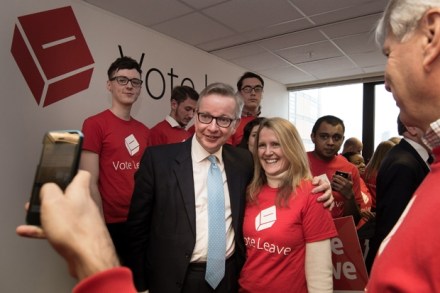
As David Cameron prepares to make his case to European leaders over dinner this evening, the Out campaign is stepping up its preparations for the referendum. Vote Leave will host 10 regional launches in the New Year and appoint campaign directors for each region. It’ll also hire staff to work at a constituency level. Combine this with a central campaign team that contains former senior aides to Theresa May, Michael Gove and Philip Hammond and you have the basis for a formidable operation. With the backing of senior business figures such as Crispin Odey and Luke Johnson, they also shouldn’t have any trouble raising money. But the campaign itself is

Brexit is gaining momentum, according to two new polls

Two new opinion polls suggest that support is growing for Britain to leave the European Union. Today’s Daily Telegraph reports on an ICM survey which shows that half of voters back Brexit, if the undecideds are excluded: the first time since 2013 that voters are evenly split. But when the undecided voters are included, it is a much tighter split: 42 per cent would vote to stay in, compared to 41 per cent for leaving. It’s a similar story in a Survation survey in today’s Daily Express, which has a five-times larger 10,000 sample size. This survey reports that 42 per cent want to leave the EU, compared to 40 per cent who would vote to stay in. Taking

The view from my Belfast bus: tribalism as the enemy of prosperity

At Stormont on Saturday, we observed a minute’s silence for the dead of Paris. Our conference group of Brits and Americans had convened two days earlier to discuss conflict resolution, the idea that nationalism and tribalism are the enemies of peace and prosperity, and how all this might relate to the migration crisis; so the moment could not have been more poignant. We had reached the seat of the Northern Ireland Assembly by way of a bus tour that was a potted history of the Troubles: up the Catholic Falls Road, through a gate in the ‘peace wall’, back down the Protestant Shankill Road and across Loyalist East Belfast; onwards

Europe podcast special: what would Brexit mean for British business?

This podcast was sponsored by King & Wood Mallesons. Would a vote to leave the EU help or hinder British businesses? In this View from 22 special podcast, The Spectator’s Fraser Nelson discusses the upcoming EU referendum with Matthew Elliott, co-founder of the Vote Leave campaign, Richard Reed, the co-founder of Innocent Drinks and a patron of the Stronger In campaign, and Stephen Kon, senior partner at King & Wood Mallesons. How are British business feeling about a potential Brexit sometime before 2017? Aside from the major corporations, are smaller businesses more inclined towards remaining in or leaving the EU? Where does the greater danger lie: the uncertainty of leaving the

Watch: David Cameron heckled during EU speech

Oh dear. David Cameron’s speech to the Confederation of British Industry got off to a shaky start today after he was heckled by Brexit protesters. While the CBI had opted to leave members of the Vote Leave campaign off of the invite list, two protesters managed to sneak in and get their own anti-EU message across. As the Prime Minister gave a speech in which he said that he could work with business leaders to keep ‘Britain in a reformed Europe’ after a successful renegotiation, protesters held up a banner and shouted that the CBI is the ‘voice of Brussels’: Exclusive: watch anti-CBI hecklers interrupt PM speech (& forgive my

Tory harmony is threatened by the EU referendum

For all the leadership positioning, one of the striking things about Tory conference in Manchester was the level of agreement about what the party’s strategy should be. There was almost no one calling for the party to move right. Instead, the emphasis was on how the party could expand its electoral coalition. Boris Johnson and George Osborne may have very different styles, but the argument of their speeches was essentially the same: the Tories have to show that they are the party for low paid workers. This determination to look for new converts, which was the defining feature of David Cameron’s speech too, is a product of the election campaign.

Nigel Farage: I’d love to share a platform with Jeremy Corbyn

Nigel Farage held another event in Westminster this morning to announce the dates of his ‘Say No – Believe in Britain’ tour, through which he hopes to drum up support for a Brexit. While the venue and message were identical to his press conference in July, the Ukip leader did reveal some details: twelve regional co-ordinators have been chosen, 300 events are planned over the next few months and six million leaflets will be delivered by Christmas. In light of the British Future polling on the toxicity of Ukip’s immigration message, Farage was keen point out he will work with anyone to achieve a Brexit — even Jeremy Corbyn. He said that a Corbyn victory

Watch: Nigel Farage on why Ukip is still relevant

Nigel Farage emerged from his summer break today to kickstart his party’s No campaign. The Ukip leader hit out at Eurosceptic Conservatives who he believes are lazy and ‘there is no No campaign’ at present. But he won’t be putting himself forward as a candidate to lead the official No campaign —  instead focusing on his grassroots efforts with a tour of the country in September. I caught up with Farage, who appeared refreshed after ‘trying to keep away from people like you’. He denied that by attacking Tories, he is beginning Ukip’s No campaign on a negative footing: ‘You will have seen in national newspaper columns this week a

Barack offers David some assistance to keep Britain in the EU

Barack Obama has given his perennial reminder that Britain should stay in the European Union. In an interview with the BBC, the President of the United States has said it is important for both Britain’s prosperity and influence around the world to remain ‘In’: ‘Having the United Kingdom in the European Union gives us much greater confidence about the strength of the transatlantic union and is part of the cornerstone of institution built after World War II that has made the world safer and more prosperous. ‘And we want to make sure that United Kingdom continues to have that influence. Because we believe that the values that we share are the

Does anybody still believe that the EU is a benign institution?

Ever since Margaret Thatcher U-turned in the dying days of her premiership, there has been a kind of agreement between Left and Right on what the European Union is. Most Conservatives followed the late-vintage Thatcher. They stopped regarding the EU as a free market that British business must be a part of, and started to see it as an unaccountable socialist menace that could impose left-wing labour and environmental policies on a right-wing government. As many critics have said, the Tory version of British nationalism that followed had many hypocrisies. It did not want foreigners infringing national sovereignty when they were bureaucrats in Brussels but did not seem to mind

The Spectator’s notes | 25 June 2015

People write about ‘Grexit’ and ‘Brexit’ as if they were the same, but they need not be. Grexit is about leaving the euro. Brexit is about leaving the EU. It seems, however, that the Greeks fear that leaving the euro would mean leaving the EU, and so feel paralysed. It simply is not clear what the true situation is. Although Britain has a specific opt-out (as does Denmark), for the other member states, euro-membership is, after a preparatory period is completed, an obligation. Does this mean that, once in the euro, an EU member state cannot leave it? If so, then William Hague’s famous phrase likening it to ‘being in

Ten myths about Brexit

  1. Leaving the EU would hurt the UK’s ability to trade with it.   The fearmonger’s favourite argument. But fear not: the global economy has changed dramatically since Britain joined the EU in 1973, seeking entrance to a common market. The World Trade Organisation has brought down tariff rates around the world; even if we didn’t sign a free-trade deal with the EU, we would have to pay, at most, £7.5 billion a year in tariffs for access to its markets. That’s well below our current membership fee. 2. Three million jobs will disappear.   A bogus figure, heard often from the likes of Nick Clegg. It dates back

‘No’ campaign coordinator pushes idea of two referendums

Dominic Cummings is the man drafted in to put together the putative No campaign for the EU referendum. Cummings has a tendency to surprise and he has done that today with a piece that pushes the idea that the No campaign should say that there would be a second referendum if Britain votes Out. This second vote would be on the terms of Britain’s exit from the EU. Cummings’ thinking is that this would de-risk voting No. People would be simply rejecting the deal that David Cameron had negotiated rather than voting to leave outright. Cummings sums up the advantages of a second referendum for No thus: This approach might allow NO to

Business for Britain attempts to show the positive side of the ‘No’ campaign

The EU ‘out’ campaigners have two troublesome image problems to contend with: the message of ‘No’ is intrinsically negative and will scare off voters, plus they are looking to change the status quo. Business for Britain, which is expected by many in Westminster to be one of the groups forming the ‘No’ campaign, is attempting to remedy the negativity of a Brexit with its new publication ‘Change or Go’. In the 1000-page report, BfB outlines in detail the changes British businesses want to the UK’s relationship with the EU. It argues that if these changes can’t be won, then it’s time to leave. The report counters the idea put about by ‘In’ campaigners that Britain would

Boris Johnson: ministers should be allowed to campaign for Brexit

Boris Johnson is back to his old tricks, causing headaches for David Cameron. After the Prime Minister’s confused position on whether ministers should be allowed to take part in the ‘Out’ campaign, the Mayor of London thrown a grenade at the idea that collective responsibility will hold. On his LBC phone-in this morning, Johnson said it would be ‘safer and more harmonious’ to allow ministers to campaign with their conscience: ‘I think in 1975, from memory, I think cabinet ministers were allowed to campaign against staying in and to keep their positions. It seemed to work last time … ‘Just thinking about it out loud, on the spur, of the moment, let

Will Ukip and Tory campaigners for a Brexit manage to co-exist?

Ukip continues to talk up a big role for itself in the Out campaign. As Britain’s most Eurosceptic party, it is eager to dive into a referendum it has been waiting almost a quarter of a century for, but the extent of its involvement is not clear.The kippers believe that their ground operation will be vital to the Out campaign — one Ukip source points out that all of Ukip’s 45,000-odd members are gearing up for the fight of their lifetime and it’ll be hard for Conservatives to match this. Therefore, if the Brexit campaign has any hope of success, Ukip would argue it has to play a prominent role. And

Even if he wins his EU referendum campaign, David Cameron will be the loser

I suppose David Cameron had little choice but to offer a referendum on Britain’s membership of the European Union. How else could he have held his party together? Indeed, it is possible that he owes some part of his small majority to that promise. Nevertheless, it will all end badly. I think there is no plausible scenario in which it can end well for Cameron. Indeed, it is entirely possible that having begun this parliament with a majority he – or, rather, his successor – will end it leading a minority administration. The most important thing to remember is that perhaps a quarter of his backbenchers actually want the Prime