Brexit

Could Brexit solve the housing crisis?

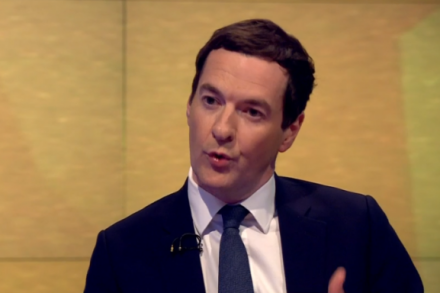
It is, at times, unclear that George Osborne is aware that the under-30s are voting in this EU referendum. When he talks about house prices plummeting post-Brexit, he talks as if this will strike fear into everyone’s hearts. For older people seeking to downsize, this might be true – but for almost everyone else, it’s not. And when I hear the In side arguing that we should all be terrified of Brexit because it will cause house prices to fall, I can’t help but wonder if this is the best single reason to vote ‘out’. For most people my age, one of the worst changes in Britain has been the

Catholic bishops split over Brexit as Archbishop accuses Osborne of ‘ludicrous’ scaremongering

Archbishop Peter Smith, the Catholic Archbishop of Southwark – whose diocese covers all of London south of the Thames – has accused George Osborne of ‘ludicrous’ scaremongering in the EU referendum. The Archbishop, talking to Vatican radio, does not explicitly say that he supports Brexit. His line is that he is ‘undecided how to vote’. But according to my sources, in private he has been telling ‘anyone who cares to listen’ that he favours the Out campaign. ‘It seems that Peter Smith wants to leave the EU – he’s made that very clear,’ a Catholic bishop tells me. Here’s an extract from the Catholic Herald report on Smith’s interview. It’s surprising and refreshing to

The Treasury’s Brexit short-term impacts analysis: A bit high, a lot political

The Treasury’s analysis of the short-term impact of Brexit offers us two scenarios for the two years following the referendum: a base ‘shock’ and a ‘severe shock’ scenario. The base case means 3.6pc less economic growth in the two years following Brexit, with inflation up 2.3 percentage points and house prices down 10pc. A first thing to grasp is the connection between the scenarios in this report and those in the previous Treasury report on the longer-term impact of Brexit. In its long-term impacts, the Treasury had three scenarios, for each of three options it claimed the UK had for its trade arrangements post-Brexit (all of which were very unlikely): an ‘EEA’ option; a ‘Canada’ option

Brexit might cause a short-term shock but it won’t be as bad as the Treasury makes out

There’s already quite a wide consensus around the basic assumption of the Treasury’s latest report that there would be a short-term economic shock from leaving the EU. However, it’s nigh on impossible to credibly foresee the size of this shock. And by going too far on such estimates the Treasury risks undermining the consensus already in its favour. Contrary to what one may be tempted to assume, short-term economic forecasts are often harder to make than longer-term ones. Making reasonable assumptions about how policy choices a few years down the line shift economic growth from a baseline is a slightly easier exercise than trying to predict short-term market movements –

There are Tory modernisers supporting Brexit — just ask Steve Hilton

Steve Hilton coming out so strongly for Brexit is important for two reasons. First, it is a reminder that the idea that, within the Tory party, this referendum is the modernisers versus the right is far too crude. There are Tory modernisers on both sides of this argument. Indeed, given the importance of localism to Tory modernisation and its appreciation that there’s a difference between being pro-big business and pro-market, there are thoroughly modernising reasons for wanting the United Kingdom to leave the European Union. Hilton also details how it was the experience of government that tipped many Tories into backing Brexit. It was the discovery of just how much

Post-referendum, will David Cameron accept that all’s fair in love and war?

This weekend’s public spat between David Cameron and Penny Mordaunt about whether Britain can stop the accession of new countries such as Turkey into the European Union looks like just another row in the referendum campaign. Every day one figure on one side makes a claim that riles the other side, and a war of press releases and broadcast interviews ensues. But this particular row doesn’t just tell us a lot about where the two camps are in the campaign, but also makes a considerable difference both to the campaign and to the aftermath of the vote. Firstly, it is clear that the Tory party is going to take a

David Cameron’s former adviser Steve Hilton backs Brexit

Although David Cameron is keen to suggest of late that the dubious bunch backing Brexit includes Vladimir Putin and Isis, he may have more trouble brushing aside the latest figure to support Leave. The Prime Ministers former director of strategy Steve Hilton has penned an article for the Daily Mail in which he reveals why Britain ‘must’ quit the EU. Hilton — who is one of Cameron’s closest friends — says the UK is ‘literally ungovernable’ as a democracy while it remains in the EU: ‘I believe it is [about] taking back power from arrogant, unaccountable, hubristic elites and putting it where it belongs – in people’s hands.’ Hilton also takes aim at

The Treasury dishes up more Brexit fearmongering. Will it work?

It’s now exactly one month until the EU referendum and the Treasury has marked the moment with another economic warning about the consequences of Brexit. The analysis out today claims that walking away from the European Union would kick-start a year-long recession. Brexit would also lower the country’s economic growth down by 3.6 per cent, according to the analysis. Although George Osborne must be nearing the point of running out of words to describe the economic ramifications of Brexit, in an article in the Daily Telegraph, Osborne and Cameron had this to say: ‘It is clear that there would be an immediate and profound shock to our economy. The analysis

Europhiles shouldn’t be surprised that Cornwall supports Brexit

As a proud Cornishman I was delighted earlier this month to be chatting to a young American fashion designer who excitedly told me about his growing label. ‘We’ve just taken on two students from Foolmoof, that’s how you say it right?’ I think he meant Falmouth whose university – specialising in creative industries – has been one of the recent success stories in Cornwall. I’ve also come across graphics designers for Pixar in the badlands west of Penzance. They have been using the superfast broadband network to pass their animations back and forth with LA. For all its Doc Martin appeal, Cornwall is not a parochial backwater, and thanks to

Even religious polemics can’t inject any life into the Brexit debate

Churches are generally ideal venues for public debates. But there’s a slight chance that a speech about the perils of EU membership will be interrupted by a homeless person doing a pee in the corner. At a debate on Christian responses to the EU at St James the Less church in Pimlico last night, Giles Fraser left off quoting his hero Tony Benn on the evil of unaccountable power in order to do his muscular Christian duty and help eject the man, who spluttered invective as he departed. Did I imagine it or did he shout ‘Fexit Brexit’? A bit earlier, his opponent Ben Ryan had set out an optimistic

Don’t believe the Tory grumbling: HS2 is on the way

There’s a lot of negativity around HS2, and I sniff a Brexit connection. You might think Leave campaigners whose aim is to boost British self-belief would promote the idea that we have a talent for grands projets such as the Olympic Park and Crossrail, rather than a propensity to deliver half what’s promised at double the cost. But there’s also an overlap between Tory MPs opposed to the northbound high-speed rail link, usually because it bisects their constituencies, and Tory MPs opposed to the government on the EU referendum. So I suspect that’s where the trouble lies. The spin is that cabinet secretary Sir Jeremy Heywood is reviewing the project

The bookmakers are giving up on the chances of Brexit

The EU referendum is only weeks away and while the pollsters aren’t offering much certainty about the result, on the betting markets it’s a different story. Bookies have seen a very substantial swing toward Remain over the last few days. The odds on the UK staying in Europe have collapsed from 1/3 last week to 1/5 today. This shows that the chances of Brexit are now at a new low of just 21 per cent compared to the giddy heights of 40 per cent at the end of 2015. On balance, the polls have probably been better for Remain recently, but there’s still a lot of variance, with some surveys still

Barometer | 19 May 2016

Name check 306 business people signed a letter to the Daily Telegraph saying that Britain would be better off outside the EU. Some notable collections of signatures: — 364 economists signed a Times letter about the dangers of monetarism in 1981. — 5,154 physicists signed a paper in Physical Review Letters last year reporting a more accurate recording of the mass of the Higgs boson particle. — 75,000 people signed a petition protesting against the government’s leaflet on why we should vote to stay in the EU. — 540,000 signed a petition demanding a stay of execution for Beau, a Missouri dog accused of killing a duck. — 1m Spaniards

Lies, damned lies and…

A Ryanair plane in a Stansted hangar was not the best backdrop for George Osborne’s claim that the economic argument about the European Union is now over and that his ‘consensus’ has prevailed. In recent years, Ryanair has lost its status as the fastest-growing budget airline in Europe: that honour goes to Norwegian Air, which has thrived outside the EU. And on the day of the Chancellor’s speech, a group of Ryanair passengers had announced their intention to take out a lawsuit against the company for what they see as unfair tricks to disguise the true cost of tickets. The Chancellor does the reverse of Ryanair: he tries to frighten

Letters | 19 May 2016

Republican party schisms Sir: Jacob Heilbrunn astutely analyses the predicament Donald Trump creates for America’s neoconservatives (‘Lumped with Trump’, 14 May). But the ideological schisms within the Republican party are even more profound than he indicates. In fact, Trump not only divides the populist right from movement conservatives — and neoconservatives — based in Washington, DC, he also divides neoconservatives against themselves. William Kristol, the neoconservative kingpin in Washington, has lately found himself under intense attack by David Horowitz, a California-based ex-radical-turned-rightist in the classic neoconservative mould. Horowitz has excoriated Kristol for dividing Republicans and effectively helping Hillary Clinton. Trump, Horowitz argues, is not only obviously better than Clinton on

What’s making Remain campaigners so tetchy?

Like a lot of keen games-players I’m a stickler for the rules. This is not because I’m an especially honourable person; merely a recognition that without a rigorous structure and a sense of fair play, a game can be no fun and winning can afford no satisfaction. I feel much the same way about politics. Take Hilary Benn’s recent contribution to the Brexit debate, wherein he professed to have taken grievous offence at Boris Johnson’s use of the word ‘Hitler’ in an article about Europe. As was perfectly clear from the context, the reference was dropped in lightly and unhysterically in the service of an unexceptionable point. So the game

Nicholas the miraculous

Miracles are not ceased. A few years ago, a kindly educational therapist took pity on John Prescott and set out to devise a way to reconcile the Mouth of the Humber and his native tongue. He came up with Twitter. That explains the restriction to 140 characters, barely room for Lord Prescott to commit more than three brutal assaults on the English language. A hundred and forty was too much. Twitter did not cure John Prescott. But it did gain pace among the young — and, the miracle, with Nicholas Soames. Nick is one of the funniest men of this age. With Falstaff, he could say (he could say a

Don’t rule out a second referendum

As the Queen read out her government’s agenda on Wednesday morning, David Cameron could have been forgiven for thinking about his place in history. What will he be remembered for, other than having held the office? The so-called ‘life chances’ strategy is intended to be a central plank of his legacy. He wants to be able to say that he made Britain more ‘socially just’. Indeed, this is his principal reason for wanting to stay in No. 10 for a few more years. Cameron loyalists hope he’ll be remembered as the leader who made the Tories the natural party of government again. The man who moved them on from Thatcherism