Brexit

George Osborne admits the Treasury is planning for Brexit

The last time George Osborne appeared before the Treasury Committee he had to face questions on his disastrous Budget. So given the low bar, you could be forgiven for thinking that today’s session on EU spending would have been a walk in the park in comparison. However, the Chancellor was put through his paces by the committee — chaired by Andrew Tyrie — as several pro-Brexit MPs, including Jacob Rees Mogg and Steve Baker, took the opportunity to air their grievances with the Remain campaign. It was Osborne’s doomsday Treasury Brexit report — which claimed that British households would be left £4,300 worse off — that gave him the biggest headache.

Britain is selling less to Europe but the EU is still hugely important

Britain’s trade deficit – the gap between what the UK imports and exports – is now at its biggest since the financial crash in 2008. The latest figures out today show that the difference between the two is now £13.3bn for the first four months of 2016. That’s a jump from £12.2bn at the end of 2015. So what do the figures actually mean? City analysts have described the trade deficit as ‘truly horrible’. The British Chambers of Commerce said the gap between imports and exports was ‘unacceptably large’. It’s not only those from the business world having their say on the latest figures though. As ever, these statistics are

IDS’s claim about Germany’s hidden EU renegotiation role is hugely damaging for ‘Remain’

Yesterday, David Cameron was all talk of ensuring peace in our time and preventing world war three by staying in the EU. But today, as the EU debate rumbles on, he’ll have come crashing back to earth after reading the front page of The Sun. The paper quotes Iain Duncan Smith as saying that Germany was secretly in control of David Cameron’s EU renegotiation throughout. The former Work and Pensions secretary, who quit the cabinet in February, is set to add in a speech this morning that: “There was a spare chair for them – called the German Chair. They have had a de facto veto over everything.” IDS goes

Today in audio: Boris vs Dave

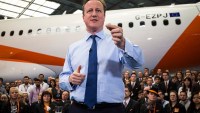
With the May elections over, the EU referendum campaign is now in full swing. David Cameron started the day warning that Brexit could put peace in Europe at risk. In his speech at the British Museum this morning, the PM also asked whether leaving the EU was a risk worth taking. Here’s what he said: Boris hit back by making his case for voting out, saying that negotiating on behalf of the EU is like ‘trying to ride a vast 28-man pantomime horse’: He also sung ‘Ode to Joy’ in German: And Boris even appeared to forget the name of the city which, until a few days ago, he was

Does anybody actually think the EU guarantees ‘peace and stability’?

According to David Cameron this morning, if Britain votes to ‘Leave’ the EU on 23 June, the Germans will invade Belgium, the Russians will invade Crimea (again), and we’ll all have to spend the coming years re-learning the finer details of the Schleswig-Holstein question. The Prime Minister’s latest attempt to warn of apocalypse in the case of Brexit has one huge flaw.  In his latest scare-speech this morning he said: ‘Can we be so sure that peace and stability on our continent are assured beyond any shadow of doubt? Is that a risk worth taking? I would never be so rash as to make that assumption.’ Well nothing is ever

David Cameron is now in full ‘Project Fear’ mode

David Cameron’s speech this morning about the EU referendum will succeed in doing one thing: infuriating the hell out of Eurosceptics. The Prime Minister is set to warn that peace and stability could be at risk if Britain walks away from Europe. He’ll also go on to say that the European Union has brought together countries previously ‘at each others’ throats for decades’. In the Project Fear brand, it’s certainly a classic in the genre. But will it work? One of the interesting aspects of his line of argument is the appeal it is likely to have to younger people. Those under the age of 34 are generally much more

Donald Trump backs Brexit

Donald Trump has waded into the EU referendum debate tonight, saying he thinks that Britain is better off walking away from Europe. It was just a matter of time before Trump had his say on Brexit, as the presumptive Republican nominee has never been shy about giving his opinion on a whole host of matters. But whatever people think about Trump, now that he looks to have the GOP race wrapped up, there’s an argument we should take him seriously. After all, where has laughing at Trump got us? Here’s what he had to say on Fox News: ‘I think the migration has been a horrible thing for Europe, a

Enter Boris, eyes on the prize

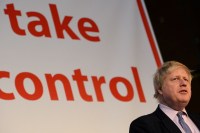
[audioplayer src=”http://feeds.soundcloud.com/stream/262486539-the-spectator-podcast-erdogans-europe.mp3″ title=”James Forsyth, Fraser Nelson and Isabel Hardman discuss Boris” startat=552] Listen [/audioplayer] After an eight-year detour into municipal government, Boris Johnson has now returned to national politics. The former mayor of London will mark this moment by going on the stump for the Leave campaign. He has some catching up to do: while never far from the public eye, he was absent from the Commons for seven years. Even when back in Parliament after the general election, Boris felt he could not take the cabinet job that was offered to him. But his time at City Hall hasn’t dented his ambitions; quite the opposite. He is the bookies’

Let’s renew the EU

From the time of the French revolution, the Catholic Church has always encouraged relationships between nations that draw them together rather than divide them. It is for this reason that the Church has always been broadly supportive of the European Union, although with reservations. There will be many Catholics on both sides of the coming referendum. Many of us have concerns about recent developments in the EU, such as the official removal of the reference to the continent’s Christian history from the European Constitution a few years ago. The more general push towards secularisation troubles us, too. Recent popes have questioned the tendency to regard the goal of the EU

Charles de Gaulle knew it: Britain does not belong in the EU

‘England in effect is insular, she is maritime, she is linked through her interactions, her markets and her supply lines to the most diverse and often the most distant countries; she pursues essentially industrial and commercial activities, and only slight agricultural ones. She has, in all her doings, very marked and very original habits and traditions.’ This classic Eurosceptic statement was made, as Daniel Hannan reminds us in his excellent book Why Vote Leave, by a great European, Charles de Gaulle. He was explaining why France was rejecting our attempt to join the EEC in 1963. The General understood what the European project was, and why Britain was not a

Letters | 28 April 2016

Green reasons to stay in Sir: As Conservatives we are clear that the European Union has been central to improving the quality of the UK’s environment. European policy is not always perfect, but on environmental issues it has allowed us to move forward in leaps and bounds. The wealth of the environment on which our economy depends is not confined to national boundaries, which is why the EU has become such a vital forum for negotiating Britain’s interest in maintaining healthy seas, clean air, climate security and species protection. It is largely thanks to European agreements that we now have sewage-free beaches in Britain. Because of tough European vehicle standards, British car

A right mess | 28 April 2016

[audioplayer src=”http://feeds.soundcloud.com/stream/261189280-the-spectator-podcast-the-wrong-right.mp3″ title=”Freddy Gray and Tom Slater discuss the state of the right” startat=22] Listen [/audioplayer] Is Boris Johnson turning into the thinking man’s Donald Trump? Just like the Donald, he’s got funny hair, charisma, and an appetite for women. He may not be as rich as Trump — although we were all impressed by his latest contribution to the Exchequer — but he makes up for that by having a much bigger vocabulary. He’s also able to get away with saying outrageous things because people think he’s entertaining. And in his efforts to persuade Britain to leave the European Union, Boris seems to be appealing to the same anti-politics

The unlikely oilman

Algy Cluff is the longest-serving oilman in the North Sea. He was one of the first to drill for oil there, in 1972, and at the last government handout of drilling licences, two years ago, there he was again, making a handsome gas discovery. Now 76, he’s also the least likely oilman you can imagine. Tall, rangy, dressed in Savile Row pinstripes; he is no J.R. Ewing. His diffident, patrician voice is so gentle that I have to turn my tape recorder up to transcribe this interview. Cluff’s Who’s Who entry lists membership of 11 clubs. But there is no clubman stuffiness about him. He’s full of wonderful anecdotes, many

Less than Marvellous

Captain America: Civil War is the 897th instalment — or something like it — in the Marvel comic franchise. This time round, the superheroes take sides, with the marketing asking if you’re #TeamCap or #TeamIronMan but not if you’re #TeamNeither, as would be most useful in my case. I swear this is the last Marvel film I will see as I never get anything out of them and whatever I say only sets the fans against me, which is not what you want at my age. I only attended this one because I had read the American critics (and some of the British ones who’d had a heads up). They

Brexit Tories are feeling disrespected. How awful

There are moments when one wonders whether one is seeing and hearing the same things as others. For me such a moment occurred a fortnight ago when reading The Spectator’s weekly column by our political editor, James Forsyth. James is exceptionally well plugged in to the world of Westminster, but — beyond that — a person of cool and sensitive judgment, so I read what he writes with attention. He said this: ‘[The Prime Minister] is campaigning with no thought for the feelings of those in the party who disagree with him. It is one thing for a leader to disagree with close to half of his MPs and most

OECD says Brexit would cut immigration by 84,000 a year

We should assume that today’s OECD report on Brexit was intended to frighten Britain into voting to remain in the EU. Ángel Gurría, its secretary-general, has tried to translate his figures into a blood-curdling soundbite about losing a month’s salary by 2030 (something that could easily be remedied by a tax cut). Its finding is that the trade we’d apparently forfeit would make the UK economy 5pc smaller that it would otherwise be 2030, not quite so bad as the 6pc estimated by the Treasury. And by the OECD’s maths, the “cost” to households is closer to £700 a year than George Osborne’s made-up figure of £4,300 a year. But because the OECD report is

The FT has become the Daily Mail of the Europhile elite

An enjoyable aspect of the EU referendum campaign is the nervous condition of the Financial Times. Unable to maintain its usual pretence at judicious balance under the strain, it has become the Daily Mail of the Europhile global elites, warning of the Seven Plagues which will afflict us if we vote to leave. Rather as the Mail loves the headline beginning ‘Just why…?’, so the FT all-purpose referendum headline begins ‘Fears mount…’ Its star columnists like Philip Stephens and Janan Ganesh pour withering scorn on Eurosceptic ‘nostalgists’ and bigots. Although they — and most of the paper’s writers — are highly intelligent, it does not occur to them to take

Is Brexit to blame for the GDP slowdown?

Britain’s economic growth slowed in the first quarter of this year to 0.4 per cent, down from 0.6 per cent at the end of last year, according to ONS figures out today. What did George Osborne have to say about the slowdown? Predictably enough, he invoked the threat of Brexit and turned the news into a pitch for staying in the EU. The Chancellor said: ‘It’s good news that Britain continues to grow, but there are warnings today that the threat of leaving the EU is weighing on our economy. Investments and building are being delayed and another group of experts, the OECD, confirms British families would be worse off

Watch: Cameron takes a swipe at Farage over his ‘poncey foreign-sounding’ name pronunciation

With little love lost between the Prime Minister and Nigel Farage, today the Ukip leader found himself on the receiving end of David Cameron’s ire during PMQs. When asking Cameron whether the public should listen to Brexit figures like Nigel Farage, Ben Bradshaw pronounced Farage’s name as ‘Farridge’. This delighted Cameron, who proceeded to blast Farage for using the ‘poncey foreign-sounding’ pronunciation. BB: With the United Kingdom facing our most momentous decision in a generation in eight weeks time, does the Prime Minister think it makes more sense for all of us to listen to all of our closest friends and allies around the world, or to a combination of French fascists,