Brexit

Don’t panic! Turkey won’t be joining the EU anytime soon

The Leave campaign sees the EU-Turkey accession talks as a reason to drum up fears about migration. In fact, it is a red herring. True, David Cameron may have previously been one of the most vocal champions for Turkish EU membership, even if during the referendum campaign he said that Turkey will not join ‘until the year 3000’. But despite his apparent contradiction, he is right about one thing: Turkish membership is a long way off. So what do the accession talks look like as they stand? They are made up of 35 chapters in all but so far only one chapter – on science and research co-operation – has

Bank of England Brexit bust-up shows the referendum campaign is getting nastier

With a week to go until the referendum, nerves are running high in both the ‘Leave’ and ‘Remain’ campaigns. This morning, we’ve seen that nervousness manifest itself in a spat between senior Tories and the Treasury and the Bank of England. Iain Duncan Smith, Michael Howard, Lord Lamont and Lord Lawson have signed a letter saying both the BoE and Treasury have been ‘peddling phoney forecasts’ to scare people into backing ‘Remain’. In their letter to the Daily Telegraph, they go on to say that: ‘There has been startling dishonesty in the economic debate, with a woeful failure on the part of the Bank of England, the Treasury, and other

The Spectator podcast: The Spectator backs Brexit

To subscribe to The Spectator’s weekly podcast, for free, visit the iTunes store or click here for our RSS feed. Alternatively, you can follow us on SoundCloud. In the magazine this week, The Spectator has urged its readers to back Brexit. In our leading article, The Spectator says that the European Union is making the people of our continent poorer, and less free and that the EU has started to deform our Government. When the country last held a referendum on Europe, ever newspaper in the country advocated a ‘Yes’ vote, apart from two: the Morning Star and The Spectator. And since then, our leader says this week, the EU

Cameron’s appointment with fear

The best thing that can be said for David Cameron’s current predicament is that he has been here before. His career has been punctuated by moments when the polls and the pundits have said he was done for. In 2007, with the new Prime Minister Gordon Brown enjoying a honey-moon and considering a snap election, this magazine pictured him on the cover with a noose and the headline ‘Get out of this, Dave’. He did. At times, even he has thought his leadership was over. On election day last year, he spent the early evening rehearsing his resignation speech to his closest aides. Hours later, he was hailing the ‘sweetest

Out – and into the world

  The Spectator has a long record of being isolated, but right. We supported the north against the slave-owning south in the American civil war at a time when news-papers (and politicians) could not see past corporate interests. We argued for the decriminalisation of homosexuality a decade before it happened, and were denounced as the ‘bugger’s bugle’ for our troubles. We alone supported Margaret Thatcher when she first stood for the Tory leadership. And when Britain last held a referendum on Europe, every newspaper in the land advocated a ‘yes’ vote. Only two national titles backed what is now called Brexit: the Morning Star and The Spectator. Our concern then

As my pen hovers over the ballot paper, I ask: am I a roundhead or a cavalier?

My pen hovers — but refuses to touch the postal ballot paper. I pour a drink (I won’t say whether claret, schnapps or English ale) and break off to watch Versailles, with its parade of lecherous continental backstabbers. The blood stirs, but still I cannot choose. So I defer the moment of decision, Remain or Leave, until after a short trip to France… Middle-aged match Meanwhile, business as usual. Microsoft is spending $26 billion to acquire LinkedIn, the social network for job-seekers. That looks a crazy price for a venture which lost $166 million last year on revenues of $2.9 billion and has never been regarded as cool. But what

I’ve seen the future – and it’s beautiful

 Berne, Switzerland Before we vote Brexit I thought I’d pop over to Switzerland — courtesy of Die Weltwoche, the nearest local equivalent to The Spectator — to see how life will be once we escape the EU. Can confirm: it’s going to be great. We’ll be richer, freer and the views are fantastic: lakes and mountains so stupidly gorgeous that each time you look at them you think: ‘This is ridiculous. Nowhere could possibly be this ludicrously pretty.’ Then you go under a tunnel to the next valley where it’s just as lovely. It’s like gorging on a giant bar of hazelnut Lindt. And — in their understated Swiss way

The day that Brexit camped in my kitchen

On Thursday last week, as the baby and I were moving in our usual slow circles around the house, from changing station to feeding station to the place of dreaded midday nap, my husband, Dom, called to say he and all his colleagues were coming over. Dom is employed by Vote Leave, the group campaigning for us to get out of the European Union. He’d been hard at work, he said, sharing his concerns about Turkey with the media, when water had begun to gush from the ceiling. Was this a desperate move by No. 10, intent on sabotage? Nope, said Dom, but we can’t stay here so I’ve invited

Whitto reveals how he got his black-eye

Aside from the EU debate, it’s John Whittingdale who has become the talk of the Commons this week thanks to the black-eye he’s been sporting. While there has been much speculation as to how he came to get the bruise, his aides have insisted that it was simply won through an altercation with a lamp post. Tonight at the UK Music summer party, the Culture Secretary’s colleague Nigel Adams — chair of the All Party Parliamentary Group for Music — appeared to hint at another cause. ‘Let’s welcome our fantastic secretary of state, who you will see got on the wrong side of an argument with a remain-er in the last

Coffee House shots: Osborne’s Brexit budget

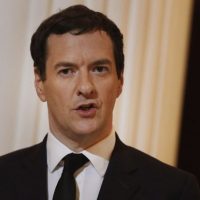
George Osborne has angered Tory MPs today by suggesting a vote to leave the European Union could trigger a series of tax rises. 57 Conservative MPs have signed a letter saying that they would not support such a motion in Parliament in a move which left Osborne flailing during a tetchy interview on the Today programme this morning. So why did the Chancellor run the risk of winding up those on the Tory backbenches? And will it do anything to scare people into backing ‘Remain’? On today’s Coffee House Shots podcast, Isabel Hardman joins Fraser Nelson and James Forsyth, who says: ‘I think the aim of this was to shift

PMQs sketch: What a strange farewell

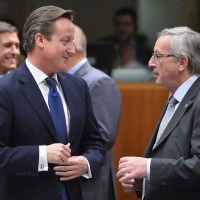
What a strange farewell. The slickest, sparkiest and most brutal street-fighter the Tory party has produced in a generation found himself agreeing with his worst enemies today. ‘That says something,’ shouted David Cameron (who remains prime minister for the next week or so). ‘We have huge disagreements,’ he explained. And yet despite the fault-lines his Remain campaign enjoys the support of nearly the entire opposition: the Greens, Labour, the Lib Dems, the Northern Ireland parties and Cameron’s bete noire, the SNP. ‘When we all agree,’ he finger-wagged, ‘that really says something.’ Absolutely. It says they’re all deluded. Does poor Cam know he’s finished? At times he seemed to sense it.

Out, and into the world — The Spectator backs Brexit

  The Spectator has a long record of being isolated, but right. We supported the north against the slave-owning south in the American civil war at a time when newspapers (and politicians) could not see past corporate interests. We argued for the decriminalisation of homosexuality a decade before it happened, and were denounced as the ‘bugger’s bugle’ for our troubles. We alone supported Margaret Thatcher when she first stood for the Tory leadership. And when Britain last held a referendum on Europe, every newspaper in the land advocated a ‘yes’ vote. Only two national titles backed what is now called Brexit: the Morning Star and The Spectator. Our concern then

Lord Falconer: vote remain to secure Britain’s destiny

This is the transcript of a speech delivered by Lord Falconer during the Spectator’s second Brexit debate. Full coverage of the event can be found here.  I so agree with Daniel Hannan that we are at a fork in the road. I think the public realise that as well, that the interest in the European Union referendum has been matched by the interest in the Scottish referendum. People feel that there is a really important decision to be made and it is to be made by the British people. I can only tell you why I think we should Remain. It is probably one of the most significant arguments that needs to

Daniel Hannan: Brexit will be a gentle process

This is the transcript of speech delivered by Daniel Hannan during the Spectator’s second Brexit debate. Full coverage of the event can be found here.  I heard today what must be reckoned to be the single worst argument that we’ve had from any major figure on either side of this campaign. It came from Ed Balls. What he said is, we should vote to remain in and then reform it. Why has nobody thought of that before, what a good idea! Think of the story of our involvement with the European Union these past four decades. If you have been listening for at least five minutes to politicians of any

Hapless Remain chief makes a comeback… to attend fashion bash

With the Remain camp now seen to be lagging behind Leave both in terms of momentum and polling, it’s a case of all hands on deck with the In crowd. However, as Mr S has previously noted, Britain Stronger in Europe’s chairman Stuart Rose has been nowhere to be seen of late. After a number of embarrassing slips — from claiming wages would rise if Britain leaves the EU to forgetting the name of his own group — Rose has retreated from the limelight. However as polling day nears, Remain-ers can take heart that he has made a return to the spotlight. Only rather than getting out on the campaign trail, Rose instead decided to

Osborne’s dead cat Budget

The In campaign believe that they win when the referendum debate is focused on the economy. So, today George Osborne and Alistair Darling are outlining a deliberately provocative post-Brexit emergency Budget. It is stuffed full of horrors: a 2p rise in the basic rate of income tax, a 3p rise in the higher rate and cuts to the NHS budget to name but a few. The plan is clear, to get the economy and the supposed effects on the public finances of Brexit to the top of the agenda. Now, as Fraser and Jonathan Portes have pointed out these aren’t the kind of measures that a government would actually enact

Vote Leave’s action plan shows why Brexit wouldn’t be a ‘leap in the dark’

What do David Cameron and the likes of Ed Balls and Harriet Harman have in common? The answer: they’ve all described Brexit as a ‘leap in the dark’. And they’re not alone in saying those campaigning for Britain to leave the EU have no plan for what happens next. We’ve heard the ‘leap in the dark’ phrase repeatedly over the last few months. But today Vote Leave have spelled out their action plan for a scenario that looks increasingly likely, at least if the polls are to be believed: what happens after a vote for Brexit on June 23rd? The ‘Leave’ campaign say that it would ‘make no sense to

George Osborne threatens to punish voters with tax rises if they defy him on Brexit

The polls are tight, so George Osborne has a cunning plan. He’ll present a “Brexit budget” where he will spell out how he’ll punish voters if they vote to leave the European Union. He’ll be forced to tear up his election pledge not to raise taxes: the voters will have provoked him, you see. Pushed him too far.  He has all kind of sums in mind, that they won’t like one bit, starting with an extra 2p on the basic rate of income tax. Fuel duty will rise. The higher rate of income tax will go up 3p. Another 5 per cent on alcohol and fuel duties. Then £2 billion off