Brexit

Low life | 9 June 2016

Showered and shaved and wearing a stiff new Paul Smith candy-stripe shirt, I took an Uber to the party. I love London and it was grand to be back and to be driven through the sunny streets by Yusef, one of the many new arrivals adding vibrancy, energy and diversity to our great city. Diversity is strength! Diversity is our greatest strength! (I used to believe that unity is strength, but I have lately recanted of this foolish and evil idea.) ‘Will you be voting in or out, Yusef?’ I said in a comradely manner, as one perplexed citizen to another. ‘I think stay in, sir,’ he said. ‘Better for

The leap

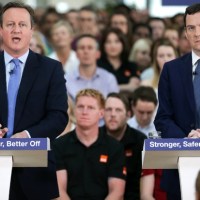
This week the Prime Minister devoted a speech to what he regarded as six lies being told by his opponents in the EU referendum campaign. He later confessed that the idea for the speech had come to him while watching the news at 9 p.m. the previous evening. It would have been better if he had contented himself with shouting at the television, rather than adding yet more rancour to what has become a slanging match. Most voters tune into an election campaign only in its final few weeks; those who do so now will find nothing but hysteria, hyperventilation and obloquy. Where, it is often asked, are the facts?

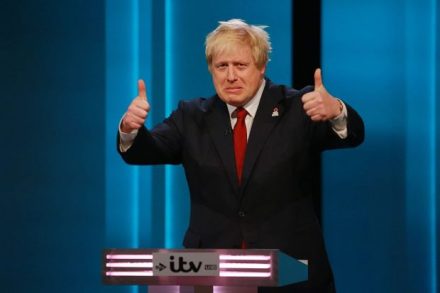
EU referendum TV debate – Leave and Remain face off in ITV showdown

Fraser Nelson, James Forsyth and Isabel Hardman review the ITV debate: Welcome to Coffee House’s coverage of ITV’s EU referendum debate. Boris Johnson, Andrea Leadsom and Gisela Stewart made the case for Brexit, and Nicola Sturgeon, Angela Eagle and Amber Rudd argued for Britain to stay in the EU. Here’s our commentary from the debate, as well as all the audio and video highlights. Here’s Isabel Hardman’s summary of the various speeches: OUT: Boris Johnson: 7/10 – stayed calm under non stop personal onslaught. Still didn’t offer much of a detailed sense of what Brexit would look like. Gisela Stuart: 5/10 – struggled particularly on women’s rights and lacked oomph but helped

Is the looming prospect of Brexit dampening trade with other EU countries?

Is the looming prospect of Brexit dampening trade with other EU countries? Not if the latest trade statistics are anything to go on. Figures out today – the final set to be published before the referendum – show that imports to the UK from other EU countries are at a record high: rising by £1bn between March and April this year. Britain’s exports to other EU countries also rose in the same period – jumping by £0.9bn, with oil and chemicals making up a large chunk of this number (£0.5bn). These figures can be interpreted in two ways and as with many things to do with the EU referendum, both

The Spectator podcast: Brexit – the first 100 days

To subscribe to The Spectator’s weekly podcast, for free, visit the iTunes store or click here for our RSS feed. Alternatively, you can follow us on SoundCloud. The EU referendum on June 23rd looks set to be one of the most important political moments in a generation. But if Britain does vote out, what would the next 100 days actually be like? The Prime Minister has predicted disastrous consequences, saying Brexit would plant a bomb under the economy. And we’ve been warned that house prices will crash and everything from air fares to ice cream will cost more. So, would Cameron step down straight away and watch the pound tumble?

The six best reasons to vote Leave

For me, as for so many people, it’s a heart versus head issue. I’m emotionally drawn to Europe. I speak French and Spanish and have lived and worked all over the Continent. I’ve made many friends among the Brussels functionaries. Lots of them, naturally, are committed Euro-federalists. Yet they are also decent neighbours, loyal companions and generous hosts. I feel twinges of unease about disappointing them, especially the anglophiles. But, in the end, the head must rule the heart. Remainers often tell us to think of our children, and I’m doing precisely that. I am thinking, not just about the EU as it is now, but about the diminished role

The six best reasons to vote Remain

Like almost everyone, I’ve piled angrily into this fight. But as the debate nears resolution I feel ashamed of all my furious certainties. In the end, none of us knows, and we shouldn’t pretend to. So I’ll try now to express more temperately six thoughts that persist as the early rage subsides. From the first three you’ll see that I’m beginning to understand that for many the EU is now a whipping boy. ‘Europe’ has become for many what in other ages Rome, or communist plots, or America, or international Jewry, or big business represented: a conspiracy against us, an explanation. In the words of Cavafy’s poem ‘Waiting for the

Brexit: the first 100 days

The Spectator Podcast Christopher Meyer, James Forsyth and Isabel Hardman discuss the first 100 days of Brexit At 5.15 a.m. on Friday 24 June 2016, David Cameron calls Michael Gove and concedes defeat in the EU referendum. The conversation is brief. With nearly all the results in, it is clear that Remain cannot overturn Leave’s advantage. Downing Street announces that Cameron will address the country before the markets open. Up to now, this scenario has just been a worst nightmare for the Remain campaign and the wildest dream of the Brexiteers. Even now, the political class is almost unanimous that ‘in’ will win. But there is little psephological evidence for

Transcript: George Osborne vs Andrew Neil on Brexit

  Coffee House Shots James Forsyth and Isabel Hardman discuss George Osborne’s performance Abridged transcript of George Osborne’s interview with Andrew Neil. AN: Now you claim the European Union could cause armed conflict if we leave, could put a bomb under our economy if we leave – the Prime Minister’s words: hurt pensioners, collapse house prices. Why are you risking all that with a referendum? GO: Well, I don’t think it is ever a risk in a democracy to ask the people. And all my lifetime this issue of Britain’s membership of the European Union has hung over our economy and our security and I think it’s right that the

PMQs Sketch: Cameron was both the fibber and the whistle-blower

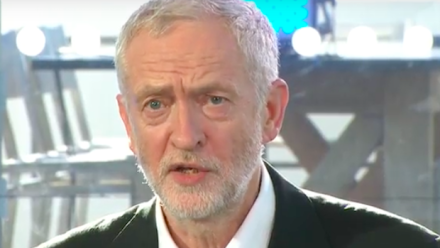
Is Corbo working for the Tories? The Labour leader was such a pushover today that Cameron turned what should have been a televised monstering into a party political broadcast on behalf of left-wing Conservatism. Corbyn raised tax-avoidance, the minimum wage, and short-term contracts — three of Cameron’s strongest issues. The PM boasted that prosecutions of minimum wage defaulters have leaped fifteen-fold since 2010. On tax evasion, he trilled, ‘I made it the centrepiece of my G8’. And on short-term contracts he reminded the droopy-shouldered Mr Corbyn that exclusivity clauses had been outlawed under the Coalition. Is Corbyn seriously trying to ambush the PM with arguments that were settled a parliament-and-a-half ago?

Revealed: Rodney Leach’s verdict on Brexit

One of the most influential and learned figures in the British European debate is Rodney Leach. In the 1990s, he helped lead those of his fellow businessmen who became convinced that the abolition of the pound would be a disaster. He was a moving spirit in Business for Sterling and then in the ‘No’ campaign against the euro. This did much to persuade Gordon Brown, as Chancellor, to ditch euro entry plans in 2004. The following year, Lord Leach set up Open Europe, and continues as its chairman to this day. It is the most trusted think tank for research and debate on all EU questions, and is incredibly useful

Why Brexit wouldn’t leave voters out of pocket

The Treasury says that the cost of the UK leaving the EU would be £4,300 per household – but compared with what? We’re not told. As a cross-bencher, I naturally take very seriously the task of checking and challenging the work of the government so I put down two Parliamentary questions which eventually elicited the response that: ‘HM Treasury did not produce a forecast of how big the economy would be in 15 years’ time….’ Really? A whole report about the impact of Brexit by the year 2030, taking in hundreds of different factors – but no estimate about how big the economy would be by then? Why on earth not? The

How the papers reacted: Farage ‘destroyed’ as Cameron is ‘taken to task’ during live EU showdown

David Cameron and Nigel Farage both avoided making any disastrous blunders during last night’s TV showdown and for that reason alone they’ll be pleased with their performances. Those in the ‘Leave’ camp especially were concerned about what Farage might do or say when he took to the stage. On the basis of last night’s showing, however, they need not have worried too much (albeit for the moment he told a woman watching to calm down). But as with last week’s EU events involving the Prime Minister and Michael Gove, much of the press coverage doesn’t focus on the two politicians who took the stage. Instead, it’s those in the audience

EU referendum TV debate – David Cameron vs Nigel Farage

Welcome to Coffee House’s coverage of ITV’s EU referendum debate. David Cameron and Nigel Farage faced public questions on the EU referendum. Here’s our commentary, as well as audio and video highlights, from the discussion.  PODCAST: Listen to Fraser Nelson, James Forsyth and Isabel Hardman give their verdict on Cameron vs Farage: DAVID CAMERON:   James Forsyth David Cameron looked pretty happy at the end of that. He got his choice of opponent in this debate and did everything he could to take advantage of that, mentioning Farage at every opportunity. Cameron also benefited from going second, another thing which he got his way on, as he could rebut Farage’s points without any

William Astor: Why voting Leave won’t mean we leave the EU

It is difficult not to be Eurosceptic. The euro is in trouble, Greece has been bankrupted by Angela Merkel’s fiscal rules, and the Schengen agreement on open borders is collapsing as economic migration seems impossible to stop. Genuine refugees are sadly lost in the human tide of misery landing on the shores of Greece and Italy. And the democratic deficit which allows the European Union to be so unaccountable is leading to the rise of extreme nationalist political parties all over Europe. The result – Bulgaria has a lamentable justice system, Poland has introduced illiberal media laws and Hungary’s constitution has been hijacked. The EU is in danger of collapse unless it undertakes serious

The Andrew Neil Interviews: Hilary Benn dragged out Remain’s immigration agony

The first of the BBC’s series of prime-time EU referendum events took place this evening, with Andrew Neil interviewing Hilary Benn. The programme highlighted both the uneasy relationship between Benn and his leader Jeremy Corbyn and the Remain campaign’s difficulty in dealing with the immigration issue. Andrew Neil began by putting to Hilary Benn a very Eurosceptic quote from Jeremy Corbyn about the EU from the Maastricht debate of the 1990s and asking Benn what Corbyn got wrong. To which Benn replied, rather uncomfortably, that the ‘Jeremy of today’ supports Britain staying in the EU. The Benn / Corbyn tensions were a feature of the interview as the shadow foreign

Today in audio: ‘Remain’ fights back as PM warns of Brexit ‘bomb’

Momentum in the ‘Leave’ campaign seems to be growing after Brexit took the lead in two polls out today. There are, however, still several weeks until the actual day of the EU referendum and the gap between the two sides remains marginal (four per cent). But ‘Remain’ still seem shaken by these polls. Here’s how they spent the day fighting back: David Cameron said Brexit would put a bomb under Britain’s economy, going on to say that ‘the worst thing is, we would have lit the fuse ourselves’: The PM was backed up Lib Dem leader Tim Farron. In a joint event, Farron said the argument for ‘Leave’ was built

Vote Leave has brought out its Turkish weapon

Vote Leave feel that they now have the momentum in this campaign. The three polls out today all have them ahead. Inside the Leave camp, they think that it is their focus on the possibility of Turkey becoming an EU member that is, in part, responsible for this apparent shift in their favour. So, in their official referendum address, which will go to 40 million people, Vote Leave is going big on the question of Turkish accession. The leaflet — which you can see here — has a map on the back showing how if Turkey joins, the EU would border both Syria and Iraq. Now, I can already hear