Brexit

Diary – 30 June 2016

Referendum day is as nondescript and wet as the day before, happily spent in Cambridge at my son’s Leo’s graduation. Even here the coming vote intrudes. Some students say that the master of Trinity College has come out for Brexit. Leo’s boyfriend Eddie, newly graduated in German studies and about to head to a job in Berlin, worries about job prospects. Our lunch table is shared with genial and smiling but very divided family. The polling station is equally lively, a place for chat with neighbours. The working day is uneventful. Dinner with friends in the evening, asleep before the first results. I wake in the middle of the night, switch on the television, and see it’s going the Brexit way. On Friday I’m on the Tube early. The mood is horribly subdued.

The Spectator’s Notes | 30 June 2016

It sounds logical that Vote Leave should now disband, since the people have obligingly voted Leave, but is it wise? Who else can try to ensure that the Leave cause is not forgotten in internal Tory struggles, or in a war between Ukip and the rest? If it is right — which I think it is — that the Leave vote is the biggest shock ever administered to the main parties and the ruling elites since the collapse of the Munich agreement, then it follows that those parties and those elites will try to reverse or at least neuter the decision. There needs to be an organised resistance to them, run by people who know what they are talking about. I know that Dominic Cummings is longing to return to the wife and new-born baby whom he has hardly seen for eight weeks, but I fear that duty calls.

High life | 30 June 2016

The two most beautiful words in the history of the world, in any language, are ‘Molon labe’, the accent on the second syllable of both words, the ‘b’ pronounced ‘v’ in the second. These two little words were the laconic answer of King Leonidas of Sparta to the offer made by the great Persian king Xerxes of not only safe passage, if the Greeks laid down their arms, but also a settlement of lands of better quality than any they currently possessed. You know what I’m talking about. The Hot Gates, or Thermopylae in Greek. The year is 480 BC, the month is August, and the Persians number more than 1,250,000 fighters, accompanied by 1,800 triremes in support.

Low life | 30 June 2016

On referendum day, my mother leaned on my arm for support and we walked slowly and carefully up the steps of the village hall, wondering if this was to be the last time either or both of us would be voting in a national plebiscite. Here again was the paper ‘Polling Station’ poster pinned to a five-bar gate. Here again were the weeds flourishing between the paving slabs in the forecourt, and the plaque on the wall commemorating the opening of the village hall by some local mauve-faced grandee in 1952. Here again were the handrails showing signs of rust and the two sets of institutional double doors reminding me of school.

Long life | 30 June 2016

The Brexit vote has thrust this country into chaos. It has left it with neither a government nor an opposition and no clear purpose in the world. And if our country has been freed from the control of interfering continental bureaucrats, as the Brexiteers wish, the likely price of this achievement is the United Kingdom’s own tragic dismemberment. We also face years of wrangling negotiation and of endless parliamentary work breaking our legal ties with the European Union. Soon, I suppose, we will all have to be issued with freshly designed passports and driving licences. Can it all really be worth it? It can be said, however, that Britain hasn’t made such an impression on the world since the second world war.

Labour: my part in its downfall

A few weeks ago, I took part in a debate at the Cambridge Union about the future of the Labour party. I argued that a combination of factors, such as the decline of Labour’s working-class support, the election of Jeremy Corbyn and the party’s near-universal backing for the EU, meant that Labour would struggle to survive in its present form. But I thought the crisis point would come after the next general election, not after the referendum. It didn’t occur to me that the party would be in its death throes by the end of the month. I suppose I have to accept a small amount of responsibility for this.

The Spectator podcast: The Tory leadership contest turns nasty

To subscribe to The Spectator’s weekly podcast, for free, visit the iTunes store or click here for our RSS feed. Alternatively, you can follow us on SoundCloud. A week after Britain backed Brexit, politics shows no sign of slowing down. David Cameron has resigned, Michael Gove has pulled out of Boris Johnson's leadership campaign before launching his own. And Boris has decided not to run in the contest. We now have a final slate of five candidates vying for the top job. In his Spectator cover piece this week, James Forsyth says the Tory party is in a 'deeply emotional state'. But he also points out that the leadership candidates who have emerged 'seem strangely united in their vision for post-Brexit Britain'.

A summer evening with Cameron

Journalists are chronic exaggerators. Strong words are always being thrown away on trivial events. ‘Whitehall was shocked last night as a bitter new row broke out…’ Translation into truth-speak: ‘There was a certain amount of interest in some quarters of Whitehall yesterday as an exchange of memoranda between the department of string and the ministry of candle-ends revealed…’ Now we truly are in shock and bitterness. Nation divided, party divided, Union in peril, City under threat, entire economy under threat. Europe weakened, the West weakened: Putin delighted, Trump delighted. A great nation has turned itself into a music-hall act for the gratification of domestic and global cretinism.

Sturgeon’s bluff

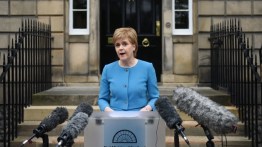
It ought not to be a surprise that Alex Salmond, Scotland’s former First Minister, has declared that the vote to leave the European Union is the trigger for a second referendum on Scottish independence. Salmond thinks everything is an excuse for another go. If a new Bay City Rollers album suffered poor reviews south of the border, or an English football pundit failed to declare Archie Gemmill’s wonder goal for Scotland against Holland in the 1978 world cup the best ever, Salmond would be right there on the UK’s television screens, chortling at the brilliance of his own wit, before intoning gravely that this insult is surely the final straw for the United Kingdom. Salmond has been demanding a second Scottish referendum almost from the moment he lost the last one.

La bomba Britannica

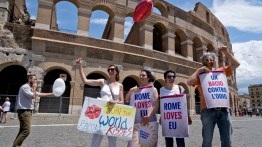
In Italy, media coverage of the triumph of Brexit has been wall-to-wall as Italians worry about the collateral damage and wonder if they too dare… So far La bomba Britannica has hit the Milan stock market much harder than the London one. On Friday, Milan fell by 12 per cent against the FTSE-100’s 3.5 per cent. Italy’s banks — too numerous, too small, undercapitalised and saddled with alarming levels of toxic debt — took the biggest hit. New eurozone rules that ban government bailouts for big depositors have turned them into sitting ducks. Shares in Monte Paschi di Siena (bailed out once already in 2013 by Italy’s central bank) fell by more than 13 per cent. In the past six months, Italy’s banks have lost 56 per cent of their share value.

Three great myths of the sulking Remainers

I think my favourite moment of the referendum campaign was John Major’s intervention, a couple of weeks before polling day. In that immediately recognisable tone of condescension tinged with snippy petulance, which we all remember and love so well from the time of his magnificent stewardship of this country, he said that people who didn’t want some degree of pooled sovereignty should go and live in North Korea, oh yes. No, John, that’s where you should go. I’m sure you can persuade the fat idiot who runs the place that his people need and deserve a motorway cones hotline, even if there are no cars on the roads. It’s time for a duck shoot.

Project Hope

Boris Johnson famously said that Winston Churchill would have voted for Brexit. The wartime leader’s grandson — staunch Remainer and Tory grandee Nicholas Soames — dismissed such claims as ‘appalling’ and ‘totally wrong’. This bad-tempered referendum rift between two traditionalist, Old Etonian Conservatives symbolises, somewhat incongruously perhaps, the broader state of the nation. Deep and traumatic divisions have been drawn between friends and families everywhere — and, of course, within political parties. David Cameron’s dignified resignation speech has quickly given way to a grim determination to ‘Stop Boris’ from taking the Conservative crown and the Premiership.

Don’t gloat – this is Brexiteers’ one big chance

‘Believe me, nothing except a battle lost can be half so melancholy as a battle won.’ I think this is how quite a few of us are feeling right now, we Brexiteers. We’re over the initial giddy disbelief, the euphoric rush of ‘My God, we actually did it!’ and heading towards the Wednesday Blues stage of our trip. Why, after all that agonising and hard work, does victory taste so bitter? Well I know that in my case it has nothing to do with buyer’s remorse. I’m still very proud of what we achieved; prouder yet of the overwhelming outbreak of common sense I witnessed last week in so many of my fellow countrymen and -women.

Not thick or racist: just poor

The most striking thing about Britain’s break with the EU is this: it’s the poor wot done it. Council-estate dwellers, Sun readers, people who didn’t get good GCSE results (which is primarily an indicator of class, not stupidity): they rose up, they tramped to the polling station, and they said no to the EU. It was like a second peasants’ revolt, though no pitchforks this time. The statistics are extraordinary. The well-to-do voted Remain, the down-at-heel demanded to Leave. The Brexiteer/Remainer divide splits almost perfectly, and beautifully, along class lines. Of local authorities that have a high number of manufacturing jobs, a whopping 86 per cent voted Leave. Of those bits of Britain with low manufacturing, only 42 per cent did so.

Our antidote to Trump

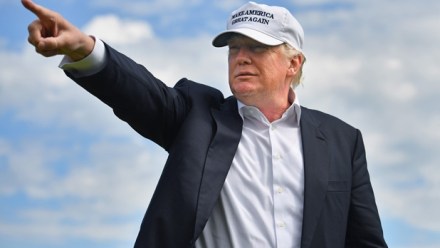
Is Donald Trump an idiot or a genius or a mad idiot genius? He seems driven by some demented force that even he doesn’t understand. What else made him come to Scotland on Friday last week? The ostensible reason, and probably the motive in Trump’s head, was that he wanted to reopen one of his golf courses. That’s weird enough in itself, given that he is the Republican Party’s presumptive nominee, and in a few months could be leader of the free world. What’s he doing still jetting about promoting his businesses? What’s even weirder is that The Donald landed on Brexit day, of all days.

Sarah Vine sends Tory leadership email to a member of the public

Oh dear. This morning Sarah Vine surprised Daily Mail readers after she declared in her column that both she and her husband Michael Gove had been 'charged with implementing the instructions of 17 million people' following the Leave vote. While Vine's central role in the Brexit negotiations prompted laughter in some quarters, it now transpires that she has been taking on a very hands-on role indeed. Sky News have been passed an email from Vine setting out the Justice Secretary's leadership plotting after she accidentally cc'ed in a member of public. The email -- sent yesterday -- raises some awkward questions for the pair.

It’s time for George Osborne to go – and go now

This is an extract from Charles Moore's Notes in the new issue of The Spectator, out tomorrow. George Osborne says he can stay in the government in some capacity (‘a decision for the next prime minister’). Monday’s Financial Times reported ‘Friends say a move to the Foreign Office would be the only other job that would appeal.’ No doubt they are right, but have Mr Osborne and his friends not noticed that what ‘appeals’ to him has nothing whatever to do with what the country needs? Unlike David Cameron, who said immediately and firmly that he will go, the Chancellor does not seem to understand that he has got it all wrong. His sense of entitlement is completely unfounded.

MPs gave a pantomime response to Ukip at today’s PMQs

PMQs was always going to be an odd event today. David Cameron is going as Prime Minister and Jeremy Corbyn is trying to survive wave after wave of resignations from his front bench. When Corbyn rose to his feet, there was almost complete silence from the Labour benches—there was the odd chuckle from the Tory one. The first few exchanges were relatively flat. But then Cameron was clearly riled by Corbyn suggesting that the referendum had been lost because voters didn’t think the status quo was working for them. Cameron swiped back that if the EU referendum was Corbyn putting his back into something, as the Labour leader had claimed, then he ‘would hate to see him when he’s not trying.’ But this was just the warm up.