Brexit

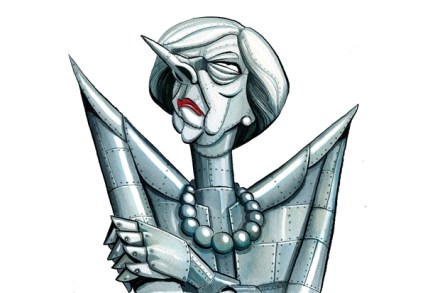
Theresa May’s love of class politics shows she’s no heir to Blair

From our UK edition

One of the professional drawbacks of coming from Scotland and then moving to London is that I don’t really know an awful lot about England. True, I spent a few years in East Anglia on my way south, but it was a particular part of East Anglia that possibly has rather more dreaming Gothic spires, rusted bicycles and robotics labs than the norm, so I’m not sure it was wholly representative. Still, I know the cities. I have spent enough time in Birmingham, Manchester, Newcastle, Nottingham and Sheffield, say, to know that they are not so terribly different from Glasgow, Aberdeen, Inverness or even the bits of Edinburgh without the cobbles.

Theresa May’s ‘Great Repeal Bill’ is about continuity, not change

From our UK edition

Six years ago, Matthew Parris suggested in The Spectator that David Cameron’s first act of parliament should be the Blanket Repeal of Legislation (Failure of New Labour, 1997-2010) Bill. That would have been a repeal bill worthy of the name. Theresa May’s proposed 'Great Repeal Bill' is not. Brexit we know about: that decision was taken on 23 June. But beyond Brexit, the Bill won't repeal anything. On the contrary, it will 'convert existing EU law into domestic law' so it is about continuity, rather than annulment. It should really be called the Great EU Regulation Continuity Bill. Nothing wrong in that; it's necessary legislation. But why spin it as radical change?

May will have to say more on what Brexit means — and soon

From our UK edition

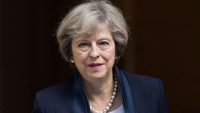
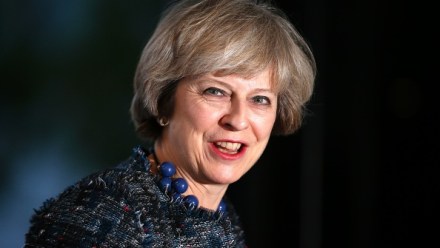
Theresa May will receive a rapturous reception from Tory activists tomorrow. She is not just their new leader, but—as I say in The Sun today—someone they see as one of their own. She joined the party as a teenager, met her husband at a Tory disco and still goes out canvassing most weekends. She’s also much closer to the activists in age than Cameron was when he became leader: she turns 60 today, Cameron was 39 when he became party leader. But May should enjoy the applause on Sunday because her job is about to get harder. She is taking the unusual step of speaking on the opening day of conference to try and get Brexit out of the way.

The Ryder Cup is Europe’s great sports project – and it’s feeling the friction

From our UK edition

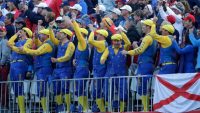
Golf isn’t the biggest thing in Minnesota right now – that privilege belongs to the knife-edge presidential race – but for this weekend, at least, it will be a close second. The Hazeltine National is playing host to the 2016 Ryder Cup and while the American fans are busy preparing their ballot papers for Hillary Clinton, the European team will be convening for the first time since Brexit. The Ryder Cup is the only major sporting event that involves Europe playing as a team, as they take on the United States in a series of golfing challenges. If the event ought to have more symbolic resonance this year, there has been surprisingly little discussion on it. The European team, led by Northern Ireland’s Darren Clarke, are getting on with business.

Meet the German business giant who is excited about Brexit

From our UK edition

Mathias Döpfner, the extremely tall, extremely intelligent head of Axel Springer, is unusual in the generally conformist German business elite because he is not an unqualified believer in the German economic model. I have known him slightly for about 20 years and have always been interested by his questing, speculative mind. We have had conversations about the freer, Anglosphere model of economic life which he admires. Although he is not anti-EU — that is still almost against the law in Germany — he is sceptical of its direction. Now he has blasphemed in the EU’s main church in Britain — the Financial Times — by telling the paper that within three to five years he would expect Britain, as a result of Brexit, to be better off than its former EU partners.

What is Theresa May’s greatest weakness?

From our UK edition

What is Theresa May’s greatest weakness as she goes into conference season? The Prime Minister had such a good start to the job that it’s easy to forget that she has the same problems that David Cameron did in terms of parliamentary arithmetic and fractures in her party over Europe. For Cameron, the parliamentary arithmetic was most difficult because there was a hardened core of eurosceptics who distrusted him, and because he and George Osborne had a habit of trying to sneak half-baked policies such as huge cuts to tax credits past MPs and hope that they wouldn’t notice (which they nearly didn’t).

Arise, Sir Snob Geldof

From our UK edition

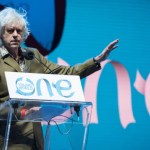
Brexit, they say, has emboldened the hateful. It has given people permission to spout their prejudices, to pollute public life with their weird, rash dislike of anyone who is different to them. And it’s true, Brexit has done this. Only not in the way they think. The most visible hatred in the three months since the EU referendum has been of the Remain variety. It has been demosphobia, a borderline Victorian agitation with the pig-ignorant pleb who is madly trusted with making big political decisions about things like the EU. The hate that’s really been emboldened by Brexit is that old, historic disdain for ordinary people and their allegedly irrational antics. Since Brexit they’ve been coming out of the woodwork, these emboldened elitists. Consider Bob Geldof.

Theresa May’s Brexit silence isn’t going down well

From our UK edition

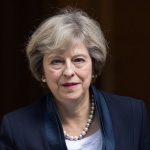
Theresa May has said she won’t be providing a ‘running commentary’ on Brexit. That refusal, the Prime Minister insisted, was to ensure the Government did not reveal its 'hand prematurely’ to other European countries in its negotiations. But how is May’s Brexit reticence going down closer to home? Not well, it seems: only one in six people think the Prime Minister is doing a good job in the early stages of negotiations. While half of voters think May is doing badly. May’s reputation is particularly miserable among ‘Remain’ voters: just one in ten thinking she is doing a good job so far. You might say that none of this is much of a surprise.

Diary – 29 September 2016

From our UK edition

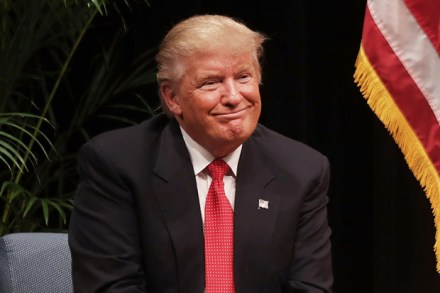
Monday night’s US presidential debate should convince a majority of American voters that Hillary Clinton is their only credible choice for the White House. Yet it may well fail to do so, in the new era of ‘post-truth politics’. The historian Sir Michael Howard suggests that on both sides of the Atlantic, we are witnessing a retreat from reason, an attempt to reverse the onset of the 18th-century Age of the Enlightenment, which banished superstition and religious faith as a basis for reaching conclusions. The progress of Donald Trump supports his thesis. I have just spent a fortnight in southern California, researching a book on the Vietnam war, and saw everywhere manifestations of Trumpery.

The Spectator’s Notes | 29 September 2016

From our UK edition

Mathias Döpfner, the extremely tall, extremely intelligent head of Axel Springer, is unusual in the generally conformist German business elite because he is not an unqualified believer in the German economic model. I have known him slightly for about 20 years and have always been interested by his questing, speculative mind. We have had conversations about the freer, Anglosphere model of economic life which he admires. Although he is not anti-EU — that is still almost against the law in Germany — he is sceptical of its direction. Now he has blasphemed in the EU’s main church in Britain — the Financial Times — by telling the paper that within three to five years he would expect Britain, as a result of Brexit, to be better off than its former EU partners.

Deadly silence

From our UK edition

There was a time when the humanitarian crisis in Aleppo would have featured strongly in political debate in Britain. Just two weeks after a negotiated ceasefire appeared to have provided some respite, a war of attrition in Syria’s second largest city is escalating into a vast human tragedy. Last Saturday, a bomb dropped by Syrian government forces knocked out a pumping station which had been supplying water to two million people, 250,000 of whom are besieged in the rebel-held east of the city. On the same day, at least 45 people, many of them children, were killed by barrel bombs dropped indiscriminately on civilians — a now common occurrence. Food supplies had already been running low, supply lines to rebel areas having been severed in early September.

How Brexit Britain can save Greece

From our UK edition

The cheerful, nattily dressed Englishman checking out at my hotel in Mykonos as I was checking in with my daughter looked shocked as he scrutinised his bill: 'What's the VAT? Twenty-four percent? How can that be?' I instantly violated my pledge to my daughter not to embarrass her by talking politics on vacation. 'You can thank Wolfgang Schäuble and the Germans,' I told the man. 'Austerity politics and all that.' My new acquaintance pondered what I was saying -- 'Is that so?' he said, or something to that effect -- then quickly changed the subject to the charm of cobblestone and the local nightlife. I didn't ask him how he had voted on Brexit, but I wish I had, for an incendiary political idea was beginning to form in my mind.

Doctor’s orders

From our UK edition

Second acts in British politics are vanishingly rare these days and Liam Fox, restored to the cabinet by Theresa May, is determined to make the most of his. We meet at his central London flat at half-past four on Sunday afternoon and even then the International Trade Secretary is beavering away: preparing for his meetings at the World Trade Organisation in Geneva the following day and finishing off his conference speech. He offers us a drink — red wine? pink champagne? — but pours a cup of tea for himself. Fox, as ever, is full of fizz. He clearly loves being back at the centre of things, and immediately starts contrasting Theresa May’s premiership with that of David Cameron. ‘We think similarly,’ he says.

Let the metropolitan elite lead the way

From our UK edition

How does one join the Liberal Metro-politan Elite? What should be the qualifications? I must be an LME member because literally thousands of my readers have (over the years) told me so. They don’t mean it kindly, but I take it kindly. ‘Elite’ means ‘the best’, I should hate to be called illiberal, and I have a nice flat near central London. How, though, do we LMEs maintain the exclusivity of our club? The 48 per cent of voters who voted Remain will soon be hammering on our door for admission, plus (I’ll bet) a fair few repentant former Leavers too.

Brexit’s philosopher king

From our UK edition

‘There was never a consensus among economists that Britain should stay in the European Union,’ insists Professor Patrick Minford. ‘That was always rubbish.’ During the heat of the referendum campaign, Chancellor George Osborne asserted it was ‘economically illiterate’ to back Leave. ‘It’s Osborne himself who is economically illiterate,’ Minford shot back. Three months on from the UK’s EU vote, Minford has reason to feel pleased with himself. Economists for Brexit — the campaign group he hurriedly founded on a shoestring — is credited with helping to swing the result. Yet Minford is anxious, in part about the dismal behaviour of his fellow scientists.

The Brexit charlatans are getting away with it

From our UK edition

Opponents of demagogues from Donald Trump to Nigel Farage have suffered from a huge political disadvantage. They were either politicians who were or had been in power, and had to take responsibility for all the failures and compromises power brings as inevitably as blisters on weary feet. Or they were voters, who thought that mainstream politicians were preferable to the leaders of the far right and left. Demagogues could dismiss them as establishment lackeys, Blairites, liberal elitists, Republicans in name only, and so on. And the dismissals could work. For how many wised-up 21st century voters wants to think him or herself as some establishment drone, some dupe of a failed status quo?

Jeremy Corbyn is ‘relaxed’ about migration. He might not be after the next election

From our UK edition

What does Jeremy Corbyn have to say to Labour voters worried about migration? Not a lot, seems to be the answer. And that’s a big problem for the Labour party if it doesn’t want to haemorrhage support at the next election. Several newspapers this morning report his ‘relaxed’ stance on the subject. While his interview on the Today show just now (which was pre-recorded, apparently because Corbyn isn’t a ‘morning person’) made it clear - as if it wasn’t before - that the Labour leader isn’t taking this issue very seriously at all. He batted away a question about what an acceptable level of migration is.

Labour must hold the Tories to account on Brexit

From our UK edition

John McDonnell is now speaking at the Labour conference, and will pledge to match the regional funding that communities will lose as a result of Brexit. This has been billed as 'one of the Labour Party's biggest policy statements since the Brexit vote', which is another way of saying 'one of the Labour Party's only policy statements since the Brexit vote'. The turmoil in the party since that vote and its dismal performance in the polls (which, despite urban legend, was the case before the attempted coup against Corbyn) means that it's largely pointless to evaluate this policy statement as though it might actually happen. Labour isn't going to be in government any time soon. But what Labour can do right now is hold the Tories to account on Brexit.