Brexit

Brexit spooks the markets, but the housing crisis will swing more votes

From our UK edition

‘I rang and said can I have a council house, I’ve nowhere to go, an’ the bloke said no you can’t, we need them all for t’Romanians,’ was a remark offered by a fellow patient, known to me as Fat Lad, when I was hospitalised three years ago. ‘I’m telling you, I’m the biggest Ukip supporter there is…’ he went on, illuminating how — unnoticed by the comfortable classes — a shortage of social and affordable housing was helping to fuel the national mood that eventually led to the Leave vote. Belatedly, Communities Secretary Sajid Javid has had a Damascene moment: ‘Tackling the housing shortage is not about political expediency,’ he declares. ‘It is a moral duty.

I want my Brexit good and strong

From our UK edition

What you really should have done if you were in Birmingham on Monday this week was skip the not notably riveting Philip Hammond speech, and head instead for the fringe event run by the Bruges Group starring me, Professor David Myddelton and Charles Moore. I can’t speak for my performance (modesty forbids me) but my fellow panellists were brilliant: funny, incisive and as optimistic as you’d expect of a pair of ardent Brexiteers addressing the victorious home crowd for probably the first time since that happy day in June. ‘Which of us here could ever have imagined that we’re actually part of the majority: the 52 per cent?’ I asked. And lots of people clapped at the wonderful warm feeling this gave them. But then I introduced a worm into their apple.

Coffee House Shots: The verdict on Theresa May’s conference speech

From our UK edition

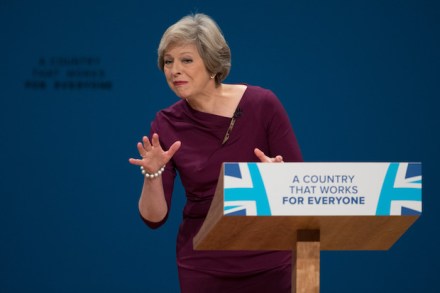
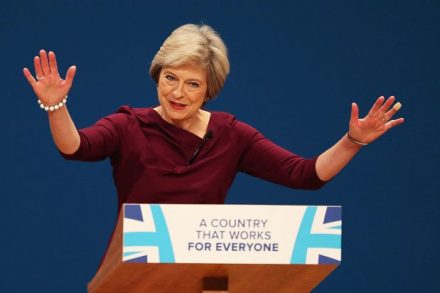
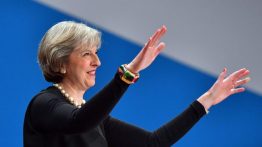
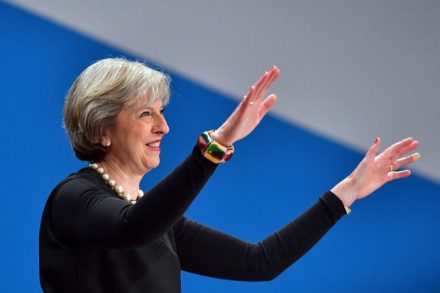
Theresa May has brought the curtain down on this year's Tory party conference with a speech in which she made a snatch for the centre ground. The Prime Minister pledged to stick up for the working class and went on the attack against the 'sneering elite', who May said looked down on others. But how successful was her speech? And did it tell us anything more about May? On the Spectator's Coffee House Shots podcast, James Forsyth says: I think she is keener on the state than most Conservatives are. I think there was a lot of aim taken at the liberal elite. There was a lot of vicar's daughter style emphasis on the obligations you owe to the other people in your family and the other people in your community.

David Davis: I’m 100 per cent sure EU migrants working in Britain can stay after Brexit

From our UK edition

Theresa May has gone out of her way to repeatedly reassure people that Brexit means Brexit. But where the Prime Minister has been less eager to offer words of comfort is on the status of EU nationals living and working in Britain. That stony silence has been one of the big themes of the Conservative party’s conference this year. May’s refusal to commit has left a question mark dangling over millions of people. At a Spectator fringe event last night, David Davis went as far as any member of Government (or, indeed, any loyal cabinet minister) to reassuring those from the EU that they wouldn’t be removed from Britain.

The Brexit bounce continues

From our UK edition

Just when you thought economists might finally have got the message about their doom-laden predictions for the economy following the vote for Brexit, along comes another statistic showing they are still getting it hopelessly wrong. I wrote here last month about how the Markit/CIPS Purchasing Managers Index – an early indicator of economic growth – had moved into positive territory in August, defying predictions that it would stay below 50, a level which suggests a shrinking economy. There was then, however, still one black cloud – the construction industry element of the index stood at 49.3 in August.

Breaking: Brexit means breakfast

From our UK edition

Brexit means Brexit. But for some, remembering that definition can be a challenge. For Welsh Tory leader Andrew Davies, it seems Brexit means something else altogether. Davies took to the stage at the Conservative party conference and proudly declared that: 'Mark my words, we will make breakfast..Brexit a success' Davies said after his gaffe that he would 'have a word' with the autocue. But Mr S is glad to see that in spite of his blunder, he still managed to see the funny side: https://twitter.

Theresa May’s passion isn’t yet matched by her policies

From our UK edition

Theresa May has done enough, for now, to put Brexit into its box. The Prime Minister hasn’t offered up much, but the piecemeal announcements she has made at the Tory party conference - including setting out a rough Article 50 timetable - have helped stave off uncertainty. Crucially, they’ve also kept the Brexit band happy: with the traditional Tory troublemakers using their conference platforms to sing the PM's praises for once rather than stick the knife in. Yet it’s clear that Theresa May wants her time in office to be about more than just the referendum. When she was asked about the Brexit vote, the PM had this to say on the Today show: ‘The vote on 23rd June was not just about leaving the European Union.

Jacob Rees-Mogg longs for the common touch

From our UK edition

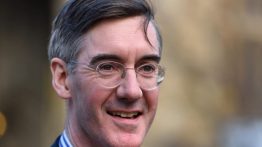
Jacob Rees-Mogg has been looking mightily pleased with himself at this year’s Conservative party conference. After the arch-Brexiteer spent years calling for Britain to leave the European Union, his wish was finally granted in June. However, he sill has work to do when it comes to convincing Remain-ers that Brexit will be a good thing. At a Politeia fringe event, Mogg recounted being teased on Question Time for suggesting Britain could get a good trade deal from Europe because French farmers still wanted to flog their champagne to Brits. It turns out that example was 'too posh' for some. So, Mogg revealed his new example to appeal to the common man: claret. This time, he said, it was clear the French still wanted to sell claret to Brits.

Full text: Liam Fox’s conference speech

From our UK edition

There was a time when the terms 'Britain' and 'trade' would have been almost synonymous. For over two centuries we were the trading nation. From the intellectual pioneers such as Adam Smith, whose book 'the Wealth of Nations' made the case for free trade, to the Royal Navy’s patrol of the world’s trade routes to the might and resilience of the British Merchant Navy, this country was at the forefront of a free and open trading world. And this party also played its part. When Sir Robert Peel fought against the vested interests of the day to repeal the corn laws and prevent the exploitation of the poor, he set the tone for a Conservative party that was to become the most successful that the democratic world had ever seen.

Philip Hammond’s ‘sombre’ speech acknowledges the impact of Brexit on businesses

From our UK edition

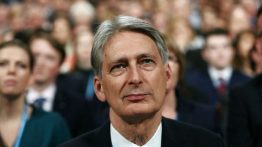
Philip Hammond's speech has had a mixed reaction from his MP colleagues, it is fair to say. A number have run up to me and rolled their eyes at how terrible his jokes were, or at his skill in managing to make one of the most important jobs in government sound boring, even telling delegates at one point not to switch off before talking about the very interesting productivity puzzle. One minister mutters that the speech was 'classic Hammond', which was more of a reference to his lack of charisma than his rather downbeat assessment of everything, from how interesting his job is to the consequences of Brexit. It was indeed striking that his assessment of the consequences of Brexit was quite so different to the rather glib picture painted by Boris Johnson yesterday.

This is what a xenophobic referendum actually looks like

From our UK edition

A country votes against the EU in a referendum in which rabidly anti-immigrant sentiments are aired by senior politicians. That is Hungary, of course, where voters have just rejected -- with a majority of 98 per cent, albeit it on a turnout of 44 per cent, too low to make it binding  -- an EU plan for the country to house 1200 refugees. Now, perhaps, the Remain camp in Britain will stop trying to portray Britain as a nasty, xenophobic country out of step with European values and admit that actually we are really rather liberal in our attitudes towards migration. The only difference is that we had an in-out referendum on EU membership and no other country has yet done so.

Philip Hammond’s Brexit scepticism is alive and well

From our UK edition

In the run-up to the referendum, Philip Hammond was one of those warning of the dire consequences of a vote to leave the EU. He predicted that Brexit would have a ‘chilling effect’ on the UK economy and said there would be uncertainty for years to come. Since being made Chancellor, Hammond has softened his language about the doom and gloom of Brexit. But only just. This morning, he’s been touring the studios and airwaves ahead of his keynote speech at the Tory party conference in Birmingham. His headline announcement? Ditching the policy put in place by George Osborne to wipe out the deficit by 2020.

Coffee House Shots: Theresa May’s big Brexit speech

From our UK edition

The Conservative party conference has started and Theresa May has kick-started this year's gathering with her big speech on Brexit. The Prime Minister revealed earlier that Article 50 will be triggered by March next year. And when she took to the stage in Birmingham, she offered up a few more small glimmers about her Brexit plan. James Forsyth was in the hall to listen to the speech and he said the PM did her best not to talk about 'hard' or 'soft' Brexit. But was she successful? 'I thought what was interesting about it was that she tried to say that this soft and hard Brexit distinction is wrong.

Theresa May’s ‘hard Brexit’ hint

From our UK edition

We had heard a great deal of Theresa May’s Brexit speech to the Conservative party conference before - to the word, in fact, with the Prime Minister using the same scripted soundbites that she’s deployed as a shield against having to answer questions about Brexit directly. ‘We will not be able to give a running commentary or a blow-by-blow account of the negotiations,’ she told the hall, warning that ‘history is littered with negotiations that failed when the interlocutors predicted the outcome in detail and in advance’. It was difficult not to think of the most recent negotiation where this has happened: David Cameron’s attempt to change Britain’s relationship with Brussels and keep the country in the EU.

Full text: David Davis’s conference speech

From our UK edition

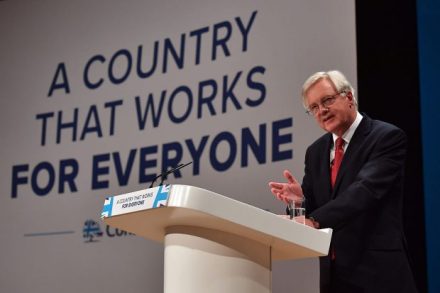
Ladies and gentlemen, on the 23rd of June the British people voted for change. And this is going to be the biggest change for a generation: we are going to leave the European Union. It was we, the Conservative Party, who promised the British people a referendum. It was David Cameron, a Conservative Prime Minister, who honoured that promise. And now it will be this government, a Conservative government that will lead the United Kingdom out of the European Union and into a brighter and better future. This must be a team effort. And I am proud to count myself part of Theresa May’s team. I don't know what it is about our great women leaders, but aren’t we lucky that they’re there when we need them?

Why didn’t Theresa May campaign for Brexit?

From our UK edition

According to Theresa May, interviewed by Tim Shipman in today's Sunday Times, Brexit will make the United Kingdom 'a sovereign and independent nation' once again. I know we are all supposed to be impressed by our new Prime Minister and much enthused by her Matron Gragrind approach to politics that is, again, such a refreshing change from the soft-furnished Call me Dave years but, really, can we pause for a moment to note that this is twaddle. Because if it were true - and if it were true that Mrs May believes this - then we are asked to believe that Britain was not, before its blessed liberation in June, a sovereign or independent nation. And if she really believed that, we might pause to ask why she did not campaign for Brexit?

Chris Grayling: UK won’t set out its negotiating position when it triggers Article 50

From our UK edition

So, what will be in the UK’s Article 50 letter? Boris Johnson had previously implied that the document would set out the UK’s aims for the negotiations, detailing the kind of relationship that this country wants with the EU in the future. But Chris Grayling just told Robert Peston that when Theresa May triggers Article 50, which she has said she will do before the end of March next year, she won’t set out the UK’s negotiating position. If this is the case, it is a mistake. Business and industry need to have a sense of, at least, what the UK government is trying to achieve. Without that, it will end up assuming the worst case scenario.

Theresa May: Brexit will begin in March 2017

From our UK edition

As Conservative conference begins, we are finally starting to find out a little more about what Brexit means. But only a little. In her interview on Marr this morning, Theresa May confirmed that she would trigger Article 50, which starts the process of taking Britain out of the European Union, before the end of March 2017. She said: 'I’ve been saying that we wouldn’t trigger it before the end of the year so that we get some preparation in place. But yes, I will be saying in my speech today that we will trigger before the end of the March next year.' But when it came to hard vs soft Brexit, the Prime Minister was rather more coy, merely repeating what she had said on the British people voting for controls on immigration in the referendum.

Conservative party conference, day one: The Spectator guide

From our UK edition

The opening day of party conferences can often be a dull affair - not so at the Conservative's annual gathering this year. Theresa May will be giving a speech on 'Making a success of Brexit' this afternoon. And while the Prime Minister has vowed not to provide a 'running commentary' on negotiations, we should expect a few more glimmers of detail to emerge about the Government's Brexit plan. Boris Johnson and David Davis will also be following in the footsteps of the Prime Minister and taking to the stage today. Here’s the full run-through of what’s on today: Conference: 2pm - 4.