Brexit

David Cameron can’t blame Theresa May for his awful deal with the EU

From our UK edition

Tim Shipman’s book about the EU referendum campaign, All Out War, is serialised today in the Sunday Times. The newspaper today leads on the remarkable disclosure that David Cameron blames Theresa May for the paucity of the deal he negotiated in those 30 sleepless hours with Brussels. Here’s the extract:- Before the speech, conscious that immigration was likely to be an explosive issue in the referendum campaign, Cameron had floated with Merkel the idea of an annual cap on the number of national insurance numbers handed to EU migrants or an emergency brake on numbers. But the German leader said she would not agree to changes to free movement for EU citizens.

Who is to blame for Brexit?

From our UK edition

With Italy facing a referendum that could unseat its president, the EU’s member states in furious conflict over immigration, and Hillary Clinton looking like an increasingly shaky last line of defence, our very own Brexit is being held up as the model of a new, disruptive politics. But its meaning has been debated. For some, Brexit was democracy delivering justice: the West’s 'first big fightback', as Nigel Farage said on Sunday, against 'a metropolitan elite, backed by big business, who’ve just been increasingly getting out of touch with the ordinary voters.' The counter-narrative is that Brexit was a fake revolution: a coup by fellow-members of the elite who 'lied to please the mob'.

It’s time for Theresa May to answer the airport question

From our UK edition

Hinkley Point — for all its flaws and the whiffs of suspicion around its Chinese investors — has finally received Downing Street’s blessing. Meanwhile, ministers hold the party line that High Speed 2 will go ahead according to plan, backed by news that the project has already bought £2 billion worth of land; and investors hunt for shares in the construction sector that might benefit from the multi-billion-pound infrastructure spree widely expected in Chancellor Philip Hammond’s autumn statement. But still no decision on a new airport runway for London — the one piece of digger work, short of tunnelling under the Atlantic, that would signal Britain’s raging post-Brexit appetite for global business.

Hong Kong offers an exciting vision of a post-Brexit future

From our UK edition

Since he moved to Hong Kong three years ago, the Rat’s Cantonese has been coming on apace. This has rather less to do with his language skills — never that much in evidence on his school reports — than it does with the fact that my stepson works in what is still, despite the mainland Chinese’s best efforts, one of the most aggressively free-market cultures in the world. ‘It’s like this,’ Rat explained, when the Fawn and I visited earlier this year. ‘If you want to get a cab somewhere urgent in the morning and you can’t speak good enough Cantonese then basically you’re stuffed. The drivers just swear at you and drive off. They haven’t got time to be wasting listening to dumb Gweilo trying to make themselves understood.

The V&A’s director is an accidental Bremoaner hero

From our UK edition

When I read that Martin Roth, the director of the V&A, was resigning from his job because of Brexit, I sensed it was not quite true. I did not doubt the sincerity of Dr Roth’s views: he has his German generation’s horror of anything which could be presented as ‘nationalism’. It was rather that it did not make sense as a motive for leaving his post. Brexit won’t actually happen until roughly the time when Dr Roth would have left anyway, so it could not have impeded his work. Besides, the collections of the V&A are not at the slightest risk of attack for being ‘decadent’ art under the May regime. My hunch seems to be right.

George Osborne warns that he won’t ‘fumble’ his next leadership bid

From our UK edition

Well, that didn’t take long. George Osborne has had dinner with the FT and the write-up shows him as ambitious as ever. Having never held down a job outside of politics, the former Chancellor isn’t looking for one now. 'I am not going anywhere,' he said, 'I want to see what happens next.' It seems he is angling for Christine Lagarde’s job at the IMF, but the most striking quote is about his leadership ambitions: 'Asked about a possible return to the front line, Mr Osborne adopted — with a twist — a phrase used by Mr Johnson in 2013 to deflect questions about his prime ministerial intentions: 'If the ball came loose at the back of the scrum, I wouldn’t fumble it,' Mr Osborne, 45, said.' Mr S wonders if Osborne has realised what has just happened.

Is Boris worrying that Brexit will never happen?

From our UK edition

Theresa May has made one thing clear: Brexit mean Brexit. But when will the Prime Minister actually pull the trigger and invoke Article 50? Boris Johnson gave his take last night: 'The Government is working towards an Article 50 letter which as you know will be produced, probably, in the early part of next year. That's still subject for discussion but what is clear I think to our friends and partners in the EU is two broad principles: we are not leaving Europe; Although we are leaving the EU treaties, we do want to have the closest possible trading relationship and it's very much in their interests to achieve that... it's very much in their interests to do a great free trade deal with us, and I think that will happen.

Pericles vs Juncker

From our UK edition

The hopelessness of the EU is well demonstrated by the current rhetoric issuing from its inner chambers: that Britain must be punished for the ‘crime’ of leaving it. What sort of message does that send out to the world, let alone other EU members, about the value that the EU places on liberality and freedom? In his funeral speech in 430 BC over those killed in the war against Sparta, Pericles hymned not so much the dead as the city of Athens itself, describing ‘the way of life that enables us to pursue our objectives, and the political institutions and national character that made our great achievements possible’.

Victory of the swashbucklers

From our UK edition

On 14 June, a short email popped up in the inboxes of all Financial Times editorial staff. It came from the paper’s style guru and announced tersely: ‘The out campaigners should be Brexiters, not Brexiteers.’ As usual for the FT’s style pronouncements, the memo did not lay out the reasoning behind the decision, but it followed a discussion among editors over whether the word ‘Brexiteer’ had connotations of swashbuckling adventure. Much has been said and written about the power of the Leave campaign’s simple and disciplined messaging.

A free vote on the Heathrow runway? Don’t be so wet, Prime Minister

From our UK edition

Hinkley Point — for all its flaws and the whiffs of suspicion around its Chinese investors — has finally received Downing Street’s blessing. Meanwhile, ministers hold the party line that High Speed 2 will go ahead according to plan, backed by news that the project has already bought £2 billion worth of land; and investors hunt for shares in the construction sector that might benefit from the multi-billion-pound infrastructure spree widely expected in Chancellor Philip Hammond’s autumn statement. But still no decision on a new airport runway for London — the one piece of digger work, short of tunnelling under the Atlantic, that would signal Britain’s raging post-Brexit appetite for global business.

Why is Nate Silver on his high horse over Trump – again?

From our UK edition

A few years ago, the pollster Nate Silver wrote a best-selling book saying (in effect) that political pundits talk rot and that only data-armed policy analysts like him could be relied on to know what was going on. He'd based his reputation on the 2012 US election, whose results he predicted. YouGov predicted it too, but Silver has a greater gift for self-publicity. His theory was later placed in doubt when he failed to predict the result of the UK General Election in a BBC documentary -- which later mysteriously disappeared. Despite this, he continues to encourage epigones in Britain, who can (and still do) come out with columns attacking folk for their inferior, prejudice-driven analysis. Today, Nate Silver is at it again -- over Trump: https://twitter.

The Brexit bounce continues – ten forecasters up their predictions for 2016 growth

From our UK edition

The Brexit bounce continues. HM Treasury has today released forecasts of the economists it follows, as it does every month. Last time, there was a flurry of downgrades and forecasts of an immediate recession. Now, these forecasts are being torn up by everyone, including by the FT (although you can bet the FT won't report on the upgrades as eagerly as it did the downgrades). The average new forecast suggests GDP will grow by 1.8 per cent this year, far better than the 1.5 per cent forecast last month. This back to where the consensus was before the Brexit vote. The OECD, which had previously predicted "immediate" uncertainty after a Brexit vote, has today also upgraded to 1.8pc for this year, saying instead that the pain will be felt next year (it predicts 0.9pc growth).

Brexit U-turns: who is rowing back on their Project Fear warnings?

From our UK edition

In the run-up to the referendum, we were warned Brexit would unleash misery. George Osborne suggested a vote for Brexit would lead to a DIY recession. And numerous business bosses and the great and the good piled in to add their warnings to the doom-mongering. Yet in the weeks since the referendum, their predictions of chaos have not come true. What's more, many of those shouting the loudest about the consequence of Brexit are now furiously rowing back on their warnings. Here, The Spectator compiles the Brexit u-turns and referendum backtracking: In the aftermath of the vote, many major banks and financial institutions continued to warn that Brexit spelt bad news for the economy.

Will Donald Trump have the last laugh?

From our UK edition

'I am getting nervous. But it's not because Trump is good. It's because people are stupid'. So said the (usually) very funny US comedian Bill Maher on TV recently. When I heard him say it, my first thought was: Trump's going to win. Not because Maher is right, but because I recognised something from the EU referendum campaign, when the great and the good - from metropolitan comedians to overpaid columnists — piled in to suggest that Brexit backers were all dimwitted lemmings, marching zombie-like off a cliff. Pro-EU devotees, some from positions of astonishing privilege, were punching down. It wasn't a good look, and it harmed their cause. The parallels between Brexit and Trumpism are largely inaccurate.

How does the new political landscape affect the UK economy?

From our UK edition

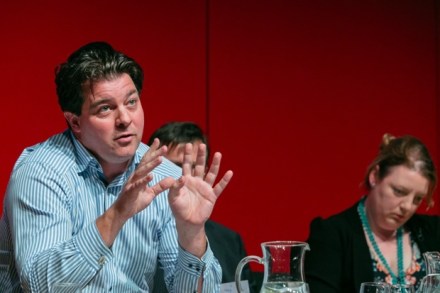
Before the Brexit vote, the majority of economists forecast economic doom for Britain outside the EU. But the economy has, so far, been doing significantly better than expected. Will Britain continue to thrive? Or will the anticipated economic consequences of leaving the EU catch up on us? And how will Theresa May’s new government help to shape the future of our economy? On 14 September 2016, The Spectator held a discussion at the British Museum on the economic prospects of the UK, attended by over 300 guests. The panel, chaired by Andrew Neil, addressed the question: how does the new political landscape affect the UK economy?

Long life | 15 September 2016

From our UK edition

It’s been a very patriotic weekend, ablaze with Union flags. In London there was the Last Night of the Proms at the Royal Albert Hall, and in South Northamptonshire there was the ninth annual ‘Village at War’ festival at Stoke Bruerne on the Grand Union Canal. I watched the first event on television but attended the second in person, because Stoke Bruerne is where I spend my weekends. These events, of course, were rather different in scale, but both evoked times of Britain’s greater glory and both took place under the shadow of the Brexit referendum in June. My own vote was in favour of remaining in the European Union, but I was part of the minority in South Northamptonshire, where 54.3 per cent of voters chose to leave.

Will David Cameron only be remembered for Brexit?

From our UK edition

At the moment, the consensus is that Brexit will be Cameron’s legacy, that the thing people will remember about his premiership is that he called a referendum on the EU and lost it. But I don’t think this will necessarily be the case. As I argue in the magazine this week, if Brexit -- to use a phrase -- turns out to be a ‘success’, then that will allow attention to turn to other parts of Cameron’s career. It will allow people to reflect on how, after three successive general-election defeats, he turned the Tories back into the natural party of government. On how he made them more comfortable with modern Britain and more representative of it. The irony of all this is that Cameron’s legacy depends on him being proved wrong on the dangers of Brexit.

Inside David Cameron’s personal Brexit

From our UK edition

In the days following David Cameron’s resignation as prime minister, Michael Gove tried to persuade the Cameroons to back Boris Johnson for the job. He argued that the former London mayor was the real continuity candidate. While Johnson would strike a very different path on Europe, Gove argued, he would keep Cameron’s domestic agenda going in a way that Theresa May would not. This was something Gove got right. But the referendum result was far too raw for this argument to work. The rest, as they say, is history. Since May became Prime Minister, it’s been clear that she does not represent continuity. May is her own woman.

Alex Salmond: Scotland should block Brexit

From our UK edition

Although Alex Salmond is Scotland's First Minister no more, luckily the public still have a chance to hear the SNP politician's thoughts on a weekly basis thanks to his LBC phone-in. Today Salmond led the charge for Nicola Sturgeon blocking Brexit: 'If Scotland could block Brexit, then I think Nicola Sturgeon should do that. I think Nicola Sturgeon should take her instruction from the verdict of the Scottish people; she's Scottish First Minister. If you remember the Scottish people voted decisively to remain.

Mark Carney has a shot at redemption tomorrow. Will he take it?

From our UK edition

There are not many predictions that are safe to make in the financial markets. M&S’s results will always be disappointing is perhaps one. Sir Philip Green will never apologise for anything is another. And there is one more that can now be added to the list. The Bank of England won’t raise interest rates when it meets this week. But it should. Why? Because the ‘emergency’ post-Brexit cut is already looking like an over-reaction. In truth, the Bank’s Governor Mark Carney is already looking dangerously over-committed to Project Remain. The best thing the Bank could do now would be to admit that it had a made a mistake – and put rates back to where they were before 23 June.