Brexit

Notebook – 8 December 2016

From our UK edition

One remark from the Christmas party season knocks insistently around my head. It came from Nigel Farage on a staircase in the Ritz. For those who didn’t enjoy 2016, a year of political revolution, he gleefully promised: ‘2017 will be a hell of a sight worse.’ My, my. What did he mean? Had he taken one Ferrero Rocher too many? Or does Farage, like an increasing number of MPs, expect a general election next year, including further dramatic upsets? The biggest reason for pooh-poohing a 2017 election isn’t the Fixed-term Parliaments Act but Prime Minister’s character. Theresa May is extremely cautious and she doesn’t want to test the electorate just yet.

Spectator live blog: The Supreme Court’s Brexit hearing, day four

From our UK edition

The Supreme Court's landmark case on triggering Article 50 has now finished. We'll have to wait until January to hear the verdict of the 11 judges involved. But for now you can follow all the main events as they unfolded on our Spectator live blog: 4.20pm: It's all over at the Supreme Court. Lord Neuberger rounds off proceedings by making it clear that the judges are 'not being asked to overturn the referendum'. Before his comments, Eadie attempted to knock down Pannick's view that the 2015 referendum act had political, rather than legal, significance. Not so, said Eadie, who insisted that the Government thought the act 'speaks volumes about the intention of Parliament' and that 'it left the royal prerogative power to give notice' with ministers rather than MPs. 3.

What the papers say: Article 50 debate, Brexit ‘fog’ and ‘looney Labourites’

From our UK edition

After MPs voted last night to back the Government’s plan to invoke Article 50 by the end of March, the Guardian says it’s good news that Parliament is now finally using its powers to shape the Brexit process. The paper says it’s ‘extraordinary’ that so much time has passed since the referendum, given how there is still no ‘real clarity about the government’s general aims’ in upcoming negotiations. It says yesterday, however, ‘some fog began to lift’: ‘At last, the great issue of the UK’s future relations with Europe was finally being discussed where it matters most of all, in our elected parliament,’ the paper says.

Whatever happened to Sir George? A festive finale for an eventful year

From our UK edition

Many (well, several) of you asked me what happened to George, the supermarket chairman who was the anti-hero of my Christmas fable last year. So I tracked him down, somewhere in the provinces, to bring you another episode… ‘Five minutes, Sir George,’ said a young man in black. ‘New boobs OK?’ George nodded, adjusted his embonpoint, and looked at himself in the full-length mirror. How the hell had it come to this? Actually 2016 had begun well. Readers may recall last December’s ‘Free Turkey’ incident, in which a boardroom invasion by carol-singing Santas, led by George’s student son Simon, coerced the supermarket group into giving Christmas fare to the poor in the spirit of King Wenceslas.

Brexit’s breaking points

From our UK edition

Trying to write the first draft of history on the EU referendum and the leader-ship mess that followed had both its dramatic and its comic elements. My phone never stopped ringing with Eurosceptics keen to tell me why their contribution to a meeting that had previously escaped my notice was the decisive factor in securing victory. But when a vote is so close — 52 per cent to 48 per cent — then it would not have taken much to push the result the other way. Donald Trump’s victory adds some credence to the idea that Brexit was pre–ordained, part of a wave of history. But the campaign turned on several events that were the result of accident, farce or both. If a relatively small number of those who backed Brexit had voted the other way, Remain would have triumphed.

How to put a positive spin on the bizarre events of this year

From our UK edition

This is going to be a positive, optimistic column. I promise. Because, look, let’s be honest, I’ve been a bit moany this year, haven’t I? Which may, I suspect, have been a bit misleading. Read me here, or indeed anywhere, and I suspect you could come away thinking I’ve spent the last 12 months, or at least the last six, lying awake, staring at my expensive north London Farrow & Ball ceiling, weeping sad, shuddering, self-indulgent tears at a world moving beyond my ken. I know, I know. I do go on. Whereas actually, it hasn’t really been like that.

Don’t try to be liked, and buy your steak at Aldi – the lessons I’ve learned in 2016

From our UK edition

Merry Christmas everyone. Here are some things I learned — or relearned — in 2016.   1. That which does not kill you makes you still alive. It’s weird to think that less than 12 months ago I was in hospital, dosed up with morphine, battered and bruised with a broken clavicle, numerous cracked ribs and a pulmonary embolism which can actually kill you, don’t you know. And now it’s as if the whole thing never happened. Well, apart from the hideous titanium plate, like a giant centipede, which I can still feel all stiff across my collar bone. And the bastard hunting ban my family has imposed on me…   2. Hunting is the only thing.

Commons votes in favour of invoking Article 50 by the end of March

From our UK edition

461 MPs have just voted for Theresa May to invoke Article 50 by the end of March. The Tory amendment to Labour’s opposition day motion passed comfortably with only 89 MPs opposing it—and Ken Clarke the only Tory amongst them with 20-odd Labour Mps joining the SNP and the Lib Dems in voting against. Now, this vote is not binding and if the government loses its appeal to the Supreme Court will not be sufficient to satisfy the courts. But it does indicate that the government will be able to get an Article 50 bill through the Commons without too much trouble. It does make you wonder why Theresa May didn’t simply ask parliament to pass an Article 50 resolution before the Gina Miller case made it to the High Court.

Spectator live blog: The Supreme Court’s Brexit hearing, day three

From our UK edition

It's day three of the Supreme Court's landmark case on the triggering of Article 50. Here's how the day unfolded:  4.15pm: The Supreme Court hearing has now finished for the day. The Lord Advocate, Lord Wolffe has been putting forward the Scottish Government's case. So far, he has told the court that using prerogative powers to trigger Article 50 would be an 'unconstitutional' step. But he makes it clear that the Scottish Parliament does not have the power to veto Brexit. You can read the Scottish Government's full submission to the Supreme Court here. 3.30pm: Ronan Lavery now takes up the argument on behalf of Northern Ireland.

What the papers say: Brexit, political pygmies and repentant Remainers

From our UK edition

MPs will vote for the first time today on the Government’s Article 50 timeline. While Labour have said the decision to spell out the plan for Brexit is a ‘welcome climbdown’ by ministers, is this afternoon’s debate merely delaying the actual process of Britain leaving the EU? That’s the Sun’s verdict on today’s proceedings, with the paper saying a ‘coalition of political pygmies’ are ‘stringing out the process in Parliament’. It goes on to say that Theresa May’s opponents ‘should stop pretending’ they are worried about democracy and Parliamentary sovereignty and instead own up to ‘their true aim’ - ‘reversing the referendum result’.

Theresa May agrees to publish Brexit strategy before invoking Article 50

From our UK edition

With the Supreme Court ruling on the government's Article 50 appeal not expected until the new year, Theresa May is facing a more immediate Brexit headache. After around 20 Conservative MPs were expected to back a Labour motion today -- tabled by Jeremy Corbyn and Keir Starmer -- calling for the Prime Minister to 'commit to publishing the government’s plan for leaving the EU before Article 50 is invoked', No. 10 has staved off the rebellion by agreeing to Labour's demand. Accepting Labour's motion, ministers have added an amendment of their own -- that the House should 'respect the wishes of the United Kingdom as expressed in the referendum on 23 June; and further calls on the government to invoke Article 50 by 31 March, 2017'.

Sorry Remoaners. The British peso is on its way back

From our UK edition

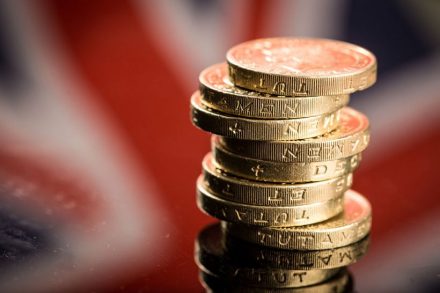
We were about to see parity with the dollar. It was fetching less than an euro at the airport. Spiralling costs were about to wipe out what little remained of our manufacturing industry, and the RXS’s – that’s the racist, xenophobic scum, in case you were wondering - were all about to lose their jobs. A collapse in the value of the pound over the summer and the autumn was one of the few genuinely worrying economic consequences of our vote to leave the EU – and the Remain camp used it endlessly to demonstrate that the economy was in freefall. It wasn’t quite a full-blown sterling crisis, of the sort that used to crash the British economy.

Spectator live blog: The Supreme Court’s Brexit hearing, day two

From our UK edition

The second day of the Supreme Court hearing has seen the Government continue to put forward its case for why it should be allowed to pull the Article 50 trigger without the say so of Parliament. And Lord Pannick has been arguing why Parliament must give approval for the start of the process of Brexit. Here's how the day unfolded on our Spectator live blog: 4.30pm: Pannick’s main pitch is about the power of Parliament. He tells the Supreme Court that ‘Parliament is sovereign and only Parliament can remove that which it has incorporated into domestic law’ - meaning that Brexit cannot be started by the Government without the agreement of Parliament.

What the papers say: Is time up for the EU?

From our UK edition

Something is happening across Europe, says the Sun - but EU leaders are still intent on burying their heads in the sand. Following Matteo Renzi’s defeat in the Italian referendum on Sunday and far-right Eurosceptic candidate Norbert Hofer’s good showing in the Austrian election, it’s clear that ‘voters across Europe are increasingly rejecting the EU’s self-interested ruling consensus,’ the paper says. But while the outcome for the continent does not look good, the signs of instability in Europe can arguably be only a good omen for Theresa May as she looks to negotiate Britain’s Brexit deal.

A Eurosceptic union is forming across Europe

From our UK edition

Of all the barbs fired at us Brexiteers, the one that’s irritated me most is ‘Little Englander’. The suggestion is that pro-EU people are broad-minded Europhiles while Brexiteers are petty nationalists who want to dismantle the Chunnel and while away our days drinking tea and slagging off Germans. It couldn’t be more wrong. In fact, the most wonderful thing about Brexit — glorious, rebellious Brexit — is the new European unity it is forging. Far from giving an English two-fingered salute to the continent, the Brexit bug is helping bring the continent together, uniting peoples who’ve had a gutful of the technocrats. The overthrow of Matteo Renzi is 2016’s latest ballot-box revolt against the new managerial elites.

Italy is in desperate need of a saviour

From our UK edition

Matteo Renzi lost his constitutional reform referendum - and his job - for a simple reason: too many Italians from across the political spectrum opposed the Florentine and what he represented. What he stood for is easy to see from the names of those who gave him their wholehearted support: Jean-Claude Juncker, Angela Merkel, Mario Draghi, François Hollande, the Financial Times, and, of course, outgoing American President Barack Obama, who made him guest of honour at his last White House state dinner in October and described him as 'bold', 'progressive' and 'promising'. God - perhaps - knows who will be the new Prime Minister of Italy. There have been more than 60 Italian governments since the fall of fascism in 1945.

Thanks to Brexit and Trump, Austria lost its appetite for political upheaval

From our UK edition

Austria’s presidential election has been overshadowed by Matteo Renzi’s dramatic defeat in the Italian referendum, but Alexander Van der Bellen’s victory is significant nonetheless. It confirms there are now two Europes, north and south. Southern members like Italy are becoming increasingly hostile towards the EU, while northern members like Austria will do (almost) anything to keep the EU on track. So why did Austria buck the American trend, and chose a Euro-friendly head of state? Churchill said Russia was a riddle wrapped in a mystery, inside an enigma. He might have been talking about Austria today. The Austrian capital, ‘Red’ Vienna, has always been socially liberal and politically leftist.