Brexit

Daft celebrity mourners have made 2016 the year of the ‘Tearleader’

From our UK edition

Despite my 'difficult' reputation, I am a cheery cove in real life, all the more so as I get older. But in true Dorian Grey style, I only stay this way by letting my intolerant side rule the roost on Facebook. Every morning my hot little hands positively itch to unfollow, defriend and block: a day which passes without binning a few dim bulbs is a day wasted. I’ve had an especially good run of it this year, as two things in particular have acted as cracking prompts for my 'negging' narrative. One has been the showing of bad attitude on the part of many Remain-supporting mates. I don’t expect everyone to be a bold Brexiteer like me, but I do expect people to be good losers.

‘Putinites on the web’ are the new ‘Reds under the bed’

From our UK edition

Wounded Remainers in Britain and the Hillary set in the US love banging on about ‘post-truth politics’. Lies are everywhere, they say, falling from Trump’s weird mouth, plastered on the side of Brexit buses. And apparently these lies invaded voters’ minds and made us do the unimaginable thing of voting against the EU and failing to vote for Hillary. We was hoodwinked by falsehoods! All of which would be a tad more convincing if it wasn't for one thing: it’s actually the Remainer and Hillary cliques that have gone full post-truth, even descending into the cesspit of conspiracy theory.

What the papers say: Trump’s top team, and ‘spurious’ Southern strikes

From our UK edition

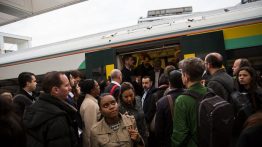
Southern’s strike continues for a second day today - spelling more misery for commuters. And the Sun knows who is to blame for the disruption: the ‘hard-left’ who are willing to ‘inflict misery on the public for political ends with impunity’. The Sun says that it’s time for a crackdown on strikes. It says the proposal apparently being put forward by some ministers - to block walkouts only backed by a small number of union members - doesn’t go far enough. Instead, the paper says, it’s time to force unions to ‘prove a dispute’s legitimacy in court or face ruin over a strike’s consequences’.

Marmite, Toblerone and the other hidden costs of Brexit

From our UK edition

One thing I won’t miss about No. 11 Downing Street are the Christmas cards: 2,056 Christmas cards to be exact. That was the number I had to sign every year. The recipients included 87 FTSE chief executives, 209 foreign dignitaries, six EU commissioners and one shadow chancellor. They all added up, and it involved several days of signing, and sore wrists. Every chancellor, prime minister and opposition leader I’ve known does the same. Judging by the thousands of cards I would receive, many must go unread. So I propose to my successors a Christmas truce. Only send cards to people you actually know. Give the money you save to a good charity and use your time more productively to, for example, run the country.

If the Fed kick-starts global rate rises, the UK shouldn’t be left behind

From our UK edition

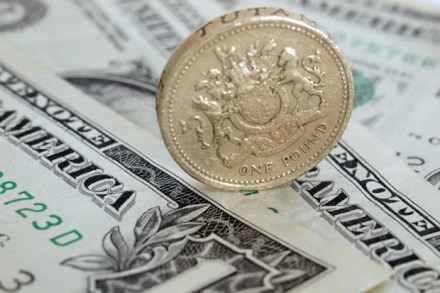
One is growing at 2.9 percent, the other at 2.1 percent. In one retail sales are growing at 1 percent, in the other at 7.5 percent. In one wages are growing by 2.4 percent a year, in the other by 2.3 percent. In one, the establishment is coming to terms with a populist revolt against the elite. In the other, the establishment is, er, coming to terms with a populist revolt against the elite. What are they? They are, of course, the US and the UK economies. What is remarkable right now is how similar the economic outlook is in both countries. True, there are some minor differences, with the Americans doing better on some measures, and the British on others. But from simply looking at the statistics, it is quite hard to tell them apart. Their performance is just about the same.

Why it’s not true that Brexit is already starting to bite

From our UK edition

So, the Remoaners have at last got a piece of economic news they can try to crow about – the Consumer Prices Index (CPI) rose last month from 0.9 per cent to 1.2 per cent, sparking a round of ‘I told you so’s’ on Twitter – one even describes it as a ‘cost of living crisis’. One suspects he wasn’t around in 1975 – incidentally the year that Britain voted to stay in what was then the Common Market – when inflation topped out 26 per cent. Except the CPI figures don’t really tell you what the Remain lobby wants to tell us at all. Remember how a few weeks ago the Marmite crisis was interpreted as a grim warning of what was to come as the sinking pound inflated food prices? Actually, food prices fell last month.

The seven ways ‘Remain’ could have won the EU referendum

From our UK edition

Trying to write the first draft of history on the EU referendum and the leadership mess that followed had both its dramatic and its comic elements. My phone never stopped ringing with Eurosceptics keen to tell me why their contribution to a meeting that had previously escaped my notice was the decisive factor in securing victory. But when a vote is so close — 52 per cent to 48 per cent — then it would not have taken much to push the result the other way. Donald Trump’s victory adds some credence to the idea that Brexit was pre–ordained, part of a wave of history. But the campaign turned on several events that were the result of accident, farce or both. If a relatively small number of those who backed Brexit had voted the other way, Remain would have triumphed.

What the papers say: Southern strikes, pig-headed militants and what Brexit means for Ireland

From our UK edition

Social care was notable by its absence from the Chancellor’s Autumn Statement. But the care system is now firmly back on the agenda following reports yesterday that Theresa May was set to allow councils to raise bills to plug the social care funding gap. The Daily Mail agrees that this is an issue that needs to be fixed urgently, saying that the UK is in ’severe danger of failing to meet’ the moral test of how well a society looks after the elderly. And for all the problems we’re seeing today, ‘things are about to get much worse’, the paper warns, with the introduction of the living wage, for one, likely to send care home fees soaring. So is the Government right to suggest upping council tax bills to stave off this crisis?

What the papers say: Theresa May’s wrong trousers and why Boris is ‘bang on the money’

From our UK edition

It would be ‘wrong’ to dwell on the subject of Theresa May’s £1,000 leather trousers, says the Times in its editorial this morning. But equally it’s a mistake to pretend those trousers don’t exist when Tory backbenchers think the cost of them brings the PM’s judgement into question, the paper argues. The Times criticises Theresa May’s adviser, Fiona Hill, for the manner in which she hit out at the PM’s trouser critic, Nicky Morgan. The Mail on Sunday revealed yesterday that Hill sent a text to Morgan's colleague, Alistair Burt, saying: ‘Don’t bring that woman to Downing Street again’, after the former education secretary criticised May's sartorial choice. So what does this all tell us?

Here’s how Theresa May can grant assurances to all Britain’s EU nationals

From our UK edition

In the chaos after the Brexit vote, no one really noticed when Theresa May adopted an odd position on EU nationals*. Throughout the campaign, everyone – from Ukip to the Lib Dems, Boris Johnson to Andy Burnham – had been clear that the Brexit debate was not about deporting anyone. Those EU nationals who were in Britain should stay here. In a fractious debate, it was a note of rare consensus: no one's status was in question. But days after the referendum, the then Home Secretary sat down on Robert Peston’s sofa and suggested that EU nationals might not be safe after all, and that she might use them as bargaining chips in her negotiation. (A plan which would later backfire badly.) It was baffling, bizarre and – to many - appalling.

How California could be heading for its own version of Brexit

From our UK edition

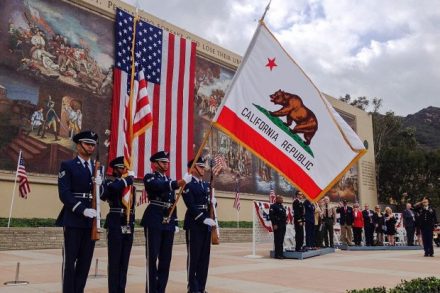
On the face of it, Brits and Californians don't have much in common: one prefers a spot of Earl Grey, the other misguidedly quaffs health-faddish Kombucha. Yet Californians and Englishmen may agree on one thing: self-government. Many golden state separatists see the successful Brexit campaign as an inspiration. In fact, on the official 'Yes California Independence' website, the president of the movement - Louis J Marinelli - mentions Brexit and what it could mean for his fellow Calexiteers: In 2016, the United Kingdom voted to leave the international community with their 'Brexit' vote. Our 'Calexit' referendum is about California joining the international community. You have a big decision to make.

I’m a part of the elite. So why am I cheering for the populist right?

From our UK edition

‘Are you Charles Moore of The Spectator?’ I answered to that description. ‘Well,’ said my questioner, ‘I am worried that you’re becoming very right-wing.’ We were sitting by the fire in a charming, smoky hut with no electric light and lots to eat and drink. It was a shooting lunch, the sort of occasion where one is seldom held to account for anything. I could have tried to laugh the question off, but my interrogator exhibited high intelligence and class confidence, so I sensed she wouldn’t let me get away with that. Unfortunately, I didn’t know how to answer her. I am not offended by being called right-wing, because I don’t agree with the left-wing view that right-wingery is a mark of personal turpitude.

Theresa May: ‘I get so frustrated with Whitehall’

From our UK edition

The Prime Minister’s office is a small, unimpressive room in 10 Downing Street with miserable views and unexceptional furniture. Since moving in, Theresa May has spruced it up — but only a little. There is now a large glass meeting table; her predecessor preferred to chat on the sofas. She has also delved into the government art collection to retrieve two pictures of Oxford, where she honed her interest in politics and met Philip, her husband. She has also picked a painting of an English country church (she is of course a vicar’s daughter), and that’s about it. It’s a place for work and — very occasionally — interviews. We meet a few weeks after Mrs May won The Spectator’s Politician of the Year award.

Labour has even bigger problems than Jeremy Corbyn these days

From our UK edition

Want proof of how bad things are for Labour? Jeremy Corbyn and his disastrous leadership is not even its biggest problem anymore. I write in The Sun that Labour’s biggest problem, and it is potentially an existential one, is that its reaction to the Brexit vote is threatening to make it a political irrelevance More than 60 percent of Labour seats voted to leave the EU. In these constituencies, being the party that is trying to block Brexit would be electoral suicide. That’s why the Labour leadership felt compelled to accept the government’s amendment this week saying Theresa May should start the formal, two-year process for leaving the EU by the end of March. But Labour MPs in heavily Remain seats have different interests.

Did the ‘rise of populism’ really cost David Cameron his job?

From our UK edition

When The Spectator was founded 188 years ago, it became part of what would now be described as a populist insurgency. An out-of-touch Westminster elite, we said, was speaking a different language to the rest of London, let alone the rest of the country. Too many ‘of the bons mots vented in the House of Commons appear stale and flat by the time they have travelled as far as Wellington Street’. This would be remedied, we argued, by extending the franchise and granting the vote to the emerging middle class. Our Tory critics said any step towards democracy — a word which then caused a shudder — would start a descent into chaos. On the contrary, we said, the choice was between reform or a ‘revolution of the most sweeping character’.

What can Nigel Farage be planning to wreck in 2017?

From our UK edition

One remark from the Christmas party season knocks insistently around my head. It came from Nigel Farage on a staircase in the Ritz. For those who didn’t enjoy 2016, a year of political revolution, he gleefully promised: ‘2017 will be a hell of a sight worse.’ My, my. What did he mean? Had he taken one Ferrero Rocher too many? Or does Farage, like an increasing number of MPs, expect a general election next year, including further dramatic upsets? The biggest reason for pooh-poohing a 2017 election isn’t the Fixed-term Parliaments Act but Prime Minister’s character. Theresa May is extremely cautious and she doesn’t want to test the electorate just yet.

The Spectator podcast: Review of the year

From our UK edition

After all the ups and downs, wins and losses, celebrations and commiserations, 2016 is finally in its twilight hours. We’ve sat some of the Spectator's top staff and contributors down with a glass of mulled wine to steady their nerves as we ask the big questions: What happened in 2016? And what’s coming in 2017? First, with an eye fixed firmly back in June, Isabel Hardman was joined by Tim Shipman, political editor of the Sunday Times and author of All Out War, Nick Cohen, and Spectator editor Fraser Nelson to discuss the first political earthquake of the year: Brexit. Next, we jumped ahead five months (not to mention crossed the Atlantic) for our second 2016 retrospective. If Brexit was the appetiser then the main course was deep-fried Trump.

The Spectator’s Notes | 8 December 2016

From our UK edition

‘Are you Charles Moore of The Spectator?’ I answered to that description. ‘Well,’ said my questioner, ‘I am worried that you’re becoming very right-wing.’ We were sitting by the fire in a charming, smoky hut with no electric light and lots to eat and drink. It was a shooting lunch, the sort of occasion where one is seldom held to account for anything. I could have tried to laugh the question off, but my interrogator exhibited high intelligence and class confidence, so I sensed she wouldn’t let me get away with that. Unfortunately, I didn’t know how to answer her. I am not offended by being called right-wing, because I don’t agree with the left-wing view that right-wingery is a mark of personal turpitude.

Power and the people

From our UK edition

When The Spectator was founded 188 years ago, it became part of what would now be described as a populist insurgency. An out-of-touch Westminster elite, we said, was speaking a different language to the rest of London, let alone the rest of the country. Too many ‘of the bons mots vented in the House of Commons appear stale and flat by the time they have travelled as far as Wellington Street’. This would be remedied, we argued, by extending the franchise and granting the vote to the emerging middle class. Our Tory critics said any step towards democracy — a word which then caused a shudder — would start a descent into chaos. On the contrary, we said, the choice was between reform or a ‘revolution of the most sweeping character’.

Unforgiven

From our UK edition

Now that almost six months have passed since the EU referendum, might it be time for old enemies to find common ground? Matthew Parris and Matt Ridley, two of the most eloquent voices on either side of the campaign, meet in the offices of The Spectator to find out.   MATTHEW PARRIS: Catastrophe has not engulfed us yet, it’s true. But I feel worse since the result, rather than better. I thought that, as in all hard-fought campaigns, you get terribly wound up and depressed when you lose. Then you pick yourself up, dust yourself down and start all over again. But my animosities — not just towards the Brexit argument, but towards a lot of the people who advanced it — haven’t softened, I’m afraid.   MATT RIDLEY: I noticed that.