Brexit

Taught to be stupid

From our UK edition

Enough! Enough! For months, the so-called liberal elite has been writing articles, having radio and TV discussions, giving sermons (literally) and making speeches in which it has struggled to understand those strange creatures: ordinary people. The elite is bemused by what drives these people to make perverse decisions about Brexit and Trump. Are they racist, narrow-minded or just stupid? Whatever the reason, ordinary people have frankly been a disappointment. Time, ladies and gentlemen, please! Instead, let’s do the opposite. Let’s try to explain to ordinary people what drives the liberal elite. The elite persists with some very strange and disturbing views. Are its members brainwashed, snobbish or just so remote from real life that they do not understand how things work?

A post-Brexit slump? Here’s the good news about Britain’s economy you didn’t hear

From our UK edition

The rearguard Remain campaign is now living in a parallel universe. In the past 24 hours we have heard endless whining about Sir Ivan Rogers’ departure and how it will mean disaster for our trading relationship with the EU. We’ve had more claims that inflation is going to surge. The poor Christmas results put out by Next have been taken as a sign of a post-Brexit economic slump when they are really just part of a change in the patterns of retailing, with online sales growing at the expense of those in shops. Meanwhile, come yet more genuine good news on the economy. Yesterday, the Markit/CIPS Purchasing Managers’ Index (PMI) for the manufacturing sector was published, showing a rise to 56.1 in December, from 53.6 in November.

The only mystery about Sir Ivan Rogers is why he was still in his job

From our UK edition

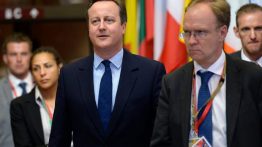
The wonder about Sir Ivan Rogers’s resignation as Britain’s ambassador to the EU is that he was still in the job. He may have possessed useful knowledge about the workings of the EU, but he was also heavily associated with a failed way of conducting negotiations with it. It was he who advised David Cameron last February on his unsuccessful renegotiations of Britain’s relationship with the EU, which failed to convince the British people to vote to remain in the union. It would have been better and less disruptive had he resigned in the wake of the referendum last June, along with the Prime Minister.

There’s a simple explanation for the Brexit ‘hate crime’ spike

From our UK edition

A New Year is upon us and a new wave of racism, bigotry and xenophobia is meant to be stalking our land. That’s according to a Sky poll released on Monday which proclaimed that ‘Britain is more racist and less happy since Brexit vote’. If this made you check your pulse and wonder what racism has started coursing through your veins since June 23rd, fear not. The headline does not reflect reality but simply some peoples’ perception of reality. It is the result of a question in the poll which asked people not whether they felt more or less racist since last June, but to answer the question ‘Would you say Britain is more or less racist than a year ago?

What the papers say: Sir Ivan ‘the terrible’ or a terrible loss?

From our UK edition

Sir Ivan Rogers is stepping down from his role as the UK’s ambassador to the EU - but is his departure really such a great loss? In his explosive resignation email, Rogers urged his colleagues to challenge ‘muddled thinking’ and ‘speak truth to power’, in a parting shot at Theresa May. So is this evidence of a Brexit botch-up? Not so, says the Sun, who calls the departing diplomat ‘Ivan the terrible’ and says it won’t weep over his decision to quit. A quick glance at the ‘pathetic empty shell’ of David Cameron’s EU renegotiation deal is all you need to see as to why Roger’s resignation is no great loss, the paper says.

Face it, Labour: you are now a painfully middle-class party

From our UK edition

Today’s Fabian Society paper on the state of the Labour Party — and what a state it is — has put Labourites and the leftish Twitterati into a spin. Aptly titled ‘Stuck’, the paper says just over half of the people who voted Labour in 2015 support the party today. And if an election were called right now Labour could expect to win a measly 200 seats: 40 fewer than in 2015 and 70 fewer than in 2010. Most strikingly, Labour has lost four times as many Leavers as Remainers.

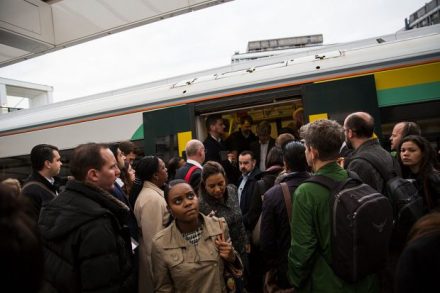
What the papers say: Foreign aid, commuter misery and financial market woes

From our UK edition

Leaving the EU was all about taking back control - and it’s time to do the same with Britain’s foreign aid budget, says the Daily Telegraph. It describes the target set by David Cameron for the UK to spend 0.7 per cent of its GDP on foreign aid as ‘ill-judged’. Making a comparison with the Brexit vote, it warns the Government to listen to voters' concerns about the levels of spending on aid projects, ‘given that the aid target is at least as unpopular with voters  as EU membership was’.

Germany won’t break the rules for Britain’s sake

From our UK edition

Back in the summer of 2015, a year before the Brexit vote, I was summoned to the German Embassy in London for a special briefing by a senior member of Germany’s Social Democrats. The man from the SPD didn’t mince his words: David Cameron might secure a few small concessions in his forthcoming renegotiation with the EU, but it was inconceivable that he could obtain any significant changes in Britain’s relationship with Europe. For Germany, free movement of people within the European Union was sacrosanct - and even if Deutschland had been willing to change the rules for Britain’s sake, any major alteration would need to be ratified by all the other member states. That process would take years, not months. There simply wasn’t time.

A Brexit bust? No, the real danger lies in the debt-fuelled boom

From our UK edition

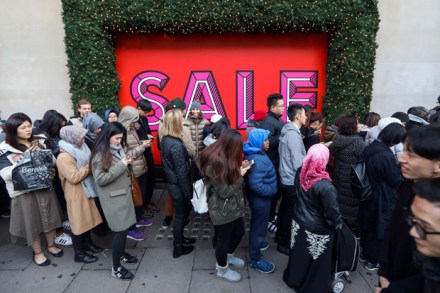
At the Westfield shopping centre in east London, the queues started at 2 a.m. on Christmas night. In Wrexham, people started lining up at three, getting ready for a six o’clock start. In Edinburgh, hardy shoppers braved flurries of morning snow to make sure they were first in line for Boxing Day bargains. Whatever else is happening at the close of this year, British shoppers are as indefatigable as ever in their determination to keep spending. Surely it wasn’t meant to be like this? In the wake of the vote to leave the EU back in June, mainstream economists were unanimous in their view that we would be in a recession by now.

Brexit means that few years will be as memorable as 2016

From our UK edition

Few years will live as long in the memory as 2016. Historians will ponder the meaning and consequences of the past 12 months for decades to come. In the future, 180-odd years from now, some Zhou Enlai will remark that ‘it is too soon to say’ when asked about the significance of Brexit. The referendum result shocked Westminster. Michael Gove was so sure it would be Remain that he had retreated to bed on the evening of 23 June and only found out Leave had won when one of his aides telephoned in the early hours of the morning. Theresa May admits in her interview with us that she was ‘surprised’ by the result and had been expecting a Remain vote, based on both the polls and the mood in her own constituency.

2016 has been one of the greatest years ever for humanity

From our UK edition

Nothing better sums up the aloofness of the chattering class, their otherworldliness in fact, than their blathering about 2016 being the worst year ever. It’s the refrain running through every Brexitphobic column, every historically illiterate comparison of Trump to Hitler, every tear-sodden list of the big-name celebs who’ve died this year. 2016 is ‘the f--king worst’, says Brit comic in America John Oliver. These people don’t know what they’re talking about. The worst? 2016 has been one of the best years yet for humankind. This year it was announced that global life expectancy is increasing at a faster rate than at any time since the 1960s.

High life | 29 December 2016

From our UK edition

What a great year this has been, what a good mood I’m in, why, it’s almost like being in love. The year 2016 will be seen as the worst ever by many patients of Dr Klinghoffer, the famous German psychiatrist who treats those suffering from the extreme distress of post-electoral disappointment syndrome, and a man about to make a fortune treating the poor dears. There are many Brits under the Herr Doktor’s care, and his clinic, situated near Ossining, New York, resembled a British retreat for broken-down thespians following 23 June of this annus mirabilis. Now more American voices have been added, and when I last spoke to Dr Klinghoffer his heavy German accent sounded almost Hollywoodian: ‘Zese people are worse than ze English, zey cry at ze sight of an appleshdrudel.

Real life | 29 December 2016

From our UK edition

What a fraught, divisive, infuriating sort of year it’s been. It started with me attempting to go on a blind date and being clocked by a speed camera doing 35 in a 30 in the dark on the way home. And on the way to the speed course, obviously, I pranged my car trying to park. I took this to be an omen. The ex-builder boyfriend was duly dusted off and put back into active service. In February, while having two new tyres fitted at a tyre shop in Wandsworth, I found myself being hit on by a jihadist tyre-fitter. We got chatting as I sat in his waiting room. He sat at his desk, beneath a golden passage from the Koran, and I somehow ended up telling him I had been to Iraq. The next thing I knew he was confessing to the fact that he was just back from there, for top secret reasons.

Long life | 29 December 2016

From our UK edition

New Year’s Day is the most depressing of holidays. It doesn’t celebrate anyone or anything worth celebrating. It simply marks the passage from one year to the next, something so predictable and uninteresting that it’s hardly worth mentioning. Yet people see it as a great opportunity to start again, to turn over a new leaf, to make times better and happier than before. It’s an odd moment in which to be optimistic, when the winter is deepening and the debts incurred over Christmas are waiting to be paid. But nothing stops millions from greeting this non-event with wine and song and gaiety as the clock strikes midnight.

Letters | 29 December 2016

From our UK edition

Unencumbered Sir: Matthew Parris’s bizarre reference (‘Unforgiven’, 10 December) to the UK economy as merely ‘medium-sized’ is a classic instance of Remainers’ tendency to pass Britain off expediently as a vulnerable country on the margins of Europe, which couldn’t survive without our EU umbilical cord. The UK is actually the fifth or sixth largest of the world’s nearly 200 national economies. If we are only medium-sized, how can all the world’s ‘even smaller’ economies — such as India, Canada, South Korea or Australia — possibly hack it as independent sovereign states outside any supranational governance bloc like the EU? How have they managed so far?

The IPPR is simply trying to create anti-Brexit noise, and it has succeeded

From our UK edition

How much more desperate can the Remain lobby’s propaganda become?    Having had its predictions of instant economic doom comprehensively disproved by events, it is dreaming up ever more devious ways of trying the hector the country into thinking that it made a huge mistake on 24 June. Today, the Institute of Public Policy Research, a think tank closely associated with the Blair-era Labour party, publishes a report trying to predict what life in Britain will be like in the 2020s. It was eagerly lapped up by the BBC and the Guardian, who seem to favour this sort of stuff over reporting genuine, good, economic news. Needless to say, neither picked up on the IPPR’s rather obvious economic illiteracy.

For the first time in my life, I feel ashamed to be British

From our UK edition

We’re closing 2016 by republishing our ten most-read articles of the year. Here’s No. 3: Matthew Parris's article from July, where he says the fallout from the referendum has left him feeling ashamed to be British for the first time. Before even writing this I know what response it will meet. Some who fought for Leave on 23 June will be contemptuous. ‘Bad loser’, ‘diddums’, ‘suck it up’, ‘go and live somewhere else’. From the online Leave brigade who stalk the readers’ comments section beneath media columns I’m already familiar with the attitudes of the angry brigade; but aware that there were also plenty of perfectly sane and nice people who took a considered decision to vote for our exit from the EU.

Populism vs post-democracy

From our UK edition

Europeans are usually alarmed or sniffy about American concern for democracy’s fate, but this time liberal opinion on both sides of the pond sings in unison: populism is a threat to democracy. A recent issue of the Journal of Democracy (a sober publication published by America’s National Endowment for Democracy) provided a handy compendium of all the parties, policies and histories that can be included in the vast cabin-trunk of populism. A lead article by Takis S. Pappas, a Greek political theorist living in Hungary, lists 22 different parties he cautiously calls ‘challengers to liberal democracy’. He breaks them down into three categories: anti-democrats, nativists and populists. (All are commonly called populists in European and American media.

A different class of snob

From our UK edition

‘Ah, beware of snobbery,’ said Cary Grant, who was surprisingly often the smartest guy in the room. ‘It is the unwelcome recognition of one’s own past failings.’ In Britain, the only place where true toffs abide and, let’s face it, the place where modern snobbery was most successfully codified, it is still a more powerful force than we like to acknowledge. Brexit was a comedy of the thwarted snobbery of the right and left. A referendum was organised by a Remainer toff who assumed he would win because, well, he was a toff. He was, in the event, comprehensively defeated and deposed.