Brexit

Theresa May’s Brexit speech – ten main points

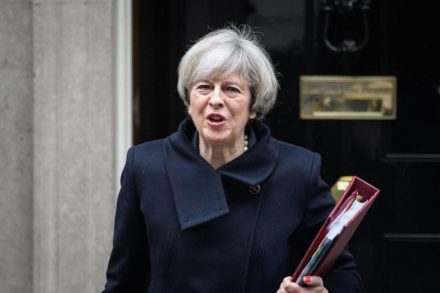
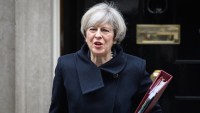
‘A Global Britain’ promised the slogan behind Theresa May as she delivered her big Brexit speech. It was robust and well-judged, very much in the tone of The Spectator‘s leading article endorsing Brexit – she even used the same ‘Out, and into the world’ language we put on our cover. The referendum, she said, was ‘a vote to restore, as we see it, our parliamentary democracy, national self-determination and to and become even more global and internationalist in action and in spirit.’ She spoke so persuasively about the case for Brexit that you almost forgot that she campaigned (or, at least, voted) against it. But after a decent period of reflection, her conversion to Brexistism is

Will Theresa May finally tell us what Brexit means?

How much will Theresa May’s speech today surprise us? The Prime Minister’s promise to offer more detail on Brexit was made before Christmas, but Number 10 types seemed curiously relaxed about the prep for the speech over the holiday. And even though those briefing the speech over the weekend warned of a ‘market correction’, this is likely to have been as much to suggest that the speech was going to be big and revelatory as it was to actually warn about its content. Today we will get the 12 priorities for May’s negotiation of Britain’s exit, which will be guided by four key principles. Those are ‘certainty and clarity’, ‘a

Daniel Hannan ought to be afraid of a hard Brexit – and so should you

The British people, whose good nature is so frequently abused, could have done with hearing today’s argument from Daniel Hannan during the referendum campaign, could they not?  Before he and his band of zealots received authorisation to manage our economic and political future it would have been good manners if they had told us how far they wanted to go. All the way, seems to be the answer now.  In the bluff language of a drunk roaring on friends in a barroom brawl, Hannan tells us on the Spectator website not to be ‘wusses’. So what if, and contrary to what they told us last year, Brexit now means crashing

Who’s afraid of a ‘hard’ Brexit?

Pull yourselves together, you wusses. It’s a minor readjustment of our tariff arrangements we’re talking about, not an epidemic or a foreign invasion or an asteroid strike. Not that anyone would guess it from the apocalyptic vocabulary you’re using. ‘A hard Brexit,’ says Keir Starmer for Labour, ‘would be catastrophic for our economy, living standards, jobs and future prosperity’. Tim Farron, the Lib Dem leader, agrees it would be ‘economically disastrous’. The CBI calls it ‘very negative’. Sound familiar? We became accustomed to such over-the-top language during the referendum campaign. The very act of voting Leave, we were told, would cause an immediate recession. Unemployment would surge and the stock

Portland expands its horizons post-Brexit

As Michael Gove does his bit for US-UK relations in The Times today with a Donald Trump interview on the positives of a quick trade deal, his former staff, too, are on manoeuvres to boost post-Brexit business. Mr S understands that Gove’s former SpAd — and Vote Leave adviser — Henry Cook has joined Portland Communications as the PR firm’s new Associate Director. Cook joins Victoria Dean’s Brexit unit to offer advice to businesses on the opportunities the Leave vote presents. Given that Portland was once the home of New Labour — and remains the scourge of the Corbynistas — his arrival shows just how much the political landscape has changed. But while the firm was founded by Blair

Princess Diana understood what ‘global Britain’ meant. Does Theresa May?

So, ‘global Britain’ eh? This, we are told, will be the leitmotif for Theresa May’s Brexit speech tomorrow and, indeed, for her approach to international affairs more generally. And who could disagree with any of that? The argument will, of course, be couched in economic terms. The spirit of Britannia will be unleashed to sail the world’s oceans. Britain is back, you know. We shall show the doubters what we’re made of and by jove we’ll make a success of Brexit. Well, let us hope so. There are many kinds of internationalism, however, and I’m not sure – at least not sure yet – the buccaneers really appreciate, far less

An ‘Anglican Brexit’ is Britain’s best hope

One of the many admirable aspects of Japanese culture is that they have developed strong taboos against triumphalism in politics. When one person scores a clear political victory over another there is pressure for him to play down that win and to present the result as a compromise. It’s the natural response of an island nation to early modern political turbulence and division, which harbours a desire to never repeat the experience. Likewise with the British, who after the wars of the three kingdoms became adept at creating a political system that rewarded compromise and discouraged extremism. Like many of the good things we’ve come to grow up with, the downside

What the papers say: Donald Trump’s deal with Britain

It’s difficult to escape from Donald Trump’s interview with Michael Gove in the Times this morning. The president-elect’s view that he wants a quick trade deal with Britain is not only leading a number of newspaper front pages, it’s also stirring up excitement in the editorials. Here’s what the newspapers are saying: In its editorial, the Times says its interview with the ‘refreshingly candid’ president-elect should reassure us about the prospect of a Trump presidency. Take Syria, for instance: it’s true that Trump ‘clearly grasps’ the scale of the crisis there. It’s also ‘reassuring’ to hear Trump commit to a strong Nato. And the fact he wants early talks with Theresa May on

The Brexiteers turn on the plebs

The trouble with plebiscites is that they leave the plebs stranded. A complicated issue is reduced to one question: should we leave the EU, yes or no. Nowhere on the ballot does it ask whether we should leave the single market or currency union, crash into the WTO without trade agreements with the rest of the world, or tear up employment protections. There is just the deceptively simple question. It provides no guidance to which of the thousands of possible futures we could chose when it is answered. The Leavers might have interpreted the referendum result as meaning Britain should embrace the Norway model; and pay the price for staying

Trump Team preparing US / UK trade deal

Boris Johnson returned from the US this week boasting that the UK was now ‘first in line’ for a trade deal with the US. He said that the Trump team and the new Congress ‘want to do it fast’. But as I write in The Sun this morning, the situation is even more advanced than this. I understand that the Trump team is already working on the outlines of a US / UK trade deal. Interestingly, they want the deal to be pencilled in before the UK leaves the EU, though the UK could not formally sign it until it has left the bloc. The US’s keenness for a trade

After Brexit and Trump, it’s time for Davos Man to admit defeat

Business cards. Check. Contacts book. Check. Stylish ski jacket. Check. If it is mid-January, the global elite, and certainly anyone who aspires to membership of that slightly nebulous group, will be packing their bags and flying, preferably by private jet, to the chic Swiss ski resort of Davos. Over the course of a few days, they will sort out the world’s problems, between munching canapés, and bagging some lucrative contracts for their bank. If globalisation has a spiritual headquarters, it is the World Economic Forum, to give it its full name. When the political scientist Samuel Huntingdon coined the term ‘Davos Man’, he turned it into a short-hand for the

What happened after I ‘voted’ twice in the EU referendum?

Kind readers sometimes ask what has happened to the case against me for electoral fraud. In these Notes on 20 August, I revealed that I had drawn attention in the EU referendum to the ease with which one could vote twice. Legitimately registered to vote in Sussex and in London, I had voted Leave in Sussex, and then gone to London, collected my ballot paper unchallenged, and spoilt it by writing on it that it was ‘my protest at how lax the voting rules are’. The Electoral Commission then publicly announced that it was referring my case to the police. Just before Christmas, I was dismayed to receive a letter

Leak suggests EU will seek ‘special’ deal to access the City post-Brexit

The Guardian has a very significant story on its front page tomorrow. It has obtained notes of a meeting that Michel Barnier, the EU’s chief negotiator, had with senior MEPs this week. These notes show that Barnier told them that he wanted a ‘special’ deal that would guarantee access for the EU firms and countries to the City of London’s financial markets. Interestingly, Barnier also said—according to The Guardian’s account—that ‘There will need to be work outside of the negotiation box … in order to avoid financial instability.” This suggests that Barnier shares Mark Carney’s view that there are financial stability risks for Europe if the EU cuts itself off

May might not give much away in Brexit speech

How much detail does Theresa May need to give in her much-anticipated Brexit speech on Tuesday? The Prime Minister will presumably have to say more than ‘Brexit means Brexit’, and odd phrases about what colour Brexit should be (red, white and blue) won’t pass muster either. But remember that the original big Brexit speech at the start of a year was the Bloomberg speech that David Cameron gave in 2013 – and he gave so much detail about what he wanted from a renegotiation of Britain’s relationship with the European Union that he was inevitably going to disappoint, which he then did, taking Britain out of the EU as a

What the papers say: When is a hate crime not a hate crime?

Amber Rudd’s speech on foreign workers at the Tory party conference has been reported to police as a hate crime. The Oxford professor who made the complaint said he took issue with what he described as the Home Secretary’s discrimination against workers from overseas. The Home Office has hit back, saying the (now scrapped) suggestion that firms might be asked to say how many overseas staff they employ was not a hate crime. But the way in which police must deal with reports like this mean that if someone reports an incident as a hate crime, police are obliged to record it as such. And the row has provoked an angry

Letters | 12 January 2017

Freudian slap Sir: In his Notes (7 January), Charles Moore explores the uncharacteristic reaction of Matthew Parris to the referendum result. What is most puzzling about Parris and so many others like him is that their present outrage has so little in common with their rather tepid support for the EU in the run-up to the vote. Such a mismatch of cause and effect suggests a Freudian explanation may be appropriate. When an impulse is felt to be so dire that it cannot be expressed, a new object is substituted and the feelings are thus ventilated. Yet what original threat could be so catastrophic as to provoke such end-of-our-world hysteria

High life | 12 January 2017

There are Dames and there are dames. Dame Vivien, an old friend, became one for her philanthropy. Dame Edna, the creation of yet another friend, was given a damehood for her middle-class morality and upper-class pretensions. And now we have Dame Anna of Vogue, honoured for affecting a faux-aristocratic grandeur to the peasants of the fashion world. There is only one thing to say, and that’s ‘Gimme a break.’ The last of the Dambusters crew members is refused a knighthood, Nigel Farage ditto, yet a flatulent embarrassment like Victoria Beckham is rewarded for preening and sneering. As the mayor of Hiroshima was said to have asked on that awful August

Long life | 12 January 2017

Mark Zuckerberg, the founder of Facebook, likes making and keeping New Year resolutions. In recent years he has learnt Mandarin, read 25 books, run one mile every day, and created a robot-butler to organise his home. But this year his New Year resolution is more high-minded than usual. ‘My personal challenge for 2017,’ he writes, ‘is to have visited and met people in every state in the US by the end of the year.’ Why should he want to do a thing like that? The reason is that, although only 32 years old, he is one of the richest people in the world and therefore seen as guilty of elitism;

Don’t ask the experts

Michael Gove never intended to make his most famous remark. In an interview during the EU referen-dum campaign, the then justice secretary was told that the leaders of the IFS, CBI, NHS and TUC all disagreed with him about Brexit. He had tried to reply that people have ‘had enough of experts from organisations with acronyms saying that they know what is best and getting it consistently wrong’. But he was picked up mid-sentence by his appalled interviewer. ‘Had enough of experts? Had enough of experts?’ Gove’s partial quote was held up to ridicule, as if it embodied Trump-style populist rage; the battle of emotion against reason. As it turned