Brexit

The Spectator’s Notes | 19 January 2017

It is hard to be shocked by anything in these tumultuous times, but I was brought up short by the ‘attic’ headline of Tuesday’s Times, advertising the paper’s T2 section: ‘Up close and personal with Donald Trump — Michael Gove’ , it said, and continued, ‘Sex after 50: it’s fabulous’.. The earliest members of Alcoholics Anonymous offered their famous Twelve Steps, which the drunkard must take in order to recover, born of their own experience. The Twelve Steps are still the foundation of AA. They work because they are taken by people who have hit rock bottom and realise it. The first step says, ‘We admitted we were powerless over

The irony of Corbyn’s three-line whip

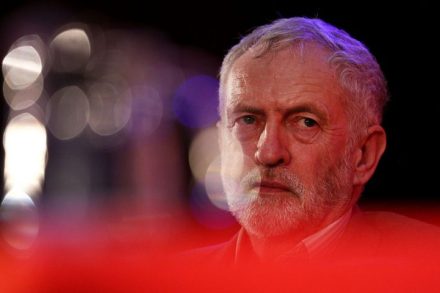
Jeremy Corbyn is a famous rebel, so famous that when he was elected, many in his party wondered how he might tell MPs to vote the way he wanted them to when he himself had refused to listen to the whips throughout his backbench career. When he was still a backbencher, he enjoyed telling a tale about Sadiq Khan, then his whip, ringing him up to check he would definitely be rebelling on a certain vote, and not bothering to waste his energy trying to get him to abstain instead. Now the Labour leader is faced with one of those awkward moments that involve him telling his MPs to vote

Voting ‘leave’ meant leaving the single market – and most voters knew it

The angrier, snootier sections of the Remain camp have done many bad things since 23 June. Some have suggested Brexit should be overthrown. Others have issued terrible libels against Leave voters, branding them ‘low information’ and xenophobic. Witness Nick Clegg in this Guardian video published this week having a good old laugh at Sheffield people who voted for Brexit after apparently falling for the ‘emotionally pungent’ claims of Leave leaders. But worst of all has been their sly rewriting of history. They’re engaged in a campaign to misremember the referendum, to depict it as a time of lies and idiocy, of racism unleashed. They’ve cranked up the memory holes, sharpened

The Spectator podcast: You’re fired!

On this week’s episode, we discuss the winners and losers as Trump moves into the White House, where Theresa May’s Brexit strategy is headed, and whether you can wear fur so long as the animal died in a snowstorm. First, the world’s media is currently congregated in Washington for the inauguration of Donald Trump as the 45th President of the United States. But what will happen when Trump swears the oath of office, and what will it mean for the UK and the rest of Europe? We had a peek behind the curtain this week, thanks to The Times’s intrepid reporter Michael Gove, but whilst we wait for the full reveal, we

Ireland will have the hardest Brexit of all

Irish eyes aren’t smiling – when it comes to Brexit. As one who hails from the Emerald Isle, I’ve taken plenty of ‘schtick’ from Irish diplomats, relatives and pundits after publicly voting to leave. For the Republic of Ireland, European Union membership carries deep political significance. Joining in 1973, along with the UK but on equal terms, was hugely symbolic. A country then less than 30 years old was finally able to represent itself on the world stage. It is this escape from British dominance, more than Brussels-funded motorways, that makes EU membership central to modern Ireland’s identity.  Liam Halligan and James Forsyth discuss Theresa May’s Brexit plans: That’s why

May has taken back control

‘No negotiation without notification’ has been the EU’s mantra since 24 June last year. Its leaders have been determined that there’ll be no talks before Britain has formally submitted its Article 50 letter, starting the two-year countdown to this country leaving the union. Even now, after Theresa May has set out her Brexit plans with a decent amount of detail, the EU is sticking to this line. Why? Because it wants Britain to be negotiating against the clock. Despite this, there have been informal conversations over the past six months that have helped forge the Brexit strategy that May set out on Tuesday. EU leaders’ insistence that they won’t compromise

A renewed special relationship

Freddy Gray, Paul Wood and Kate Andrews discuss Trump’s arrival at the White House:   As president, Barack Obama was too cool for the special relationship. The romantic bond between the United States and Great Britain, which always makes Churchill fans go all soggy-eyed, left him cold. Obama was more interested in globalism, ‘pivoting’ to Asia and the European Union. Donald J. Trump is a very different creature. The new US President seems to cherish Great Britain, whereas the EU annoys him. Brexit is beautiful, he believes — and the EU is falling apart. Trump may or may not know the name of the British Prime Minister but, as he

Theresa May’s Twelve Steps for EU recovery

The earliest members of Alcoholics Anonymous offered their famous Twelve Steps, which the drunkard must take in order to recover, born of their own experience. The Twelve Steps are still the foundation of AA. They work because they are taken by people who have hit rock bottom and realise it. The first step says, ‘We admitted we were powerless over alcohol — that our lives had become unmanageable.’ Theresa May’s Twelve Objectives, announced in her outstanding speech at Lancaster House of Tuesday, play a similar role for national recovery, substituting the words ‘European Union’ for ‘alcohol’. Until the June referendum, Mrs May, like millions of others, barely even admitted there

SNP MP’s fake news

Although Theresa May’s speech revealing her plan for a global Britain was well-received by her party and much of the media yesterday, the SNP found much cause for concern. While Nicola Sturgeon has said May’s announcement that the UK will leave the single market makes a second independence referendum more likely, Paul Monaghan has a different interpretation. The SNP MP has tweeted out what Theresa May has said ‘in her own words’ a hard Brexit would mean. It comes with a quote — attributed to May — claiming: ‘Yes, things will cost more. Yes, you’ll have to retire later. Yes, our standing in the world will decline.’ Only May said

Theresa May prepares to play tough

Theresa May’s Lancaster House speech sought to answer the question: does the Government have a plan for Brexit? Open Europe’s judgement is that she succeeded. And she also started to set out a wider vision for the UK’s relationship with the EU, linking it both to Britain’s place in the world, and to her own domestic vision – for the sort of country ‘we want to be’. At first sight the Prime Minister’s 12-point plan for a global Britain seems to be a masterclass in common sense. We welcome her clarity on various points, including that – inevitably – both Houses of Parliament will vote on the UK’s final deal

A full English Brexit is on the menu

Kipling wrote about Brexit first, you know: “It is always a temptation for a rich and lazy nation, To puff and look important and to say: Though we know we should defeat you, We have not the time to meet you. We will therefore pay you cash to go away.” That, in essence, was David Cameron’s approach to the eurosceptics within his own party. Promise to pay just enough to keep them satisfied in the hope they would not then be emboldened to come back for more. But, as Kipling knew: “And that is called paying the Dane-geld; But we’ve proved it again and again, That if once you have

Hard Brexit it is – and the currency markets don’t seem to mind

A hard Brexit, currency markets seemed to indicate yesterday, would mean an even weaker pound. How, then, to explain this afternoon’s surge in sterling, which surged from just over $1.20 to just under $1.24 within a couple of hours of Theresa May’s speech? The rise more than reversed the falls since Monday morning, when the contents of the Prime Minister’s speech first became apparent. In other words, the market for sterling seemed to fear hard Brexit, but when it got hard Brexit it turned jubilant. Some have interpreted the rise as a reaction to Theresa May’s announcement that once the Brexit deal has been done it will be subject to

May just made another Scottish referendum ‘more likely’, says Sturgeon

Nicola Sturgeon inched Scotland closer to a re-run of its independence referendum today by reacting angrily to Theresa May’s Brexit speech. Having already put indyref2 ‘on the table’ – but not for this year – Scotland’s First Minister said the Prime Minister’s speech today had made another independence vote ‘more likely’. ‘The UK Government cannot be allowed to take us out of the EU and the single market regardless of the impact on our economy, jobs, living standards and our reputation as an open, tolerant country, without Scotland having the ability to choose between that and a different future,’ the First Minister said. And she added: ‘With her comments today, the Prime Minister has

No real opposition from Labour to May’s Brexit speech

With Theresa May opting to give her speech in the grand settings of Lancaster House rather than the Commons, it fell on David Davis to face anxious MPs in the House. With many MPs feeling sidelined by the Prime Minister, the Brexit secretary summarised May’s speech — re-asserting that the final deal will be put to a vote in the Commons and adding that Britain will seek an interim agreement in order to avoid the economy falling off a cliff edge. Keir Starmer, the shadow Brexit secretary, responded by announcing his disappointment that May had avoided answering questions in the Commons. However, while Jeremy Corbyn took to the airwaves to accuse May

Theresa May’s cheery Brexit threat to EU leaders

Theresa May was at pains in her Brexit speech and in the question-and-answer session from journalists afterwards to appear as friendly as possible to European leaders. She pointedly took questions from members of the European press who were present. She told the room that ‘we are leaving the European Union, but we are not leaving Europe’, and addressed ‘our friends across Europe directly’, promising that Britain would continue to be ‘reliable partners, willing allies and close friends’. But she also took a very strong negotiating line, threatening what David Cameron either couldn’t or wouldn’t, which was to walk away if the deal offered wasn’t good enough, particularly if EU leaders

Coffee House Shots: Theresa May outlines her Brexit plans

In front of a packed audience at Lancaster House, Theresa May delivered a speech outlining some of the key components of the Brexit deal that she is seeking. As Fraser Nelson dissects in his piece, there was confirmation of the UK’s exit from the single market and customs union, along with other telling hints about her negotiating strategy. Isabel Hardman is joined on Coffee House Shots by Fraser and James Forsyth, the Spectator’s Political Editor, to pick out the essential soundbites from May’s speech, which opened, not unlike the Spectator’s Brexit endorsement, by encouraging the UK to go ‘out, into the world’. You can listen to their discussion here: And if you enjoyed that,

The problem with Brexit Britain? Slavery, says Lily Allen

Today Theresa May revealed her plan for ‘a global Britain’ in a speech at Lancaster House. While her words were well-received by her party and the media, not everyone is so convinced. Step forward Lily Allen. Yes, the pop singer — who last year apologised ‘on behalf of my country’ on a visit to the Calais ‘jungle’ camp — has taken to Twitter to offer her two cents’ worth on May’s proposals. Alas it’s not good news. Allen says although a global Britain ‘could b good’ it might not happen as the ‘world still hates us’ because of… slavery. While many Europhiles and EU officials no doubt have plenty of reservations

Theresa May’s Brexit speech: A Global Britain

Listen to Isabel Hardman, Fraser Nelson and James Forsyth reviewing Theresa May’s speech:   A little over six months ago, the British people voted for change. They voted to shape a brighter future for our country. They voted to leave the European Union and embrace the world. And they did so with their eyes open: accepting that the road ahead will be uncertain at times, but believing that it leads towards a brighter future for their children – and their grandchildren too. And it is the job of this Government to deliver it. That means more than negotiating our new relationship with the EU. It means taking the opportunity of