Brexit

A US / UK free trade deal is the big prize for Theresa May

Theresa May’s team will be basking this morning in the write-ups of her successful visit to Washington. As I say in The Sun this morning, the big prize for her is a US / UK free trade deal. Government ministers think that, given the political will on both sides, the deal could be negotiated in just eight months. There is also confidence in Whitehall that the US will be prepared to grant an exemption for public services which would ‘protect’ the NHS. This should do much to reduce the intensity of the opposition to the deal. Trump’s protectionist rhetoric is often cited as a reason why a US / UK

High life | 26 January 2017

 Gstaad The snows came tumbling down just as the camel-drivers headed back to the Gulf. In fact, they never saw the white outdoor stuff. And a good thing it was, too. The outdoor stuff makes everything look so pretty that the glitzy types might have been tempted to return. God forbid. Let them stick to the indoor white stuff. The problem with Gstaad is the local council. They remind me of the EU: they’re intransigent, short-sighted and stick to a losing game. In Brussels they keep passing more and more laws and regulations. In Gstaad, they keep putting up their prices and building more and more apartments. As a gentleman

Trading places | 26 January 2017

After any other US election it would cause little comment that the new president had chosen the British Prime Minister for his first meeting with a foreign leader. Yet this time, Theresa May’s trip to Washington feels quite a coup. She has fallen out of favour with her fellow EU leaders, sent home from December’s summit in Brussels without any supper as they tried to portray her as internationally isolated. Yet here she is being invited to the White House, lured with the promise of a trade deal. How long ago it seems that Barack Obama was threatening to send Britain to the ‘back of the queue’ if the country

Don’t listen to the ‘alternative facts’ being spewed out about Britain’s economy

I don’t know about Donald Trump’s press conferences, but there are certainly enough ‘alternative facts’ being spewed out by the Remain lobby. This morning the Office of National Statistics (ONS) produced its first estimate for economic growth in the last quarter of 2016. It came out at 0.6 per cent, a notch up from the 0.5 per cent which analysts had been expecting and putting annual growth at 2 per cent. We can no longer claim to be the fastest-growing economy in the G7 as annualised growth in a booming US has accelerated to 3.5 per cent. Moreover, the ONS’s figures are provisional. But we can certainly claim to be

The Spectator podcast: Holland’s hurricane

On this week’s episode, we discuss the hurricane that’s headed for Holland, the state of parliamentary sovereignty here at home, and whether taxing horses is really the way to go. First up: with elections in the Netherlands less than two months away, the eyes of Europe’s political pundits are being drawn to the clash between the incumbent People’s Party and the insurgent Party for Freedom, led by the charismatic controversialist, Geert Wilders. Will the Dutch be the next domino to fall to right-wing populism? And what exactly is the deal with Wilders, a man who was banned from travelling to Britain due to his vociferous criticism of Islam? Joining us to discuss are Douglas

Keynes’s grandchild

‘Did you really deserve the Nobel prize?’ I ask Amartya Sen. ‘Why do you think you won?’ When you’re sitting opposite the world’s most respected living economist, at a time when the dismal science is under intense scrutiny, an opening question should be punchy. Thankfully, Sen, an 83-year-old Harvard professor, has a sense of humour. ‘You can’t ask me that,’ he says with a grin. ‘I have absolutely no idea why I won.’ He then composes himself. ‘Like any researcher, I’m happy if my work interests others,’ he says carefully. ‘But it would be a pretty bad way to conduct one’s life, thinking about how to win prizes, rather than

Washington Notebook | 26 January 2017

On Wednesday afternoon I went to the British embassy in Washington for ‘a tea and champagne reception’ to mark the inauguration of President Trump. Like most institutions, the embassy has struggled to come to terms with the Donald. We all know (thanks to Twitter) that Trump wants Nigel Farage to be the UK representative in DC, which must leave the current ambassador, Sir Kim Darroch, feeling a bit tense. Still, Sir Kim managed to draw some big Republican beasts to his party: Ted Cruz, Chris Christie, Rand Paul and Newt Gingrich to name but four. Everybody said the special relationship was very special — they would, wouldn’t they? — and

Brexit’s biggest political victims: Ukip

Perversity is a much undervalued British trait, much more redolent of our real psyche than queuing, drinking tea or being tolerant of foreigners and homosexuals — all things for which we are better renowned. Seeing Dunkirk as a victory was magnificently perverse. So, too, was electing a Labour government in 2005 shortly after we had invaded a sovereign country and created a civil war. For ‘perversity’ I suppose you could read ‘complexity’, although the two often amount to the same thing. Our reactions to stuff are never as straightforward as they should be — they are complex and therefore can seem perverse. And so it is right now. For three

Should the government publish a Brexit White Paper?

Just a year ago, the phrase ‘Brexit rebels’ denoted Tory MPs like Peter Bone who had a distinguished pedigree of pushing the government to be as Eurosceptic as possible, with the odd eccentric comment along the way. Today, it means former Cabinet ministers such as Nicky Morgan, who are trying to push the government away from a ‘Hard Brexit’ – also with the odd eccentric comment about trousers. Those new Brexit rebels are now demanding that the government publish a White Paper on Brexit. Morgan, Dominic Grieve and Anna Soubry want the government to ‘formalise the government strategy in a “reasoned fashion”’, as Grieve put it. This really isn’t the

What the Supreme Court got right and wrong in today’s judgment

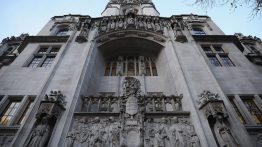
The Supreme Court has today rejected the Government’s appeal from the High Court judgment by a majority of eight justices to three.  The decision means that a new Act of Parliament will now be required before the Government may lawfully trigger Article 50.  However, the Court has also unanimously dismissed the devolution challenges, which argued that the consent of the devolved legislatures in Scotland, Wales and Northern Ireland was a constitutional precondition to Brexit. The judgment is obviously important, but perhaps less important than once assumed.  The litigation was launched immediately after the referendum.  While it was framed as an attempt to vindicate parliamentary sovereignty, the point of the litigation

Nicola Sturgeon’s Brexit charade continues

With the predictability of an atomic clock, Nicola Sturgeon has come out today condemning the Supreme Court which has reminded her that foreign affairs are not devolved, so Brexit is handled by the UK government on behalf of everyone in the UK. She concludes that ‘Scotland’s voice is not being heard and not being listened to within the UK’. She started wanting to find a compromise about Brexit, she said, trying to be reasonable. But she – or, rather Scotland because they are of course the same thing – faces ‘hard-right Brexit opinion’. Nicola Sturgeon on the UK Government not having to consult the Scottish Government before triggering Article 50. https://t.co/pfqV2e3r2F pic.twitter.com/JX6OFPyxfX —

How ‘straightforward’ can the Government’s Brexit bill actually be?

The Government may be accepting its defeat in the Supreme Court graciously overall, but David Davis was in a rather dismissive mood when he responded to Labour’s questions about the ruling in the House of Commons this afternoon. The Brexit Secretary gave a statement to the House explaining that ministers would publish ‘within days’ a bill that would give the Government the legal power to trigger Article 50. Both in the statement and in his responses to questions about it, he repeatedly told the Chamber that it would be a ‘straightforward’ bill. Meanwhile the Government had already offered MPs plenty of scrutiny of the Brexit negotiations, and the Prime Minister had

The mental gymnastics of the Brexit debate

What a lot of contortions we are seeing this morning from so many quarters about the Article 50 ruling. Brexiteers such as Iain Duncan Smith are cross with the Supreme Court for ruling that Parliament must have a say on triggering the process for Brexit, with the former Tory leader telling the BBC this morning that the judgement raised ‘real constitutional issues’: ‘They have stepped into new territory here, where they have actually told parliament not just that they should do something, but actually what they should do. I think that leads further down the road to real constitutional issues about who is supreme in this role.’ There is something

What does President Trump do to Brexit?

With Theresa May expected to head to Washington next week to see President Trump, I have a look at what the Trump presidency might mean for Brexit in my Sun column this morning. Despite his protectionist rhetoric, on full show again yesterday, Donald Trump is keen on a US / UK trade agreement. He has told people that he would like to get personally involved in negotiating the deal. I understand that his transition team has done more work on it than they have for any other agreement. Squaring the circle between Trump’s protectionist rhetoric and his enthusiasm for a US / UK deal isn’t as hard as it first looks.

Watch: Emily Thornberry’s opposition blues on Question Time

On Thursday, Jeremy Corbyn’s shadow cabinet found themselves in disarray after the Labour leader suggested he would issue a three-line whip for MPs to vote to trigger Article 50. This upset many in his party as they had hoped he would make Labour’s consent — at the very least — conditional upon certain details being revealed or caveats regarding Britain’s possible future as a tax haven. So, with that in mind, brains at Labour decided the best plan of action was to send Emily Thornberry on Question Time to field questions on the matter. Alas the shadow foreign secretary soon found herself under fire from all sides as Chris Grayling took issue with

Letters | 19 January 2017

Particle of faith Sir: Fraser Nelson draws our attention to the most worrying aspect of economists getting it wrong, which is their reluctance to recognise it (‘Don’t ask the experts’, 14 January). Some economists, seduced by sophisticated mathematical models, aspire to the status of, say, particle physicists, who can tell us they have found something called the Higgs boson. The fact that we tend to believe the particle physicists despite being more familiar with prices, jobs and buying and selling than with quantum equations comes down to physicists having a long track record of heeding the biologist E.O. Wilson’s advice: ‘Keep in mind that new ideas are commonplace, and almost

Doing Brexit right

From the start of the European Union referendum campaign, competing visions of Brexit have been advocated. To Nigel Farage, the case for leaving the European Union was all about what we did not like (the diktats, the immigration, etc). This played into the caricature cleverly presented by the Remain campaign: the shaking fist of Little England, a country that had had enough of foreigners and the tolerance that the European project represented. Then came the vision put to Britain by the Vote Leave campaign, articulated by Michael Gove and Boris Johnson. It was of a globally minded Britain, fed up with the EU’s parochialism. A country itching to go out

Diary – 19 January 2017

Donald Trump was gushing about one European leader in his Times interview this week. But it was the wrong one. The President-elect told me that he was delighted that he’d been congratulated on his election by the ‘very fine gentleman’ who was the ‘head of the European Union’. ‘Mr Juncker?’ I ventured. ‘Ah, yes,’ he replied. Inaccurately as it turns out. For the European president who’d rung to congratulate the American president-elect was not the European Commission president, Jean-Claude Juncker, but the European Council president Donald Tusk. Many of my colleagues will, I’m sure, regard Mr Trump’s error as proof of the folly of electing an unschooled barbarian to the