Brexit

Brexit is exposing the cowardice of conservatism

The decision by Conservative MPs to walk away from the Commons Committee on Exiting the EU is one of the most unintentionally revealing abdications of duty I have seen. The report they refused to endorse was polite to the point of blandness. The necessity of securing cross-party approval meant that its restrained language bore little relation to the chaos in Whitehall the committee’s hearings had uncovered. In March, the committee’s chair, Hilary Benn, showed its extent when he submitted David Davis to a tough cross-examination which the Brexit Secretary was lamentably unable to withstand.


Can Anglo-Spanish relations survive Brexit?

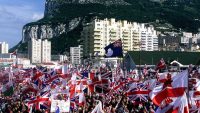
As the events of the last few days show, the increasingly toxic issue of Gibraltar means the UK's Article 50 talks with Spain might become more fraught than either party would like. It's not just that Spain wants to share sovereignty of the Rock with Britain; more dangerous is the fact that Brussels can exploit this dispute to punish the UK for Brexit. In fact, this weekend's fracas over Gibraltar's post-Brexit status shouldn't have caused the uproar it did. True, the document distributed to EU member governments on Friday by Donald Tusk highlighted Spain's ability to veto Gibraltar's inclusion in any EU-UK deal; but as part of the soon-to-be 27 member bloc, Spain already possessed that ability.

What the papers say: the Gibraltar row heats up

Theresa May says the way to deal with the row over Gibraltar is ‘jaw-jaw’ rather than war. And there is plenty of chatter on the subject in today’s newspapers: Of course we don't want a war with Spain, says the Sun. But ‘nor will we sit quietly’ and let Madrid ‘launch its latest ridiculous attempt to claim the territory’. Some have said that Theresa May brought this mess upon herself, by failing to namecheck Gibraltar in her Article 50 letter to the European Union last week. This isn’t the case, says the paper, which points out that the PM is right to say the Rock’s ‘future is settled and its people aren’t a bargaining chip’.

Why ‘no deal’ broke the Brexit committee

Last week, disgruntled MPs walked out of a meeting of the Commons Brexit Select Committee -- chaired by Hilary Benn -- in protest at a report they claimed was 'too gloomy'. Today that report has been published in its 155-page entirety.  As expected, the committee is divided over its contents -- with Tory members of the committee objecting to it. Dominic Raab says it is 'rushed, skewed and partisan', while his fellow committee member Alistair Carmichael claims it's a devastating critique that shows 'the government’s handling of Brexit makes a Jeremy Corbyn reshuffle look like a smooth operation'.

Theresa May is heading for trouble over the Brexit ‘divorce’ bill

ICM, who Vote Leave used for their own referendum polling, have some striking numbers on what elements of an EU exit deal British voters would find acceptable. 54 per cent of voters regard maintaining free movement as part of a transition deal - something that Theresa May wouldn’t rule out in her interview with Andrew Neil - as acceptable. However, there is clearly going to be a big problem with any exit payment. 64 per cent regard a £10 billion payment as unacceptable, with that figure rising to 70 per cent for a £20 billion payment—which is at the low end of what people in Brussels think Britain ought to pay. This, obviously, presents a political problem for May: how does she square the public on such a payment?

Is Emmanuel Macron part of an establishment plot?

In 2002, I befriended an old Frenchman called Andre. He had been a resistant, one of the first, and when the SAS parachuted into the wooded, rolling countryside of the Morvan in central France, he was there to greet them. For three months in the summer of 1944, the SAS and the Resistance waged a guerrilla war. It was a brutal campaign. Andre took me to the church tower from where the Germans had hurled the village priest, and he showed me the forest clearing where his Resistance group had shot a 15-year-old boy for betraying one of their number to the Nazis. Andre also told me about his acquaintanceship with François Mitterrand. They first met shortly after the war when Mitterrand was elected Andre's MP having artfully wooed supporters from the left and the right.

The great Brexit exodus of EU students isn’t all it’s cracked up to be

Remember the hoo-ha about the sharp fall in the number of EU students applying to study at British universities? Numbers were down, we were told, and there was only one reason: Brexit. In the months since the referendum, applications from EU students have fallen by seven per cent. Nicola Dandridge, chief executive of Universities UK, told MPs they were ‘concerned about EU numbers’. These Brexit jitters were nothing new; in its initial application stage which ended in October, Cambridge University announced a 14.1 per cent dip year-on-year in students from the continent applying to study there. A spokesman for the university said there was ‘considerable uncertainty’ felt by EU students in the wake of the referendum.

How good a businessman is Donald Trump?

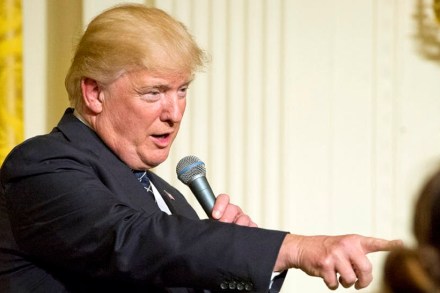
How good a businessman is Donald Trump? Maybe the answer doesn’t matter, since barring death or impeachment he’ll be the most powerful man in the world until January 2021, or even 2025, come what may. Or maybe it does matter, in the sense that the only positive spin to be put on his otherwise ridiculous presidency is that the irrepressible cunning of the real-estate tycoon will eventually win through for the good of America — and thereby, we must hope, the good of the free world — against opponents who have smaller cojones and less dealmaking prowess than the Donald does. ‘He’s the closer,’ declared White House spokesman Sean Spicer, shortly before his boss failed to close his biggest political deal so far, the American Health Care Act.

The joys of Brexit

The thing that got me about the photo-graph which prompted the Daily Mail’s harmless but now infamous headline ‘Never mind Brexit — who won Legs-it!’ was what I shall call the Sturgeon Lower Limb Mystery. In the photograph, the SNP leader seemed to be possessed of two slender and very long legs indeed. Whereas we know from television news footage that her legs are only seven inches long from her toes to that bit where they join the rest of her body. Walking to Downing Street for meetings, or being interviewed on the hoof by camera crews, Nicola Sturgeon usually resembles a slightly deranged Oompa--Loompa, or, as many have commented before, Janette Krankie.

Britain and the EU probably will reach a trade deal. Here’s why

Most diplomats in Brussels will tell you that Theresa May has just embarked upon a fool’s errand, that Britain might wish for a free-trade deal with the European Union but will have to learn that it can’t cherry-pick. Anyway, they say, nothing of any value can be agreed in two years. This received wisdom can be heard, under various iterations, in most capitals in Europe — and it’s natural that the EU will be sore, perhaps a little defensive. But there is a free-trade deal to be struck. First, a declaration: I didn’t want Britain to leave the EU. I’m a Swede running a free-trade thinktank in Brussels and can tell you that the UK’s absence will be sorely felt by all of its allies.

European politics is following in Israeli footsteps

For Israelis, Europe's political landscape is looking increasingly familiar. Whereas Israel was once seen as something of a political backwater, nowadays it's European politicians who seem to be gazing across to Israel for inspiration. Those on the right are leading the way: from Marine Le Pen and Geert Wilders to Austria’s Norbert Hofer, this group of populist politicians are tending to see in Israel’s brand of nationalism a model for their own. In January, Le Pen spoke of a 'patriotic spring' of nationalism in Europe; she went on to say that 'we are experiencing the return of nation-states'. And who better to provide inspiration for that than Israel?

Theresa May’s Brexit negotiation has got off to a good start

There’s an awfully long way to go, but the Brexit negotiations got off to a good start for Theresa May this week I say in The Sun today. Number 10’s great worry was that there would be an immediate no from the EU to what it proposed. That is why May’s Article 50 letter was written in such a conciliatory and constructive tone—it was meant to be impossible to simply say no to. This approach has had some success. In his negotiating guidelines, EU Council President Donald Tusk doesn’t suggest that the UK has to hand over the so-called divorce payment before trade talks can start—something which would have been unacceptable to the UK government.

An independent Britain’s top priority: staying friends with the EU

On 29 March 2019 the Queen should have a state dinner and invite the European Union’s 27 heads of state and its five presidents. The evening’s purpose would be to toast the new alliance between the United Kingdom and the EU: one based on free trade, security cooperation and shared democratic values. This celebration of the new alliance will be especially welcome after two years of negotiations which are bound to be fraught and, at times, ugly. The complexity and the sums of money involved pretty much guarantee this. There is, though, a particular onus on Britain to keep things civil. We have chosen to end this failed relationship, so we should brave the insults and not feel the need to respond to every Juncker jibe.

The European Council pulls its punches in its draft Brexit plan

So we have the first sight of the European Council’s draft negotiating guidelines. They’re much more constructive that we would have been lead to believe. And there are no big surprises. The first headline point is that there is no mention of the €60 billion figure which Jean-Claude Juncker and the European Commission have loved to go on about. In fact no figure is mentioned at all. The section on money is restricted to saying that debts will need to be settled – something Theresa May has already acknowledged. It does not say when the cheque needs to be signed: A single financial settlement should ensure that the Union and the United Kingdom both respect the obligations undertaken before the date of withdrawal.

Confirmed: UK economic growth accelerated after the Brexit vote

All of the blank ink that the FT used on the day after the Brexit vote, all of those predictions of the job losses and recessions – and still, the economy still refuses to behave as those economists predicted. Not only did British economic growth actually accelerate after the Brexit vote (GDP now confirmed at 0.7pc up in the last three months of 2016) but the confidence continues. A Deloitte survey of chief financial officers finds their optimism at an 18-month high as they become more relaxed about Brexit. As has the Bank of England (see below).

Now is not a good time to be making enemies

I always thought leaving the EU would be a cause for celebration, but the sight of Donald Tusk accepting the Article 50 letter this week just made me feel a bit sad, and that we had let down our friends and neighbours. One of the things Brexit has done is made me realise how European I feel, and I'm sure I'm not alone. I always found Vote Leave's whole Commonwealth shtick a bit disingenuous, because we have far more in common with the Dutch and the Germans than with most non-European countries, even those we did forcibly make part of our empire against their will.

Theresa May is right to be troubled about the prospect of Irish reunification

Amidst the apparent chaos in the days after the Brexit vote, one important story largely slipped under the radar. Now, the demand issued by Sinn Féin for a border poll on reunification of Ireland is resurfacing. Admittedly, back in June, it was difficult to know how much attention to pay to such a demand. Irish reunification is, after all, the entire purpose of the Irish Republican party. However, in the months since the referendum, the peripheral possibility of Irish reunification is starting to move centre stage. And the old platitude from Sinn Féin is morphing into a growing and credible movement on both sides of the Irish border. But it's not only Sinn Féin who are pushing for Irish reunification in the wake of Brexit.

The EU’s Brexit strategy, full text

On 29 March 2017, the European Council has received the notification by the United Kingdom of its intention to withdraw from the European Union and Euratom. This allows for the opening of negotiations as foreseen by the Treaty. European integration has brought peace and prosperity to Europe and allowed for an unprecedented level and scope of cooperation on matters of common interest in a rapidly changing world. Therefore, the Union's overall objective in these negotiations will be to preserve its interests, those of its Member States, its citizens and its businesses. The United Kingdom's decision to leave the Union creates significant uncertainties that have the potential to cause disruption, in particular in the UK but also in other Member States.