Brexit

Dear Mary solves Tim Martin’s Brexit dinner party problem

From Tim Martin Q. I have campaigned vociferously for Brexit. In my own world of pubs, Leavers prevail. However, my wife insists I attend Remain-dominated dinner parties over Christmas, where I am as popular as Jonny Bairstow in an Aussie team talk. How can I ingratiate myself with the bourgeoisie? A. Subtly encourage the inevitable kangaroo court atmosphere so the rival males can let off steam and use you as a verbal punchbag, asserting their masculinity and showing off in front of their wives. You might initiate a dispute on one of the Leave campaign’s less sound assertions and concede points so they can be seen to have ‘won’. Let

My Christmas party game comes with a Brexit veto

Since it’s That Time Of Year, I have a quick parlour game suggestion: ‘Copy & Paste’. At any time during a meal, or long weekend, when someone does or says something of note, another can point to them and say ‘Copy’. Then, whenever anyone points to that person and says ‘Paste’, they have to repeat their performance, or pay a forfeit. If the holiday becomes especially Brexit-y, you can prohibit the repetition of an offending act by introducing the function ‘Cut’. This is an extract from Ben Schott’s Notebook, which appears in the Christmas issue of the Spectator

Tories on the back foot over blue passport ‘fake news’

It’s fair to say that the government announcement that British passports will be blue once more after Brexit has received a mixed response. The Sun say it’s a no less than stunning Brexit victory for the paper – which had been campaigning for the move – and Nigel Farage has also been quick to express delight. Others have questioned Theresa May’s Brexit priorities. However, the issue that should worry the government isn’t so much what shade they ought to be but the confusion over how much they cost. There are reports online that the colour change will cost the taxpayer a cool £500 million. This is the claim doing the rounds

What the papers say: How has May managed to cling on?

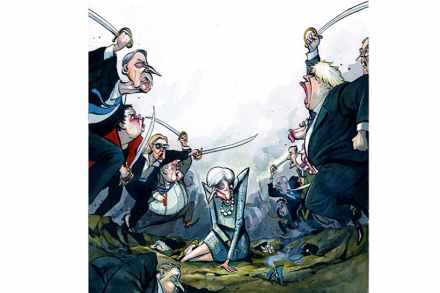
Damian Green was Theresa May’s closest ally in government and his departure makes life even trickier for the embattled Prime Minister. Yet while Green’s sacking caps off a dreadful 2017 for the PM, still May survives. ‘In an otherwise traumatic year’, says the Guardian, ‘that probably counts as a success.’ So how has May managed to cling on? The Guardian says May owes her survival to the lack of a viable alternative within the Tory ranks. What’s more, it’s worth remembering that those who would seek to replace the PM – Philip Hammond, Boris Johnson and David Davis, for instance – have hardly had the best of years themselves. The

Theresa May must share the blame for the Brexit bitterness

As Gore Vidal said, “Every time a friend succeeds, I die a little” and by that exacting standard, Tim Shipman has become a significant trial to his many friends. I thought of this again when it emerged – as they say in Westminster – that the cabinet would meet to discuss the future shape of Brexit. It seemed telling that this actually counted as a bona fide ‘news’ story. That is, it was a man bites dog moment and therefore worth putting in the newspapers.  Then again, readers of Fall Out, Shipman’s sequel to his best-selling account of the Brexit referendum entertainment, would not have been surprised. Shipman reveals that

The boredom of living through ‘interesting times’ 

Robert Tombs, author of the majestic ‘The English and their History’, has written in the latest Spectator about how Brexit has become the trigger for a new culture war in Britain. He likens it to the sectarian arguments of the 18th century, pointing out that: ‘When I hear prominent Remainers unquestioningly supporting the demands of the EU Commission, however incoherent and excessive, I cannot but remember the opposition leader Charles James Fox happily admitting during the Napoleonic Wars that ‘The Triumph of the French government over the English does in fact afford me a degree of pleasure which is very difficult to disguise.’ ‘Is this just coincidence? There does seem

What the papers say: Why Barnier must ‘button it’

Ever since the referendum, the reality has hit home for the British government as to ‘the weakness of (its) bargaining position’, says the Financial Times. This ‘dawning’ of reality has led ministers to realise that ‘they are accepting Brussels’ demands rather than genuinely negotiating’ during discussions with the EU. When talk turns to trade in the new year, this is unlikely to change, says the FT. It’s true, of course, that given the importance of the City of London, the EU will not want to ‘cut off’ European companies from accessing it when Britain leaves the EU. Yet even when it comes to this subject, Britain ‘will not have the

Theresa May educates her Cabinet on the joys of cherry-picking

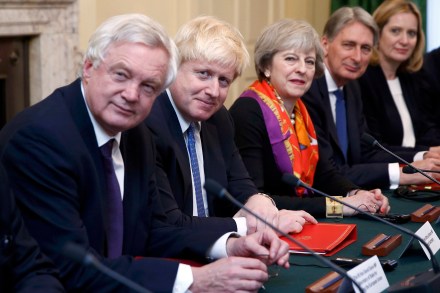
Today the Cabinet finally held its first discussion on what type of relationship the UK should have with the EU post-Brexit. The reason the discussion had been put off for so long is that it is potentially a toxic one – with strong feelings on both sides of the debate. In recent weeks (or months, if you’re a regular Coffee House Shots listener) the two tribes in Cabinet have come to be known as the divergers and the aligners. The first camp – composed of the likes of Boris Johnson, Michael Gove and Gavin Williamson – think it’s vital that Britain is able to diverge from EU regulations in any

What will Brexit mean for the UK’s sugar industry?

The Spectator, in association with Tate & Lyle Sugars, brought together MPs, representatives from Tate & Lyle, the Fairtrade Foundation and the Australian High Commissioner to discuss the future of the UK sugar sector following Brexit. This is a report of the discussion which followed. The sugar industry is an interesting case study for the opportunities as well as the challenges which could result from Britain’s departure from the EU. At present, 50 to 60 per cent of the sugar consumed in Britain comes from sugar beet grown and processed in this country. The industry has been subsidised since before Britain joined the EU and subsidy has continued under EU

By rebalancing Britain’s economy, Brexit is succeeding where George Osborne failed

Yet again this morning comes a demonstration of the enormous gulf between gloomy economic forecasts pumped out by those opposed to Brexit and much more positive data from the real world. And guess which received the biggest headlines. Britain, claims PwC, is about to miss out on a surge in global growth – the best in seven years – as ‘uncertainty relating to Brexit’ acts as a drag on the UK economy. A survey by the CBI and a recruitment firm claims that 63 per cent of businesses think that Britain will become less competitive in the next five years. Meanwhile comes a remarkable insight into current conditions in the real

What the papers say: May’s Brexit Britain is a fantasy island

Theresa May’s Brexit statement in the Commons yesterday ‘told us a great deal about what has happened already,’ says the Daily Telegraph. But the detail on ‘what happens next’ was thin on the ground. Once again, the PM ‘reaffirmed that the UK is leaving the EU on March 29, 2019’. Yet this told us little we didn’t already know when Article 50 was triggered six months ago. ‘The question now to be resolved is not whether we are leaving but on what basis,’ says the Telegraph. So what does Britain actually want from Brexit? The PM said, not for the first time, that the aim was to secure a “bespoke

Theresa May must still be prepared to call the EU’s Brexit bluff

As the Brexit ‘war cabinet’ meets this morning to discuss what future trading relationship Britain would like with the EU there is a grim inevitability about the next few months. We know what we want – free trade with the EU, in services as well as goods, as well as free trade with the rest of the world. The EU, as it has made clear in recent days, has other ideas. Its plan is to allow us a Canada-style deal – a free trade deal in goods but not services, something which will be completely unacceptable to Britain, with our financial services-dominated economy. Moreover, it is going to try to

What the papers say: The new Brexit divide

‘Remain’ and ‘Leave’ is no longer the basis of the divide over Brexit, says the Daily Telegraph. Instead, the new split is over to what extent post-Brexit Britain should ‘mirror what the EU does on trade and services’ or whether the UK should ‘plough its own furrow in the world’. 18 months on from the referendum, this key debate has not been ‘addressed by the Government’. ‘Convergers’ – those who want Britain’s trade arrangements to remain broadly in line with the status quo – ‘have the upper hand’ at the moment, says the Telegraph. Philip Hammond has confirmed this with his vow for Britain to maintain, at least in the

Unofficial deadline of mid-January for working out UK’s end-state negotiating position

On Monday, the Brexit inner Cabinet will finally have a proper discussion on what kind of trade deal with the EU, the UK wants. But this meeting won’t settle the question. Rather, it will be the start of a discussion. Inside government, I write in The Sun this morning, an unofficial deadline of mid-January has been set for working out a position agreed by the whole Cabinet. The aim is that this should give the UK government a chance to work out its negotiating strategy before talks proper start in March. Privately, senior figures in Downing Street admit that the government wasn’t as prepared as it should have been for

Theresa May’s next big task is getting her own MPs on side

It’s official. Theresa May’s Christmas wish has been granted. At the EU council meeting today, EU leaders agreed to move Brexit talks on to the second phase of talking trade. Announcing the news on social media, Donald Tusk, the European Council president, sent his ‘congratulations’ to Theresa May. EU leaders agree to move on to the second phase of #Brexit talks. Congratulations PM @theresa_may — Charles Michel (@eucopresident) December 15, 2017 Moving forward, the EU withdrawal agreement will now be formalised and  talks will move on to the new relationship between the UK and EU post-Brexit. The first issue to be discussed will be the transition period with Brussels insistent

What the papers say: In praise of the Tory rebels

EU leaders look set to formally approve a move on to the next stage in Brexit talks today in Brussels. Yet back home, this week saw the government suffer its first defeat on Brexit legislation in Parliament. So will the actions of the Tory rebels leave the government hamstrung? The Tory rebellion may prove to be a ‘momentous vote foreshadowing serious cross-party opposition’ to Britain’s departure from the EU, says the FT. Or it could just be ‘fury and thunder signifying nothing’. What it certainly shows though, according to the FT, is that Parliament is willing to stick up for itself. The ‘Brexit mutineers’ ‘should be congratulated’, says the paper.

Brexit is becoming a ‘just war’, with predictable consequences

Brexit could split the Tory party. So many people wrote articles arguing this before and after David Cameron called the EU referendum, but it was generally assumed that the split would involve disgruntled eurosceptics claiming they had been betrayed after Britain voted to stay in the bloc after all. It was also generally assumed that the split would at least involve something quite serious. But today MPs are locked in a war of words over whether or not they should get a ‘meaningful’ vote on the final Brexit deal. Those in favour defeated the government last night: Theresa May’s first serious Commons defeat since the snap election. Stephen Hammond was

Theresa May should have backed down in her Brexit battle with Parliament

This morning has brought predictable outrage about Tory ‘traitors’. The Prime Minister has been undermined, Guy Verhofstadt has had his fun describing it as a ‘good day for democracy’. The government has been reduced to damage-limitation, suggesting that last night’s defeat – which means that Parliament will now have the final say on a Brexit deal – won’t derail its plans. That is true. Allowing Parliament the final judgement on the deal almost certainly won’t alter the outcome: Britain will leave the EU on 29 March 2019 with whatever deal the government is able to cut with Michel Barnier and his team. Parliament will not vote it down because the

Angry Leavers must accept that ‘hard’ Brexit died on election night

Some Brexiteers are angry. This is not news. This has been true since about 20 minutes after the referendum result was declared. There are some Leavers who have been looking, since 24 June last year, for a new grievance, fresh evidence they are being betrayed and denied, generally by some shadowy group they describe as ‘the establishment’ or ‘the elite’. (Please note that I say ‘some’ Leavers, not all. More people in politics and journalism should distinguish between members of a group and the whole group). Some of that anger is understandable. For years and decades, anyone who espoused leaving the EU was ignored and marginalised and called a crackpot.

What the papers say: Theresa May’s bitter humiliation

The government’s defeat in the House of Commons last night amounts to a ‘bitter humiliation’ for ministers, says the Sun. It is also ‘a moment of shame for the Tory “rebels”’. In defeating the government, the Tory MPs who sided with the opposition ‘utterly compromised’ Theresa May as she heads to Brussels today. As well as making life difficult for the Prime Minister, they have also ‘handed a victory’ to those who want to reverse Brexit, says the Sun. Now the onus is on the PM to ‘find a solution’ to the challenge of negotiating a deal ‘without fearing Remainers in Parliament will kill it’. But May’s hands are tied