Brexit

What the BBC won’t tell you about the leaked Brexit forecasts

The leaked government Brexit forecasts have this morning been reported by the BBC just as its leakers intended: as embarrassing proof that Brexit is bad for the economy. If it had any vague interest in being impartial, perhaps the Beeb would have bothered to make the rather obvious point: not only have we seen such forecasts before, but the new figures are more optimistic than HM Treasury’s last effort. The government’s April 2016 analysis said that the economy would be 3.8 percentage points smaller than it otherwise would have in 15 years if we were to stay in the EEA; that has now been revised down to a 2pc hit.

What the papers say: Eurosceptics are wrong to ‘rage over the Brexit transition’

Michel Barnier’s Brexit transition deal offer – under which Britain will continue to pay into the EU’s budget and have no say on rules – has not gone down well with some Brexiteers. The Daily Telegraph says that this suggestion means that the date of when Brexit will happen has effectively been pushed back until December 31st 2020. The paper says that it was right for Theresa May to initially lay out a request for a two-year transition deal during her Florence speech last year. But since the PM made that speech, Britain has been too ‘meek’ in obeying the EU and allowing Brussels to ‘call all the shots’. This

Don’t sweat the Brexit transition deal

There are many things to worry about with Brexit, but the terms of the transition should be pretty low down that list. The transition was always going to have to be off-the-shelf (if you could negotiate a bespoke transition, you might as well do the final deal) and as long as it is time-limited, it shouldn’t be a problem. Indeed, it should help smooth out Britain’s exit from the European Union. Bill Cash’s urgent question today was another sign of how some Tory Eurosceptics are becoming more and more concerned about the terms of the transition, and how it will make Britain—in effect—a non-voting member of the EU. Jacob Rees-Mogg’s

Conservative MPs should be careful what they wish for

How much trouble is Theresa May in? Just three weeks ago, it looked as though the Prime Minister was at her strongest point since the disastrous snap election. Now, the BBC 10 o’clock news is leading on questions about her survival – with reports of irrepairable drift, Brexit rifts. The Sunday papers are filled with a deluge of negative headlines depicting a party out of control – including on-the-record criticism from Conservative MPs. Former minister Theresa Villiers has gone on the airwaves to warn that the Prime Minister could be about to sell a lie on Brexit. What’s more, reports claim that the influx of letters to Graham Brady continues to

Theresa May’s lack of a Brexit vision is costing her, and the country

Boris Johnson and Philip Hammond are further apart on Brexit than anyone else in the inner Cabinet. But there is one thing they agree on, I say in The Sun this morning. In the last 10 days, both of them have expressed their frustration to close allies that Theresa May won’t make a decision; that Britain is at a nation-defining moment in its history and that there is no real leadership. Their interventions are an attempt to provide that leadership, to give people an idea of what Brexit will be like. Absurdly, the Brexit inner Cabinet did not meet this week despite the fact that there is not yet a

The ‘experts’ must learn their lesson from Project Fear’s failure

Unemployment would soar. Trade would collapse. Factories would close, and house prices would be in freefall. Rewind to the spring and summer of 2016, when Project Fear was at its peak, and we were meant to be shivering in the streets by now, flicking through battered copies of ‘The Road’ for tips on surviving in a post-apocalyptic wasteland as a result of leaving the EU. Instead, we learned today that the UK economy is doing pretty well. It expanded by 0.5 per cent in the latest quarter, well ahead of forecasts. Even the Governor of the Bank of England, Mark Carney, one of the dark overlords of Project Fear, now agrees

Open goal

A decade ago, bankers were not merely the masters of Davos, but the ‘masters of the universe’. No one calls them that any more. It is a mark of how far the global economy has shifted that the market capitalisation of Goldman Sachs was this week overtaken by that of Netflix, the online entertainment company. The world’s five largest companies are now all in the field of technology and the internet: Apple, Google, Microsoft, Amazon and Facebook. Ten years ago, none of them made the top five: the masters, then, were Exxon, Walmart, China National Petroleum and the Industrial and Commercial Bank of China. We are in a period of

Theresa May is safe, at least for now

This comes perilously close to making a prediction about politics, so I’ll probably regret it. Never mind. Here goes. There’s some talk at Westminster about a leadership challenge to Theresa May. Harry Cole of the Sun, who knows his stuff, reports that Graham Brady of the 1922 Committee, could be close to the critical total of 48 letters from MPs. Joe Murphy of the Evening Standard, a Lobby reporter with few, if any, peers, says he’s heard of two more letters going in this weekend. Joe also reports a Tory plotter saying that May’s local elections are the ‘maximum danger point’ for Mrs May. And on that basis, I make the following observation:

Philip Hammond’s soft Brexit remarks are a mistake

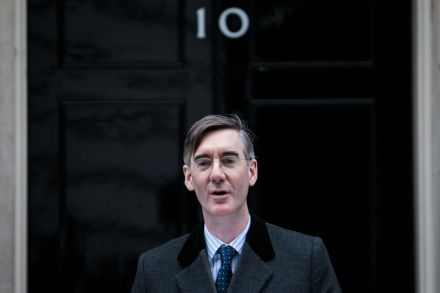
This afternoon has provided a preview of just how difficult the next few weeks are going to be for Theresa May. First, we had word of a speech from Jacob Rees-Mogg, the new chairman of the European Research Group of Tory MPs, warning that the government’s whole tone on Brexit must change and that it mustn’t be treated as just a ‘damage limitation exercise’. Rees-Mogg also made clear that, to his group, close alignment with EU rules is unacceptable. Then the FT broke news of Philip Hammond telling a Davos audience that he only wanted ‘very modest’ changes to the UK’s relationship with the EU. So as one Whitehall source put

Ukip’s victory

The continuing saga of Henry Bolton’s notional leadership of Ukip continues to amaze and amuse and appal in equal measure. The press loves a freak show and, in the absence of anything better, Ukip is the best circus in town. You might think it odd to give so much attention to a party that won just 2 per cent of the vote in last year’s general election — but this is all about Kipperism, which is bigger than Ukip. Much of the time, it seems as though this is Ukip’s Britain. The rest of us just live in it. It amounts to the most stunning reverse takeover in modern British

Thank goodness Turkey is not in the EU

What, you might well ask, could possibly make the situation in Syria look much worse, after President Erdogan’s assault on the Kurds in Afrin? The Turks are, obviously, attacking the forces that did most of the heavy lifting when it came to dealing with Isis on the ground. Indeed, If it hadn’t been for the Kurds, it’s at least arguable that Isis would still be sitting tight in Raqqa rather than dispersed elsewhere. They are the only really reliable ally in the area for the US – though I take on board the argument that it was the US’s move in establishing a force of 30,000 border guards, dominated by

Watch: David Davis saved by the bell

David Davis is no stranger to accusations that he has dodged Parliamentary scrutiny over Brexit. This morning though, there was no getting out of an appearance in front of the Brexit select committee. Fortunately for the Brexit secretary however, he was briefly rescued during a tricky exchange about transitional arrangements when his phone went off. Davis scrambled to silence it quickly, before it died in his hands. Mr S. hopes Jean-Claude Juncker doesn’t try to get in touch this morning…

Boris is right about NHS funding – but he didn’t get his way today

Cabinet today was not the dramatic showdown over NHS funding that some expected. Boris Johnson was, unsurprisingly given that Theresa May knew what he wanted to say, not called on to speak first. Those Ministers who went before him emphasised that it would be better if these debates took place in private, not public. When it was Boris’s turn to speak, I am told that he slightly pulled his horns in. He made the case for more money for the NHS but he didn’t argue for a specific figure, I understand. Interestingly, and in a sign of how May still views the International Trade Secretary as her bridge to Brexiteers,

Staying in the customs union would be a risky bet for May

There’s renewed speculation in Westminster that Britain might end up staying in the customs union. The CBI is calling for the UK to stay in a customs union with the EU and Labour is expected to move to backing customs union membership soon. The argument goes that because customs union membership does not require free movement, it is compatible with the referendum result. Big exporting businesses tend to like the idea as it would ease most of the bureaucratic problems in moving goods around post-Brexit. But I don’t think Theresa May will go for this idea. If Britain stays in the customs union, then it can’t do comprehensive free trade

In defence of farming subsidies

Martin Vander Weyer says, unhelpfully and inaccurately, that subsidies ‘absurdly’ favour bigger farms. As we look towards life after Brexit, instead of debating the merits of small vs large, the government should incentivise good rather than bad. My family’s farming business, Beeswax Dyson Farming, farms 33,000 acres directly and has invested £75 million in technology, training, soil improvement and environmental stewardship over the past five years. These are hardly the acts of a mere ‘wealthy landowner’, in his dismissive parlance. Subsidies we receive go directly into the activities that they are designed to support but are dwarfed by our own investments. Farmers in the EU receive substantial subsidies. Unsurprisingly, British

Boris Johnson’s proposal for a bridge across the Channel isn’t crazy – but the backlash is

Building a physical bridge between the UK and France is, apparently, ridiculous. I know that because, ever since Boris Johnson raised the prospect at the Anglo-French summit, my Twitter feed has been full of comments from various bien pensants ridiculing the idea. ‘If you like the Boris bridge idea, wait ‘til you hear about Liam’s plans for a zip wire from Washington DC to Washington, Tyne & Wear,’ quipped one commentator, referring not to me (on this occasion) but to Trade Secretary Liam Fox. ‘David Davis wants a pedalo from Boston, Massachusetts to Boston, Lincolnshire!’ parlayed another keyboard wag. As it happens, the construction of a bridge across the English

Boris Johnson’s bridge over troubled waters

This post first appeared in the Spectator’s Evening Blend email, a free round-up and analysis of each day’s politics. Sign up for free here. Why is Boris Johnson quite so keen on improbable-sounding bridges? The Foreign Secretary became obsessed with the idea of a ‘garden bridge’ across the river Thames when he was Mayor, a project that was cancelled by his successor Sadiq Khan after it became clear that public money would be needed to build the structure, which would then not always be open to the public. Unabashed, Boris is now suggesting something much bigger and more eye-catching: a bridge across the Channel to France. Johnson was talking about

What the papers say: In praise of Macron’s charm offensive

Emmanuel Macron capped off his trip to Britain by taking a selfie with the Prime Minister last night. His charm offensive has paid off, says the Daily Telegraph, which suggests the visit shows what a post-Brexit relationship with Britain’s neighbours could look like. The progress in co-operation during the visit – on the migration problem in Calais and on defence, for example – is evidence, for the Telegraph, that the EU ‘is not the be-all and end-all of European co-operation’. After all, Britain’s close ties with France are matched ‘in the east’ by Poland, and ‘in the west’ by Ireland. It’s true that Macron remains opposed to Brexit and has

Portrait of the week | 18 January 2018

Home Carillion, the construction and service-provider with 20,000 employees and many contracts for the public sector, went into liquidation with debts of £1.5 billion, owing 30,000 businesses £1 billion. The government said it would pay employees and small businesses working on Carillion’s public contracts ‘to keep vital public services running rather than to provide a bailout on the failure of a commercial company’, as David Lidington, the minister for the Cabinet Office, told Parliament. Greg Clark, the Business Secretary, asked the Official Receiver to investigate the conduct of its directors; ‘Any evidence of misconduct will be taken very seriously,’ he said. The annual rate of inflation fell back a smidgen

France and Brexit: lessons from history

Almost 50 years before Brexit, there was a ‘Frexit’: France shocked her allies in March 1966 by giving notice of her withdrawal from an international community of largely European states (plus the USA and Canada), of which she had been a member for 17 years, on the grounds that she wished to regain her national sovereignty. French withdrawal from the integrated military command of NATO was complete within two years. Though France remained a member of the Atlantic Council and subsequently negotiated a continued role in certain NATO institutions, she left the all important collective military command which France’s president General de Gaulle claimed bridled her independence and her ability