Brexit

The government should have listened to the rebels, not tried to crush them

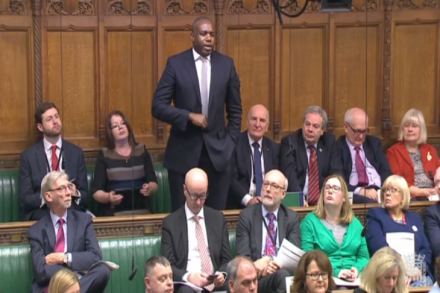
The government has just been defeated in the House of Commons on whether the final Brexit deal will get a ‘meaningful vote’ by Parliament. MPs voted 309-305 to pass the amendment to the EU withdrawal bill by Dominic Grieve. There were dramatic scenes in the Commons, as MPs had initially believed that the government had won. This was based on the way one of the tellers for the rebels was standing in the Chamber (the tellers are MPs who announce the result, and they stand according to whether the Ayes or Noes have it). Heidi Alexander only moved to the other side of the floor at the very last minute,

Are driverless cars the future?

  Philip Hammond’s last Budget focused on driverless cars as an example of the brave new technological world. But should we believe the hype? The Spectator arranged for Christian Wolmar, author of a new book on the subject, to meet Rory Sutherland, vice-chairman of Ogilvy & Mather and The Spectator’s Wiki Man columnist, to talk about the future of driving and transport.   Wolmar: Let’s face it: we’re talking about a technology that will never happen. There may be some driverless cars going round Phoenix in a very limited way but the owners, Waymo, which is part of Google, are very secretive about precisely what they’re doing. The hype is being

Right side of history

How nice it would be, in this season of good cheer, to find something hopeful to say. Being a historian, I shall try: history often helps us to see our problems in proportion. But let us grit our teeth and begin with the depressing news. Worst is the sudden emergence — or re-emergence? — of an unusually angry division within our politics and society. A large part of the political class, and seemingly a sizeable proportion of the country’s educated elite, have distanced themselves from the majority of the country. Never in modern times has there been such an overt and even contemptuous attempt to deny the legitimacy of a

Leave Brexit alone and get on with governing

I return often to Cambridge and was there recently. Julian Glover, my partner, was talking to the History Society at Trinity about his new biography of Thomas Telford, the 18th-century roads, bridges and canals engineer. We spent the night at Trinity, and I had time to update my acquaintance with this fast-changing city. ‘Fast’ hardly does justice to the speed of change. ‘Silicon Fen’ may be a smart-Alecky sobriquet, but something huge is happening here, something very much of our time. Though the university nucleus remains reassuringly familiar, the river Cam sits at the centre of the biggest and most sustained expansion and boom I’ve ever seen in England. A

Let’s hear the good news about Brexit more often

In my lifetime, I cannot remember any thing or idea or person getting as bad a press as Brexit has. It’s relentless. It’s not daily — it’s hourly, minutely, by the second. Open a newspaper, switch on the radio, browse the web, and there it is: more Brexit-fear, more predictions of economic calamity and national decline if we continue down this course dumbly mapped out for us by the electorate. It’s exhausting to read; heaven knows what it must be like to write it! I fear for the sanity of the Brexit Doom hack. No doubt reporters and columnists will say they’re doing their job and reporting uncomfortable facts. But

Theresa May’s poll lead still gives the Tories little to cheer about

Corbynistas are curiously quiet this morning about the latest YouGov poll, which puts Theresa May narrowly ahead of the Labour leader for the first time since June. 42 per cent of voters back the Tories, with 41 per cent saying they would vote for Labour. May’s success in securing a deal with the EU in the first stage of Brexit talks seems to be the clear reason for this latest small boost. For a government low on confidence and on the back of a difficult year, it is a welcome sign. But this lead, which falls within the margin of error in polling, is nothing for the Tories to really

Labour discovers that there is no easyBrexit

Despite the government reaching its long-awaited milestone of ’sufficient progress’ in the Brexit talks last week, certain key figures on both sides of the debate seem intent on muddying the waters as much as possible. Mr Steerpike reports on David Davis’s latest efforts on that front, while Labour MPs are trying to understand the implications of Keir Starmer’s latest utterances on their party’s Brexit position. The Shadow Brexit Secretary appeared to walk into a trap laid by Andrew Marr yesterday, in which the presenter asked him reasonably innocent questions about Labour’s demand for a ‘single market variant’ and the need for a new treaty enshrining the full access to and

Watch: Labour’s Brexit single market muddle

Working out Labour’s position on the single market is no easy task. Jeremy Corbyn has said Brexit will mean Britain leaves it. So far, so simple. But not everyone in the party – including Corbyn himself, who has since guaranteed access to the single market – appears to agree. Diane Abbott, the shadow home secretary, suggested that it would be better to stay put as a member of the single market. But that stance is news to shadow trade secretary Barry Gardiner, who could not have been clearer when he told Sky News: ‘We will not be members of the single market’. Unfortunately, a number of his other colleagues don’t

Sunday shows round-up: Davis calls for ‘Canada plus plus plus’ trade deal

David Davis: May’s EU deal ‘a statement of intent’ The Brexit Secretary David Davis joined Andrew Marr this morning to discuss Theresa May’s recent round of negotiations in Brussels, where the European Union finally agreed to progress to the second phase. Friday’s breakthrough included an agreement that there would be ‘no hard border’ between the UK and Ireland, and that the UK would maintain ‘full alignment’ with the EU’s single market and customs union. Marr asked Davis about how the Prime Minister’s deal would affect the negotiations going forward: DD: This [deal] was a statement of intent more than anything else. It was much more a statement of intent that

What will the Cabinet decide on Brexit?

Now that ‘sufficient progress’ has been achieved, attention shifts to the coming Cabinet discussion on what kind of trade deal the UK wants with the EU. I report in my Sun column this morning that the inner Brexit Cabinet were meant to meet on Monday afternoon, but that has now been postponed by a week. When the inner Cabinet do discuss the end state, on one side there’ll be Philip Hammond, Amber Rudd and Greg Clark who favour a cautious approach of staying as close to EU roles as possible to maximise access to the EU’s internal market. On the other will be Boris Johnson, Michael Gove, Liam Fox and

The government must wake up to the danger of fake news before its too late

Fake news has been around for decades. But it was normally the preserve of despotic regimes. Now it’s threatening to undermine democracies across the world. The rise of the internet means that, in the words of Mark Twain, ‘a lie can travel halfway around the world while the truth is putting on its shoes’. You can normally assume newspapers, irrespective of their political stance, have sourced and doubled checked their facts. But with the explosion of social media, we need to adapt our mentality to make sure people start questioning the sources and veracity of their news more. While the government, rightly, commits billions to tackle cyber security to protect

The great Brexit unsayable

On Monday, we held a dinner party in the Cavendish Room at Brooks’s, one of the most beautiful spaces in London. Our guest list started with Matthew Parris, whom my wife was panting to meet, observing that she agrees with him about absolutely everything except that she is reluctant to become gay. After that, it was merely a matter of ensuring that we included nobody who might profess enthusiasm for Trump, Brexit or — following their treatment of Dwin Bramall, Edward Heath and now Damian Green — policemen. We discussed the problem that scarcely anyone active in British politics dares to tell voters important truths, foremost among these that Brexit

A guide to Parliament’s Brexit tribes

There’s relief in No 10 today after Theresa May and Jean Claude Juncker finally reached deal on the Irish border, EU citizens’ rights and the so-called Brexit bill. The European Commission have subsequently recommended that ‘sufficient progress’ has been achieved in time for this month’s EU council meeting – and that the Brexit talks should move on to trade in the new year. In order to get to this point, May has agreed a £40bn Brexit bill, time-limited ECJ role and a promise of no hard border between Northern Ireland and the republic. However, for the government the hard work is only just beginning. The second round of negotiations is

Deal agreed in first stage of Brexit talks

Britain and the European Union will progress to the next stage of Brexit talks following a breakthrough in negotiations overnight. The European Commission said that sufficient progress had been made in discussions on the Brexit divorce bill, the Irish border and citizens’ rights to allow trade talks to get underway. There is no doubt that the deal is good news for the embattled Prime Minister, with some suggesting that her survival depended on progress being made before Christmas. But the agreement will not be without controversy. In particular, a passage in today’s text promising that the government is committed to maintaining ‘full alignment with…rules of the Internal Market and the

Portrait of the week | 7 December 2017

Home Theresa May, the Prime Minister, was thrown into a political crisis, along with the negotiations for Brexit, during a protracted lunch in Brussels with Jean- Claude Juncker, the President of the European Commission. At first, smiles and Mr Juncker’s special cheerful tie had suggested that Britain had paid enough and said enough to be allowed at an EU summit on 14 December to enter into trade talks. But the Democratic Unionist Party, which lends the Conservatives a parliamentary majority, had got wind of a phrase in a text already agreed between Dublin and the EU proposing ‘continued regulatory alignment’ on both sides of the Irish border. Arlene Foster, the

May’s mistake was embracing the lie that Brexit would be easy

Brexit is getting a far easier ride than it deserves. I accept that its promoters live in a world of paranoid irresponsibility. They lament their unjust suffering, and blame everyone but themselves for its many failings. But consider how Britain has bent over backwards to enable their project. We don’t have an opposition willing to oppose Brexit. A Tony Blair or indeed an Ed Miliband would be hammering home the government’s failures. They would by now have ensured that voters, who barely thought about politics from one month to the next, knew that they had been sold a false prospectus. Instead of robust opposition, however, we have the gloriously hypocritical spectacle

The Spectator Podcast: Carry on Brexit

On this week’s episode we’re looking at the Brexit situation as 2017 draws to a close. We’ll also be marvelling at all the wondrous, and infuriating, jargon to come from our EU withdrawal, and asking whether British aristocrats are being seduced by the new ‘glamocracy’. First up: the days might be getting shorter, but the crises faced by Britain’s Brexit negotiations seem never-ending. Ireland has been the sticking point this week, compounding a torrid month for Theresa May. Her task is Herculean, writes James Forsyth in this week’s magazine cover story, not because she herself is Hercules, but because her tasks are getting more and more difficult. Will the EU ever

What the papers say: Labour must clarify its Brexit plan

Another day, another Brexit warning: this time it comes from the head of Standard Chartered, who says that Britain’s imminent departure from the EU is already having a negative impact. Bill Winters said that his bank is already ‘preparing for the worst’. The Sun says that the ‘same old commentators’ are repeating themselves constantly with their warnings that ‘Britain’s going to hell in a handcart’ as a result of Brexit. ‘Give it a rest’, the paper urges them. The Sun goes on to concede that yesterday ‘wasn’t a good day for the Government’. David Davis’s ‘impact assessment’ misunderstanding and the ongoing row between the Irish PM and the DUP which rumbles

Lost for words

Emma Bridgewater has, since 1985, produced pottery acceptable in tasteful middle-class kitchens. Some jars had Coffee on and some Biscuits. Coffee meant ‘coffee’ and Biscuits meant ‘biscuits’. In a similar attempt to achieve popularity, Theresa May told us that Brexit meant ‘Brexit’. It said so on the jar. But as the Emma Bridgewater range grew, it included a plate bearing the words ‘Bacon & Egg. Bubble & Squeak’. The ampersands were attractive, but it was unlikely that the plate would really accommodate the items suggested. Now Brexit, once an admirably plain portmanteau of Britain and exit, became a mug’s game. Its meaning is supposed to vary according to what adjective