Brexit

What the papers say: In praise of Macron’s charm offensive

From our UK edition

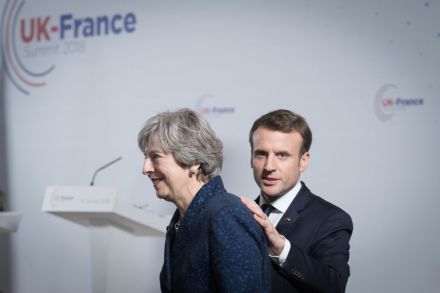
Emmanuel Macron capped off his trip to Britain by taking a selfie with the Prime Minister last night. His charm offensive has paid off, says the Daily Telegraph, which suggests the visit shows what a post-Brexit relationship with Britain’s neighbours could look like. The progress in co-operation during the visit – on the migration problem in Calais and on defence, for example – is evidence, for the Telegraph, that the EU ‘is not the be-all and end-all of European co-operation’. After all, Britain’s close ties with France are matched ‘in the east’ by Poland, and ‘in the west’ by Ireland. It’s true that Macron remains opposed to Brexit and has said a decision to backtrack would be looked on ‘with kindness’.
Portrait of the week | 18 January 2018

From our UK edition

Home Carillion, the construction and service-provider with 20,000 employees and many contracts for the public sector, went into liquidation with debts of £1.5 billion, owing 30,000 businesses £1 billion. The government said it would pay employees and small businesses working on Carillion’s public contracts ‘to keep vital public services running rather than to provide a bailout on the failure of a commercial company’, as David Lidington, the minister for the Cabinet Office, told Parliament. Greg Clark, the Business Secretary, asked the Official Receiver to investigate the conduct of its directors; ‘Any evidence of misconduct will be taken very seriously,’ he said. The annual rate of inflation fell back a smidgen to 3 per cent in December, from 3.

France and Brexit: lessons from history

From our UK edition

Almost 50 years before Brexit, there was a ‘Frexit’: France shocked her allies in March 1966 by giving notice of her withdrawal from an international community of largely European states (plus the USA and Canada), of which she had been a member for 17 years, on the grounds that she wished to regain her national sovereignty. French withdrawal from the integrated military command of NATO was complete within two years. Though France remained a member of the Atlantic Council and subsequently negotiated a continued role in certain NATO institutions, she left the all important collective military command which France’s president General de Gaulle claimed bridled her independence and her ability to play a world role.

Macron charms, but won’t give ground on the City

From our UK edition

Emmanuel Macron is revelling in his new status as the preeminent politician in Europe. In his joint press conference with Theresa May, he turned in a charming performance highlighting the ties between Britain and France and urging the two countries to ‘make a new tapestry together’. However, there was a sting in the tail. When Macron was asked about financial services and the single market, he emphasised that Britain’s choice was between Norway—full involvement in the single market but paying into the budget, accepting ECJ jurisdiction and free movement—and Canada, a much more limited free trade deal. Interestingly, though, he said he didn’t want to exclude any sector from the EU’s free trade deal with the UK.

Tories weaponise EU withdrawal bill vote

From our UK edition

Last night the EU withdrawal bill cleared the House of Commons after MPs approved the bill, which transposes EU law into UK law, by 324 to 295.  With Labour's Brexit position as confusing as ever (just watch Jeremy Corbyn's Peston interview on the/a customs union), readers will be interested to know that the party opposed the bill's third reading. 243 Labour MPs voted to block the bill, with only a handful – Frank Field, Kate Hoey, John Mann and Graham Stringer – defying party orders. The Conservatives have been quick to go on the offensive and claim this shows Labour is trying to stop Brexit.

Watch: Ken Clarke sends fellow Tory MP to sleep

From our UK edition

Ken Clarke is back on his feet talking about Brexit in the Commons again – but his speech has not gone down well with all of his colleagues. Sitting behind him, his fellow Tory MP Sir Desmond Swayne struggled to stay awake as Clarke talked about the rights of EU citizens. Swayne even appeared to nod off at one point. Mr S thinks Swayne could be forgiven for thinking he had heard it all before...

Donald Tusk’s Brexit comments should worry the government

From our UK edition

Donald Tusk’s comments, echoed by Jean-Claude Juncker, that Britain could still change its mind on Brexit should worry the UK government. Why? Because as long as senior figures in the EU think there is a chance Brexit won’t happen, there’s very little incentive for them to think creatively about the future relationship. Instead, the temptation for them is to offer as little as possible in the hope that this might prompt a change of heart in London. Now, realistically, I think Brexit is going to happen. The referendum and the parliamentary vote to trigger Article 50 means that it is very hard for it not to, though what kind of Brexit it is—obviously—is very much up for grabs.

Nigel Farage is wrong and the EU must prepare for no deal

From our UK edition

Nigel Farage met Michel Barnier on Monday and is now calling, inexplicably, for a second EU referendum. He wants to rerun the whole thing. Well, I too have just got back from Brussels and no doubt Barnier said the same things to me and my three colleagues as he did to Nigel. That being the case, I think Nigel has lost the plot. I met Barnier on Wednesday along with Digby Jones, John Longworth and John Mills, all experienced and talented businesspeople with a deep understanding of the issues. We had a long discussion with Barnier, put our case for the EU accepting Brexit gracefully and acting with positivity in the up-coming trade negotiations. We all want the same thing: a good deal for both the EU and the UK.

Nigel Farage’s referendum call should be greeted with caution

From our UK edition

What to make of Nigel Farage talking about why there might need to be a second Brexit referendum? To some on the Remain side, this is a moment—the Evening Standard have splashed on it, the Liberal Democrats have welcomed it and Labour MP Chuka Umunna has declared that Farage for ‘the first time in his life is making a valid point’. They reason that if the man who was so influential in there being a referendum in the first place is open to a second one, surely it will happen? But I don’t think this is right. Farage’s comments were, I suspect, driven as much by a desire to be back in the headlines as anything else. There isn’t yet any sign of a great, concentrated public desire for another vote.

Peter Stringfellow’s bold Brexit stand

From our UK edition

Breaking news in today's Evening Standard. George Osborne has splashed on the revelation that Peter Stringfellow - the nightclub owner - has ditched the Conservatives in protest over its stance on Brexit. Stringfellow – who often attends the Tories' black and white ball – says he is quitting the Tories 'unless they change their direction and lead us towards Remain'. https://twitter.com/George_Osborne/status/951417047950528513 So, which party will he defect to? Well, judging by his previous comments, the party he favours next after the Conservatives is... Ukip. Yes, in 2012, Stringfellow warned he could defect to Ukip: 'This is the first time I have not supported the Conservative Party in 32 years of being in London.

Britain needs a second referendum – but not on Brexit

From our UK edition

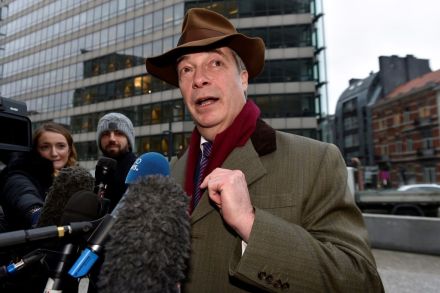
Nigel Farage has called for a referendum on the House of Lords. Earlier this week, on ITV’s Good Morning Britain, wearing his trademark dapper hat and velvet-collared coat, Farage laid into Lord Adonis’s anti-Brexit agitation, branding him a ‘dishonest, disconnected, twisting little weasel’ — ouch! He then said that if Adonis’s antics are ‘what the House of Lords is all about’, maybe we do need a second referendum — not on Brexit, but on the Lords itself, ‘a referendum to sack the lot of them’. https://www.youtube.com/watch?v=Om74Me2mTNw This is the most correct and brilliant thing Farage has ever said. We do need a referendum on the Lords, and I know which side I’ll be on: for abolition.

Cabinet reshuffle: Justine Greening quits the Cabinet

From our UK edition

Theresa May's reshuffle is underway. Here are the key points so far: Justine Greening has quit the government; Damian Hinds is the new Education Secretary David Gauke becomes the Lord Chancellor and Secretary of State for Justice Esther McVey becomes work and pension secretary Karen Bradley is the new Northern Ireland Secretary after James Brokenshire resigns due to ill health Matt Hancock is the new Culture Secretary David Lidington appointed minister for the Cabinet Office Claire Perry is the new minister of state for business Brandon Lewis is new Tory party chairman following confusion over Chris Grayling's reported appointment.

Remainers must stop sneering at Brexit stamps and blue passports

From our UK edition

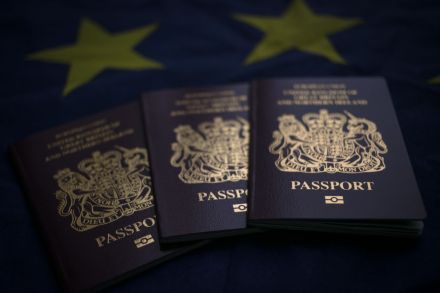
First blue passports. Now Brexit stamps. For some, these belong in the same file as the Royal Yacht Britannia and Big Ben’s bongs. See also: filament lightbulbs and fruit and veg sold in pounds and ounces. For some (repeat: some) Remain-voting politicians and observers, this stuff is ridiculous, old-fashioned nonsense, an attempt to drag Britain back to some imagined 1950s idyll and proof to their suspicions that Leavers are old, weird and stupid. Just in case you need an illustration of this, dip into online 'debate' about the Sun’s Brexit stamps campaign. Now, I should declare an interest: I voted Remain and still can’t see any of the possible outcomes of Brexit that is better than those that faced us if we’d stayed.

David Aaronovitch: Brexiteers are dying at a faster rate than Remainers

From our UK edition

After Tony Blair's call for a second referendum (and maybe even a third if that one didn't work out) fell flat on Thursday, the campaign to stop Brexit looks on shaky ground. However, Newsnight have put forward an argument that could be just the thing to put life back in the campaign. In a film for the BBC current affairs programme, David Aaronovitch – who once said 'if every one of the PM’s demands had been turned down I would still have been in favour of remaining in the European Union' – appears to find a glimmer of hope: Brexit voters are dying at a faster rate than Remain voters!

What the papers say: Blair has himself to blame for Brexit

From our UK edition

Time is running out to halt Brexit. That was Tony Blair’s dire warning on the airwaves yesterday, as the former prime minister once again waded into the referendum debate to say that: ‘2018 will be the year when the fate of Brexit and thus of Britain will be decided’. Unsurprisingly, his warnings have not gone down well in today’s newspapers. The Sun says that Blair’s ‘stomach-churning dishonesty on Brexit was putrid even for him.’. The paper says that the worst thing about Blair’s intervention was ‘his feigned concern for democracy’ in trying to insist that voters should be allowed another say on Brexit.

Letters | 4 January 2018

From our UK edition

A church for all people Sir: I enjoyed reading Ysenda Maxtone Graham’s account of debates in the Church of England in the interval between our parish mass for Advent 3 and our service of nine lessons and carols (‘Mission impossible?’, 16 December). She asks whether the church is planning ‘a back-door “evangelical takeover”’. The simple answer is no. Yes, the Archbishops’ Council has helped to fund churches such as St Luke’s Gas Street in Birmingham, St Philip’s in Salford, and St George’s Gateshead — though it is a bit harsh to dismiss these churches, which are effective in reaching students, young people and families, as ‘centres for instant conversion’.

Tony Blair’s shrill Brexit warnings won’t persuade anyone

From our UK edition

Tony Blair’s message for voters on Brexit is becoming more and more shrill. His latest stark warning is that: '2018 will be the year when the fate of Brexit and thus of Britain will be decided. 2017 was too early in the negotiation. By 2019, it will be too late.' The point Blair misses is that 2016 was the year 'the fate of Brexit' was decided, and it is difficult not to think that with each pronouncement fewer and fewer people are listening (Blair has an approval rating of –50, according to YouGov).

Is Labour’s clever* Brexit strategy running on borrowed time?

From our UK edition

We're four days into 2018 and Tony Blair has kindly graced the nation with his first Brexit intervention of the new year. Proving old habits die hard, the former Prime Minister has written a blog criticising the government's handling of Brexit. Blair claims Theresa May is on course to negotiate a deal that is the 'worst of all worlds' – allowing the Government to claim Brexit victory but in reality meaning the UK has lost its seat 'at the table of rule-making'. However, the main target for his ire is Jeremy Corbyn's Labour. Blair claims the party's confusing 'cake and eat it' approach of leaving 'the' single market but being in 'a' single market means 'the handmaiden of Brexit will have been the timidity of Labour'.

Continental divides

From our UK edition

What do Europeans really think about Brexit? Do they secretly admire our unexpected decision to walk away from all those pesky regulations and sub-committees? Or are our former ‘European friends’ relieved the arrogant, entitled Brits are leaving them alone? The official response of the European political class is one of regret combined with studied indifference and a determination not to let Brexit weaken the project. That, broadly, seems to be the unofficial response too. The EU, after a couple of decades of declining popularity and a rising populist challenge, has actually seen a small up-tick in popularity since Brexit, according to the Eurobarometer polling organisation. Trust in the EU stands at 42 per cent, ten points up since 2015 and the highest level since 2010.

Theresa May’s 2018 resolution should be to look beyond Brexit

From our UK edition

The last full year before Britain leaves the EU has been foretold by some as a time of increasingly desperate negotiation. According to this view the government is drifting towards an economically painful Brexit, so consumed by the whole sorry business that it is unable to address any of the country’s other problems. Yet there is no reason why 2018 should turn out this way, and every reason to hope that it will prove to be the year when the Conservatives finally emerge from the tumult of the referendum to achieve other things. While the deal struck between the government and the EU in December -- and the prospect of Britain paying a ‘leaving bill’ of around £40 billion -- has offended some Brexiteers, it has transformed the political landscape.