Brexit

Can the EU withdrawal bill survive its return to the Commons?

Put June 12th in your diary, for that’s when the EU withdrawal bill will return to the House of Commons. Julian Smith, the chief whip, has written to Tory MPs telling them, ‘There will be a number of divisions that day’ as the government attempts to overturn the Lords’ amendments to the bill. Smith’s letter includes a pointed reference to the Tory manifesto, which included a commitment to leave the customs union. This is designed to remind potential Tory rebels that they’d be breaking with the manifesto on which they were elected if they vote for the customs union amendment. But it’ll take more than this to get the government

Sadiq Khan’s Brexit stance isn’t ‘brave’ | 4 June 2018

It’s always good to remind Sadiq Khan that Brexit is more popular in London than he is. Khan loves to play the role of Mayor of Remainia, the political figurehead of this oh-so-clever capital city that can see through the folly of Brexit that those strange inhabitants of Essex, the North and Wales voted for. And yet while it’s true Londoners voted Remain by 59.9 per cent to 40.1 per cent, the fact is more of us voted for Brexit than we did for Khan: 1,513,232 Londoners want to leave the EU, which is 200,000 more than the 1,310,143 who wanted Khan as mayor. So Brexit was such a massive

The Brexit myth that must be busted

A neat but delusional mythology appears to be gaining currency (see, for example, Lloyd Evans’s interview with Bernard-Henri Lévy) that the Brexit referendum can be understood as a conflict between metropolitan elitists voting Remain and the frustrated masses beyond the M25 longing to Leave. This analysis may chime satisfyingly with recent trends in some other democracies, but it distorts what happened in this one. In the two UK countries furthest from London, the votes went against Brexiting by bigger margins than the UK-wide Leave majority: 56-44 in Northern Ireland, and 62-38 in Scotland. London vs The Rest only works if The Rest ends at Carlisle. Incidentally, both these margins were

Will Sajid Javid force Theresa May’s hand on immigration?

Sajid Javid is losing no time establishing his personal authority as Home Secretary and making the case for change. I wrote in my Daily Telegraphcolumn two weeks ago that the test of his independence would be whether he’d pick a fight with Theresa May on Tier 2 visas: doctors, engineers and other skilled workers coming from outside the EU. That fight has now begun. Andrew Marr asked him why thousands of tier-2 skilled workers had been rejected recently, usually because they’re not earning £50k. Marr quoted one NHS manager saying it was “completely barmy”. It seems that the new Home Secretary agrees “When that policy was put in place, there was

It’s political centrists who are most hostile to democracy

The New York Times has taken a drubbing in the British press (not least here on Coffee House) for its downbeat assessment of Brexit Britain. However the full page opinion piece it ran last Thursday, by political researcher David Adler, will be music to the ears of many Brexiteers, both left and right. ‘Centrists are the most hostile to democracy,’ declares the New York Times, in the headline and standfirst for Adler’s article. ‘Research shows that it’s not the far right or the far left that is the least supportive of democracy and the most supportive of authoritarianism. It’s the centre.’ The basis of this assessment is a wealth of

How to fix the BBC’s Brexit bias

Starbucks will close all its outlets for four working hours to train its staff out of ‘unconscious bias’, a decision which surely shows unconscious bias against all customers who might want a cup of coffee that day. The training was ordered after a member of staff called the police when two black customers came in and one asked to use the lavatory without buying anything. I wonder if the BBC might try such a shutdown on a grander scale. It would take at least four weeks — possibly four years — to train its staff out of unconscious bias on Brexit, Christianity, the sex war, paedophile accusations, immigration, Israel, Trump,

What’s the New York Times’s problem with Britain?

When Mark Thompson, a Briton, took over as CEO of the New York Times in November 2012, he was under a dark cloud. He’d just served as Director General of the BBC, and the corporation had been accused of covering up the sex crimes of one of its biggest-ever stars, the late Jimmy Savile. Ever keen to demonstrate objectivity, the Times ran an opinion piece a few days before Thompson took over, asking whether he was really the right man for the job. ‘Since early October,’ wrote columnist Joe Nocera, ‘all anybody has asked about Thompson are those two most damning of questions: what did he know, and when did he know it?’

Letters | 31 May 2018

What the NHS needs Sir: James Forsyth and Fraser Nelson are right (‘The great Tory health splurge,’ 26 May): an extra 3 per cent will not solve the Tories’ political problem. Labour will still trumpet NHS deficiencies, waste will continue and the NHS will demand ever more resources. Only structural change will solve the problems inherent in our state healthcare monopoly. First, we need to set sustainable limits on what the NHS should provide, learning from other countries how to restrain demand responsibly. Second, we need to look beyond how adult social care is funded, to how it should fit with the NHS. Third, we must slash the top-heavy bureaucracy

The Spectator Podcast: the people vs the EU

This week, the new Italian coalition’s proposed government was blocked by the Italian President, giving EU grandees in Brussels a cause for celebration. But is the EU way too controlling of rebellious member states? On the home front, would a Eurozone crisis help or hinder Brexit negotiations? We ask Nigel Farage. And last, is Mueller’s special investigation into potential Russo-Trump collusion going anywhere? First, Brussels has got a problem. Across Europe, populist politicians are winning elections on Eurosceptic platforms. Douglas Murray argues in this week’s cover piece that even though the public has spoken, Brussels just can’t handle democracy when elections don’t go their way. That’s why, he writes, Italy’s

Can Ruth Davidson snap Theresa May out of her Brexit delusion?

Ruth Davidson’s Glasgow speech is making headlines about the NHS because that’s where most political village attention is right now. We all know that a big government announcement on health funding is coming and Davidson knows it too. As a former hack, she also knows how to hijack someone else’s story, so her speech is deftly done. (In the trade, this would be known as byline banditry, and it’s Jeremy Hunt’s byline she’s attempting to bandit, or at least share.) But I’m more interested in what she said about immigration. Yes, she repeated a previous call to scrap the stupid “tens of thousands” target because it’s, well, stupid. That’s not

Ireland’s referendum was nothing like the Brexit vote

The wags of the right have been chuckling since the Irish electorate voted to legalise abortion. Ha, ha, ha, they cry, look at all those liberals. They deplore the Brexit referendum result and seek to have it overturned but are whooping with delight at the – wait for it – referendum result in Ireland. Here is Mark Littlewood of an Institute of Economic Affairs that is blocking its ears to the economic consequences of Brexit. And here is Matthew Goodwin, an academic whose attention seeking has become so desperate, I should call the Daily Mail comment desk and beg it to put the poor chap out of his misery by

Sunday shows round-up: Jacob Rees-Mogg – We must be stronger in our Brexit negotiations

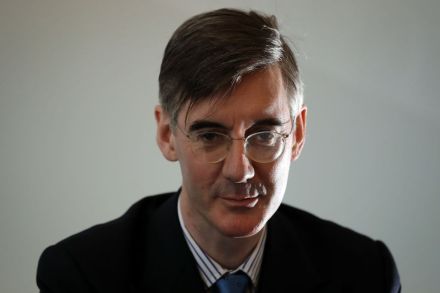
Andrew Marr returned to our screens this week after recovering from his kidney operation. His first interview was with Jacob Rees-Mogg, the Chairman of the European Research Group and currently the bookies’ favourite to be the next Prime Minister. Marr inquired as to how Rees-Mogg felt the government’s negotiations with the EU were progressing, particularly regarding the present stalemate over potential customs arrangements post-Brexit and the knock-on impact for the Irish border: AM: [The Prime Minister] thinks this idea of ‘We’re not putting up a hard border, let someone else do it if they dare’… is irresponsible, and she’s said so much to you. JRM: …I think that is a

The six tricks Mark Carney used to cook up his ‘Brexit costs you £900’ figure

Mr S has always been a great admirer of creative accounting: the tricks our politicians use to dress up 50p as £1. It’s not lying, per se. All the techniques need to be valid. But their effect is to mislead. Ed Balls was the great master of this dark art, George Osborne his less-subtle apprentice. Now Mark Carney is stepping in, claiming that the Brexit vote has somehow made people £900 a year worse off. How can he conjure up this figure, given that his doom-laden projections for the No vote have all been disproven? By using financial spin. A combination of language and statistical skills to “give an appearance

How to console a Remainiac

Matthew Parris feels that he has become a genuine Remainiac, and kindly readers, fearing for his mental health, have been springing to his aid. The Roman elite, who felt the same sense of disempowerment after the republic collapsed and Augustus became the first Roman emperor in 27bc, might have a solution. The point about Augustus was that he did not call himself ‘emperor’ but princeps (‘first citizen’) or Caesar (as the later emperors did); and he maintained the trappings of the republican system (senators, consuls, etc). But he was now the final source of all authority. Any popular control over laws and appointment of officials was gone. So Romans began

Theresa May’s Brexit ‘strategy’ is a shambles

Dear Tory MPs and donors, I’ve avoided writing about the substance of Brexit and the negotiations since the anniversary last year but a few of you have been in touch recently asking ‘what do you think?’ so… Vote Leave said during the referendum that: 1) promising to use the Article 50 process would be stupid and the UK should maintain the possibility of making real preparations to leave while NOT triggering Article 50 2) triggering Article 50 quickly without discussions with our EU friends and without a plan ‘would be like putting a gun in your mouth and pulling the trigger’. Following this advice would have maintained the number of positive branching histories of the

The great Tory health splurge

A fortnight before Philip Hammond delivered his last Budget, the chief executive of the NHS gave a speech making the case for more funding. Simon Stevens had brought with him picture of a Vote Leave poster, promising £350 million a week for the health service, which he showed to his audience. What a good idea, he said. He wasn’t coming out as a Brexiteer, but he did think the Leavers had a point about giving an extra £350 million a week to the National Health Service. In fact, he went so far as to say that the ‘public want to see’ this promise honoured. And if politicians don’t cough up?

L’Europe, c’est moi

I meet Bernard-Henri Lévy in a colossally luxurious hotel on a tree-lined avenue just behind the Elysée Palace. The French philosopher is half-reclining on a sofa, with one ankle tucked under his thigh, beneath an ornamental bookcase bearing a bust of Voltaire. He wants to discuss his new play, Last Exit Before Brexit, which will receive its world premiere at Cadogan Hall, London, on 4 June, under the auspices of the Hexagon Society. The play takes the form of a 100-minute monologue. What’s it about? ‘A group of anti-Brexit intellectuals decide to organise a last-chance event in the symbolic city of Sarajevo. They ask me to deliver the keynote speech.

Tory MPs brace themselves for EU Withdrawal Bill showdown

The Chief Whip has just told Tory MPs that the EU Withdrawal Bill will be coming back to the Commons in early to mid-June. He told a meeting of the 1922 Committee that all leave was cancelled, and that there would be no slipping as the Government tried to overturn the Lords amendments. He was, I am informed, clear that the Government isn’t changing its mind on either the EEA or a customs union. There had been speculation that the Government would try and hold the withdrawal bill back until the autumn. But I understand that this option was never really a goer because of the number of statutory instruments

Jacob Rees-Mogg’s snap election warning

Jacob Rees’Mogg’s appearance on the new Conservative Home Moggcast has caused a stir in Westminster. In the broadcast, the arch-eurosceptic – and chair of the European Research Group – questions Theresa May’s commitment to Brexit: ‘I fear we’re getting to the point where you wonder whether the Government really wants to leave at all.’ Although the comments are unlikely to go down well in Downing Street, there is one aspect of the Moggster’s comments that will ease concern in No 10. On the recurring topic of an early election, Rees-Mogg says such talk is dangerous – and something that should be avoided: ‘The national polling level is very encouraging. It’s