Brexit

Trump returns to backwater Britain

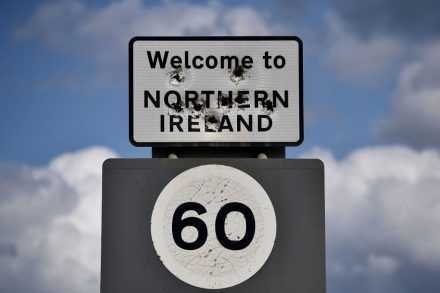
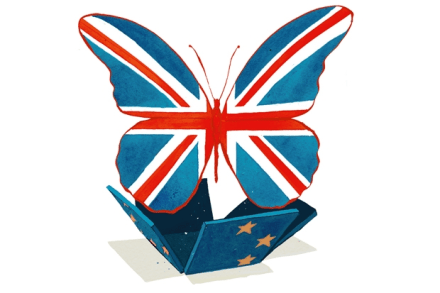
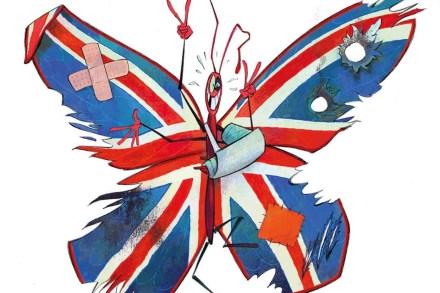
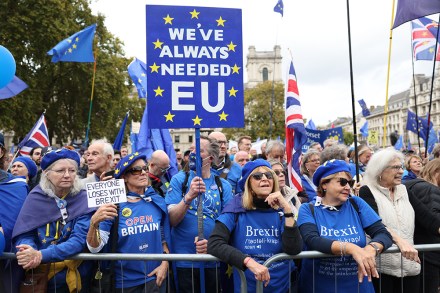
President Trump returns to Britain this week for his second state visit, to a country which is much changed yet depressingly still the same. On his first, six years ago, Britain had yet to complete its departure from the EU, Elizabeth II was still on the throne and the Conservatives still in power – with three Prime Ministers to go before their eventual ejection from office. He will no doubt receive a warm and dignified welcome from King Charles, whatever is going through the monarch’s head – the impeccable neutrality of the British throne has survived the change of reign. Yet the President will find a country that is anything but transformed by Brexit or by its change of government.

Donald Trump

One issue I can’t stop snubbing the left over

Before I’d established my tiny crew of fellow local moms, I aggressively befriended – or tried to befriend – any woman with a baby who looked vaguely friendly. I’d try my luck in cafes, playgrounds, baby classes, yet with only minimal success (one find, a Cambridge-educated Irish lawyer, "forgot" her wallet on our date, leaving me to pay for her expensive glass of wine).So I clung gratefully to one of my café pickups, Marta, with whom two or three pleasant playdates (or rather: mommy walking dates) had taken place. I had rosy hopes for more as her kid was cute and reminded me of my own. But one day, strolling along the dark and wintry main drag that connected our two adjacent neighborhoods, things took a turn for the ominous.

left

The Europe of American imaginations no longer exists

Since the United Kingdom left the European Union five years ago, the pair have been in battle to prove who has performed better. But the real story of the past five years is not a stagnant UK falling behind a buoyant EU, but of Britain and Europe being trapped in the same cycle of relative decline. It’s America that has quietly raced ahead of Europe this century. Following the pandemic it has become impossible to ignore the gulf in economic vitality between the US and Europe, the former growing by 16.3 percent per capita since 2008. There are very good reasons for America’s success, or rather, Europe’s decline. The EU and the UK increasingly treat their industries as pieces of heritage which must be preserved against disruptors and foreign competition.

Europe

A pleasant respite from the tumult in Cambridge

Cambridge, England Inscribed on the lid of a two-manual harpsichord in Holy Trinity Church at Hildersham in Cambridgeshire is the Latin tag Musica Donum Dei — music is a gift of God. It was a sentiment I could hardly quarrel with as I listened in the little twelfth-century church to a variety of baroque sonatas for violin, recorder, cello and harpsichord. They were expertly performed by the Azur Ensemble, which is comprised of recent graduates of the Royal College of Music. A particular standout was the French harpsichordist Apolline Khou, who has performed widely in Europe and in a solo concert for King Charles III.

Cambridge

The era of ideological, overreaching and omnipresent government

It was a law of classical political philosophy that democratic polities devolve inevitably into tyrannical ones. This law is being validated in the twenty-first century, as liberal democracy creates societies antithetical to both liberalism and democracy by shaping citizens of a character for which neither was designed nor developed. In a parallel development over the past decade or so in Europe and the United States, liberals and democrats view their response to the problem as “reaction,” pure and simple, against the sort of thing they have been fighting since 1789. Only it is not reaction; it is apparently something new in history.

government

London to Amsterdam via Brussels: taking the long way

Brexit, the gift that keeps on giving: from June 14, 2024 to January 2025, a reduced Eurostar service will run between London and Amsterdam. Why? Part-closure of Amsterdam Centraal leaves no space for the extra bureaucracy now necessary. Passengers returning to London will change at Brussels to go through security and passport checks, adding up to almost two hours of extra journey time. Global travel booking platforms such as OMIO have reported a surge in train travel in recent years. Cheaper prices (compared to flying) and environmental concerns are cited as the main drivers. But Eurostar’s capped passenger numbers and indirect routes will surely increase air travel in 2024, literally flying in the face of Dutch sustainability policies.

brussels

The rise of English wine

Sometimes, I pretend that I worked the wine beat thirty or forty years ago. I picture myself in formal wear, kicking back in gilded settings, sipping perfectly aged first growth, trading bons mots with winemakers. We’d spend hours solemnly considering the slow, steady, seemingly eternal rise of wine culture, and how inevitably it would soften the cruder edges of society. It would be so merry, yet cerebral — but also something we could feel good, even morally superior, about participating in. Instead, I’m in 2024 wearing yoga pants and guzzling mineral water (must hydrate!) by myself holding Zooms with winemakers, sweating over the fact that scientists say climate change imperils up to 73 percent of the world’s current wine-growing regions.

wine

Brussel or Bruxelles? Even the locals can’t agree

Brussels is the source of all evil to many of those who supported Brexit, and even for Americans. “What’s a good Christian boy like you doing in Satan’s den?” was the question of an Austin friend when I told him work had brought me to the capital city of the European Union. To its critics, Brussels is the bastion of the worst sort of Big Government, with the European Commission and Parliament issuing diktats to more than 500 million people across twenty-seven nations. But while the city is “full of nets” with which to trap you, as described by another friend who worked here on human rights legislation, it’s also a city of “hope.” Brussels has a rich comic book culture. There are the intrepid reporter Tintin and his sidekick Snowy.

brussels

Does Biden have a problem with King Charles?

Does Biden have a problem with King Charles?  Next month, the British and Irish governments will commemorate twenty-five years since the Good Friday Agreement was signed. Political leaders past and present, from both sides of the Irish Sea, and both sides of the Atlantic, will meet in Belfast to mark a quarter-century since the historic peace deal was signed. The guest list will include King Charles, Irish and British heads of government and protagonists from both sides of the peace talks. Bill and Hillary Clinton will reportedly be in attendance. As will George Mitchell, the US senator who chaired talks between republicans and unionists. Missing from proceedings, however, will be Joe Biden.

Eating from Lisbon to London and back again

Six months of the year, I’m a (wannabe) Lisboeta, “a person from Lisbon.” A peripatetic British food and travel journalist somewhat scuppered by Brexit, I’m allowed in the Schengen Area for up to ninety days in any 180-day block. I max them out before I’m sent packing. I’ve come to think of these moments in time as “chapters,” in a half-hearted attempt to romanticize the loss of my border privileges. Lisbon is the object of my affections — and has become my base for European chapters from which I breathlessly ping between countries. I try new dishes and try not to fall in love with anyone before I’m ordered home (rather inconvenient: "getting married for the visa" jokes grow less and less funny).

lisbon gunpowder

The ‘natcons’ are here to stay

Cast your mind back to the 1990s for a moment. The left, dispirited at their generation-long rout at the hands of Ronald Reagan and Margaret Thatcher, and enraged by the ratification of limited-government trends at the hands of Bill Clinton and Tony Blair, were looking for a new rallying point. By the end of the decade, the intellectual left had settled upon a new epithet: “neoliberalism.” Although the term was not brand new, it exploded in popularity in left academic journals and soon in left media too. Simply put, “neoliberalism” means “democratic capitalism.

Why we’ll all miss Boris

I think that Thomas Babington Macaulay had the last word about Boris Johnson’s forced resignation as prime minister of the UK: “We know no spectacle so ridiculous,” Macaulay wrote, “as the British public in one of its periodical fits of morality.” Macaulay’s line needs to be slightly adjusted, it is true, because, ridiculous though public displays of puritanical moralism are, in this case it was mostly Boris’s colleagues in Parliament, not the public at large, that suffered that unbecoming fit of morality. Indeed, throughout it all, Boris — a politician with more élan than any prime minister since Margaret Thatcher — remained popular with the public. He was especially popular, I think, with the American public. And why not?

boris johnson trade

Biden cares about borders — as long as they’re Irish

Joe Biden won’t go to the border, but the border is coming to him. The Northern Irish border, that is. On Wednesday, Biden, Kamala Harris (pronouns: she/her) and Nancy Pelosi marked St Patrick’s Day by talking with Irish politicians from both sides of their border. Afterwards, the Irish prime minister, Micheál Martin, thanked Pelosi for her ‘continued support’ on Brexit. It’s bordering on the ridiculous. Biden’s administration refuses to admit that it has a moral and humanitarian crisis on its southern border, but it makes time to create problems on the border between two close allies, Britain and the Republic of Ireland. The administration insists it isn’t taking sides on Brexit, but the truth is that it already has.

border

Nigel Farage: Trump is taking us back to more traditional alliances

Our Washington editor Amber Athey interviewed Nigel Farage, founder of the UK Brexit party, for a Steamboat Institute livestream. We've published the transcript below.Amber Athey: Welcome everyone to the Steamboat Institute's live broadcast. I'm Amber Athey, the Washington editor for Spectator USA. And I am joined by Nigel Farage, the leader of the UK Brexit party, who will also be a keynote speaker at the Steamboat Institute's annual Freedom Conference this year from August 28 to 29. Nigel, thank you so much for joining us again.Nigel Farage: Thank you. No problem at all.AA: So I want to go ahead and get started by giving you a chance to respond to a little bit of a controversy. People are very upset with you for attending Trump's rally in Tulsa, Oklahoma.

farage

Who is Dominic Raab?

On Monday evening, Britain’s Prime Minister Boris Johnson, diagnosed 11 days’ earlier with COVID-19 and taken to hospital for ‘tests’ on Sunday afternoon after showing ‘persistent’ symptoms, was moved into an Intensive Care Unit at St Thomas’s Hospital in London. A brief statement from 10, Downing Street described Johnson’s ‘worsened’ condition and confirmed that Johnson, who had continued working in isolation throughout his illness, had asked foreign secretary Dominic Raab to ‘deputize for him where necessary’.Forty-six-year-old Raab is also the first secretary of state, the most senior member of Johnson’s cabinet.

dominic raab

After liberalism

We’re entering the post-liberal moment. From Trump to Brexit, Ireland to Brazil, we’ve seen a number of revolts at the ballot box that point to a mass vote of no-confidence in the economic and cultural status quo — in other words, in 21st-century liberalism. The liberals aren’t taking it lying down. They’re doing their best to define post-liberalism in language they are most comfortable with, calling it ‘fascist’ or ‘communist’ — and sometimes the criticism is spot-on. But other times it is wholly inaccurate. One of the glaring paradoxes of the post-liberal moment is that many of the people involved in it want to rescue liberalism from itself.

liberalism post-liberal

After Brexit

This article is in The Spectator’s February 2020 US edition. Subscribe here. The US-China trade war is easing; a new trade deal with Canada and Mexico has been passed by a large cross-party majority in the House of Representatives — largely unnoticed, as it happened in the same week as Donald Trump’s impeachment. The idea that the president is taking the world down a blind alley toward an era of protectionism is beginning to fade. So what now of the prospects for that other trade deal that Trump has promised: between the US and Britain?

brexit

French disconnection: how Emmanuel Macron went from savior to failure

This article is in The Spectator’s February 2020 US edition. Subscribe here.Montpellier, France As the new year dawned, it was business as usual in France, with transportation paralyzed, hundreds of cars burning in the suburbs, violent demonstrations in the cities, a whiff of tear gas in the Métro, police beating protesters. Train drivers, air-traffic controllers, nurses, garbage collectors, ballet dancers, opera singers were all on strike — and so, even, were lawyers. If the country is not wholly immobilized, it’s because the French are pretty adaptable and, to be honest, some only pretend to strike. My garbage was picked up in the normal way. Making the French swallow bitter medicine is hard, even in a nation of hypochondriacs.

emmanuel macron

A US-UK free trade agreement will bring benefits on both sides of the Atlantic

It will no doubt be met with furious resistance in parliament and on the streets. There will be an outcry over chlorinated chickens. There will be scare stories about the National Health Service being sold off. And the farmers will be angry at the prospect of the country being flooded with food that is far cheaper than anything they can produce. Even so, assuming the Conservatives win the election, we leave the European Union and Donald Trump wins re-election to the White House (OK, I will agree the hypothetical is doing some heavy lifting in that clause), Britain and the United States are going to attempt a comprehensive free trade agreement. That will be a big deal. America and the UK are, respectively, the biggest and fifth biggest economies in the world.

us-uk

Why the left wants a political advertising ban

An easy, crowd-pleasing opinion column would maintain that banning political adverts from social media platforms is wrong because it implies that voters are anything less than impeccably rational in their decision. We like to think our votes are based on our pure objective reason. Simultaneously, we like to think the votes of people that we disagree with are based on the outrageous propaganda of our opponents and the sheeplike and emotional qualities of their supporters.Balderdash. None of us have a Spock-like devotion to logic or an assiduous grasp of evidence when we vote. We are all prey to biases that bubble out of our stew of grievances, tribal loyalties and tribal hatreds, sensitivity to rhetoric and keen desire for social status.

advertising