Brexit

A pleasant respite from the tumult in Cambridge

Cambridge, England Inscribed on the lid of a two-manual harpsichord in Holy Trinity Church at Hildersham in Cambridgeshire is the Latin tag Musica Donum Dei — music is a gift of God. It was a sentiment I could hardly quarrel with as I listened in the little twelfth-century church to a variety of baroque sonatas for violin, recorder, cello and harpsichord. They were expertly performed by the Azur Ensemble, which is comprised of recent graduates of the Royal College of Music. A particular standout was the French harpsichordist Apolline Khou, who has performed widely in Europe and in a solo concert for King Charles III.

Cambridge

Britain is losing friends – and making enemies

From our UK edition

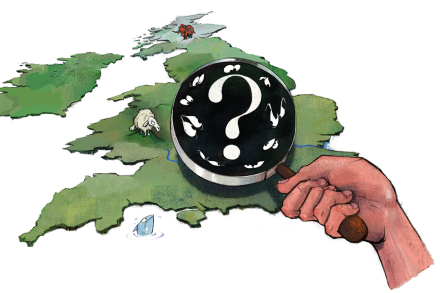
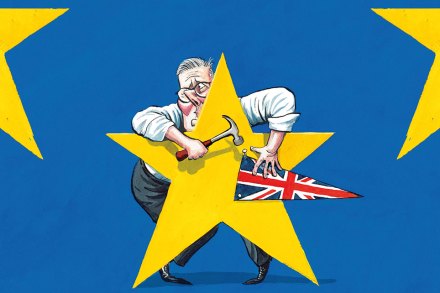
Whatever way you voted in 2016, I suspect that many of us have the same image of post-Brexit Britain. It is easier to capture in a cartoon than in prose but it looks something like this. A chap tries to make a leap across a canyon, falls ever so slightly short and as a result gets wedged in a crevice. And there he is – stuck. Neither on one side or the other and gaining the benefits of neither ledge. The Conservative party obviously carries a large amount of responsibility for this – not least for the fact that European law still dictates our insane migration policy. But the current government must also take its share of responsibility. If we were run by competent men and women of vision then getting out of the spot we are in could be possible.

Is Europe really faring better than Britain?

From our UK edition

Five years ago this week, Boris Johnson was celebrating the achievement of leaving the European Union and wondering how he might take advantage of Britain’s newfound freedoms. A virus had other ideas. Covid-19 didn’t just turn our lives upside down and cost many lives; it robbed the then government of the chance to seize the initiative and prove that Brexit was worth the pain and inevitable disruption. For frustrated anti-Brexit campaigners, the pandemic provided them with ammunition to claim that their worst predictions had been realised. Falling economic growth, rising inflation, empty supermarket shelves – all these came to be blamed on Brexit, ignoring the rather large spanner which had been thrown into the works of the global economy.

Would Brexit voters really accept the return of freedom of movement?

From our UK edition

19 min listen

New research this week suggested that a majority of Brexit voters would accept the return of freedom of movement in exchange for access to the EU single market. The poll, conducted by the European Council on Foreign Relations (ECFR), found that 54% of Brexit voters – and 68% of all respondents – would accept this. Facing their own changing domestic concerns, how close can the UK and EU governments really get? Could Defence hold the key for collaboration? And how much is this driven by a more volatile geopolitical landscape ahead of Trump’s return as US president? James Heale speaks to Anand Menon, director of the think-tank UK in a Changing Europe, and Mark Leonard, director at the ECFR. Produced by Patrick Gibbons.

I hope you didn’t sign that petition

From our UK edition

Did you sign it, then? And if so, what were your expectations? That Sir Keir Starmer would look at the figures and say – perhaps with a tinge of remorse – ‘Yup, that’s it, I’m bang to rights, we’ll have an election?’. Or were you simply hoping to annoy him? If so, I assume you are disappointed, because Sir Keir doesn’t look very annoyed to me. It turns out we are no better than those liberal lefties who can’t believe that other people have different views The petition to demand a general election on the grounds that the people who didn’t vote Labour on 4 July are upset at the result so far has almost 2.7 million signatures.

A post-Brexit entertainment: The Proof of My Innocence, by Jonathan Coe, reviewed

From our UK edition

This is a novel that spans the Truss administration, from its heady dawn to its decline and fall 49 days later. The Proof of My Innocence starts as a satire, not so much of Truss and her world but the ideologists who thought that the prime minister’s brief, shining moment was their long-cherished future. They meet in a collapsing Cotswolds castle to hear from delegates such as Josephine Winshaw, who intones that everything now is woke: ‘Paying your TV licence was woke. Getting vaccinated was woke... buying avocados was woke, and reading novels was woke.’ Another speaker praises a reactionary novelist to a much smaller audience. Into this milieu steps Christopher Swann, a blogger. To him the radical economic libertarianism that Truss represents stems from early 1980s Cambridge.

In defence of the liberal elite

From our UK edition

You can hear it already. Rising from the tents of the dejected Democrat camp comes the whimper of self-reproach. It’s all our fault. Liberalism created this monster. There’s a distinct whiff of mea culpa in the air. Nostra culpa, nostra maxima culpa for the alienation of half the American people.  Donald Trump and his mob? It’s the fault of liberals for not feeling Trump-America’s pain. We fed their despair. Nigel Farage and his Reform party? Liberal Britain’s fault for being too stuck up to take Red Wall voters’ concerns seriously. Noses in the air (apparently), deaf to the woes of all those deplorables, and babbling about trans rights, preferred pronouns and all the rest of the woke agenda, we have lost the trust of those we (apparently) secretly consider negligible.

Familiar scenarios: Our Evenings, by Alan Hollinghurst, reviewed

From our UK edition

There’s a certain pattern to an Alan Hollinghurst novel. A young gay man goes to Oxford. He’s middle class and riddled with suburban self-consciousness – a kind of complicated awareness of his non-posh failings and resulting subtle superiority. He meets another young man – possibly gay – who is posh. An intricate dance ensues of social slip-ups and huge townhouses in Notting Hill, bags of money and country piles. It’s a formula which can be transposed between Edwardian drawing rooms and 1980s parties with only the slightest changes. Sometimes our protagonist is the aristocrat himself; sometimes he even went to Cambridge. He’s always cultured – interested in poetry, theatre and Henry James. Hollinghurst’s fiction was, for a period, radical.

How can Ireland survive the seismic changes of the past three decades?

From our UK edition

Historians in Ireland occupy a public role – unlike in Britain, where those with an inclination towards the commentariat usually migrate to America. This is perhaps not surprising in a country where public intellectuals are exemplified by Stephen Fry and philosophers by Alain de Botton. Ireland presents a more demanding prospect, where, ever since the days of Conor Cruise O’Brien, historians have colonised the public sphere with influential newspaper columns and regular debates on television. Indeed, when the national TV station began broadcasting in the early 1960s, it featured a discussion programme called The Professors, all of them historians (and one or two usually a bit the worse for wear).

Politics as Ripping Yarns: the breathless brio of Boris Johnson’s memoir

From our UK edition

It is, perhaps, hard to imagine a collaboration between Virgil and Captain W.E. Johns, a fusion of the Aeneid and Biggles Pulls It Off, but that is how Boris Johnson’s memoir reads. Our intrepid hero travels round the world, wooing Gulf potentates, sticking it to Vladimir Putin, snatching submarine contracts from under Emmanuel Macron’s snooty Gallic nose and then makes it home in time for some uniting and levelling up before settling down to a well-deserved glass of Tignanello. He also, like Aeneas, endures a thousand ordeals and makes himself father of the world’s greatest city (while also making some truly dreadful puns: ‘Was it H.J. Eysenck who gave me that idea? Eysenck it was...’).

Where is the Brexit dividend? Live at Conservative conference

From our UK edition

37 min listen

In this special Saturday shots we hear from a panel discussion on Brexit, originally recorded at Conservative Party conference.  Four years on there are successes to point to, namely eliminating the cost of membership, new trade deals and the speed of the vaccine rollout. Yet the prevailing sense is that the full potential of Brexit has not been realised. Where do we go from here?  The Spectator's James Heale speaks to former MEP Lord Hannan, Telegraph columnist Sherelle Jacobs, Iain Duncan Smith MP and Tom Lubbock, co-founder of JL Partners.

Six politicians who shaped modern Britain

From our UK edition

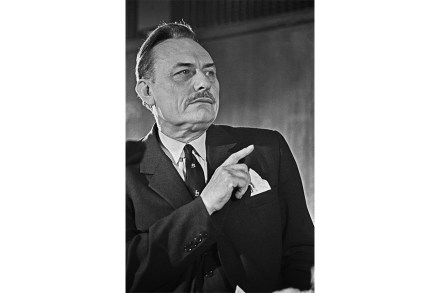
‘All political careers end in failure,’ said Enoch Powell. Maybe. But just occasionally our imperfect political system throws up someone whose impact on our way of life, for good or ill, outlives them. In a series of elegant essays, Vernon Bogdanor, professor of government at King’s College London, examines the careers of six politicians – three from left of centre, three from the right – who, in his view, changed the political weather of modern Britain. Only one, Nigel Farage, is still alive.  First up is Aneurin Bevan, the left-wing firebrand who, in the teeth of fierce opposition from the mighty, vested-interested British Medical Association, presided over the creation of the National Health Service.

Keir Starmer’s plan to soften Brexit

From our UK edition

42 min listen

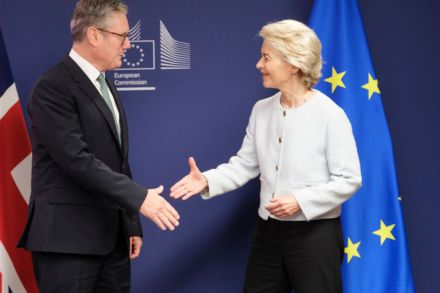
This week: Keir Starmer’s plan to soften BrexitKaty Balls writes this week’s cover piece on Labour’s plans to establish close ties with the EU. Every member of Starmer’s cabinet voted Remain, and the government is trying to ‘reset EU relations through a charm offensive’. Brussels figures are hopeful: ‘There was no real goodwill for the Conservative government.’ There are tests coming: the first deal, Katy writes, could be harmonisation on veterinary standards. But will the UK have to abide by the European Court of Justice? Then there’s the issue of Chinese electric cars: will Starmer accept cheap imports, or follow the EU in raising tariffs on them? For now, EU officials see the new PM as ‘workman-like and not playing to the gallery’. How long will that last?

Keir Starmer’s plans to soften Brexit

From our UK edition

Anew political bromance is brewing on the continent. Keir Starmer has met Olaf Scholz, his German counterpart, three times since he entered Downing Street last month. Already the two men have found plenty in common. Both are social democrats, both are lawyers from similar backgrounds and both went through a socialist phase before selling themselves on competence. ‘Charisma is largely alien to them,’ said Der Spiegel after the two met recently at Blenheim Palace. ‘Perhaps this is why they like each other so much.’ Most importantly, Starmer and Scholz are both very keen for a new, closer relationship between the United Kingdom and the European Union.

The era of ideological, overreaching and omnipresent government

It was a law of classical political philosophy that democratic polities devolve inevitably into tyrannical ones. This law is being validated in the twenty-first century, as liberal democracy creates societies antithetical to both liberalism and democracy by shaping citizens of a character for which neither was designed nor developed. In a parallel development over the past decade or so in Europe and the United States, liberals and democrats view their response to the problem as “reaction,” pure and simple, against the sort of thing they have been fighting since 1789. Only it is not reaction; it is apparently something new in history.

government

One damned thing after another: Britain’s crisis-ridden century so far

From our UK edition

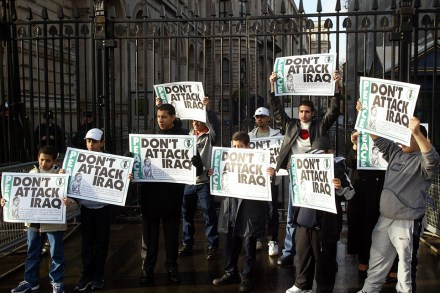
Asked about the greatest challenges he faced as prime minister, Harold Macmillan is said to have replied: ‘Events, dear boy, events.’ The first quarter of this century has seen no shortage of events that have blown prime ministers off course. There was Tony Blair by 9/11 and the resulting war in Iraq; Gordon Brown by the financial crisis of 2007-8; David Cameron and Theresa May by Brexit; and Boris Johnson by Covid. With the exception of May, none of these people had any inkling, on taking office, of the bolts from the blue that would ultimately define their premierships.

Is Brexit safe under Labour?

From our UK edition

17 min listen

Writer, trade unionist and Labour Brexiteer Paul Embery joins James Heale to discuss Labour's plans for the EU should they get into government. Paul highlights the need for Labour to deliver on its promises and avoid alienating working-class voters. Will Rachel Reeves appease the Red Wall? And how tough will Labour be on immigration?

Is Boris back to save the day?

From our UK edition

12 min listen

If you're a Twitter user, you might have seen more of Boris Johnson than usual. He's been making videos to endorse selected candidates from his holiday in Sardinia. Might he make a bigger return to the election campaign? Is he the man that could save the Tories from Farage - and does he want to?  James Heale speaks to Isabel Hardman and Fraser Nelson.

The danger of a Labour supermajority

From our UK edition

We are witnessing what could well be the last few weeks of a constrained Labour party. Sir Keir Starmer is saying as little as possible about his agenda and is instead listing what he won’t do (raise income tax, etc). He is rightly fearful that the Conservatives may do better than the opinion polls suggest. That has happened in the past. There may be a ‘shy Tory’ effect in the polls as there was in 1992, 2015 and 2019. Who would admit to voting Conservative in the current climate? Regardless, power now looks certain to come Starmer’s way – perhaps with a majority bigger than that of any modern prime minister. It doesn’t much matter that he has not enthused voters with his promises.

The EU ‘elections’ vindicate Brexit

From our UK edition

If Britain had not left the European Union, we would be going to the polls this week as well as on 4 July. The European parliament elections have come round again and it is likely that there will be a mass revolt against the direction of the EU project. Across the continent, voters disillusioned with the EU model of democracy are turning to the Eurosceptic right. Marine Le Pen’s National Rally is on course to become the biggest single party in the European parliament. AfD is polling in second place in Germany. Geert Wilders’s Freedom party is comfortably ahead in the Netherlands. Chega, a new far-right party from Portugal, is expected to make big gains, as is the Freedom party in Austria and the Croatian Homeland movement.