Books

The enigmatic rise of Colleen Hoover

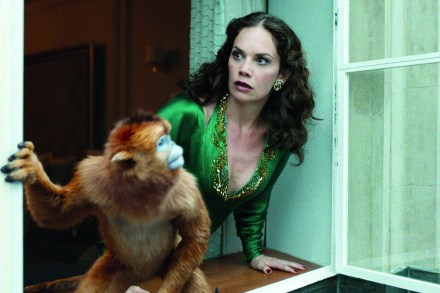
The world’s bestselling author is a forty-three-year-old mom you probably haven’t heard of. In fact, unless you’re an extremely online fiction reader between the ages of sixteen and twenty-four, Hoover is likely to be a bit of an unknown quantity. It’s hard to see how she can stay that way: with 1.1 million followers on TikTok — her fans call themselves her CoHort — Hoover is the platform’s most popular author. As a result of her #BookTok fame, “CoHo” is now the second most followed author on Goodreads; while most authors have a single book on the bestseller list, Hoover dominates with multiple books at a time. In late January this year, her books held three of the top five spots on the New York Times bestseller list.

colleen hoover
his dark materials

The magnetism of His Dark Materials

When I was in middle school back in the 1990s, there were two sets of books every boy seemed to have in his backpack. One was the Redwall series, Brian Jacques’s swashbuckling tales of heroic mice and tyrannical wildcats. The other was the His Dark Materials trilogy by Philip Pullman. It’s no coincidence, I think, that both Jacques and Pullman are British. What made these books intriguing, beyond their carefully wound plots, was that they were marketed to children yet addressed subject matter that was very much adult. In Redwall, it was the brutal violence. His Dark Materials had some of that too (in the first chapter of the first book, we witness an attempted killing; in the first chapter of the second book, we witness an accidental fatality).

The rewriting of Roald Dahl is an act of cultural vandalism

From our UK edition

The vandals have come for Roald Dahl. His books for children are to be cleansed of their ‘offensive’ content. Sensitivity readers – what we used to call censors – have been employed to pore over his works and expurgate any word or passage that might hurt a kid’s feelings. If you weren’t worried about cancel culture before, surely this egregious assault on some of the best-known children’s books of the modern era, this posthumous purging of an author’s output, will change your mind. Dahl is being well and truly Ministry of Truthed. Puffin essentially tasked the sensitivity readers with morally improving his stories so that no child will ever feel affronted by their fruity, judgemental language. Some of the changes are crazy.

Stephen Rubin, the publisher who speaks truth to power

Stephen Rubin may not be a household name, but one gets the impression that doesn’t bother him much. Since he began his career in the '80s, he has built his reputation on publishing zeitgeist-baiting fiction and non-fiction alike, ranging from the undeniably good (John Grisham’s The Firm) to the undeniably bad but hugely lucrative (The Da Vinci Code), along with George W. Bush’s memoir Decision Points. You may not like all, or even most, of the thousands of books that Rubin has been involved with, but you cannot deny his commercial acumen. He knows what people want to buy, and has been as responsible as anyone in the United States for bringing it to them.

Why we need a biography of philosopher Bryan Magee

From our UK edition

When I was a philosophy student at King’s College London in my early twenties, I came across a book called Confessions of a Philosopher by Bryan Magee. A history of western philosophy told through the story of the author’s relationship with it, it opens with a three- or four-year old Magee trying to catch himself falling asleep every night. Try as he might, he can never experience himself crossing the threshold from wakefulness into unconsciousness, a conundrum that keeps him in a state of ‘active mystification’. Magee spent the rest of his life like this, wrestling with the mysteries inherent in everyday experience. Far from being a fusty academic discipline with no relevance to the ‘real’ world, philosophy was, for him, an existential matter of immediate importance.

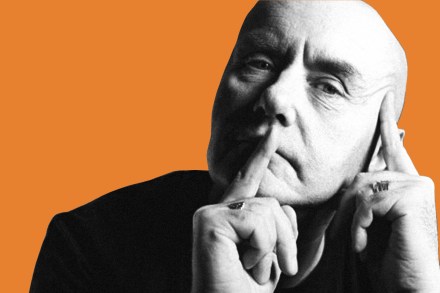
Trainspotting at thirty: an interview with Irvine Welsh

A lot of new books grow old fast. It isn’t even the fault of their material, necessarily, but their milieu. Hour by hour, the means of cultural production are accelerating at an evaporative rate. Today more than ever before, irrelevancy looms large over the shoulder of the novelist. It’s an environment within which thirty days of relevance is a feat, but thirty years? A fiction in and of itself. Yet, throughout three decades of cultural churn, the words of Irvine Welsh have remained steadfast; as culturally relevant and artistically avant-garde as the day they first hit the shelves.

Irvine Welsh

The unstoppable march of the celebrity author

From our UK edition

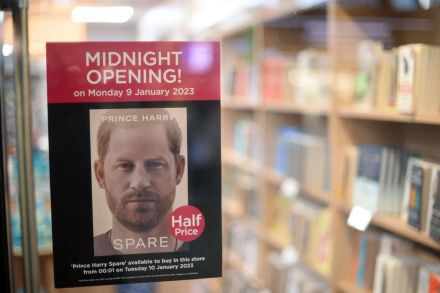
The anticipation surrounding the release of a certain memoir today obscures a bigger question about the changing face of our publishing industry. Why does every Tom, Dick and Prince Harry think they can write a book these days? Figures last week showed the number of independent bookshops in Britain reached a ten-year high in 2022, thanks to a reading frenzy fuelled by pandemic lockdowns, the mushrooming of book groups and, perhaps most of all, the incessant, unstoppable march of the celebrity (not to mention royal) author. It is good news that there are now more than 1,000 independent bookshops in Britain and Ireland, the culmination of six years of growth at a time when other retail sectors have taken a battering.

Books to look out for in 2023

From our UK edition

After a fair-to-middling 2022, it’s not unreasonable to hope that 2023 will see several stars burn brightly in the literary firmament. Whether what promises to be the most talked-about book of the year, Prince Harry’s Spare (out tomorrow with Bantam), is included in this number remains to be seen. On the plus side, the Prince has the estimable J.R. Moehringer as his ghostwriter; on the negative side is the fact that his every public appearance over the past few years has been so combative that we might expect little more than a 416-page exercise in score-settling. More reliable pleasures await. Pamela Anderson’s memoir Love, Pamela (Headline, January) should be a revelatory and fascinating dive beyond the usual bimbo clichés.

The return of Bret Easton Ellis

The Shards is about 600 pages long. “Should anyone even publish a 600-page novel?” asks its author Bret Easton Ellis. “I happen to believe, yes, if it’s justified.” Such books are rarely justifiable, and often, novelists become buzzed-about simply for executing them, but not many can boast that every word, scene and sentence is necessary. This is how it feels to read The Shards: not a detail is to be missed. It contains the thematic elements that run through Ellis’ oeuvre: the social lives of the wealthy, or nearly wealthy, drugs, sexuality and desperation painted over with bursts of violence. The through line that connects his work isn’t that sex and violence are taboo.

ellis

The books to watch out for in 2023

After a fair-to-middling 2022, it’s not unreasonable to hope that 2023 will see several stars burn brightly in the literary firmament. Whether what promises to be the most talked-about book of the year, Prince Harry’s Spare (Random House, January), is included in this number remains to be seen. On the plus side, the prince has the estimable J.R. Moehringer as his ghostwriter; on the negative side is the fact that his every public appearance over the past few years has been so combative that we might expect little more than a 416-page exercise in score-settling. More reliable pleasures await. Pamela Anderson’s memoir Love, Pamela (HarperCollins, January) should be a revelatory and fascinating dive beyond the usual bimbo clichés.

The best new year celebrations in literature

From our UK edition

Literature presents many different ways of observing the new year. Much like real life, the options range from big parties to quiet stay-at-home gatherings… and existential crises. In Louisa May Alcott’s Little Women, Meg and Jo March attend a New Year’s Eve party at the home of their family friend Mrs Gardiner. ‘Down they went, feeling a trifle timid, for they seldom went to parties, and informal as this little gathering was, it was an event to them.’ This is the moment that Jo converses with Laurie for the first time and sparks fly as they watch the New Year’s Eve party from their shared point of refuge in a small curtained recess.

Beyond Dickens: the best Christmas short fiction

From our UK edition

Claire Keegan’s Booker-shortlisted Small Things Like These this year revived the tradition of Christmas short fiction. It’s a deftly done parable about cruelty and kindness in the run-up to Christmas, with actual snow – and tears.   Although Keegan’s novella eventually lost out to Shehan Karunatilaka for the Booker, it perhaps served a greater purpose than prizes: it was a reminder of the value of stories that connect us with our humanity, particularly around this time of year.  It was also a reminder that cultural consumption at Christmas needn’t merely be about overloading on films.

The publishing mega-merger that wasn’t

If you sit down and talk to an author for any length of time, you will hear gripes. (Writers will never be confused with the sunniest of people on this planet.) About the visibility of their books; about the size of their advances; about their sales, relative to their other titles and to their peers; about publicity campaigns; about cover designs. There will be a lot of gripes, and if you are cornered by an author in a bar, or at a party, you might be advised to make your excuses and flee. But if you have some sympathy for this much-maligned breed, it may occur to you that the basis of their complaints ultimately comes down to a simple lack of appreciation by their publishers: those all-powerful entities that have the power to make or break careers at the touch of a button.

publishing
le Carré

The spy who loved me

I started reading Suleika Dawson’s The Secret Heart at a London bar, intending simply to skim through as I finished my beer. Six hours and many more beers later I was still at the bar, and still reading. The book, an erotically charged, no-punches-pulled account of her multiple affairs with the author John le Carré (or David Cornwell, as she knew him), is also a fascinating and important portrait of the man himself. The pseudonymous author, with her winking nod at Max Beerbohm’s femme fatale, offers a degree of insight and honesty which le Carré’s official biography (let alone his own memoir) and recently released collection of letters do not, and a character study of a London long since lost.

The art of the stocking-filler book

From our UK edition

The best stocking-filler present I received last year was the bumper Christmas edition of The Spectator. But it wasn’t the only erudite reading matter crammed into a moth-eaten ski sock. Nestled under a mouldy tangerine and some chocolate money destined to be stolen by my children were: How it Works: The Dad (Ladybird for Grown-Ups); You Do Have the Authority Here!: #What Would Jackie Weaver Do?; and The Best of Matt, 2021. They now jostle for space in a downstairs loo sprinkled with other half-read stocking fillers chronicling the past two decades: Schott’s Original Miscellany; The Curious Incident of the WMD in Iraq; Does Anything Eat Wasps?; Crap Towns; Fifty Sheds of Grey; Five on Brexit Island; and half a dozen more Ladybird spoofs, a series that has sold 5.

The best out-of-print books (and where to buy them)

From our UK edition

Those overstuffed shelves of the latest releases aren’t always the best place to start when you’re shopping for a book to read (or to give as a Christmas gift). You can find plenty of out-of-print books with timeless appeal that are worth snapping up – if you know where to look.   Elizabeth von Arnim’s Introduction to Sally, for example, is almost 100 years old, but is a very enjoyable read if you can find a copy. Mr Pinner is a shopkeeper and he and his wife have longed for a child for years, so they are thrilled when their daughter is born. Mr Pinner wants to call her ‘Salvation’ but they compromise on ‘Salvatia’ (shortened to Sally). Sally grows up to be the most beautiful girl anyone has ever seen.

The Spectator’s 2022 Books of the Year

William Boyd Writing effective comedy is very difficult. True comic genius, the ability to create a unique tone of voice — deadpan, perfectly timed, self-deprecating, abjuring all whimsy (the British disease) and grandstanding — is extremely rare. One thinks of S.J. Perelman, Peter de Vries, the Grossmiths and P.G. Wodehouse amongst very few others. One name that can be added to this tiny and exclusive club is Theo Fennell who has published, this year, his memoir I Fear For This Boy: Some Chapters of Accidents (Bloomsbury, $35). It relates incidents in Fennell’s life where everything that could go wronnd Catholic Churches as he veered between them.

books
autofiction

Think autofiction is easy? Think again

"No, Lisa." As rejection letters go, it was admirably concise. I’d made an attempt at “autofiction,” that amorphous genre which inhabits the space between autobiography and fiction, and this was the entirety of my editors’ response. Any writer who has been at it for any length of time will have received Dear Johns from publishers, but is two words a record? It was something to cling to, at least, during the five further years it took for the book to find a home. Eventually, a French house took it, and Les Femmes de mes amants staggered unobtrusively into print in June this year. Obviously, I should have set my sights on Paris from the first.

book

How to throw a book party

London The launch party for my book has gotten sensational reviews. “Party of the year!” said one friend. “Simply brilliant!” said another. A hack from the Times declared, “It was like an old-fashioned Fleet Street Party” — by which he meant everyone was drunk, dancing and misbehaving. Unfortunately, my book has not gotten sensational reviews. It’s gotten no reviews — at least from the national press. This is a cause for worry. Or so my publisher Todd Swift of Eyewear Publishing thinks. The day after the party he calls me. I’m still buzzing with my party reviews; he’s buzzing with panic. Todd tells me that no reviews mean we can’t get my book into the major bookshops! I’d hate to see your great book die, he says.

Inside Joan Didion’s extravagant estate auction

On December 23, 2021, I left the Hollywood Roosevelt and walked down North Orange Drive to turn right and face Sunset Boulevard. It was dark when I passed the entrance to the Chateau Marmont. When I finally crossed the street to arrive at Book Soup, the “Bookseller To The Great & Infamous,” I turned to the cashier and asked if they had copies of Play It As It Lays by Joan Didion. He huffed, “Uh, yeah, we’re sold out.” Joan Didion had died earlier that day in Manhattan due to complications of Parkinson’s Disease.

joan didion