Books

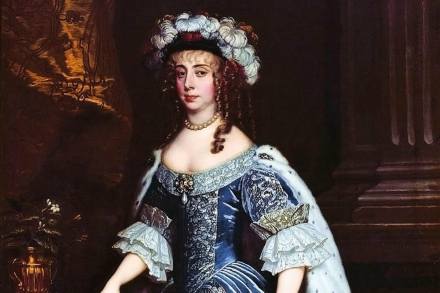
Meeting Margaret Cavendish

In the spring and summer of 1667, London began to see some odd goings-on. Seven years after the restoration of King Charles II to the throne — after England’s republican experiment under Oliver Cromwell ended in 1660 — and one year after the Great Fire had laid waste to the city, things were rather tense: the second Anglo-Dutch war was under way and, by the end of June, there would even be the fear of a Dutch invasion making its way up the Thames. But oddly, it wasn’t wars, invasion threats or geopolitical goings-on that caused the great and the good of London society to exchange frantic missives. At the beginning of April, a young man-about town wrote a rollickingly bizarre letter to his father.

‘You cannot begin by calling me France’s most famous living artist!’: Sophie Calle interviewed

From our UK edition

‘You cannot begin by calling me France’s most famous living artist!’ Thus Sophie Calle objected to the first line of the obituary I wrote for her, commissioned for the enormous exhibition, À toi de faire, ma mignonne (‘Over to you, sweetie’), that currently occupies the whole Musée National Picasso-Paris. But modesty aside, it is a fact that no other French artist alive today is so celebrated, loved, debated, denounced and, indeed, imitated, around the world as Calle. Having long mined her own life for her work, Calle now happily mines her death This year is the 50th anniversary of Picasso’s death and that his most important museum should officially mark this by inviting Calle to take over its institution, replacing all his work with her own, is a brilliant provocation.

Comedy of the blackest kind: Boy Parts, at Soho Theatre, reviewed

From our UK edition

There’s something mesmerising about watching a good mimic. And Aimée Kelly, who plays fetish photographer Irina Sturges in Soho Theatre’s Boy Parts, is a very good mimic. Across the 80 minutes of this one-woman performance, she inhabits the bodies of dozens of characters, each a carbon copy of the worst kind of person: oleaginous city bankers; shrill, hysterical twenty-something women; ‘Andrew Tate-core’ men. An unnamed boy ends up as nothing more than a severed head Her sneering representations of these characters instruct us to see them (whether we want to or not) as Irina does: pathetic and deeply undesirable. It’s uncomfortable.

With John Nichol

From our UK edition

35 min listen

John Nichol is a former RAF Tornado navigator who, during the first Gulf War in 1991, was famously shot down, paraded on television and held prisoner by Saddam Hussein. John wrote movingly about his experience in his first book, 'Tornado Down', and has gone on to write fifteen more best-selling books. His latest, 'Eject, Eject', is out now. He also loves food, is very fond of cooking and often posts pictures on social media of his many and varied culinary creations. Presented by Olivia Potts.Produced by Linden Kemkaran.

America’s professor: the afterlife of C.S. Lewis

In the summer of 1955, an unusual meeting took place. Billy Graham visited the writer and academic C.S. Lewis in Lewis’s rooms at Magdalene College, Cambridge. It was unusual because leading British academics typically avoided Southern Baptist revivalists. But rather than encountering a fussy, prim don, Graham found a kind, intelligent scholar who was very happy to spend the afternoon with him. Later, Graham admitted he was intimidated by Lewis, but the English professor quickly dispelled any anxiety, probably by offering Graham a cup of tea. Graham’s impact on American religious culture, for good or ill, is unquestioned, but it is difficult to imagine what that same culture would look like without the works of C.S. Lewis.

lewis

The roots of J.K. Rowling’s contrarianism

Like his creator J.K. Rowling, Harry Potter says unspeakable things. He teases his cousin Dudley, the prince of his aunt’s suburban kingdom. He calls the Dark Lord Voldemort by his name. He even speaks to snakes. In other words, if Potter were a real person, he’d likely write a Substack, present a podcast and empathize with his creator’s recent public controversies. You are probably familiar with Rowling’s protests against trans activists’ demands to use women’s restrooms.

Rowling

On the trail of Roman Turkey with Don McCullin

From our UK edition

The genesis for our book Journeys across Roman Asia Minor was hatched in the autumn of 1973, when Sir Donald McCullin was a young man. He had been assigned by the Sunday Times to work with the writer Bruce Chatwin on a story that would take them from a murder in Marseille to the Aurès highlands of north-east Algeria. It was an emotionally gruelling journey and they rewarded themselves on the way back by stopping off to look at a solitary Roman ruin. No photographs were taken, but the memory of this place from all those years ago remained embedded in Don’s imagination. Three decades later, that seed bore fruit, as he undertook a series of visits to North Africa. I was lucky enough to accompany him on two of these trips, into western Libya and southern Algeria.

Taking a trip to Russoville

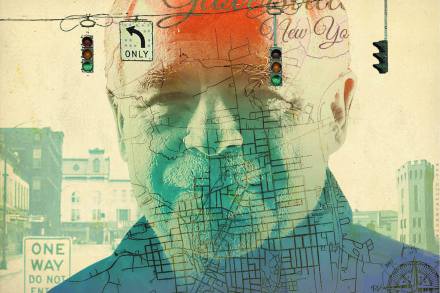
In Elsewhere, a coruscating memoir published in 2012, Richard Russo described his formative years as “an American childhood, as lived in the late Fifties, by a lower-middle class that barely seems to exist any more.” The setting for this slice of lost Eisenhower-era Americana was Gloversville in upstate New York, an East Coast leather town where the money had long since moved out and taken the locale’s animating spirit with it, to the point where the eighteen-year-old high-school graduate reckoned that “you could have strafed Main Street with an automatic weapon without endangering a soul.” The “Main Street” reference carries its own freight of associative cargo.

russo

New York hotels with a literary twist

From our UK edition

‘You really ought to read more books – you know, those things that look like blocks but come apart on one side.’ Perhaps F. Scott Fitzgerald was aiming for a motivational tone – literature was his livelihood, after all. He was also a seminal figure in the writers' movement that began in 1920s New York and, over the following decades, took root in hotels across the city. Hot on the heels of Spectator Life's guide to London's literary hotels, here are five New York hotels with their own tales to tell. The Algonquin Hotel [iStock] The Algonquin’s association with the infamous Round Table of the 1920s has provided it with more connections to literature and the arts than perhaps any other hotel in New York.

In praise of encyclopedias

Simon Winchester recalls the time — he was not yet three — when, stepping into his rubber boot, he was stung by a wasp. He rates this penetrating moment as his first “acquisition of knowledge.” Readers of his many books may thank that wasp for starting Winchester on his ever-widening path to further knowledge. His new book, Knowing What We Know: The Transmission of Knowledge, from Ancient Wisdom to Modern Magic (KWWK for short), is what that wasp hath wrought. It follows close on the heel of Simon Garfield’s entertaining study, All the Knowledge in the World: The Extraordinary History of the Encyclopedia (AKW for short). Despite the title, Garfield’s ambitions are more cabined than Winchester’s.

knowledge
yeats

The great late Yeats

The 1923 Nobel Prize in Literature was awarded to William Butler Yeats “for his always inspired poetry, which in a highly artistic form gives expression to the spirit of a whole nation.” Informed of the prize late on the night of November 14 by the editor of the Irish Times, the fifty-eight-year-old Yeats and his wife George sat up taking telephone calls and telegrams for a couple of hours. Then, according to Yeats’s sister Lily, the couple went down to the kitchen and cooked some sausages before going to bed. The next day, the Yeatses went out and began spending some of the check Yeats would receive in December.

Don’t cancel Beatrix Potter

From our UK edition

I spoke too soon. Beatrix Potter, I suggested in an afterword to my 2016 biography of the author and illustrator, had escaped the distortions of sexual and racial revisionism that now blight so many eminent and long-dead British writers. But no longer. Last week a specialist in postcolonial literature at a northern university accused Potter of failing to acknowledge her indebtedness to an oral storytelling tradition of enslaved Africans working on American plantations. Welcome, please, a new Potter for the 21st century: exploitative, colonialist, dishonest. Potter’s concealment, claims Dr Emily Zobel Marshall, ‘[feeds] into a damaging and recurring appropriation of Black cultural forms that continues today’. Blimey.

In praise of goths – the most enduring of pop subcultures

From our UK edition

More than 40 years on, every town still has them, wandering the streets with pale skin, more make-up than you can find in Superdrug, swathed in acres of black fabric. Goths, rather unexpectedly, have turned out to be the great survivors among pop subcultures. Others have risen and faded, but the goths – laughed at, ignored, dismissed – have endured, seeing their style and their musical tastes slowly incorporated by everyone else (there’s even a goth version of hip-hop, known as ‘horrorcore’). Goth was a fitting name for the music: overbearing and foreboding; delivering ecstasy through the building and releasing of tension rather than through major chords and primary colours; drawing on punk, Bowie, the Doors and the Stooges.

The afterlife of Christopher Hitchens

In 2011, a terminally ill Christopher Hitchens faced death with droll stoicism: “To the dumb question ‘Why me?’ the cosmos barely bothers to return the reply: ‘Why not?’” he wrote. As his health declined and the end drew nearer, the skeptical Hitchens stuck to his atheist guns, clear-eyed in his confidence that death was final. Hitchens died in 2011, but his work and reputation live on. No paradox there, of course, but just how large Hitchens looms twelve years after his death would surely have surprised even this immodest author. It’s certainly a surprise to me, a reformed Hitchens fanboy. The face of twenty-first-century atheism is having quite the afterlife.

Hitchens
Halliburton

The dauntless spirit of Richard Halliburton

A sailor; a conqueror of the most treacherous mountain peaks; a man who wades defiantly under the stars of the Far East sky; a dashing writer who pursues his mark as a hunter on safari; an explorer who rides elephants through the Alps. This is not a collection of young men, newly emancipated by the end of the Great War and a new era of global empires. It is the nearly improbable life of one man, Richard Halliburton, whose swashbuckling existence was inspired by everyone from Daniel Defoe and Rupert Brooke to Odysseus. Halliburton was the self-proclaimed protagonist of his own heroic epic. He decided in the days before his graduation from Princeton in spring 1921 that he would forgo a life of tedious expectations and “let those who wish have their respectability.

authors

Where will the vogue for censoring our best-loved authors lead?

It was recently announced in the Daily Telegraph that the novels of P.G. Wodehouse — much beloved by millions, including me, for their combination of wit and soufflé-light evocation of an England that never really existed but which almost might have done — are the latest to fall foul of that new scourge of writers the world over, the “sensitivity reader.” New editions of Wodehouse’s masterly works Right Ho, Jeeves and Thank You, Jeeves have been reissued with the craven disclaimer “Please be aware that this book was published in the 1930s, and contains language, themes and characterizations which you may find outdated. In the present edition, we have sought to edit, minimally, words that we regard as unacceptable to present-day readers.

Alison Roman: ‘My desserts are consistently imperfect’

From our UK edition

Alison Roman’s cooking is a counsel of imperfection. She serves dinner late (fine, as long as you have snacks), gets her guests to pitch in on the washing up and won’t make her own ice cream – ‘it simply will never be better than what you can buy, sorry’. ’Her ‘pies leak, cheesecakes crack and pound cakes are pulled from the oven before they’re fully baked. Lopsided and wonky, occasionally almost burned, unevenly frosted, my desserts are consistently imperfect’. In her new book, Sweet Enough, Roman wants to free the home cook from the dessert ties that bind them. ‘My hope for you,’ she tells her reader, ‘is that you strive for the animalistically irresistible, not aesthetically pristine’. The two, she finds, are ‘rarely the same’. ‘Baking is annoying.

London hotels with a literary twist

From our UK edition

There’s something rather wonderful about the idea of settling down for the night in the spot where one of your favourite writers once slept, played or dreamed up a plot. There are a range of hotels across London with a vast array of bookish associations: some have played host to writers both famous and infamous, while others have been commemorated in novels, poems and short stories. Their present-day owners are all too happy to show off their literary heritage, should you ask nicely. Here are six with the most interesting tales to tell. Hazlitt’s [Alamy] There are few London hotels with so existential a literary connection as Hazlitt’s on Frith Street in Soho.

The best coronations in literature

From our UK edition

‘In her big, white dress the Queen looks like a balloon that’s about to float up to the roof of Westminster Abbey and bob about up there amongst the gilded arches and roof bosses. To prevent this happening people keep weighing her down with cloaks and robes, orbs and spectres, until she’s so heavy that bishops and archbishops have to help propel her around.’ This is the coronation of Elizabeth II in 1953 as described by one-year-old Ruby Lennox in Kate Atkinson’s Behind the Scenes at the Museum. These observations might seem preternaturally advanced from a narrator not yet old enough to walk and talk, but that is consistent for this witty novel. It opens with Ruby being fully aware of her own conception: ‘I exist!

What makes a novel funny?

What makes a novel funny? As well as being too enormous a question to tackle properly here, such an enterprise would, I suspect, require so clinical an approach to reading comic fiction as to remove entirely any possible joy or amusement. As the old saying goes, deconstructing a joke is like dissecting a frog: nobody laughs, and the frog dies. However, the question came to me again recently, as I reread John Kennedy Toole’s A Confederacy of Dunces. I howled with laughter from the initial farcical scene outside a department store, through Ignatius J.

funny novel