Books

The publishing mega-merger that wasn’t

If you sit down and talk to an author for any length of time, you will hear gripes. (Writers will never be confused with the sunniest of people on this planet.) About the visibility of their books; about the size of their advances; about their sales, relative to their other titles and to their peers; about publicity campaigns; about cover designs. There will be a lot of gripes, and if you are cornered by an author in a bar, or at a party, you might be advised to make your excuses and flee. But if you have some sympathy for this much-maligned breed, it may occur to you that the basis of their complaints ultimately comes down to a simple lack of appreciation by their publishers: those all-powerful entities that have the power to make or break careers at the touch of a button.

publishing
le Carré

The spy who loved me

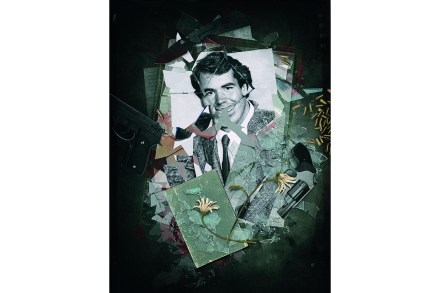
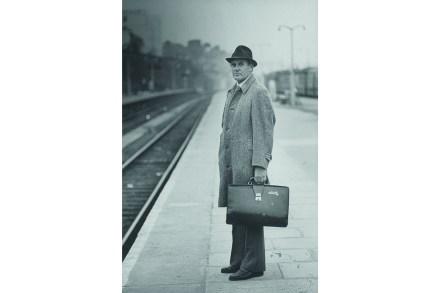
I started reading Suleika Dawson’s The Secret Heart at a London bar, intending simply to skim through as I finished my beer. Six hours and many more beers later I was still at the bar, and still reading. The book, an erotically charged, no-punches-pulled account of her multiple affairs with the author John le Carré (or David Cornwell, as she knew him), is also a fascinating and important portrait of the man himself. The pseudonymous author, with her winking nod at Max Beerbohm’s femme fatale, offers a degree of insight and honesty which le Carré’s official biography (let alone his own memoir) and recently released collection of letters do not, and a character study of a London long since lost.

The art of the stocking-filler book

From our UK edition

The best stocking-filler present I received last year was the bumper Christmas edition of The Spectator. But it wasn’t the only erudite reading matter crammed into a moth-eaten ski sock. Nestled under a mouldy tangerine and some chocolate money destined to be stolen by my children were: How it Works: The Dad (Ladybird for Grown-Ups); You Do Have the Authority Here!: #What Would Jackie Weaver Do?; and The Best of Matt, 2021. They now jostle for space in a downstairs loo sprinkled with other half-read stocking fillers chronicling the past two decades: Schott’s Original Miscellany; The Curious Incident of the WMD in Iraq; Does Anything Eat Wasps?; Crap Towns; Fifty Sheds of Grey; Five on Brexit Island; and half a dozen more Ladybird spoofs, a series that has sold 5.

The best out-of-print books (and where to buy them)

From our UK edition

Those overstuffed shelves of the latest releases aren’t always the best place to start when you’re shopping for a book to read (or to give as a Christmas gift). You can find plenty of out-of-print books with timeless appeal that are worth snapping up – if you know where to look.   Elizabeth von Arnim’s Introduction to Sally, for example, is almost 100 years old, but is a very enjoyable read if you can find a copy. Mr Pinner is a shopkeeper and he and his wife have longed for a child for years, so they are thrilled when their daughter is born. Mr Pinner wants to call her ‘Salvation’ but they compromise on ‘Salvatia’ (shortened to Sally). Sally grows up to be the most beautiful girl anyone has ever seen.

The Spectator’s 2022 Books of the Year

William Boyd Writing effective comedy is very difficult. True comic genius, the ability to create a unique tone of voice — deadpan, perfectly timed, self-deprecating, abjuring all whimsy (the British disease) and grandstanding — is extremely rare. One thinks of S.J. Perelman, Peter de Vries, the Grossmiths and P.G. Wodehouse amongst very few others. One name that can be added to this tiny and exclusive club is Theo Fennell who has published, this year, his memoir I Fear For This Boy: Some Chapters of Accidents (Bloomsbury, $35). It relates incidents in Fennell’s life where everything that could go wronnd Catholic Churches as he veered between them.

books
autofiction

Think autofiction is easy? Think again

"No, Lisa." As rejection letters go, it was admirably concise. I’d made an attempt at “autofiction,” that amorphous genre which inhabits the space between autobiography and fiction, and this was the entirety of my editors’ response. Any writer who has been at it for any length of time will have received Dear Johns from publishers, but is two words a record? It was something to cling to, at least, during the five further years it took for the book to find a home. Eventually, a French house took it, and Les Femmes de mes amants staggered unobtrusively into print in June this year. Obviously, I should have set my sights on Paris from the first.

book

How to throw a book party

London The launch party for my book has gotten sensational reviews. “Party of the year!” said one friend. “Simply brilliant!” said another. A hack from the Times declared, “It was like an old-fashioned Fleet Street Party” — by which he meant everyone was drunk, dancing and misbehaving. Unfortunately, my book has not gotten sensational reviews. It’s gotten no reviews — at least from the national press. This is a cause for worry. Or so my publisher Todd Swift of Eyewear Publishing thinks. The day after the party he calls me. I’m still buzzing with my party reviews; he’s buzzing with panic. Todd tells me that no reviews mean we can’t get my book into the major bookshops! I’d hate to see your great book die, he says.

Inside Joan Didion’s extravagant estate auction

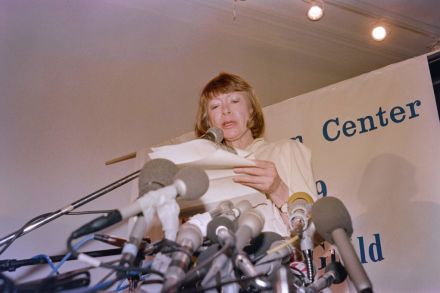
On December 23, 2021, I left the Hollywood Roosevelt and walked down North Orange Drive to turn right and face Sunset Boulevard. It was dark when I passed the entrance to the Chateau Marmont. When I finally crossed the street to arrive at Book Soup, the “Bookseller To The Great & Infamous,” I turned to the cashier and asked if they had copies of Play It As It Lays by Joan Didion. He huffed, “Uh, yeah, we’re sold out.” Joan Didion had died earlier that day in Manhattan due to complications of Parkinson’s Disease.

joan didion

The case against book clubs

From our UK edition

Picture the scene: it’s 8 p.m. on a Tuesday. You’re sitting on the sofa in the home of someone you barely know, gulping supermarket wine, making inane chitchat with friends of friends as you all put off the inevitable: discussing a book only a third of the women – always women – in the room have actually bothered to read. In your head, you’re counting the minutes until you can excuse yourself for the last train home, wondering what’s happening on tonight’s Bake Off and engineering a strategy to quietly remove yourself from the group WhatsApp without appearing rude. You stifle a yawn and subtly check your watch while necking yet more wine. Sound familiar? Welcome to book club.

Have we finally reached Peak Pride?

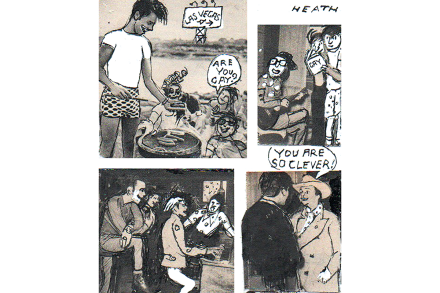
Have we reached Peak Pride? As a gay man, I suppose I should feel gratified by the fervor with which seemingly every entity across the Western world declares its solidarity with the LGBTQIAA+ community every June. But this year, the omnipresence of the rainbow flag — the latest iteration of which resembles a testing of the Emergency Broadcast System on acid — has gone a tad too far. Lounging poolside at a Las Vegas resort for my younger brother’s bachelor party, I casually reveal to the bikini-clad young woman lying next to me that I am gay. “Happy Pride!” she enthuses, in a way that a gentile wishes me a “Happy Chanukah” upon discovering, at Christmastime, that I’m Jewish.

gay

Free expression after the Rushdie attack

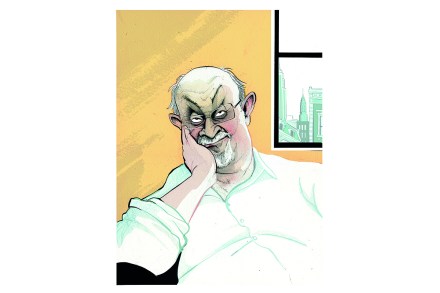
In an interview with Stern magazine at the end of July, Sir Salman Rushdie was asked about the current circumstances of his life. Given that this is a question that he has faced since 1989, Rushdie might have been expected to respond with boredom, even irritation — as, understandably, he has done in other public conversations, when the subject of the fatwa that he has been under for nearly three and a half decades has been raised by an inquisitive or prurient journalist — but he responded with reasonably good cheer. Describing his everyday existence as “very normal,” he even ventured a light-hearted remark, saying, “A fatwa is a serious thing. Luckily we didn’t have the internet back then. The Iranians had to send the fatwa to the mosques by fax.

Rushdie
God

Has the American novel abandoned God?

I have always thought “Call me Ishmael” to be a rather camp introduction to a novel. Given the line’s conspiratorial intimacy, I have long imagined it whispered by a drag queen in a dive bar at 3 a.m. This, however, is the fault of my own unseriousness. The resonance of the name Ishmael — Abraham’s illegitimate son by Hagar who is destined to wander the desert — remains the opening example of one of the clearest, cleverest and most consistent of themes in Herman Melville’s magnum opus Moby-Dick, namely, the quest for God. Religion runs through Moby-Dick. We might almost say that the Bible haunts it. There are the names, mostly of Biblical characters, and even the direct invocation of prophets: Ezekiel, Elijah and, of course, the ur-whale wrestler, Jonah.

penguin

A haunting novel remembers 1990s Ukraine

"They don’t treat people nowadays, let alone penguins.” When Americans ask what went wrong after the fall of the Berlin Wall, this wry comment on the state of Ukrainian healthcare in the 1990s isn’t a bad place to start. It’s also typical of the darkly funny Death and the Penguin, an account of a young writer in Kiev and his pet penguin, Misha, formerly of the city zoo. Did I say Kiev? Of course I meant Kyiv. It has lately become unfashionable to mention the commonalities between Ukraine and Russia, lest you give aid and succor to Vladimir Putin. But Putin’s propaganda resonates because it contains a grain of truth. Despite war and ethnic conflict, Russia and Ukraine have a great deal of shared history.

The best hotels for bookworms

From our UK edition

It’s hard to beat escaping into a book – but for bookworms looking for an escape that jumps off the page, there are plenty of hotels that cater to a love of all things literary. From a Cornish coastal retreat that’s been immortalised in fiction to a book-strewn adults-only resort on a South Pacific island, here are eight of the best hotels in the world for book-lovers. The only question that remains is what holiday reading to take with you. Carbis Bay Hotel, Cornwall A luxury beachfront resort just outside St Ives, Carbis Bay Hotel appears as The Sands Hotel in two of Rosamunde Pilcher’s novels, The Shell Seekers and Winter Solstice.

Good riddance to long books

From our UK edition

As soon as I picked up the parcel, my heart sank. The sheer weight of it gave the game away. Already I could unhappily picture myself struggling to hold it in one hand without straining a wrist while standing on the Piccadilly Line. I’d ordered it after coming across a couple of positive references to it in quick succession: Lonesome Dove by Larry McMurtry. Written in the 1980s, set in the 1870s, it’s a cowboy story that won a Pulitzer in its day and still has its enthusiasts. I just hadn’t thought to check its length. In fact the paperback isn’t much smaller than a box of Kleenex and runs to 839 pages. That’s scarcely less than my paperback of Ulysses and more than other whoppers I’ve read lately, The Magic Mountain and Our Mutual Friend.

The art of menus

From our UK edition

There is, of course, no endeavour, no craft, no profession, no trade that neglects to ‘reflect society’. This is a commonplace. The collective narcissism of considerate builders, for instance, claims that hod carriers and brickwork reflect society. The contention of Menu Design in Europe is kindred. Graphic artists, restaurateurs, decorators and chefs have, through two centuries, expanded their capabilities according to the milieux in which they have practised. Menus are, then, not merely functional lists, they are self-advertisements, exhibitions, seductions and, occasionally, desirable objects that are apparently collectible. Indeed this book has the unmistakable feel of an obsessive’s scrapbook, a completist’s trophy.

I’m on Andrew Doyle’s side – for now

From our UK edition

I’ve agreed to interview the author and journalist Andrew Doyle about his new book at the Conservative party conference – on stage, no less – so I thought I’d better read it. It’s about the inexorable rise of the social justice warriors, whom he regards as a danger to the survival of free speech and, by extension, the institutions and traditions that our liberal democracy depends on. My first reaction was one of irritation. The book is called The New Puritans: How the Religion of Social Justice Captured the Western World and it’s annoyingly similar to the title of a book I’ve been working on – Salem 2.0:the Return of the Religious Police to the Public Square.

What young Ukrainians will learn from reading Joseph Roth

From our UK edition

As Russia’s assault on Ukraine continues, Volodymyr Zelensky’s ministry of education has just announced changes to the national curriculum that include removing almost all the Russian authors on the foreign literature syllabus. In last week’s Spectator, Svitlana Morenets revealed the new names: we see Robert Burns, whose inclusion may be a nod to Britain’s support during the conflict. Then there is Joseph Roth, a master of German prose, whose writing about interwar Europe speaks to Ukraine’s modern upheavals. Roth was born in 1894 in Brody, a town that now stands in western Ukraine but then lay in what was known as Galicia, the eastern Austro--Hungarian crownland.

T.S. Eliot’s The Waste Land at 100

In the United States a century ago, a single poet dominated the literary sphere. He was not only the recipient of the first ever Pulitzer Prize for Poetry — which he would win twice more during the course of an internationally distinguished career — but would be nominated for the Nobel Prize for Literature on four separate occasions. He was beloved by presidents, described by one admirer as “more artful than Hardy and more coy than Frost” and found himself one of the bestselling writers in America. His reputation seemed assured forever.

waste land
Joyce

A Joycean odyssey

In retrospect I should have done it the other way round. When I mapped out the walk from my elegant Zurich hotel it looked to be about twenty minutes. What I failed to spy was the topography — and soon I was climbing a pretty serious hill through a high-end residential neighborhood. It was hot. I soldiered on, obviously appearing to the unamused Swiss on the sidewalk a weird and confused American, huffing and puffing and smoking. Then the little mountain plateaued into a blind road, a ball field and across from it the cemetery. Now it was just a matter of finding his grave. No writer, possibly no person I have never met, has occupied as much time in my mind as James Joyce. I first read Portrait of the Artist as a Young Man at fifteen.