Books

Why I stopped reading novels

From our UK edition

New York I received a letter from a long-time Spectator reader, James Hackett, enquiring about books I am reading. It is not often that I get letters that delight me, as this one did. It is a far cry from the readers’ letters you see in newspapers and magazines in the United States. Lots of them seem sanctimonious, holier than thou; others, I suspect, are written by the glossy magazines themselves promoting their own celebrity culture worship. James Hackett is an American gent whom I’ve never met, and I hope I don’t disappoint with my choices. The last time I read novels was literally some 50 years ago.

Absorbing and beautifully designed: Jane Eyre reviewed

From our UK edition

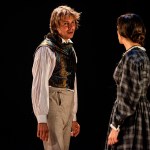
Blackeyed Theatre is another victim of the virus. Its production of Jane Eyre was midway through a UK tour, and due to visit China for a month, when the pandemic shot its plans to bits. Last month the show was revived on stage and committed to film. Kelsey Short (Jane) leads a team of just five actors who tell the story as Charlotte Brontë wrote it. The costumes, hairstyles and habits of speech seem authentically Victorian. The director, Adrian McDougall, has rejected the fashionable habit of presenting Jane as a rad-fem freedom fighter surrounded by grotesque male oppressors. His version reminds us how sympathetic the novel is towards men. Mr Rochester (Ben Warwick) is a romantic enigma, a dashing, grizzled buccaneer who is also decent, honourable and kind-hearted.

The genius of I’m Sorry I Haven’t a Clue

From our UK edition

I’m Sorry I Haven’t a Clue has just been voted the greatest radio comedy of all time by Radio Times, ahead of Hancock’s Half Hour and the brilliant Round the Horne. The first two episodes of series 73 (can you believe it?) are also the last Tim Brooke-Taylor recorded before losing his life to coronavirus earlier this year. Brooke-Taylor was part of the original cast of the self-styled ‘antidote to panel games’, which first aired in 1972 with Bill Oddie, Jo Kendall and the show’s deviser Graeme Garden as fellow performers (Barry Cryer joined during the first series and Willie Rushton two years later).

What the books in our Zoom backgrounds really say about us

To cast your eye across someone’s bookshelves is to understand them. Alan Bennett certainly thought so: 'A bookshelf is as particular to its owner as are his or her clothes; a personality is stamped on a library just as a shoe is shaped by the foot.' Journeying across my own bookshelves I see the spines of my life, not curated or color-coded, but jammed in messily and haphazardly, out of chronological order, just like experience itself. Brideshead Revisited next to Healing the Child Within. Babar next to The Fallen of the Somme. Since I got married, my husband’s books now number among my own; political biographies next to novels, a literary record of our lives before we met, pages and pages of the past.

zoom

The author in full: Tom Wolfe

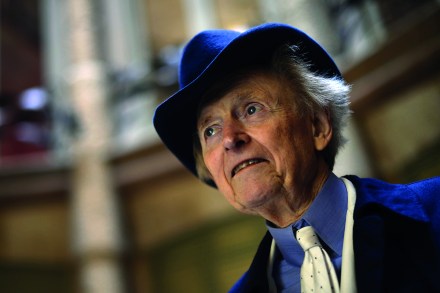
I was introduced to Tom Wolfe in the late 1970s, a year or two after I had begun my journalistic career as the literary editor at National Review, by Timothy Dickinson — an Oxford man working for Lewis Lapham, then editor of Harper’s — who was (as he doubtless remains) the sole ambulatory compendium of the British Museum. As Wolfe was fond of Middle Eastern cuisine, we met for lunch at a Lebanese place in Manhattan’s Garment District. While saying goodbye on the sidewalk out front of the restaurant after the meal, Timothy dropped his walking stick which was headless; only the screw that had once fastened the missing head in place protruding from the top of the shaft.

tom wolfe

Antony Gormley: why sculpture is far superior to painting

From our UK edition

Antony Gormley: In the beginning was the thing! The reason I chose sculpture as a vocation was to escape words, to communicate in a physical way. It was a means of confronting the way things were, of getting to know them in material terms. The origins of making physical objects go back to before the advent of Homo sapiens, earlier even than the appearance of our Neanderthal cousins. Sculpture emerges from material culture. At the beginning there was an urge to make objects and you could argue that making them was the catalyst for the emergence of the modern mind.

‘We’re all members of the Stasi now’: Irvine Welsh interviewed

From our UK edition

The history of the word ‘offend’, from the Latin offendere, to hit, attack, injure, is a revealing one. From its starting point in physical violence to transgression against God in the Middle Ages, today ‘offence’, understood as displeasure or upset, is seemingly everywhere. The word may no longer refer to direct physical harm, but culture of all kinds, from artworks to comedy to literature to music, seems to have an upsetting quality to some. Words, we are told, are ‘violence’, images are hurtful, differing opinions are dangerous and must be suppressed. Even silence is ‘violence’, as this year’s Black Lives Matter protests reminded us.

You won’t be able to look away: Shirley reviewed

From our UK edition

This week, two electrifying performances in two excellent films rather than two mediocre performances in the one mediocre film — see: Rebecca — so things are looking up. Firstly, Mogul Mowgli, starring Riz Ahmed, directed by Bassam Tariq and co-written by the pair. Ahmed plays Zed, a British-Pakistani rapper who has lived in New York for two years and is on the brink of stardom when he returns home to his family in London. It’s intended as a brief visit but then he is struck down by an autoimmune disease that is never named but is something like multiple sclerosis. The point is, I think, even his body doesn’t recognise him any more.

From half a shelf to a library: my life in books

From our UK edition

‘Yes, I will have a coffee,’ said the van driver. He’d driven down to the south of France from Devon. I motioned him to take a pew at the kitchen table and asked him about himself. Ron was ex-army. Aged 17, he was faced with a stark choice: the building site or the army. Because he’d seen his builder father working in a trench all day with water up to his waist, he chose the army. He joined the Royal Engineers and trained as a driver. In the early 1970s he drove two SAS men around Belfast in an unmarked saloon car. That was the job. All day every day. Everywhere Gerry Adams went Ron followed him. Gerry Adams knew he had a tail and would give a friendly or an unfriendly wave, depending on how he was feeling. Yes, he enjoyed the army.

East Anglia is the place for birds

From our UK edition

I first visited Orford in 1970, at peak Cold War when this stretch of the East Anglian coast was one of the most dangerous places to be, so that for three months of each winter living in Aldeburgh, I was perfectly positioned for maximum danger between Orford Ness with its secret atomic weapon testing, and Sizewell’s nuclear power station. I was too busy writing books to worry but Orford, bristling with military security and terrifying ‘Keep out’ notices, gave me nightmares. Now it is quiet save for some magnificent gales and rain battering the windows of this house overlooking the water. I am in mid-book as usual, and Orford Ness is an innocent nature reserve, with some access, though one area is still worryingly out of bounds.

Funny, tender and properly horrible: Channel 4’s Adult Material reviewed

From our UK edition

A woman is eating a pie in her car as it gets an automatic wash. Careful to keep the pie out of shot, she then films herself on her phone pretending to have an orgasm, posts the clip online and drives to work. Once there, she’s constantly distracted by thoughts of domestic chores (‘Whites tonight, colours in the morning, hang them out before the school run’) — which mightn’t be so unusual, except that her work consists of having sex. But if the early scenes in Channel 4’s new porn-industry drama Adult Material suggested a cheeky, essentially light-hearted twist on female life-juggling, this soon proved deceptive.

The most important book on black Britishness has one flaw: its author was white

From our UK edition

How many black friends do you have? Do you have any? It’s likely that black people have more white friends than the reverse. In part that’s surely down to demographics and the size of the population. No matter your colour, you’re ten times more likely to bump into a white person than a black person, more or less, depending on where you find yourself, of course. The situation is not so pronounced as in the United States where residential segregation has reinforced social apartheid. In the UK black and white people may live cheek-by-jowl, but that doesn’t necessarily indicate knowledge or even empathy. Out of just over 100 households on our street in Brighton there are three black families; ours is one of them.

The gentle genius of Mervyn Peake

From our UK edition

To be a good illustrator, said Mervyn Peake, it is necessary to do two things. The first is to subordinate yourself entirely to the book. The second is ‘to slide into another man’s soul’. In 1933, at the age of 22, Peake did precisely that. Relinquishing his studies at the Royal Academy Schools to move to Sark, in the Channel Islands, he co-founded an artists’ colony and took to sketching fishermen and romantic, ripple-lapped coves. He put a gold hoop in his right ear, a red-lined cape over his shoulders, and grew his hair long, like Israel Hands or Long John Silver. The incredible thing was that he had yet to receive his commission to illustrate Treasure Island.

A podcast about the literary canon that actually deepens your knowledge (sort of)

From our UK edition

While most of life’s pleasures can be shared, reading is lonely. It’s more than possible for six friends to enjoy an exquisite meal, a bottle of wine and then settle down for a four- or five-hour orgy. Food, drink, sex: these things are better shared. But if, as dawn approached, someone cracked open Chaucer’s ‘Parliament of Fowls’ and intimated that it was time to really get down to brass tacks, it could only spoil the mood. Reading is lonely because so much of the reading that matters is hard. The books that change the world and shake the culture are rarely pure pleasure. The heaven sections of Paradise Lost. The war bits of War and Peace. The history bits embedded within the war bits of War and Peace.

Unique and disturbing: Donmar Warehouse’s Blindness reviewed

From our UK edition

Okay, I admit it. I have a girl crush on Juliet Stevenson. Ever since I first saw her in the 1990 film Truly, Madly, Deeply with Alan Rickman, I have loved her sexy, round and intelligent tones. Imagine how excited I was to discover, therefore, that you can have Juliet in your ear for a whole hour and 15 minutes while you sit through a so-called ‘sound installation’ — or rather an audio staging — of Blindness, the current offering at the Donmar Warehouse and the first opening since lockdown. Sitting in a darkened theatre studio, with strobe lighting and headphones, you are seated in your own space, and socially distanced from 40 other people.

The weird and wonderful world of hotel carpets

From our UK edition

Consider the carpet. In all likelihood, you usually don’t. It’s simply something beneath your feet, soft or scratchy, bright or beige, thick or thin. But in a new book, Bill Young asks you to pause and really look at a particular genre of floor-padding: the carpets in the hotels around the world. In Hotel Carpets, the long-neglected designs pop from the pages. Young, a corporate pilot, would often send pictures of hotel carpets to his wife and daughter while he was travelling. ‘Because I spend most of my life in hotels, that’s just one thing that was sticking out,’ Young says, in a video interview from his home in Dallas, where he’s been mostly grounded of late, due to the pandemic.

Why is Robert Burton’s masterpiece Anatomy of Melancholy being sold as self-help?

From our UK edition

The BBC has been having a good pandemic. Stuck at home, a generation raised on podcasts and YouTube has discovered the comfort of a radio that babbles quietly in the corner. The concerts from the empty Wigmore Hall, streamed live on YouTube once a day, have been the first classical concerts of my life that could honestly be described as cultural events. And in the initial terror of the disease’s spread, everyone reverted to watching the BBC simply to find out what would happen next. Perhaps our vaunted passion for fake news was only a fad of convenience given that, when our lives depended on it, we really listened to Auntie.

The art of the incel

From our UK edition

Let’s say you have a diagnosis of autism, depression or anxiety. You sleep too much or too little. You masturbate too often. You play computer games and don’t open the curtains. You have no money and you are often profoundly lonely and frequently bored. From this unedifying starting point, can you, let’s say, weightlift your way out of misery? Can you trick yourself into being sociable? Can you ultimately get beyond your fantasy that a woman will save you (she won’t) and learn to live with everyday misery? Alex Lee Moyer’s documentary TFW NO GF, internet-speak for ‘that feel(ing) when no girlfriend’, is the first attempt to make cinema out of incel subculture (and perhaps thereby also signalling its end).

There’s no point in bishops – Covid has shown us so

From our UK edition

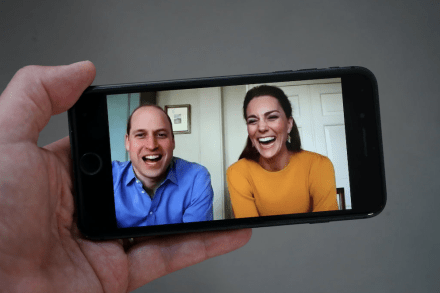
It is a relief to parents that young children are allowed out a bit now as the length of the lockdown has wreaked havoc with tempers. Birthdays have been particularly difficult. Zoom parties, with every guest in their little on-screen box like stamps in an album, are a poor substitute for a roomful of overexcited kids eating jelly. My granddaughter was eight last week and at last could meet her best friend, who lives next door, in the new paddling pool. They have managed uncomplainingly via walkie-talkies through a window so this was a joyful reunion. But what about the other would-be dressed-up party guests, not to mention gift-bearers?

Why is it that age limits never apply to men?

From our UK edition

I’d never have thought I’d be good at doing nothing. Or rather walking the dogs, loafing in the sun, trying to match Paul Hollywood’s tête de brioche (third time of trying), doing jigsaws and reading hefty books. But I’m lovin’ it. The only thing that stresses me — indeed brings me out in lower-deck language most unbecoming to an octogenarian — is doing live shows or podcasts on Zoom or Skype while our broadband buffers, stutters or crashes. And some poor presenter is trying to fill the gap, desperate for me to make the technology work. Calls to Relate have tripled under lockdown I’m told because seeing too much of each other is seriously straining relationships.