Books

The Literary Disco podcast made me want to throw my laptop at the wall

From our UK edition

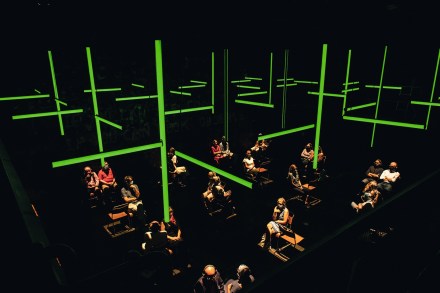
One of the stranger things that happened in the period just before lockdown was the sudden disappearance of audiences from TV and radio shows. Late-night hosts told jokes to silent rooms in front of a white background, dutifully pausing for a laugh that never came; panel shows were broadcast without so much as the sound of tumbleweed. Punchlines flopped, charisma evaporated. It was as if Earth’s comedians had been banished to some purgatorial realm, where they would be forced to tell jokes to no one as a form of penance. Comedy needs an audience. It’s not clear that the same is true of short stories. In Selected Shorts, well-known actors read short stories to a room full of people.

Adapting Wodehouse for the radio is a challenge – but the BBC has succeeded brilliantly

From our UK edition

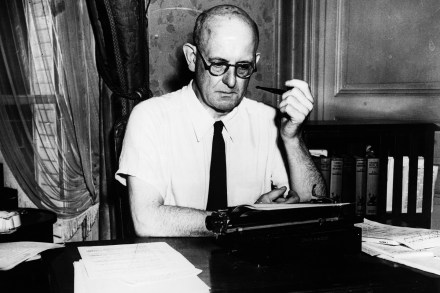
Everyone knows a Lord Emsworth. Mine lives south of the river and wears caterpillars in his hair and wine on his shirt and has just occasionally written for this magazine. That doesn’t much narrow it down. When you look at him, you understand a little better why P. G. Wodehouse is topping the lists of authors to read during lockdown. It’s not just that the books are funny. With an Emsworth or a Bertie Wooster you’re guaranteed that idling and dithering will land you somewhere. Even if it is in the soup. Adapted for Radio 4 this fortnight, Leave it to Psmith, the second in Wodehouse’s Blandings series, sees the dithering Earl invite a prospective thief into his home after mistaking him for a Canadian poet.

The lost world of lockdown

From our UK edition

It started when, the day after the announcement of some lockdown easing, I drove five miles along the coast road. For seven weeks there had been barely another car, and now it was like a normal pre-pandemic morning. Our little town was no longer deserted, and there were queues for newsagent and bank. Many holiday and second homes are apparently occupied, though no one is actually allowed to be here of course. Nevertheless, agencies are merrily advertising: ‘Come and lock down in beautiful, safe North Norfolk.’ The paths to the beaches are open again, and if the wind had not swung round to blow a vicious north-easterly they would have been crowded.

Europe’s eye-popping first glimpse of the Americas

From our UK edition

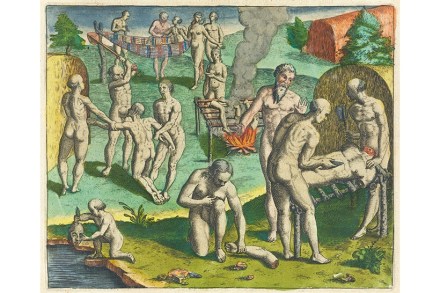
Coronavirus has cast a dampener over this year’s Mayflower 400 celebrations due to a hidden enemy with which the Pilgrim Fathers were all too familiar: within months of their arrival in America more than half of them had died of a disease whose principal symptom was violent coughing. There was no official artist on the Mayflower. Its ragtag party of Separatist Puritans had only been granted a charter on condition that their religious affiliation, banned in England, was not formally recognised.

The author who made a living measuring the legs of lice

From our UK edition

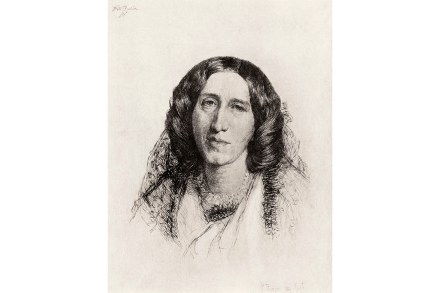
Wilhelm Nero Pilate Barbellion, real name Bruce Frederick Cummings, earned his living measuring the legs of lice in the Natural History Museum. ‘To the lay mind how fantastic this must seem!’ he exclaimed in his journal, before enumerating his enthusiasms for Burton’s Anatomy of Melancholy, names like ‘Mr. Hogsflesh’ and ‘Pickle Herring Street’, and Petticoat Lane on Sunday mornings. The young naturalist had a habit of landing himself in embarrassing situations. He once spotted a pretty woman at the theatre and composed a notice for the classifieds in a bid to find her. The editor sent his missive back supposing he was a white-slave trafficker.

How to go clubbing without leaving your living room

From our UK edition

To my surprise, what I miss most about life before the lockdown are parties. As others pine for restaurants and theatres, I am longing for sticky floors and 4 a.m. Ubers. Give me plastic cups and music so loud you feel it in your kidneys. Sylvia Plath wrote disparagingly of the ‘shrill tinsel gaiety of parties with no purpose’. It’s precisely that shrillness and pointlessness that I’m yearning for: drunk young bodies cramming together for no reason other than to be close to one another. At the weekend, my longing finally spilled over and I decided to make do online. I put on a nice top and loaded my lashes with mascara.

In the Covid era, age isn’t just a number

From our UK edition

When I told my seven-year-old granddaughter, over Zoom, how much I missed being with her, I added: ‘Maybe it won’t be much longer before I can see you.’ But she said that it would be some time, as ‘the government are going to stop old people seeing anyone because of the virus’. Asked what was meant by ‘old people’, she said: ‘I think anybody more than 54.’ Clearly some misunderstanding. At nearly 25 years beyond 54, I am correctly classed as old; some days I feel it, most days I don’t, but I am well, have most of my marbles and am working hard. Age is just a number. Except that it isn’t.

William Boyd on the miraculous snaps of boy genius Jacques Henri Lartigue

From our UK edition

What must it be like for an artist to achieve success only at the end of a long, relatively ignored career? The word ‘bittersweet’ seems particularly apt. Yet, late recognition is better, I suppose, than dying in oblivion like Vincent van Gogh, Franz Kafka or John Kennedy Toole. One of my favourite photographers, Jacques Henri Lartigue (1894–1986), did manage to savour the sweet smell of success in his old age. Lartigue’s late flowering was down to New York’s Museum of Modern Art and its then director of photography, John Szarkowski. There’s a very good argument to be made that during Szarkowski’s tenure at MoMA (1962–91) his shows transformed 20th-century photography.

How many books are in the average home?

From our UK edition

Admitting defeat 8 May is celebrated as VE Day, but it is also a date which marks a significant English military defeat. It was the day in 1429 when the Earl of Salisbury’s forces were driven from Orleans by Joan of Arc, an event which provoked an English retreat from the Loire Valley and marked a turning point in the Hundred Years’ War. The event is marked in Orleans with an annual Fête de Jeanne d’Arc, featuring a parade through the city led by ‘Joan’. Upwardly mobile Residents on the Isle of Wight were urged to install an app on their phones which is being used in a pilot scheme for tracking contacts of people who have been diagnosed with coronavirus. How many people own a smartphone, by age group?

A short history of the kimono

From our UK edition

'Fashions have changed', said the Japanese writer Ihara Saikaku in 1688. 'Certain shrewd Kyoto people have started to lavish every manner of magnificence on men’s and women’s clothes. By then, everyone in Japan was wearing a kimono. But it was the new, eye-catching, sumptuous ones wrapped around a flourishing breed of fashionistas that Saikaku was talking about. How to show off your wealth and status in Edo-era Japan? Wear the latest kimono. This was the starting point for the V&A’s exhibition Kimono: Kyoto to Catwalk, which opened, then hurriedly closed just days before the lockdown. Those of us lucky enough to catch it can tell you it would’ve been the museum’s summer blockbuster.

The ridiculousness of the bookshelf police

From our UK edition

 ‘People want to know why Michael Gove owns "racist" and "anti-Semitic" books’, reports the Independent’s website. By 'people' it actually means the time-rich Twitterati, who have discovered a new hobby: bookshelf policing. And the latest bookshelf to fail their purity test, to commit the sin of containing books these people disapprove of, is Gove's. Yes, not content with policing speech, tweets, jokes and even hairstyles (witness the screams of 'cultural appropriation' that greet any celeb who wears her hair in a way her race isn't meant to), now the offence-taking mob is policing bookshelves. The Shelf Stasi, we might call them, peruse the tomes in people's private book collections and bark 'Verboten!' if they spy something unacceptable.

Do we really want to go back to normal?

From our UK edition

On the day our A-level exams began some wit wrote on the blackboard: ‘I wasted time, and now doth time waste me.’ I thought of that again yesterday when a writer friend emailed: ‘Like you, I thought I would be much more productive but I do find it very hard to focus… and I still haven’t filed those boxes of books in the sitting room.’ The days fly by and the sunshine was a real bonus, for it is pleasant and surely good for the soul to sit in it, reading, dreaming, nodding off, and topping up our Vitamin D levels. I said here at the beginning of lockdown that I would finish the book I had already started, plus some short stories, this weekly column and the occasional book review.

Why men don’t read books anymore

When John F. Kennedy was dating Jacqueline Bouvier, he gave her two books. One was Pilgrim’s Way (1940) a memoir by the British spy and author John Buchan. The other was The Young Melbourne (1939) by Lord David Cecil, which describes the raffish exploits and political intrigues of a Whig aristocrat, and later prime minister, in the early 19th century. Quite what Jackie thought of this is unrecorded. Later President Kennedy told Life magazine what his favorite books were. Both of the titles above were in this proto-listicle, along with works about Byron, John C. Calhoun, Talleyrand and Gibbon’s The Decline and Fall of The Roman Empire.

read books

From Middlemarch to Mickey Mouse: a short history of The Spectator’s books and arts pages

From our UK edition

The old masters: how well they understood. John Betjeman’s architecture column ran for just over three years in the mid-1950s. Yet during that short run he experienced the moment that comes, sooner or later, to every regular writer in The Spectator’s arts pages. ‘It is maddening the way people corner one and make one discuss politics at the moment,’ he wrote on 23 November 1956, clearly as bored of the Suez crisis as the rest of us were, until recently, by Brexit: Because I write in this paper, people assume that I share its Editor’s views about Suez… But I don’t know what the views of this paper about Suez are, because I never read the political stuff in front.

Letters: The joy of balconies

From our UK edition

The closing of churches Sir: Stephen Hazell-Smith is quite right in writing that churches should re-open (Letters, 18 April), however the issue is now more fundamental. Recent weeks have demonstrated a crisis of leadership in almost every aspect of national life, excluding the Queen, who has exercised a spiritual leadership made necessary by the failure of bishops. The closing of churches may be seen as a defining moment in the life of the Church of England. As the Archbishop of Canterbury broadcast from his kitchen on Easter Day, impervious to the damage his ‘leadership’ has caused, many Anglican clergy and people I know looked to the image of the Pope in an almost empty St Peter’s, and saw the true image of Christian service.

Now is the time for comfort reads

From our UK edition

It all started on the day after the Brexit referendum. People who do not get the result they voted for in any election are naturally annoyed, sad, even despairing. If we sincerely believe in one political party and point of view, and lose to the opponents, we feel doomy and gloomy and say so. We used to speak our minds to friends and fellow believers, and that was that. Brexit changed everything. For many who lost, that was not that, and it still isn’t. What started on social media extended to public platforms and personal communication. Disagreement became vicious, language abusive, people tore at one another, claws out, simply for having a different opinion. I lost count of the old friends who dropped and blocked me on discovering I voted Leave and have never picked me up again.

The best crime novels to read during lockdown

From our UK edition

For those with work to do and kids to homeschool, the idea that you might have lots more time on your hands amid the coronavirus lockdown probably seems like a bad joke. But for those who have a bit of extra reading time to make the most of, here are five crime fiction series to help pass the lockdown hours: The LA Quartet, James Ellroy James Ellroy L.A. Confidential (Cornerstone) James Ellroy is well deserving of his status as the pre-eminent crime fiction writer of our times, and for those yet to discover the demonic delights of his oeuvre, the original ‘LA Quartet’ is definitely the place to start.

The secret excitement that lurks beneath our distress

From our UK edition

Something about the word ‘bomb’ has always thrilled me, and I know why. No school today. In the 1950s we lived in Nicosia, Cyprus, when the island was a British colony and Greek Cypriot terrorists were trying to kill us. Our house was near a big army camp and our Cypriot neighbours were friendly, so home felt protected. It never occurred to me, just starting school, that proximity to the military was not a guarantee of security; and it never occurred to Mum and Dad that our neighbours had a small bomb factory, later discovered underneath their chicken house; so indoors seemed safe. But outdoors was different.

The lockdown list: books to read during quarantine

Now we’ve got time on our freshly cleaned hands, The Spectator’s literary luminaries are lubricating the wheels on time’s wingèd chariot and seizing the chance to boost their morale and brain function, reflect on the meaning of life and catch up on a good book or six. Each day, the Lockdown List carries our bibliophilic recommendations. Day 74: Indian summerRoss Clark The success of Black Lives Matter has deflected attention from a group which has no less a cause for grievance over its treatment throughout US history: native Americans. Indeed, to this day Native Americans, thousand for thousand, have an even greater chance of being killed by police officers as do African Americans.

custer

‘Irish writers don’t talk to each other unless they’re shouting abuse’: Sebastian Barry interviewed

From our UK edition

Sebastian Barry, Irish literary Laureate, is in London to promote his first play in a decade. He didn’t plan on leaving it so long, he insists; it’s just that finishing the play — On Blueberry Hill — took longer than he’d planned. How long? Most of the decade, he confesses. At one point progress was so slow that he wrote to his agent and offered to pay back the advance. ‘God knows, money is tight enough already in theatre without me taking it for not writing a play,’ he says. In his defence, Barry has been rather busy, publishing no fewer than three novels (including the Costa prize-winning Days Without End) in the time it took to finish one play. Why did On Blueberry Hill take so long then?