Colin Grant

Colin Grant is the author of Negro with a Hat: Marcus Garvey.

Joe Biden was right to pardon Marcus Garvey

From our UK edition

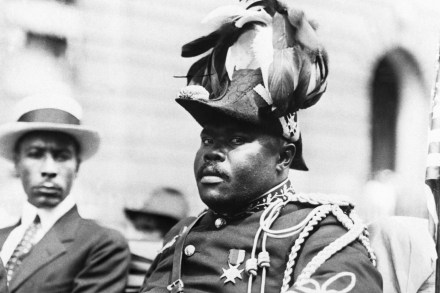
In the 1920s, Marcus Mosiah Garvey was the most famous black man on the planet. The Jamaican-born black nationalist led the Universal Negro Improvement Association (UNIA), a mass movement of working-class black Americans aimed at freeing them from the subjugation of American and European imperial powers. He aimed to start a black renaissance and a new African empire. Marcus Garvey was a disrupter who delighted black people and terrified the authorities who schemed to neuter his power and eventually imprison him in 1925 for mail fraud. After his death in 1940, the story of Garvey was primarily written from the perspective of his enemies but the petitions for him to be exonerated never ceased. Many of us assumed Garvey would be pardoned by Obama but he disappointed.
The debt I owe to cannabis

From our UK edition

Boris Johnson, Dominic Raab and Jeremy Hunt have all admitted that they tried cannabis as young adults. Neither the admission nor the THC psychoactive component of the drug, which makes you high, seem to have done them much harm in their pathways to successful careers in parliament. But a new governmental war on drugs is afoot which some fear may lead to unexpected consequences, and not just for those who ply their trade on street corners or draw up on Deliveroo-type scooters to supply cannabis as if it were a takeaway curry. I wouldn’t bet on everyone getting caught up in judicial dragnets, though; I imagine that middle-class consumers will still largely avoid censure and that the police and the Crown Prosecution Services will continue to target working-class suppliers.

The most important book on black Britishness has one flaw: its author was white

From our UK edition

How many black friends do you have? Do you have any? It’s likely that black people have more white friends than the reverse. In part that’s surely down to demographics and the size of the population. No matter your colour, you’re ten times more likely to bump into a white person than a black person, more or less, depending on where you find yourself, of course. The situation is not so pronounced as in the United States where residential segregation has reinforced social apartheid. In the UK black and white people may live cheek-by-jowl, but that doesn’t necessarily indicate knowledge or even empathy. Out of just over 100 households on our street in Brighton there are three black families; ours is one of them.

Why a whole new generation of young Europeans are turning to old-school reggae

From our UK edition

A camera sweeps across the verdant, shimmering beauty of Jamaica before descending on to a raffishly charming wooden house built into the hills. We’re at a music studio where four of the pioneers who gave birth to reggae are congregated to record a new album. ‘It’s tranquil, a real feeling of nature, just birds, trees and the wind,’ says 71-year-old Ken Boothe, whose seductive voice is smooth as rum, just as it was in 1974 when ‘Everything I Own’ stormed the British charts. Boothe is one of the stars of a beguiling new documentary, Inna De Yard, about the rise and fall of roots reggae, which reached its peak in the late 1970s with Bob Marley’s ‘conscious’ lyric-writing and is now witnessing a revival.