Books

Letters: The joy of balconies

From our UK edition

The closing of churches Sir: Stephen Hazell-Smith is quite right in writing that churches should re-open (Letters, 18 April), however the issue is now more fundamental. Recent weeks have demonstrated a crisis of leadership in almost every aspect of national life, excluding the Queen, who has exercised a spiritual leadership made necessary by the failure of bishops. The closing of churches may be seen as a defining moment in the life of the Church of England. As the Archbishop of Canterbury broadcast from his kitchen on Easter Day, impervious to the damage his ‘leadership’ has caused, many Anglican clergy and people I know looked to the image of the Pope in an almost empty St Peter’s, and saw the true image of Christian service.


Now is the time for comfort reads

From our UK edition

It all started on the day after the Brexit referendum. People who do not get the result they voted for in any election are naturally annoyed, sad, even despairing. If we sincerely believe in one political party and point of view, and lose to the opponents, we feel doomy and gloomy and say so. We used to speak our minds to friends and fellow believers, and that was that. Brexit changed everything. For many who lost, that was not that, and it still isn’t. What started on social media extended to public platforms and personal communication. Disagreement became vicious, language abusive, people tore at one another, claws out, simply for having a different opinion. I lost count of the old friends who dropped and blocked me on discovering I voted Leave and have never picked me up again.

The best crime novels to read during lockdown

From our UK edition

For those with work to do and kids to homeschool, the idea that you might have lots more time on your hands amid the coronavirus lockdown probably seems like a bad joke. But for those who have a bit of extra reading time to make the most of, here are five crime fiction series to help pass the lockdown hours: The LA Quartet, James Ellroy James Ellroy L.A. Confidential (Cornerstone) James Ellroy is well deserving of his status as the pre-eminent crime fiction writer of our times, and for those yet to discover the demonic delights of his oeuvre, the original ‘LA Quartet’ is definitely the place to start.

The secret excitement that lurks beneath our distress

From our UK edition

Something about the word ‘bomb’ has always thrilled me, and I know why. No school today. In the 1950s we lived in Nicosia, Cyprus, when the island was a British colony and Greek Cypriot terrorists were trying to kill us. Our house was near a big army camp and our Cypriot neighbours were friendly, so home felt protected. It never occurred to me, just starting school, that proximity to the military was not a guarantee of security; and it never occurred to Mum and Dad that our neighbours had a small bomb factory, later discovered underneath their chicken house; so indoors seemed safe. But outdoors was different.

The lockdown list: books to read during quarantine

Now we’ve got time on our freshly cleaned hands, The Spectator’s literary luminaries are lubricating the wheels on time’s wingèd chariot and seizing the chance to boost their morale and brain function, reflect on the meaning of life and catch up on a good book or six. Each day, the Lockdown List carries our bibliophilic recommendations. Day 74: Indian summerRoss Clark The success of Black Lives Matter has deflected attention from a group which has no less a cause for grievance over its treatment throughout US history: native Americans. Indeed, to this day Native Americans, thousand for thousand, have an even greater chance of being killed by police officers as do African Americans.

custer

‘Irish writers don’t talk to each other unless they’re shouting abuse’: Sebastian Barry interviewed

From our UK edition

Sebastian Barry, Irish literary Laureate, is in London to promote his first play in a decade. He didn’t plan on leaving it so long, he insists; it’s just that finishing the play — On Blueberry Hill — took longer than he’d planned. How long? Most of the decade, he confesses. At one point progress was so slow that he wrote to his agent and offered to pay back the advance. ‘God knows, money is tight enough already in theatre without me taking it for not writing a play,’ he says. In his defence, Barry has been rather busy, publishing no fewer than three novels (including the Costa prize-winning Days Without End) in the time it took to finish one play. Why did On Blueberry Hill take so long then?

In defence of modern children’s books

From our UK edition

A few years ago, I was surprised to open a newspaper and read that the head teacher of a London public school had decided to ban my books from his library. He described the adventures of Alex Rider, which have sold around 20  million- copies worldwide, in terms so derogatory that I have no mind to repeat them. Suffice it to say that the article quite put me off my cornflakes. But the strange thing was that — once I had got past the sheer offensiveness of his language and a mindset that believed that banning books could ever have good connotations — I was actually quite sympathetic to his wider point of view. Everyone agrees that children benefit from reading, but we seldom discuss what exactly we would like them to read.

The Spectator USA guide to book curation

Books Do Furnish a Room was the title of one volume in Anthony Powell's sequence of novels A Dance to the Music of Time. How true that is. When you enter a room, where do your eyes turn? To the wallpaper? The ceiling? The furniture? No, the books! What do you have in common with the person you are visiting? What can you talk about? What can you slip into your pockets while they are out of the room? 'Books do furnish a room' is the thesis Thatcher Wine has built his career around (yes, that is his name, not the special vintage of some kind of hideous Young Tory club.) Wine is Gwyneth Paltrow's 'book curator', as an interview in Town & Country Magazine describes. 'After everyone tired of reading on their Kindles,' the interview begins (everyone, everyone): '...

gwyneth paltrow

Exclusive: the eagerly anticipated (or not) Trump-era memoirs of 2019

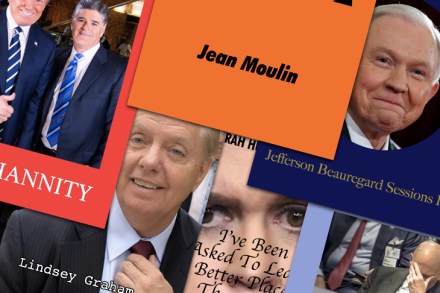
I’ve Served My Time in Hell By John F. Kelly This memoir by Trump’s resigned White House chief of staff takes its title from the Vietnam-era GI mantra: ‘When I die, I’m going straight to heaven because I’ve served my time in hell.’ The former Marine Corps general likens his tenure at the White House to ‘simultaneous waterboarding and colonoscopy.’ At one point he was so depressed that he tried to hang himself from a chandelier in the East Room, but was interrupted by a tour group. He chafes at criticism that he failed to moderate Trump’s wilder impulses.

2019 memoirs

Spectator USA’s Books of the Year 2018

A silence descended on the Spectator USA library as our writers composed their Books of Year. It was the silence of deep thought, broken only by the clink of ice in tumblers, the gentle whoosh of the Juul pipe, and snoring from the armchair by the fire. At dawn, the editors unlocked the library doors. Our writers stumbled out, blinking in the bright sunshine. We gathered their shoddily written copy, and watched through the library windows as they gamboled in the snow. They looked like children, only with hip flasks and cigars.   Daniel Akst Any gift can be a burden, and no gift is more potentially burdensome than a book. That’s why any books you give ought to be brief, unexpected and absorbing – the opposite, in other words, of homework.

spectator usa books of the year

The artist who breathes Technicolor life into historic photographs

There is something of The Wizard of Oz about Marina Amaral’s photographs. She whisks us from black-and-white Kansas to shimmering Technicolor Oz. When Howard Carter leans over Tutankhamun’s open sarcophagus (1922), he does so in the glare of pharaonic gold. A photograph of fallen American soldiers on the Gettysburg battlefield (1863) shocks the more when we see the colour of the blood soaking through shirts. The Javanese dancers who performed at the Exposition Universelle in Paris (1889) are gorgeous in madder pinks, jades and golds.

His dark materials

In this giant, prodigiously sourced and insightful biography, John A. Farrell shows how Richard Milhous Nixon was the nightmare of the age for many Americans, even as he won years of near-adulation from many others. One can only think of Donald Trump. Nixon appealed to lower- and  lower-middle-class whites from the heartland, whose hatred of the press and the east-coast elite, and feelings of having been short-changed and despised by snobs, held steady until their hero and champion unmistakably broke the law and had to resign his second-term presidency. Nixon won a smashing re-election in 1972, even as it was apparent that the White House was awash with skulduggery.

His dark materials

In this giant, prodigiously sourced and insightful biography, John A. Farrell shows how Richard Milhous Nixon was the nightmare of the age for many Americans, even as he won years of near-adulation from many others. One can only think of Donald Trump. Nixon appealed to lower- and  lower-middle-class whites from the heartland, whose hatred of the press and the east-coast elite, and feelings of having been short-changed and despised by snobs, held steady until their hero and champion unmistakably broke the law and had to resign his second-term presidency. Nixon won a smashing re-election in 1972, even as it was apparent that the White House was awash with skulduggery.

Philip K Dick: Five of his best books

From our UK edition

Most science fiction writers got the future wrong. That’s OK. We don’t read sci-fi for predictions and, often, books set in the future tell us far more about the times they written in. But two 20th Century authors stand out as both relevant and prescient to anyone living in 2017. The great JG Ballard is one, and Philip K Dick, the other. While the majority of 20th Century science fiction writers predicted full automation, huge advances in propulsion technology or the colonisation of other planets, Ballard and Dick were visionaries of inner space, telling us what life would feel like for 21st Century (and later) humans.

Five reasons why the Jack Reacher novels are brilliant

From our UK edition

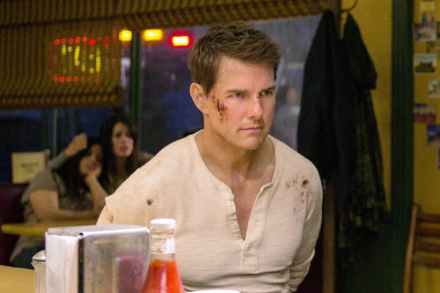
Lee Child’s Jack Reacher is back with the release earlier this month of The Midnight Line, the 22nd book in the series. The Reacher books are hugely popular, but fail to garner much in the way of critical respect. Here are five reasons why the public love Reacher and why critics should… Jack Reacher Reacher is without a doubt one of the most original, complex and compelling characters in crime fiction. An ex-military policeman turned drifter, he has nothing tieing him to the world except for his relentless (and almost psychopathic) desire for justice. He’s the archetypal existential avenging angel – John Wayne, Bogart and Brando rolled into one.