Book reviews

Triumph and disaster

From our UK edition

The title of this first novel refers to a version of childhood as a magical kingdom where evil can be overturned and heaven and earth remade at the whim of a power-crazed infant. In fact our narrator’s world has already been darkened by the time she is presented by her beloved elder brother with the rabbit she insists on calling God. She has been sexually abused by an elderly neighbour, a Jewish musician who fascinates her with tales of the concentration camp in which he was never interned. The brother discovers the betrayal, promises to keep it a secret and — this all happens in the first 30 pages — terrifies the elderly musician into suicide.
Bookends | 12 March 2011

From our UK edition

About 80 per cent of books sold in this country are said to be bought by women, none more eagerly than Joanna Trollope’s anatomies of English middle-class family life. Her 16th novel, Daughters-in-Law (Cape, £18.99), is sociologically and psychologically as observant as ever, showing how not to be a suffocatingly possessive mother-in-law. About 80 per cent of books sold in this country are said to be bought by women, none more eagerly than Joanna Trollope’s anatomies of English middle-class family life. Her 16th novel, Daughters-in-Law (Cape, £18.99), is sociologically and psychologically as observant as ever, showing how not to be a suffocatingly possessive mother-in-law.

A bit of a softie

From our UK edition

Tom Bower’s fearsome reputation as a biographer preceded him in the Formula One paddock. Tom Bower’s fearsome reputation as a biographer preceded him in the Formula One paddock. His devastating treatment of subjects such as Conrad Black, Mohamed Al-Fayed and Richard Branson was well known. So here, at last, was a writer who would unravel the mystery of Bernie Ecclestone and explain how he progressed from selling buns in his school playground to wielding great power over a major world sport, trousering billions of pounds on the way. We all suspected that much of the mystery was created by Bernie himself. He loved to give the impression of a ruthless, frightening individual with a dark and menacing side. He liked to hint at sinister connections to the underworld.

The family plot

From our UK edition

Hisham Matar is a Libyan-American writer whose father, Jaballa — an opponent of Gaddafi — was kidnapped in Cairo in 1990. Hisham Matar is a Libyan-American writer whose father, Jaballa — an opponent of Gaddafi — was kidnapped in Cairo in 1990. He is believed to be in jail in Libya; Matar campaigns from London for his release. If you already knew this, it’s probably because of the attention that came Matar’s way when he published his first novel, In the Country of Men (2005). That book, set in Tripoli in 1979, is told from the point of view of a dissident’s young son. Although the details don’t match Jaballa’s case, many readers took it as lightly fictionalised memoir.

Massacre of the innocents

From our UK edition

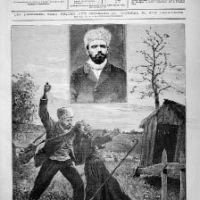
‘La justice flétrit, la prison corrompt et la société a les criminels qu’elle mérite’ — Justice withers, prison corrupts, and society gets the criminals it deserves. ‘La justice flétrit, la prison corrompt et la société a les criminels qu’elle mérite’ — Justice withers, prison corrupts, and society gets the criminals it deserves. With that terrifying and depressing thought, the fin-de- siècle criminologist Jean-Alexandre-Eugène Lacassagne summed up his views at the end of his long career.

Pastures new

From our UK edition

On 20 September 1949, five days after his election as Chancellor of the newly created German Federal Republic, Konrad Adenauer addressed the Bundestag: ‘Much unhappiness and much damage’, he told the deputies, ‘has been caused by denazification . On 20 September 1949, five days after his election as Chancellor of the newly created German Federal Republic, Konrad Adenauer addressed the Bundestag: ‘Much unhappiness and much damage’, he told the deputies, ‘has been caused by denazification . . . many have atoned for a guilt that was subjectively not heavy.

Ravishing beauty

From our UK edition

For a composer who gave so much delight to so many, Ravel occupies a peculiar position in 20th-century music. Stravinsky’s famous description, ‘the most perfect of Swiss clockmakers’, still brings a chortle of recognition, though it might be better to think of him as a jeweller. In the words of one critic, writing in 1906, his music conceals tenderness ‘beneath a surface of flashing, kaleidoscopic precious stones’. Either way, he has probably been patronised by kind words more than any other great composer. Some listeners, it is clear, never forgave him for not being Debussy. Even the famous piano concerto, premiered in 1932, five years before his death, was damned by Constant Lambert as being ‘in painfully good taste throughout’.

Bookends: Deeply peculiar

From our UK edition

The kraken legend is often said to have been inspired by real sightings of giant squid, and this is why Wendy Williams in her Kraken: The Curious, Exciting and Slightly Disturbing Science of Squid (Abrams, £12.99) has chosen this as a title for her book. Below the thunders of the upper deep, Far far beneath in the abysmal sea, His ancient, dreamless, uninvaded sleep The Kraken sleepeth . . . wrote Tennyson in his sonnet about the gigantic sea monsters of Viking myth. The kraken legend is often said to have been inspired by real sightings of giant squid, and this is why Wendy Williams in her Kraken: The Curious, Exciting and Slightly Disturbing Science of Squid (Abrams, £12.99) has chosen this as a title for her book. But there was no need for such a theatrical title.

A reluctant country

From our UK edition

The unification of Italy 150 years ago was a terrible mistake, according to David Gilmour, imposing a national state on a diverse collection of people with little sense of patria. But Barry Unsworth thinks it’s too early to cry failure David Gilmour begins his pursuit of this most elusive of quarries where all such pursuits should begin: with a close look at the physical features of the country, which have from the remotest times determined the pattern of its history, the repeated waves of invasion and settlement. Few countries have been more vulnerable. The coastline is enormously long, impossible to guard effectively; the northern rampart of the Alps has never provided much protection, breached by marauders for thousands of years.

Recent crime novels

From our UK edition

Andrew Rosenheim is building a solid reputation for intelligent, thoughtful thrillers driven by character and theme rather than plot mechanics. His latest, Fear Itself (Hutchinson, £14.99), breaks new ground for him in that it is also a historical novel. Set mainly in the United States in the late 1930s and the first year of the second world war, it deals with the activities of the Bund, an outwardly respectable German-American organisation with a pro-Nazi agenda. Jimmy Nessheim, a young Special Agent in the recently established FBI, is given the job of infiltrating it. The stakes are high — President Roosevelt is trying to obstruct Hitler’s increasingly ruthless advance in Europe, and the Bund’s priority is to obstruct Roosevelt.

Black swan

From our UK edition

At a time when publishers seem chary of commissioning literary biographies, the conditions for writing them have never been better. Major authors born in the 1890s and early 1900s were written about pretty comprehensively in the so-called golden age of biography, stretching from the last quarter of the past century into the first few years of the present one. Now they are up for reassessment. ‘It is time to look again at Edith Sitwell,’ as Richard Greene puts it. The advantage for the new wave is that more material has become available. In the case of Edith Sitwell, biographies of her brothers Osbert and Sacheverell have filled some gaps. Letters that were stuffed in drawers at Renishaw are now put in order.

Planting a dream

From our UK edition

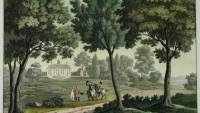
Every schoolboy knows the story of six-year-old George Washington taking his ‘little hatchet’ to his mother’s prized cherry tree. Every schoolboy knows the story of six-year-old George Washington taking his ‘little hatchet’ to his mother’s prized cherry tree. Less well known is that in later years he more than made up for this childish piece of vandalism by planting thousands of trees on his estate at Mount Vernon. Gardening became such a passion that even while defending Manhattan against the British in July 1776 Washington found time to work on planting schemes.

In fine feather

From our UK edition

The telephone rang and it was Mark Amory, literary editor of this magazine. You could have knocked me down with a feather when he asked me to review Beautiful Chickens. I said yes at once. I already had a copy of the book, given me by the staff at Heywood Hill as a Christmas present, so I knew the fun I was letting myself in for. The chickens are beautiful indeed. The Frizzle, for instance — a spoilt lady coming out of the hairdressers where they have forgotten to comb out her curls — is truly surreal. But not as surreal as what I overheard a woman telling a friend at the Reading Poultry Show many years ago, long before political correctness had been invented: ‘I put my little Japs in the bath’.

Desk-bound traveller

From our UK edition

With a new novel each year, Robert Edric cannot have much time for courting London’s literary establishment, but does he stay at home in East Yorkshire? The London Satyr is set in 1890s London and to me, a Londoner, it seems not merely researched but felt, as if its author has tramped the streets and occupied the world of his characters. With a new novel each year, Robert Edric cannot have much time for courting London’s literary establishment, but does he stay at home in East Yorkshire? The London Satyr is set in 1890s London and to me, a Londoner, it seems not merely researched but felt, as if its author has tramped the streets and occupied the world of his characters.

Bookends: Life underground

From our UK edition

For the first 17 days of their ordeal, the Chilean miners trapped underground last year were forced to ration themselves to one sliver of tuna every 36 hours. Less than a month later, while still down the mine but after rescuers had secured them regular food supplies, they threatened to go on hunger strike. Such surprises are vital in a book like Jonathan Franklin’s The 33 (Bantam Press, £14.99). When you already know the story’s conclusion, details are everything. The most gripping period is that between contact being made with the miners and their eventual ascent. Psychology rather than physics takes centre stage (it was strained relations with the psychologist that led to the strike threat), and we see human nature in the raw.

A negative outlook

From our UK edition

Why, the energetic historian Niall Ferguson asks in his new book, did a minority of people stuck out on the extreme western end of the Eurasian landmass come to dominate the world in cultural, political and economic terms for more than half a millennium? This, he says, ‘seems to me the most interesting question a historian of the modern era can ask’. Its supplementary — to which he only tentatively suggests answers — is ‘is it all over?’ Make no mistake [he writes], this is not another self-satisfied version of ‘the triumph of the West’. I want to show that it was not just Western superiority that led to the conquest and colonisation of so much of the rest of the world; it was also the fortuitous weakness of the West’s rivals.

So farewell, John Bull

From our UK edition

His Grace the Archbishop of Canterbury, Dr Fisher, keen to counter the dreadful spectre of the atomic bomb in the 1950s, observed that the very worst it could do would be to sweep a vast number of people at one moment from this world into the other, more vital world, into which anyhow they must all pass at one time. His Grace the Archbishop of Canterbury, Dr Fisher, keen to counter the dreadful spectre of the atomic bomb in the 1950s, observed that the very worst it could do would be to sweep a vast number of people at one moment from this world into the other, more vital world, into which anyhow they must all pass at one time. Simon Green notes that such an opinion had already become unacceptable by that time, even though it was not, and still is not, unorthodox theology.

Getting the balance right

From our UK edition

Branko Milanovic is the lead economist at the World Bank’s research department, a professor at the University of Maryland and a grand fromage at the Carnegie Endowment for International Peace too. Branko Milanovic is the lead economist at the World Bank’s research department, a professor at the University of Maryland and a grand fromage at the Carnegie Endowment for International Peace too. He is not, it turns out, a very light-hearted man and that’s a particular misfortune because The Haves and the Have-Nots was clearly designed to be the easy-reading version of his far more weighty tome on global inequality, Worlds Apart.