Book review

Europe in 60 languages

From our UK edition

So Basque is an ergative language! Well, I never. I couldn’t have told you that a week ago. I even know now what that means (more or less). And, well… so much for Basque. Moving along, then… In Lingo, Gaston Dorren speeds around Europe, giving each of his chosen 60-odd languages three or four pages’ attention before striding off again. Brisk doesn’t begin to describe it. Each language is introduced by means of one quirk, or in a simple picture sharpened by viewing through one particular historic/grammatical/circumstantial prism — the ideology that drives Sweden’s pronoun wars, say, or why Spaniards always seem to be talking so quickly, or Ossetian’s peculiar position as sole European representative of the Iranian language group.

The king who blamed everything that went wrong on God

From our UK edition

Geoffrey Parker is a product of Nottingham and Christ’s College Cambridge, and I think was once a pupil of the unforgettable Jack Plumb. He went to Urbana-Champaign (Illinois) in 1986, Yale in 1995 and since 1997 has been at Ohio State University. Against that improbable background he established himself years ago as the world’s outstanding historian of Philip II, his court, his problems and tragedies, having devoted much attention to the Dutch revolt. His masterly biography of King Philip appeared first in 1978. Now, after publishing several authorative revisions, he has written a new biography of the same monarch.

This autumn’s crime fiction visits the Isle of Man and enters the Big Brother house

From our UK edition

Phil Rickman isn’t unusual among crime writers for mingling supernatural elements with earthly crimes. What makes him different is his way of grounding his novels in the real world, and of bringing a wry sense of humour to his other-worldly themes. His latest novel, Night After Night (Atlanti, £18.99, Spectator Bookshop, £16.99) is a wonderful example of his ability to pull off this fiendishly difficult combination. A TV production company hires a journalist, Grayle Underhill, to research Knap Hall, a reputedly haunted country house with a chequered history. Its most recent owner, the world-famous model and film star Trinity Ansell, died in tragic circumstances.

A brown-noser’s history of the Old Vic and National Theatre

From our UK edition

The moment Waterloo Bridge was planned across the Thames, a new theatre to serve the transpontine coach trade was inevitable. The Old Vic opened in 1818. Originally called the Royal Coburg, it could seat a whopping 3,800. Kean was the first great actor to perform there. In 1831 he played Richard III, King Lear and Othello in one week. After giving his Moor, he came on, still blacked up and doubtless drunk, and let the heckling swine have it: ‘I have never acted to such a set of ignorant, unmitigated brutes as I see before me.’ Theatre back then sounds such fun. The amazing thing about the Old Vic is that it never burned down like all other theatres of its vintage; instead, its story is one of constant financial disaster.

In search of dead men’s bones

From our UK edition

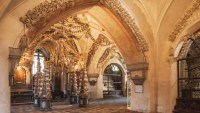
Skulls, femurs, ribs, pelvises, piled on top of each other in a chaotic heap: this, Denise Inge discovered, was what she and her husband John were living on top of in their pretty house in Worcester Cathedral Close, into which they had recently moved when John became the diocesan bishop. The house is on top of a medieval charnel house that can be reached by opening a trap-door in the cellar. Inge opens her book with these words: I live over dead men’s bones. Dead women’s, too, for all I know. Every day when I leave my house to escort my children to school, I walk over them.

From water-dwelling sponges to face-eating hyenas: the whole of life is in this book

From our UK edition

‘The meaning of life’, announces Simon Barnes in the opening pages of his new book, ‘is life, and the purpose of life is to become an ancestor.’ Simple really. Yet it is hard to imagine a title launched this autumn that has a more all-encompassing theme or a larger moral purpose. Ten Million Aliens is an impassioned hymn to the teeming multitude of organisms crowded alongside humanity on this ever-smaller planet. In truth even Barnes’s vast panorama is only a partial statement about the Earth’s genuine biodiversity. For, as he readily acknowledges, he has been obliged to omit for want of space all 28 kingdoms of bacterial organism, five other kingdoms of unicellular life, as well as all the hundreds of thousands of green plant and fungi species.

Némirovsky’s love letter to the France that spurned her and killed her

From our UK edition

By 1940 Irène Némirovsky, who had arrived in France at the age of 16 as a refugee from Kiev, had become a prominent and successful novelist. In March of that year she celebrated what was to be her final publication day. She was Jewish, and for French publishers under Nazi occupation she had ceased to exist as an author when the German army entered Paris. But she continued to write. She moved with her children to a village in Burgundy, hoping to protect her family from the Vichy government’s manhunt, and she started work on her masterpiece, Suite Française, which would lie undiscovered until 2004. She also started three other novels, two of which she finished. Both were published in France after the war. By then their author was dead.

Which great French novelist was also a crossword-setter?

From our UK edition

One could have endless fun setting quiz questions about Georges Perec. Which French novelist had a scientific paper, ‘Experimental demonstration of the Tomatotropic organisation in the Soprano (Cantatrix sopranico L)’ included in a scientific festschrift at the Centre National de la Recherche Scientifique? (The article charted the ‘yelling reaction’ — YR —of singers pelted with ‘Tomato rungisia vulgaris’.) And which French novelist wrote the world’s longest palindrome (5,566 letters)? Perec would have enjoyed being the subject of a quiz, though, to do him full justice, the questions ought to have been cryptic: he was a crossword-setter as well as a novelist.

Behind (almost) every great writer is a great garden

From our UK edition

It is a truism that writers of all kinds often find inspiration and solace in their gardens, as well as protection from the outside world and its demands. After all, writing is a supremely solitary business and outside influences must be subtle and uplifting, not noisy and distracting, if writers are to flourish. The Writer’s Garden is an attempt to explore this appealing idea by describing the gardens of 20 well-loved British writers, including Jane Austen, Beatrix Potter, Walter Scott and George Bernard Shaw.

What went so wrong for Vaclav Havel?

From our UK edition

The unforgettable moment a quarter of a century ago when the Berlin Wall came down was the most vivid drama in that dizzying year of revolutions in 1989 when the Soviet empire fell to its knees. But another event a month later and 250 miles away in Prague was equally poignant. As the playwright/philosopher Václav Havel was sworn in as president of Czechoslovakia and declared in one of the most moving speeches I have heard, ‘Citizens, your government has returned to you’, it was clear that if history hadn’t exactly come to an end, the world had changed utterly. In his own country Havel’s reputation has nosedived since those giddy days, though it flickered briefly after his death two years ago.

The woman who invented the Italian resistance

From our UK edition

Italo Calvino, the Italian arch-fabulist, wrote a foreword to this celebrated wartime diary when it appeared in Italy in 1956. (The author displays an ‘ironic modesty’ and ‘simplicity’ in the writing, Calvino wrote approvingly.) The act of keeping an anti-Fascist diary of this sort during the German occupation carried an automatic death penalty. The author, Ada Gobetti, jotted down her entries in a cryptic English that only she could understand; at the war’s end she deciphered the jottings for eventual publication.

What Julie Burchill’s ex-husband thinks of her new memoir

From our UK edition

Unchosen is the journalist Julie Burchill’s account of how she — a bright and bratty working-class girl from Bristol — fell in love with the Jewish race. It’s an exhilarating and exasperating mix of the utterly brilliant and the totally bonkers. Poor Julie — she thought that her teenage dream of marrying a Jewish man had come true when she married me back in the 1980s. Yes, she got her Jew, but the -ish bit was missing. My family and I earn a chapter in her book called ‘Meet the Perverts’ and all I can say is: Oy vey! You think you’re a smart and funny man to be married to — and then you read an ex-wife’s memoir and you wonder: was I that boring?

To call this offering a book is an abuse of language

From our UK edition

I picked up this book with real enthusiasm. Who cannot be entranced by those 20 years after the second world war when New York supplanted Paris as the cultural capital of the world? One thinks of the Beats, of Dylan and Greenwich Village, of Sontag and Trilling. Well think again, for none of the above feature in this book at all. Indeed the first thing to be said is that to call this offering from Thames & Hudson a book is a real abuse of language. It has covers and inside those covers one finds text and image but the three essays that cover visual art, architecture and design and the performing arts appear to have simply been placed together without either editorial brief or plan. Worse, the book lacks not only a credited editor but also a credited designer.

The writer who showed the West there was more to South America than magic realism

From our UK edition

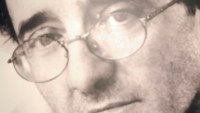
Early on in this ‘Biography in Conversations’ we’re told that the Chilean novelist Roberto Bolaño ‘continued to see himself throughout his life as a literary character, a fictional person.’ It’s a dubious claim: we might believe that about any number of Hollywood actors, pop stars, or historical monsters, but not of the author of books that, as one editor interviewed here, Ignacio Echevarría, notes, ‘would lead to the recanonisation of Latin American literature.’ But it’s easy to see why the idea tempted Mónica Maristain, an Argentinian journalist whose lighthearted interview with Bolaño for Playboy Mexico happened to be the last before his early death and posthumous mythologisation from outside.

Marble-mania: when England became a spiritual heir to the ancients

From our UK edition

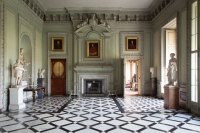
Phrases such as ‘Some aspects of…’ are death at the box-office, so it is not exactly unknown for the titles of scholarly works to promise far more than they actually deliver. Most unusually, the actual reach of Ruth Guilding’s mighty and compelling new study is far wider than the already large subject of ‘Why the English Collected Antique Sculpture, 1640–1840’. There are all sorts of ways in which the author goes beyond her ostensible brief, but it should be stated at the outset that she does indeed examine both why the English collected and what they collected. Guilding begins her introduction with a quote from J.

The problem when novelists write short stories

From our UK edition

Rose Tremain walks on water. Her historical novels are absolutely marvellous, brilliantly plotted, witty and wise, with some of the best characters you’ll find anywhere. Indeed one of their number has a good claim to being the natural heir to Falstaff, his bawdy antics giving way to a more melancholy conclusion: he is to be found in both Restoration and the eponymous Merivel. Tremain’s contemporary fiction is similarly strong. With tremendous insight and sympathy, The Road Home describes the life of an Eastern European as he tries to make a new life in England. The novel is a powerful corrective to the notion that economic migrants have an easy time of things. If Nigel Farage et al haven’t read this book, it’s about time they did.

A big literary beast’s descent into incoherence

From our UK edition

Something odd happened between the advance publicity for this book and its printed appearance. Trailed as addressing the troubled history of Australia’s relationship with the USA, it is actually about the troubled relationships between a cat’s cradle of everyday radical folk and set almost entirely in the suburbs of Melbourne. A washed-up old left-wing journalist, Felix Moore (keep an eye on the names), is employed to write an account of how and why Gabrielle Baillieux, a rebellious young computer hacker-cum-ecowarrior, devised and hatched a virus — or ‘worm’ — to open all the prison cells in the United States and Australia. She has been arrested and bailed and gone on the run. Gaby is supposed to help Felix by making herself available.

A Stratford Stalin: the nasty, aggressive and stupid world of Joan Littlewood

From our UK edition

If Stalin had been a theatre director he’d have resembled Joan Littlewood. What an outstandingly unpleasant woman she was — yet I must admit it was fun making notes on her spitefulness. Few escaped her scorn and derision: Sybil Thorndike (‘a shocking actress’), Rachel Kempson (‘she had a face like a scraped bone’), Laurence Olivier (‘not trying’), T.S. Eliot (‘thin gruel’), Daniel Massey (‘a dud’) and John Gielgud (‘voice wanking’). Rather wonderful that last one, let’s be honest. Joan dismissed every one of the Redgraves (‘How do these untalented people make it?’) and when she saw Flora Robson, Cedric Hardwicke and Ralph Richardson, she was ‘appalled’.