Book review

Blue Note’s 75 years of hot jazz

From our UK edition

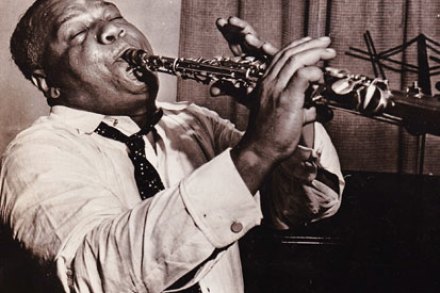
This is a big book, a monumental text with 800 illustrations, 400 of them in colour, to be contemplated more easily on a lectern than in bed, celebrating the 75-year history of the greatest record company devoted solely to the variegated music called jazz. Blue Note Records, with headquarters in Manhattan, originated in the romantic imagination of a privileged adolescent, a Jewish architect’s son (the Jewishness was significant), who was born and brought up in Christopher Isherwood’s neighbourhood in Berlin, which regarded itself, with justification, as Europe’s capital of jazz in the hedonistic heyday of the Weimar republic. Alfred Lion precociously consorted with the city’s artists, musicians and all-round bohemian intellectuals.
Business books aren’t meant to cheer you up. But this one will

From our UK edition

Economics is known as ‘the dismal science’, and certainly there have been — and indeed are — economists whose day seems to have been wasted if they have left their readers with a smile on their face. Happily such puckered-brow, down-turned-lips fellows are rarely admitted through the doors of The Spectator. For more than half a century this magazine has had City correspondents devoted, like Arnold Bennett’s Denry Machin — ‘The Card’ — to the great cause of cheering us all up. In my youth there was Nicholas Davenport. He gave way to Christopher Fildes, and now we have Martin Vander Weyer to lighten the prevailing gloom on Friday morning.

The Edge of the World: deep subject, shallow history

From our UK edition

The Mediterranean glows in our conception of the Continent, the warm source of everything that is best in us, the seat of civilisation, from which one delicious wave after another has washed up on our shores. But what about the Mediterranean’s twin, the other great lobe of the Atlantic which defines the northern edge of the European peninsula, a sea of enormous fertility, its edges laced with islands, fed into by the richest of rivers, with, in the Baltic, its own inner chamber, giving access to the giant hinterlands of Russia. Surely the North Sea deserves its human history too? That is Michael Pye’s question: do the North Sea and the connections across it constitute the missing half of the European story? How have its dynamics shaped our history?

What Shami regards as right isn’t necessarily what is right

From our UK edition

Shami Chakrabarti, director of the civil rights group Liberty and omnipresent media personality, is on the cover of her book. She’s wearing a blindfold bearing the legend ‘On Liberty’, which seems to cast her in the role of Justice — blind, and all that. The title is the same as John Stuart Mill’s famous essay on the subject, which is, I’d say, unwise, as inviting comparisons. I did indeed go out to get JSM’s essay to read alongside Shami, and it wasn’t just the prose that left her standing. This book is an account of her time at Liberty since she started there, the day before 9/11, with a bit of autobiography thrown in.

Why the most important years in history were from 1347 to 1352

From our UK edition

A group of retired Somerset farmers were sitting about in the early 1960s, so Ian Mortimer’s story goes, debating which farming invention had most changed their lives. Was it the tractor? Fertilisers? Pesticides? Silos? No, they agreed, it was the Wellington boot. Mortimer tells this old story to illustrate that ‘it is not always the most dramatic changes that make a difference to our lives’. And for all the wars, plagues, renaissances and revolutions documented in this lively survey of 1,000 years of western history, they are outweighed by quieter forms of change: the rise of peace in the 11th century, for instance, or that of record-keeping in the 13th. Later, there are all the ‘-isations’ — urban, industrial, liberal, global.

Cronenberg attempts a teleportation from cinema to fiction. Cover your eyes…

From our UK edition

Following his beginnings as a science-fiction horror director, David Cronenberg has spent the past decades transforming himself into one of cinema’s most literary filmmakers. He has adapted for the screen — often brilliantly — novels by J.G. Ballard, William Burroughs and Don DeLillo. In each, he has paraded his obsession with lurid mutations in human form wrought by technology, disease and the imagination. In Crash (1996), he had bodies melding with machinery. In Naked Lunch (1991), he had bodies melding with insects — plus insects melding with typewriters.

Was John Cleese ever funny?

From our UK edition

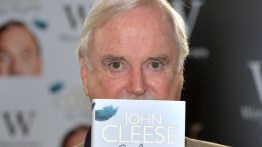
Like many of my generation I was enchanted by the surrealistic irreverence of Monty Python’s Flying Circus, until I overheard other boys — it was never girls — excitedly murdering the Parrot Sketch: ‘Ah yes, the Norwegian Blue — lovely plumage…’ This was not out of a snobbish disdain for popularity; I still loved the Beatles, after all. What made me wince was that the boys in question obviously lacked any sense of humour, and had adopted the show as a kind of prosthesis — which would explain its huge success in Germany.

The deep Britishness of fish and chips

From our UK edition

During the D-day landings, members of the parachute regiment, finding themselves behind enemy lines at night, needed a way of telling whether someone nearby was friend or foe. Their solution was a pair of codewords: one man would call out ‘fish’, the other replied ‘chips’. Brits seem to reach for the words as easily as we reach for the food itself. My Latin teacher used them to illustrate how the alternative to ‘et’ works (‘fish chipsque’), while people impersonating the Kiwi accent need only say ‘fush and chups’. The meal is deeply embedded in our national psyche. John Simpson, we learn in this book, pined for it during the siege of Sarajevo. When George W.

A Jamaican civil war, with cameos from Bob Marley

From our UK edition

There are many more than seven killings in this ironically titled novel — in fact very long — that starts off set in the Kingston, Jamaica, of the 1970s, amid an efflorescence of political violence. The two major parties, the right-wing Jamaica Labour Party and the left-wing People’s National Party, were pouring guns into West Kingston’s slums to create loyal voting ‘garrisons’, controlled by neighbourhood dons — because ‘who-ever win Kingston win Jamaica and whoever win West Kingston win Kingston’, as one of Marlon James’s characters explains. The CIA was siding with the JLP, or, as another character puts it, ‘squatting on the city, its lumpy ass leaving the sweat print of the Cold War’.

The Tudor sleuth who’s cracked the secret of suspense

From our UK edition

Some reviewers are slick and quick. Rapid readers, they remember everything, take no notes, quote at will. I’m the plodding sort, making more notes than I can ever use and underlining so many quotes that, if I put them all in, it would constitute a republication of the book. But I’ve not done this with Lamentation, the sixth novel in C.J. Sansom’s Tudor crime series featuring his credible and likeable hero, the lawyer Matthew Shardlake. I intended to proceed as normal, but so engrossing is the tale that I didn’t pause long enough to take a note. Even when judged by the high standards of the earlier Shardlake novels, this one stands out — not least because it successfully maintains suspense for over 600 pages, which is going it a bit.

Michael Frayn’s new book is the most highbrow TV sketch show ever

From our UK edition

Enough of big ideas and grand designs. Instead, here are 30 unusually small ideas from the giant pulsating brain of Michael Frayn. Matchbox Theatre is a collection of tiny playlets, all one-handers or two-handers, designed to be performed in the most intimate theatrical space of them all: your mind. In ‘Sleepers’, Sir Geoffrye de Frodsham and Lady Hilarye lie motionless in their tomb, and bicker throughout eternity. ‘Since when has he been doing choral Evensong in the crypt?’ ‘Since 1997.’ ‘I’ve never heard any choral Evensong in the crypt.’ ‘You were asleep.’ ‘You’re telling me I slept through that?’ ‘You slept through the second world war...

Terror plots, threats to liberties, banks in crisis: welcome to Britain during the Napoleonic Wars

From our UK edition

In our own troubled times it is useful and comforting to recollect that ’twas ever thus.  Violent threats against prominent politicians? Jenny Uglow reminds us that in 1802 Colonel Edward Despard, a British officer turned radical agitator, was the last person in England to be sentenced to be hanged, drawn and quartered, for a plot to kill King George III and the cabinet; while in 1812, the wildly unpopular hardline Tory Spencer Perceval became the only prime minister (so far) to be assassinated, the victim of John Bellingham, a deranged bankrupt. Threats to civil liberties?

Care for the dying needs more imagination – and less hospitalisation

From our UK edition

‘To die of age is a rare, singular and extra-ordinary death’, wrote Montaigne, ‘and so much less natural than others: it is the last and extremest form of dying.’ Not any more. Thanks to the marvels of modern medicine, we are limping and stumbling and mumbling and forgetting our way into the grave at greater ages than ever before. Since such longevity is still new, we’re not really prepared for it: we are dying beyond our means, outliving our usefulness, our pensions and even our individual body parts. Outliving, too, the patience of our families. In affluent countries like ours, the spectre of the care home holds more menace than death itself. Atul Gawande is a surgeon, as well as a professor at Harvard Medical School.

While Holmes is away

From our UK edition

Careful Sherlockians, on returning in adulthood to the four novels and 56 short stories that they devoured uncritically in their teens, tend to notice an endearing vagueness on the part of Sir Arthur Conan Doyle when it comes to details. There is Watson’s old war wound, for instance, which journeys absent mindedly between shoulder and leg. And there is Doyle’s inability to remember dates or even his own characters’ names. In ‘The Creeping Man’ the client, Trevor Bennett, is met by his fiancée with a gushing, ‘Oh, Jack, I have been so dreadfully frightened.’(Watson himself has form here. In ‘The Man With the Twisted Lip’ his wife calls him James and he does not find it odd, even though his name is John.

The man who was mistaken for a deer

From our UK edition

‘And anything by Michael Connelly’ were the final words of advice from one of my best friends in discussing books to read one summer. I’ve been hooked ever since by a master of narrative tension, complex but believable plotting and three-dimensional characters. Luckily Connelly is a prolific author of detective and investigative fiction with a number of protagonists who sometimes appear in each other’s books. His latest novel maintains the same high standard and relentless forward impetus that keeps one turning the pages. Hieronymous ‘Harry’ Bosch, a Vietnam veteran, has had a distinguished but somewhat bumpy career as a detective and is now deployed in the Open-Unsolved unit of the Los Angeles Police Department looking at old, cold murder cases.

Four ways to win Waterloo

From our UK edition

The Kaiser’s war deprived Britain of her centenary celebrations of the victory at Waterloo. It also set the propagandists something of a challenge, for the Kaiser himself had sent an aide-de-camp to the British embassy the day after the declaration of war deploring ‘the action of Great Britain in joining with other nations against her old allies at Waterloo’. A hundred years and all that had passed therein evidently counted for nothing to the imperial mind, though the emperor appeared to have forgotten that Belgian troops had also stood with the allies at Waterloo.

Jeff Koons’s latest achievement: a new standard in prolix, complacent, solipsistic, muddled drivel

From our UK edition

Jeff Koons is, by measures understood in Wall Street, the most successful living artist. But he’s a slick brand manager rather than a tormented creative soul. The Koons brand includes a stainless steel bust of Louis XIV, a red aluminium lobster and balloon dogs, plus countless knock-offs of novelty-store dross. It is tempting to think Koons a vulgarian and condemn his art as crapola, but to do so would be lazy. There’s no point in criticising him for his cynical exploitation of the credulous art market, since that is exactly his intention. Futile to damn him as vacuous; he’d be flattered. All artistic achievement can be assessed in terms of skill, talent and genius. Koons has very little technical skill: his work is made by production-line assistants.

Lolita’s secret revenge mission, and other daft theories of literary spite

From our UK edition

Richard Bradford has written more than 20 books of literary criticism and biography. This latest one is a compendium of writers’ feuds and resentments. Reading Literary Rivals is a curious experience; from the quotations and bare facts you can just about make out a version of reality, but it’s fighting so hard against the author’s interpretations that it’s sometimes obscured altogether. It feels as if Bradford has done his research with a baleful monocle pressed to his eye, giving a ghastly pallor to everything he reads. When Dickens read Thackeray’s review of his work, he wrote to thank him, but when Professor Bradford read the same review, he saw nothing but mockery and malice. Nabokov and his friend Edmund Wilson disagreed about communism.