Book review

Is it boring being the god of the sea?

From our UK edition

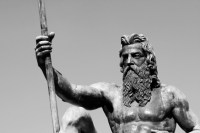
Writing to a god seems a presumptuous thing. Who are we, feeble mortal creatures whose lives pass in the blink of an eye, to address the great immortal deities? The Dutch writer Cees Nooteboom, now entering his ninth decade and never knowingly lacking in chutzpah, is not one to be deterred by such considerations. Nooteboom is an immensely civilised and civilising writer, rich in curiosity and armed with a dazzling literary style. Those who already know his writing will not be surprised to discover that on the page, if not in the briny, he is more than a match for the trident-bearing earth-shaker, god of the sea.

How a clumsy drummer started the 1848 revolutions

From our UK edition

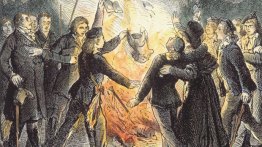
There are hundreds of resounding ideas and shrewd precepts in Adam Zamoyski’s temperate yet splendidly provocative Phantom Terror. This is the history of European ultra-reactionary repression and police espionage in the half-century after the overthrow of the French monarchy in 1789-93. The instability of popular opinion, the destructiveness of angry, ignorant populism and the wretchedness of timid, suppliant leadership are laid bare by him. Yet his deadliest strictures are against the rigid, fear-driven, authoritarian reaction of the propertied classes, which he demonstrates was lethally counter-productive as well as often absurd.

From working-class heroes to Disney World mascots: the sad fate of the Chilean miners

From our UK edition

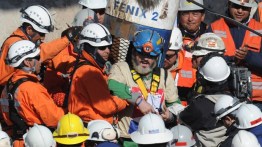
On 5 August 2010, 33 men entered the remote San José mine in Chile’s Atacama desert to begin their 12-hour shift. They came out again 69 days later, to be greeted by the country’s president in front of a worldwide TV audience of around 1.2 billion. A group of workers who, in many cases, had never left the local area in their lives were now global heroes. At the time, it was embarrassingly easy to see their rescue as simply the sort of good news that makes us all aware of our shared humanity. Héctor Tobar’s book, though, is a sharp reminder that the truth was a lot more complicated — and sombre — than that. As their shift started, many of the men were already worried by the rumbling sounds coming from the mine, but were ordered to carry on anyway. Then, at around 2 p.m.

My mad gay grandfather and me

From our UK edition

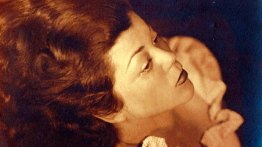
Family history is all the rage at the moment — finding out about one’s ancestors, digging back into one’s roots. Sofka Zinovieff has written the strange, and strangely moving, tale of her family’s unorthodox relationships. By turns comical, tragicomical and melodramatic, her book often reads much like fiction, and she recounts it like a novel. The principal characters are: Gerald Berners, born in 1883; his lover, nicknamed the ‘Mad Boy’, Robert Heber-Percy, born in 1911; the author’s grandmother, Jennifer Fry, born in 1916; and the author herself, born in 1961. Zinovieff expertly interweaves their unlikely history from late Victorian England until the present day, leaving the reader on the last page with ‘a view up to the intriguing gateway of Faringdon House’.

The Guru of Late Antiquity speaks again

From our UK edition

Nearly 50 years ago we made our way into an inner place, a semi-subterranean room, in a peculiar college. A smallish, round-faced man was beginning to give tongue. Each week he drew multi-coloured patterns in the air, words flitting about like luminous bats in a night sky. We sat bewitched. There was suspense too, since from time to time a stammer threatened to stop all speech. He took us back to a world far removed from our own — there was more than a touch of Pullman magic as he made an incision and we crossed into his world. First we found ourselves in the Middle East in an era of war on fronts stretching from the Red Sea to the Caucasus. Key characteristics of the two great powers involved, Byzantium and Sasanian Persia, were identified.

Hercule Poirot returns – and yes, he’s as irritating as ever

From our UK edition

First, a confession. I have never cared much for Hercule Poirot. In this I am not alone, for his creator felt much the same way, describing him as a ‘detestable, bombastic, tiresome, egocentric little creep’, albeit a creep with remarkable commercial staying power. Fortunately, my prejudice doesn’t affect enjoyment of the brilliantly constructed plots and the unobtrusively effective storytelling. But I find it far easier to warm to Miss Marple. Poirot is, after Sherlock Holmes, the most celebrated fictional detective in the world. It was only a matter of time before the Agatha Christie estate allowed him to be brought back to life. Continuations have become big business in recent years — marriages of convenience between a prominent, dead author and a well-established living one.

James Ellroy’s latest attempt to unseat the Great American Novel

From our UK edition

Aficionados of detective fiction have long known that the differences between the soft- and hard-boiled school are so profound that, as P.D. James observed, it seems stretching a definition to place both groups in the same category. Over here we have, or used to have, a comforting story concerned with restoring order to the mythical village of Mayhem Parva; across the Atlantic, the detective novel is expected to tackle the rotten, usually urban, underbelly of the American Dream. Violent, cynical and disquieting, it has also become a significant challenge to the more refined attempts at the Great American Novel. James Ellroy’s detectives are not only inured to confronting vice but are often the perpetrators of it too.

Wave goodbye to the weight-gaining, drunk-driving Inspector Wallander

From our UK edition

Some years ago I met the Swedish crime writer Henning Mankell at the Savoy Hotel in London, where he was staying. A waitress came up to our table. ‘I think, Belinda,’ Mankell said to her suavely, ‘that I would like a glass or two of your red wine!’ Momentarily confused, Belinda asked Mankell to repeat his order. After she had gone, Mankell commented peevishly to me: ‘What’s the matter with her? Was there anybody at home? Hello?’ Clearly, the hoped-for flirtation with Belinda had not come off. More than just the top button of Mankell’s black shirt was undone. Mankell could not have imagined how successful the Inspector Wallander mysteries would be when, 23 years ago, he published the first in the series.

Narrative history at its best – and bloodiest

From our UK edition

Anyone thinking of bringing out a book on Waterloo at the moment must be very confident, very brave or just plain daft. Over the last month there have been at least five new books on the battle, and so unless a writer is in a position to bring the equivalent of whole divisions of loyal Sharpe readers with him, he’d better have some new line to take. Nick Foulkes showed how it might be done with his terrifically entertaining Dancing into Battle, and Paul O’Keeffe has taken it a step further by quite simply giving the battle a miss. From the opening pages one is always aware that something pretty major is happening a mile or two over the next hill.

Imagine Eastenders directed by David Lynch

From our UK edition

Ghostly doings are afoot in Edwardian London. Choking fog rolls over the treacle- black Thames. Braziers cast eerie shadows in grimy alleyways. Two sinister doctors hunch beside a dying fire in the appropriately-named Printer’s Devil Court, ‘a dark house, with steep, narrow stairs’. Having supped on a hearty repast of lamb stew and treacle pudding, the ‘shadowy’ Dr Walter reveals his dastardly scheme. ‘We are proposing... to bring the dead back to life.’ Our hero young Dr Meredith is appalled. This is diabolical! Derivative of Frankenstein! Not quite. The experiment results in a phantom rather than a monster. No gothic element is spared in this tale. The author has surpassed herself.

A jaunty romp of rape and pillage through the 16th century

From our UK edition

The Brethren, by Robert Merle, who died at the age of 95 ten years ago, was originally published in 1977, the first in a sequence of historical novels that sold millions in their native France but have gone untranslated until now. Set in a plague-ridden, conflict-ravaged 16th century, rife with beheadings, hangings, abductions and rape, it’s a visceral yet strangely jaunty chronicle of provincial life after the Reformation. The title refers to a partnership between war veterans Jean de Siorac and Jean de Sauveterre. One is a libidinous medical graduate, the other a more dour Protestant with a dim view of his pal’s bastard-fathering ways. Together they hang up their swords and use their accumulated plunder to hoover up land in southwest France and build a dynasty.

Flawed, unproductive and heroic: the real Ernest Shackleton

From our UK edition

Polar explorers are often cast as mavericks, and this is hardly surprising. The profession requires a disdain for pseudo-orthodoxies and, besides, the urge to dwell on a frozen ocean or forbidding glacier is maverick in itself. In the so-called Heroic Age (the late 19th and early 20th centuries) both Poles remained ‘unconquered’ and the margin between glory and opprobrium was slender. Frederick Cook and Robert Peary claimed that they reached the North Pole in 1908 and 1909 respectively. Their accounts were later discredited. When Roald Amundsen beat Captain Robert Scott to the South Pole in 1911, he was accused (unfairly) of concealing his plans and was summarily shunned by the British establishment. Scott meanwhile forced his expedition on, but in doing so condemned it to disaster.

A compendium to match Radio 4: boring, but somehow gripping

From our UK edition

When you think about it, Radio 4 is mostly a pile of old toss. Money Box qualifies as an anaesthetic, the dramas couldn’t act their way to the nearest street corner and Sheila Dillon from The Food Programme just needs a slap. That’s even before we reach the five most depressing words in the English language: ‘And now, You and Yours.’ Yet we love it. The bits of the station’s output we do like, we worship. Forget Magna Carta and the NHS, when the barricades go up then I, along with all the other Four Whores, will be fighting myself to a bloody stump in defence of Corrie Corfield and Today. This book, a lists-and-break-out-boxes tribute to the station, is very like Radio 4 itself: much of it I found boring, yet I couldn’t resist sticking with it.

To be astonished by nature, look no further than Claxton

From our UK edition

Mark Cocker is the naturalist writer of the moment, with birds his special subject. His previous book, Birds and People, was a tour de force, taking the birds of the entire world as its subject. Craig Brown described it as ‘the sort of masterpiece that comes along only once or twice a decade’. Expectations could not be higher. Claxton is a selection from his journalism for the Guardian and other publications, written since he moved to Claxton village, southeast of Norwich, 12 years ago. The 140 entries are arranged in 12 chronological chapters to form a naturalist’s journal of a Claxton year. Many have been radically revised so that of his eight books this ‘has taken the longest to write’.

How Hitler’s dreams came true in 1946

From our UK edition

I should begin this review, in the spirit of full disclosure, by admitting that I know the author very slightly. Something close to 14 years ago, we were on the same press freebie: a slap-up lunch in Paris courtesy of — was it? — LBC radio. Who knows? The ignominious occasion of our acquaintance isn’t the reason I mention it: rather that, somewhere on the Eurostar under the Channel, he and I fell into a conversation about the European Union. As I trotted out the usual boilerplate grumbles about sovereignty and bureaucratic opacity and the iniquities of the Common Fisheries Policy, he exclaimed so passionately in its favour that the conversation stayed with me. After all these years I of course paraphrase, but what he said was: ‘Yes, yes, but it is such a beautiful idea.

David Nicholls’ Us: Alan Partridge’s Grand Tour

From our UK edition

Us, David Nicholls’s first novel since the hugely successful One Day, is about a couple who have been married for 20 years. Douglas Petersen, the anally retentive middle-aged narrator, never feels like an equal to Connie, his attractive and witty wife. On the opening page, Connie tells him that she thinks she wants to leave him when their son Albie goes off to university. But first they are to take a long-planned family holiday — a Grand Tour of the great cities of Europe. Douglas sees this as his last chance to save his marriage, and also to rebuild his broken relationship with Albie. In an introduction, Nicholls explains that the inspiration for the book came when he was travelling round continental Europe publicising One Day.

Picasso’s dealer

From our UK edition

When she was four, Anne Sinclair had her portrait painted by Marie Laurencin. It is a charming picture, a little dark-brown-haired girl with a white bow, very blue eyes and a white and pink striped blouse, and it was commissioned by Sinclair’s grandfather, Paul Rosenberg, one of the handful of most influential Parisian art dealers of the 1920s and 1930s. More interested in politics than family history, Sinclair — for 13 years the host of the prestigious French weekly television news show 7 sur 7 — waited until she turned 60 to explore the trunks of papers in her mother’s attic.

Jessica Mitford and Esmond Romilly – crusaders, chancers, spongers

From our UK edition

Even ardent Mitfordians must quake at the sight of yet another biography of the sisterhood. There have been more forests felled in the name of Nancy, Pamela, Diana, Unity, Jessica and Deborah Freeman-Mitford than the Brontë sisters. Jessica alone produced two volumes of memoirs, Hons and Rebels (1960) and A Fine Old Conflict (1977); her collected letters (Decca, 2006) came in at a thumping 700 pages and in 2010, Irrepressible, Leslie Brody’s biography of Jessica’s years in the United States, appeared. ‘Enough already’, one can hear her American sisters cry. Yet with Churchill’s Rebels, Meredith Whitford, a South Australian author of historical novels, has brought a clear eye and a fresh pen to the early life of Jessica and her first husband, Esmond Romilly.

Why Jonathan Powell thinks we’ll have to negotiate with al-Qa’eda

From our UK edition

Jonathan Powell is best known as Tony Blair’s fixer. He was intimately involved with the Northern Ireland peace process, about which he has written authoritatively, and since leaving office has set up his own NGO which advises on negotiations with terrorists worldwide. This book, subtitled ‘How to End Armed Conflicts’, is offered as a guide to negotiators. They should find it very useful, packed with quotes and anecdotes from negotiations with, amongst others, the Tamils, ETA, the IRA, the ANC, Columbia’s FARC and, of course, that hardiest of all perennials, Israel-Palestine.