Book review

Forget Poirot, Holmes or Marlowe: there is nothing urgent or even logical about Chilean detective work

From our UK edition

If nothing else, a private investigator who has learned his trade from the works of Simenon stands out from the crowd. Cayetano Brulé, the hero of The Neruda Case, sets himself a course of Maigret novels on the advice of his first client, Pablo Neruda. ‘If poetry transports us to the heavens,’ the aged poet remarks, ‘crime novels plunge you into life the way it really is.’ Brulé, a Cuban exile in Chile, has now appeared in six detective novels by Roberto Ampuero, a Chilean professor of creative writing at the University of Iowa. The Neruda Case is the most recent; it is also the first in the fictional chronology of the series and the first to be translated into English.

Scotland’s miraculous century (it started with the Union)

From our UK edition

In 1707 Scotland surrendered what it had of its independence by the Treaty of Union with England. That independence had been limited since the Union of the Crowns in 1603, and arguably for at least half a century before that. But the treaty was, as Lord Seafield, Chancellor of Scotland, said ‘the end of an auld song’. It was unpopular in Scotland, popular in England because, in the middle of a war with France, it secured the Protestant succession to the throne and meant that the new kingdom of Great Britain no longer had an internal frontier to defend. Nevertheless, it would be 40 years before domestic peace and security were assured. In that time there were three Jacobite risings — attempts to restore the exiled Stuart kings.

An armchair voyeur gets a glimpse into Nicky Haslam’s vast address book

From our UK edition

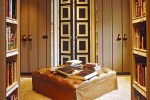
Phaidon pioneered the modern art-book in 1936. The formula was: large format, fine production, exceptional plates, and essays by the superstars of German art history. After Richard Schlagmann acquired the imprint in 1990 Phaidon maintained, even enhanced, its reputation for good design, but visual style was prioritised over editorial substance and writers were marginalised. That is, more or less unwanted and, if wanted, not paid very well. Since 2012 Phaidon has been owned by hedgie Leon Black. The interest in massive, high-concept illustrated product remains, but design and production have slipped. Or so I thought, effortfully working my through Room: Inside Contemporary Interiors, edited by Nacho Alegre and others (£49.95, Spectator Bookshop, £44.95).

Stefan Zweig: the tragedy of a great bad writer

From our UK edition

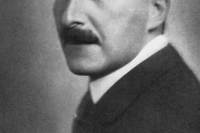
Stefan Zweig wasn’t, to be honest, a very good writer. This delicious fact was hugged to themselves by most of the intellectuals of the German speaking world during the decades before 1940, in which Zweig gathered a colossal and adoring public both in German and in multiple translations. It was like a password among the sophisticated. Zweig might please the simple reader; but a true intellectual would recognise his own peers by a shared contempt for this middlebrow bestseller. The novelist Kurt Tucholsky has a devastating sketch of a German equivalent of E.F. Benson’s Lucia: Mrs Steiner was from Frankfurt, not terribly young, alone and with black hair. She wore a different dress each night and sat quietly to read cultured books. She was a devoted follower of Stefan Zweig.

A misery memoir from Alan Cumming that’s surprisingly thoughtful

From our UK edition

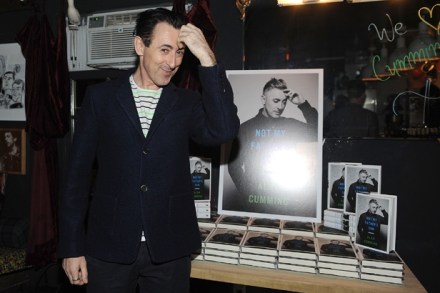
Misery loves company. Anyone who doubts this old adage should pop into their local bookshop, because besides celebrity chefs and Fifty-Shades-of-Grey-style erotica, what keep the tills ringing are misery memoirs. The shelves are groaning with them. Their titles can vary from the merely toe-curling (Cry Silent Tears) to the queasily exploitative (Please, Daddy, No), but even if the names of the characters vary, all these books share the same basic plot. A child is horribly abused in some way, but eventually manages to break free from its upbringing, like a chick hatching from an egg. Good comes out of bad.

I guarded Rudolf Hess

From our UK edition

I had the misfortune to meet Lord Richards on probably the darkest day of his 42 years in the military. In July 2009 I went to visit the then Commander-in-Chief UK Land Forces in his office on the edge of Salisbury plain and we spoke about his career, and the army in general. All the while staff officers ran in and out with updates and requests concerning a double IED attack which had left five soldiers of 2nd Battalion, The Rifles, dead and a dozen wounded — the single worst incident in our 13-year involvement in Afghanistan. Richards was, as the title of his auto-biography suggests, in total command of himself and the situation — eloquent but concise, knowledgeable and incisive; and while far from unfeeling, his judgment was completely unclouded by emotion.

From head-shrinking to skull-seeking: a history of the severed head

From our UK edition

A severed head, argues Frances Larson in her sprightly new book, is ‘simultaneously a person and a thing… an apparently impossible duality… an intense incongruity’. History is ‘littered’ with such heads. Pilgrims visit them: the heads of St Peter and St Paul, for example, are thought to be in the high altar of the Basilica of St John Lateran. Artists are inspired by them, especially the erotically charged ones in the stories of Salome and Judith. Medical students dissect them, thereby acquiring the ‘necessary inhumanity’ of their profession. And Americans pay $50,000 to have their own heads cut off — cryonicists prefer the term ‘cephalic isolation’ — and preserved in thermos flasks of liquid nitrogen.

A book about the ordinary nothings that, in the end, are everything

From our UK edition

We live in a world in which nuance is trampled on and cannot survive. Is that true? I don’t know. But the further point is, must authors now preface their novels with introductory letters, in which they carefully explain the central themes of their work? Epistolary prefaces in general are not remotely new: you often find editors and publicists addressing readers with disinterested solicitude. (‘We care about you dear reader and only want the best for you, Buy this book’). Of course, Jane Smiley, the Pulitzer-prize-winning author of such novels as A Thousand Acres and The Greenlanders, is entitled to communicate with the reader in any way she likes.

Europe in 60 languages

From our UK edition

So Basque is an ergative language! Well, I never. I couldn’t have told you that a week ago. I even know now what that means (more or less). And, well… so much for Basque. Moving along, then… In Lingo, Gaston Dorren speeds around Europe, giving each of his chosen 60-odd languages three or four pages’ attention before striding off again. Brisk doesn’t begin to describe it. Each language is introduced by means of one quirk, or in a simple picture sharpened by viewing through one particular historic/grammatical/circumstantial prism — the ideology that drives Sweden’s pronoun wars, say, or why Spaniards always seem to be talking so quickly, or Ossetian’s peculiar position as sole European representative of the Iranian language group.

The king who blamed everything that went wrong on God

From our UK edition

Geoffrey Parker is a product of Nottingham and Christ’s College Cambridge, and I think was once a pupil of the unforgettable Jack Plumb. He went to Urbana-Champaign (Illinois) in 1986, Yale in 1995 and since 1997 has been at Ohio State University. Against that improbable background he established himself years ago as the world’s outstanding historian of Philip II, his court, his problems and tragedies, having devoted much attention to the Dutch revolt. His masterly biography of King Philip appeared first in 1978. Now, after publishing several authorative revisions, he has written a new biography of the same monarch.

This autumn’s crime fiction visits the Isle of Man and enters the Big Brother house

From our UK edition

Phil Rickman isn’t unusual among crime writers for mingling supernatural elements with earthly crimes. What makes him different is his way of grounding his novels in the real world, and of bringing a wry sense of humour to his other-worldly themes. His latest novel, Night After Night (Atlanti, £18.99, Spectator Bookshop, £16.99) is a wonderful example of his ability to pull off this fiendishly difficult combination. A TV production company hires a journalist, Grayle Underhill, to research Knap Hall, a reputedly haunted country house with a chequered history. Its most recent owner, the world-famous model and film star Trinity Ansell, died in tragic circumstances.

A brown-noser’s history of the Old Vic and National Theatre

From our UK edition

The moment Waterloo Bridge was planned across the Thames, a new theatre to serve the transpontine coach trade was inevitable. The Old Vic opened in 1818. Originally called the Royal Coburg, it could seat a whopping 3,800. Kean was the first great actor to perform there. In 1831 he played Richard III, King Lear and Othello in one week. After giving his Moor, he came on, still blacked up and doubtless drunk, and let the heckling swine have it: ‘I have never acted to such a set of ignorant, unmitigated brutes as I see before me.’ Theatre back then sounds such fun. The amazing thing about the Old Vic is that it never burned down like all other theatres of its vintage; instead, its story is one of constant financial disaster.

Wendy Cope on hating school, meeting Billy Graham and enduring Freudian analysis

From our UK edition

A surprise! I took this book from its envelope expecting a fresh collection of Wendy Cope’s poems, and opened it to find prose — a variety of memoirs, reflections, articles and letters. There are literary pieces on poets such as Anne Sexton and George Herbert, and her reviews from The Spectator when she was television critic here. She has been very keen on Molesworth since reading Down with Skool at 11, and thinks that it is salutary for a poet to be aware of the Fotherington-Thomas effect: ‘When I notice myself sounding like him, I try again’ — an excellent piece of advice for any poet to follow. The first part of the book is largely autobiographical.

From water-dwelling sponges to face-eating hyenas: the whole of life is in this book

From our UK edition

‘The meaning of life’, announces Simon Barnes in the opening pages of his new book, ‘is life, and the purpose of life is to become an ancestor.’ Simple really. Yet it is hard to imagine a title launched this autumn that has a more all-encompassing theme or a larger moral purpose. Ten Million Aliens is an impassioned hymn to the teeming multitude of organisms crowded alongside humanity on this ever-smaller planet. In truth even Barnes’s vast panorama is only a partial statement about the Earth’s genuine biodiversity. For, as he readily acknowledges, he has been obliged to omit for want of space all 28 kingdoms of bacterial organism, five other kingdoms of unicellular life, as well as all the hundreds of thousands of green plant and fungi species.

Némirovsky’s love letter to the France that spurned her and killed her

From our UK edition

By 1940 Irène Némirovsky, who had arrived in France at the age of 16 as a refugee from Kiev, had become a prominent and successful novelist. In March of that year she celebrated what was to be her final publication day. She was Jewish, and for French publishers under Nazi occupation she had ceased to exist as an author when the German army entered Paris. But she continued to write. She moved with her children to a village in Burgundy, hoping to protect her family from the Vichy government’s manhunt, and she started work on her masterpiece, Suite Française, which would lie undiscovered until 2004. She also started three other novels, two of which she finished. Both were published in France after the war. By then their author was dead.

Which great French novelist was also a crossword-setter?

From our UK edition

One could have endless fun setting quiz questions about Georges Perec. Which French novelist had a scientific paper, ‘Experimental demonstration of the Tomatotropic organisation in the Soprano (Cantatrix sopranico L)’ included in a scientific festschrift at the Centre National de la Recherche Scientifique? (The article charted the ‘yelling reaction’ — YR —of singers pelted with ‘Tomato rungisia vulgaris’.) And which French novelist wrote the world’s longest palindrome (5,566 letters)? Perec would have enjoyed being the subject of a quiz, though, to do him full justice, the questions ought to have been cryptic: he was a crossword-setter as well as a novelist.

Behind (almost) every great writer is a great garden

From our UK edition

It is a truism that writers of all kinds often find inspiration and solace in their gardens, as well as protection from the outside world and its demands. After all, writing is a supremely solitary business and outside influences must be subtle and uplifting, not noisy and distracting, if writers are to flourish. The Writer’s Garden is an attempt to explore this appealing idea by describing the gardens of 20 well-loved British writers, including Jane Austen, Beatrix Potter, Walter Scott and George Bernard Shaw.