Book review

Death wears bling: the glory of London’s Caribbean funerals

From our UK edition

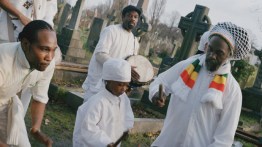
Death is big business in parts of the Caribbean. In the Jamaican capital of Kingston, funeral homes with their plastic white Doric columns and gold-encrusted ‘caskets’ are like a poor man’s dream of heaven. The dwindling belief in an afterlife — the consolation that we might ever join our loved ones — has taken much of the old-time religion out of the West Indian funeral. Wealthier Jamaicans may lavish up to US $30,000 on a Cadillac hearse. Now even death wears bling. Fortunately, mortuary tradition survives in the Neo-African ‘Nine Night’ ceremony, where for nine nights the body remains in the deceased person’s home or ‘dead yard’ and hymn-singing mourners see to its safe departure to the next world.

The book that made me (almost) believe in bitcoin

From our UK edition

Bitcoins are digital money ‘mined’ from satanically difficult mathematical problems. Madness, obviously. But five years ago, while the rest of us were saying ‘Huh. Geeks. Money in cyberspace’, or ‘Y’what?’ a young doctor I know bought a few quids’ worth for fun. Sold it later for £800. Now she’s out on a hillside in the driving rain with her hawk. Bitcoin paid for the hawk. As for cyberspace, that’s where all money is anyway. Bitcoins simply take it a step further. It might be the first step on one of the most important journeys in economic history. It’s a strange, compelling tale, and three things lie at its heart.

Move over Downton: Margot and the Asquiths’ marital soap opera

From our UK edition

You might be forgiven for thinking that there is no need for yet another book about Margot Asquith. Her War Diary was published only a few months ago: surely we have had enough about this woman, extraordinary though she was. Anne de Courcy’s new book shows that this is not the case at all. Instead of using Margot’s voluminous diaries to illustrate the politics of the Asquith government, as most writers have done, she writes the story from Margot’s point of view. The result is a gripping read. When the rising Liberal politician Herbert Henry Asquith married Margot Tennant in 1894 he was a 42-year-old widower and she was 30.

Women in the various hells of Algiers

From our UK edition

On the surface Harraga is the story of two ill-matched women colliding dramatically, with life-changing consequences. What emerges, in throwaway fragments, is a picture of Algeria’s chequered past and present; a history of conquest and occupation. It’s a sugar-coated pill with a burning, bitter core. Boualem Sansal is an Algerian writer recently nominated for the Nobel Prize in Literature. His novels have been translated into 18 languages and won international awards. In his own country, his books are banned. Before becoming a writer at the age of 50, he enjoyed an enviable life as general director of Algeria’s ministry of industry and restructuring, until open criticism of the regime cost him his job. He still lives in Algeria, though officially ostracised.

Sabina Spielrein: from psychiatric patient to psychoanalyst

From our UK edition

Sabina Spielrein was a psychiatrist and psychoanalyst with groundbreaking ideas about the role of the reproductive drive in human psychology and the link between Darwinism and psychoanalytic theory. She was a pioneer of play therapy for children, and the first hospitalised psychiatric patient to progress to practising psycho-analysis. She worked with, among others, Freud, Jung and Piaget; she was regarded as Freud’s standard-bearer. Yet she is remembered, if at all, as Jung’s mistress, a hysteric with a taste for spanking; David Cronenburg’s film A Dangerous Method, with Keira Knightley as Spielrein, has provided the only readily available version of her.

Jerry Lee Lewis: interrogating ‘The Killer’

From our UK edition

‘I ain’t never pretended to be anything,’ says the man they call the Killer. ‘I’ve lived my life to the fullest, and I had a good time doin’ it. And I ain’t never wanted to be no teddy bear.’ Jerry Lee Lewis is still recording and performing at the age of 79, but his legend rests on what he did in the couple of years after he turned 21. In 1957, ‘Whole Lot of Shakin’ Going On’ and ‘Great Balls of Fire’ made him a $10,000-a-night sensation who sold more tickets than Elvis or Sinatra. Sam Phillips of Sun Records called him ‘the most talented man I ever worked with, black or white’.

How did English football get so ugly?

From our UK edition

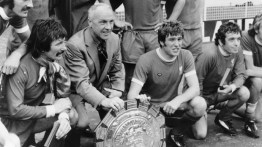
Bill Shankly, the manager of Liverpool FC in the club’s halcyon days of the1960s and 1970s, once said: ‘Football isn’t just a matter of life and death, it’s far more important than that.’ But as David Goldblatt shows in this penetrating study, it was a sport then in apparently terminal decline.The deaths in the next decade of so many fans at Bradford from fire, and at Hillsborough from suffocation, exposed both its obsolete infrastructure and and anachronistic governance. It had few friends in high places and no ready access to funds. In 1963 the maximum wage of £100 per week had been abolished.

The darkest secret about commuting: some of us enjoy it

From our UK edition

In the early days of Victorian railways, train journeys were (rightly) considered so dangerous that ticket offices sold life insurance as well as tickets. There were no onboard toilets until the 1890s, meaning that passengers either had to cross their legs or buy a ‘secret travelling lavatory’, consisting of a rubber tube and bag hidden inside the clothes. Some traditions, though, were already well-established. ‘The real disgrace of England,’ wrote Anthony Trollope in 1869, ‘is the railway sandwich.’ These three facts all come from the first chapter of Iain Gately’s exploration of commuting. They also serve as a neat summary both of what’s best and what’s most odd about Rush Hour as a whole.

Eugene O’Neill: the dark genius of American theatre

From our UK edition

George Bernard Shaw called him a ‘Yankee Shakespeare peopling his isle with Calibans’. He was dubbed ‘a fighting Tolstoy’ and ‘the great American blues man of the theatre’. Before he was 35, Eugene O’Neill had emerged as the first real titan of American theatre, a preeminence he has never lost. When Sinclair Lewis was awarded the Nobel Prize in 1930, he responded that they should have given it to O’Neill, because he had done ‘nothing much in American drama save to transform it utterly… from a false world of neat and competent trickery to a world of splendour and fear and greatness’. O’Neill’s struggle to wrench American theatre into splendour, fear and greatness is the subject of Robert M.

Is there anything new left in gardening books?

From our UK edition

‘Whither the novel’ was a great dinner party topic in the 1960s. It is a question less aired these days, when novels come in strange and varied forms. From Paul Kingsnorth’s The Wake, set in the 11th century andwritten in cod Olde Englisshe, to the versifying of Constantine Phipps (much chosen as ‘book of the year’), there is plenty to please us all. Gardening books, however, have now reached the whithering stage. Samey, samey, samey is what they are, and this year even that most traditional of booksellers, Heywood Hill, has lamented the lack of anything new in the horticultural line. There are the inevitable huge picture books, the horticultural porn. The largest of these is Madison Cox’s The Gardener’s Garden (Phaidon £49.

Vita in her ivory tower: a portrait of a lonely, lovelorn aristocrat who yearned to be mistress of her own ancestral home

From our UK edition

Visitors to the National Trust’s Sissinghurst — the decayed Elizabethan castle transformed by Vita Sackville-West in the early 1930s — are regaled by picturesque extracts from Vita’s landscape poems, and moving professions of love to and from her husband Harold Nicolson. Matthew Dennison’s title, Behind the Mask, indicates his ambition to get beyond such projections to something more real. But the metaphor is unfortunate. There was no single image that Vita adopted or which others imposed on her — nor a single real self which has been concealed until now. Dennison knows this.

Is France now the sick man of Europe? It is if it’s taking Eric Zemmour seriously

From our UK edition

For the Figaro journalist and TV commentator Eric Zemmour, whose Le Suicide français has been topping the bestseller lists in France, France is ‘the sick man of Europe’. The land of liberty was once admired by the whole world. Then came May ’68, feminism, immigration, consumerism and homosexuality. On the surface, nothing has changed; espressos are still being plonked down on zinc counters, and ‘the legs of Parisian women still turn heads’. But ‘the soul has gone’. Gays and Muslims are taking over, and France is ‘dissolving in the icy waters of individualism and self-hatred’. The blurb calls Le Suicide français an ‘analyse’, but there is nothing analytical about it.

The Duke of Wellington also invades Christmas art books

From our UK edition

Art books fall naturally into various categories, of which the most common is probably the monograph. Judith Zilczer’s A Way of Living: The Art of Willem de Kooning (Phaidon, £59.95, Spectator Bookshop, £53.95) examines its hero’s career from his extraordinarily accomplished — and resolutely conventional — teenage productions, by way of his glorious middle years, on to the final works, which were created when he was suffering from Alzheimer’s. Lavishly illustrated not only with works by the artist, but also with photographs of him and his friends, it does full justice to his towering — if not always entirely lovable — achievement.

Did anyone ever really love Bob Hope?

From our UK edition

Why does everything these days have to be a superlative? Why must writers scream for our attention, yelling that the guy in their book blows everyone else out of the water? Bob Hope, claims Richard Zoglin in this biography, was the most important entertainer of the 20th century. In fact, he adds, you could argue that Hope was ‘the only important entertainer’. Can Zoglin really believe this? Is he really telling Chaplin, Sinatra, Elvis, Monroe et al to roll over? Even if you made the ‘only important …’ boast about one of those people it would sound absurd. Making it about Bob Hope sets you up for a 486-page fall. It isn’t that Hope’s story lacks importance.

God, aliens and a novel with a mission

From our UK edition

They say never work with children and animals. They could just as well say don’t write about aliens and God. A raft of readers hate sci-fi, and probably more sheer away at the very idea of a novel about a missionary. And yet… And yet The Book of Strange New Things works. It is in many ways extraordinary; its narrative drive, its lack of sentimentality, its occasional (emotional) brutality, its humour (albeit rare) all add up to a novel which is both intelligent, thought-provoking and as readable as a potboiler. Peter, ex-junkie, loving husband, cat-lover, sets off on a journey. The novel opens with his farewell to his wife, and we gather that he will be gone a while and that he might be in danger.

Songs for the road: through his music and his classic car collection Neil Young hopes to escape his childhood traumas

From our UK edition

Why do people talk about ‘experimenting’ with drugs when mostly they just mean that they’re doing them? Perhaps, as I write this, I should experiment with a glass of beer. In any case, one day back in the 1970s — when rock stars were particularly prone to experimentation — Bob Dylan dropped in on Neil Young, who played him a song detailing his extensive drug-related experiments (with grass, cocaine and amphetamines). At the end of the performance, Dylan remarked drily, ‘That’s honest.’ Young still laughs when he remembers this. Partly it was because Dylan, who had done some experimenting himself back in the day, knew where Young was coming from. Also, though, what makes it funny is that all artists are in the business of revelation.

The 10 best loo books of 2014: why we sing so much better in the shower and what became of Queen Victoria’s children’s milk teeth

From our UK edition

Nancy Mitford would not call them ‘toilet books’, that’s for certain. Loo books? Lavatory books? One or two people I know favour ‘bog books’. And having written one or two books myself that teeter on the edge of frivolity, I know that for your book to be kept in what Americans call the ‘bathroom’ is essentially a compliment. As long as it’s there to be read, of course. Oddly enough, the two best loo books of the year I have already and separately reviewed in these pages. The Most of Nora Ephron (Doubleday, £20, Spectator Bookshop, £16.