Book review

A treasure-trove of grisly Arab tales may appeal more to an Isis fighter than your average British reader

From our UK edition

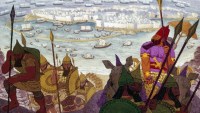
The marvellous tales of the title are not just confined to the contents of this book, for the travels and travails of the lone manuscript in which they were inscribed are also something of a wonder, and deserve to be told. The original collection appears to have been composed in the 10th century, and it is easy to imagine some of these stories doing the rounds of Cairo, Baghdad and Damascus while the crusaders were making trouble in the neighbourhood. This particular version of the stories was written down in the 14th century, probably in Cairo, for that is where the manuscript can be traced.

Grimms’ fairy tales: the hardcore version

From our UK edition

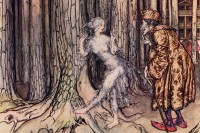
Child murder, domestic slavery, abusive families, cannibalism and intergenerational hatred — what could be better for the festive fireside than a new edition of Grimms’ fairy stories? There hasn’t been a straight translation in English of the original 1812 edition; most retellers in English relied on revised versions by Wilhelm Grimm. Now Jack Zipes has produced the complete first edition of The Original Folk and Fairy Tales of the Brothers Grimm. It’s a good translation, faithful to the simple character of the originals. It’s been well received by the fairytale industry, writers and academics who like to remind us that the original versions were rawer than Wilhelm’s family-friendlier edition of 1857.

Wonder Woman: feminist symbol or the ultimate male fantasy?

From our UK edition

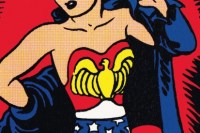
It’s always interesting when people succeed in two different arenas — like Mike Nesmith’s mum, who gave the world both a Monkee and Tippex, or Hedy Lamarr, the beautiful film star who also helped develop wireless communication, or Paul Winchell, the voice of Tigger who also invented the artificial heart. (If only he’d played the Tin Man in The Wizard Of Oz!) William Moulton Marston created both the cartoon heroine Wonder Woman and the lie detector machine, though by the time I had finished this book I was wondering how he found the time or the energy to do either.

After the trilogy (and the hurricane): the likeable return of Frank Bascombe

From our UK edition

The story of Frank Bascombe, a sports-writer turned estate agent but always a New Jersey homebody, has already taken Richard Ford nearly 30 years and three volumes to tell, totalling 1,300 pages — longer than War and Peace. But for Frank, aged 68 (and for Ford, aged 70), it’s not over. In the autumn of 2012, Hurricane Sandy ravaged the New Jersey shoreline. And though Bascombe is retired from real estate and living safely inland in Haddam (the town where his first-person chronicles began, in 1986, with The Sportswriter) he is not unaffected by the devastation. In the four long stories that comprise this fourth Bascombe volume, he learns that his former beach house has been destroyed. A woman made homeless by Sandy has retreated to Haddam and shows up at Frank’s door.

Transnistria: a breakaway republic of a breakaway republic

From our UK edition

Transnistria is not an area well-served by travel literature or, really, literature of any kind. The insubstantial-seeming post-Soviet sandwich-filling between Moldova and Ukraine, it doesn’t have a bad reputation. It has no reputation. As Rory MacLean, the author of the ‘across-the-old-Iron-Curtain-in-a-Trabant’ bestseller Stalin’s Nose, explains: ‘Transnistria is a breakaway republic of a ba lot smaller than Devon. And it is recognised by no country in the world except itself. You could indeed be forgiven for thinking that Transnistria is a made-up place (and at times the author of this book almost treats it as if it is).

The quirkiest garden book Roy Strong has read in years

From our UK edition

Incredulity is rarely a word that crosses my mind when it comes to garden writing. This genre can, of course, be quite straight-forward and descriptive, like Miss Jekyll’s rather boring volumes. It can equally be wildly funny, as when Anne Scott-James and Osbert Lancaster hitch their respective wagons to horticulture and produce a spoof history. But where, oh where did Sam Llewellyn’s exotic aberration spring from? Is it fact or fiction? I don’t think I ever decided which. This is one of those books where you spend the whole time worrying less about what’s happening in the kitchen garden in spring and more on trying to work out what the hell is this place and who on earth is this man with a less-than-house-trained duchess in tow.

Roll up, roll up! A history of the circus from Ancient Egypt to the present

From our UK edition

Linda Simon’s compact and colourful circus history is, in many ways, a jewel of a publication. It is hard to say anything new about the circus because almost impossible to uncover quotes and stories that cannot be found in other books. The circus itself — disregarding the circus of ancient Rome — is a modern form and so the stock of images available for this type of illustrated history is quite limited and well known. But here are some interesting photographs of ceramic Mexican acrobats, and an Egyptian fresco of a female contortionist which back up one of Simon’s themes: using the body as a spectacle is an ancient impulse, of which the circus as we know it is just one manifestation.

Five of the best celebrity biographies of 2014

From our UK edition

Cilla Black has become a strange creature during her 50 years in showbiz. When her husband Bobby was in hospital she found to her dismay that she didn’t now how to take the dogs for a walk. That was some time ago, for Bobby Willis died of liver cancer in 1999. ‘They lived their lives almost like Siamese twins,’ writes Douglas Thompson in Cilla, Queen of the Swinging Sixties (Metro, £7.99, Spectator Bookshop, £7.59). He is an old hand in Cillagraphy, having published Cilla Black: Bobby’s Girl in 1998 and Cilla: the Biography in 2002. He is not the author of this year’s Cilla: the Adventures of a Welsh Mountain Pony, which will disappoint fans since it makes no reference to the long-term hostess of Blind Date (1985–2003).

Deng Xiaoping: following in Mao’s footsteps

From our UK edition

Much has been written about Deng Xiao-ping (1904–1997), most recently by Ezra Vogel in Deng Xiaoping and the Transformation of China. But apart from his fondness for eating croissants and playing bridge, and the fact that his second wife left him for a party colleague — Michael Dillon records the divorce only — we still know little about Deng himself. Mao Zedong’s personality, on the other hand, was often remarked on — from Edgar Snow’s first meeting with him in 1936 to Henry Kissinger’s in 1971(both men swooned in his presence). Dillon rightly notes that Vogel compressed a large part of Deng’s life into a mere 30 pages. In this biography the entire life and career are given appropriate space.

What makes mankind behave so atrociously? Ian Buruma and Joanna Bourke investigate

From our UK edition

The first interaction between two men recorded in the Bible involves a murder. In the earliest classic of English literature, one of the murderer’s descendants has his arm ripped from its socket by a young warrior who celebrates his gruesome victory by drinking himself blotto; the next day, our hero wakes up (not hungover, apparently) and kills his opponent’s mother. Not my cup of tea, Beowulf, or, perhaps, yours. But this is what literature was like until the 18th century or so, when the stakes were lowered and people began writing about inheritances, bishoprics and low-key adultery.

An alternative map of Britain: caves, canals, megaliths and ley lines

From our UK edition

Picture the map of Britain. Its strangely cadaverous shape, blobs of population and routes between them seem as familiar as our own faces; there is only one definitive map, surely? Not according to Joanne Parker, whose Britannia Obscura aims to tease out less corporeal cartography. Hers are not quite ‘maps of the mind’, for they exist as truly as a crisp new Ordnance Survey, but they are largely out of sight: above us, below us or otherwise in the shadows. Each of her five chapters takes on a different map: of our cave and canal networks, overhead air routes and patterns of megalithic remains. These four are clearly real enough; the fifth, a map of ley lines, rather less certain.

What Hanif Kureishi learned from being robbed by his accountant

From our UK edition

Have you ever met a sane accountant? I ask, because one of the more striking sentences in A Theft runs: ‘Long before this, though, and long before I learned that the insane, these days, might disguise themselves as money experts, I had heard that no one had met a sane accountant.’ To which an accountant might reply: ‘I have never met a sane writer. ‘(I am certainly in no position to wag the finger when it comes to this.) Hanif Kureishi, though, has cause for his observation, and his grievance. In the spring of 2012, his accountant, whom he calls here Jeff Chandler, managed to con him out of around £180,000. This booklet is his reaction to that. It starts out very promisingly.

Your immune system’s war isn’t Saving Private Ryan — it’s Homeland

From our UK edition

Before I read this book, I imagined the immune system as a defensive force, like the Germans on the beaches at Normandy on June 6 1944. When you’re young and vital, your immune system is the Germans in the early morning — scanning the horizon for movement, with plenty of ammunition in reserve. But life is a process of attrition; as you get older, you become like the Germans later that afternoon — your machine guns get jammed up, and then you use rifles, and pistols, and eventually bayonets, until the invaders finally destroy you — just like the first 20 minutes of Saving Private Ryan. That’s what I used to think. Now I’ve read this book, I see things a bit differently.

Not a barrel of laughs: a history of hogsheads, kegs and puncheons

From our UK edition

Few people, perhaps, will immediately seize on this title as just the thing for a relative’s Christmas, even if their surname is Cooper. If it doesn’t have the wide appeal of the latest Lee Child or Jamie Oliver, though, there is plenty in it of interest, and not just for the many fans of wine and whiskey. Since the unexpected commercial success of Mark Kurlansky’s Cod, there have been a number of attempts to dare to be dull, approaching apparently unpromising subjects with the attitude that anything becomes interesting if you look at it closely enough.

Mecca: from shrine to shopping mall

From our UK edition

Mecca is the greatest paradox of the Islamic world. Home to the Kaaba, a pagan-era cube of black granite said to have been built by Abraham and his son Ishmael, it is the lodestar to which 1.6 billion Muslims direct their five daily prayers. Mecca is the single point on the planet around which Muslims revolve — quite literally for those able to perform the once gruelling, now simply expensive, pilgrimage or haj. Yet the prodigious, world-illuminating gifts of Islamic civilisation in the arts and sciences, from architecture to astronomy, physics to philosophy, came not from Mecca but from cities such as Damascus, Baghdad, Cairo and Istanbul.

A mouth-watering selection: 2014’s best eight cookery books

From our UK edition

The people behind the people are the ones to watch for, and we have all been waiting for a book by Anna Jones. Who? Well, if you are a fan of Jamie Oliver, you will have read a lot of Jones. For seven years she worked as his ‘stylist, writer and food creative,’ which means, we guess, that she was behind the curtain busily pulling levers for the great wizard. He has written the foreword to his protégée’s first book, and says he’s is ‘super proud’. But so he should be, for A Modern Way to Eat (Fourth Estate £25, Spectator Bookshop, £20) is a beautiful and inspiring one, and thankfully devoid of Jamie-speak — that is, nothing is described as ‘smashing.’.

Composer, conductor, author, pianist, lecturer — was there anything Leonard Bernstein couldn’t do?

From our UK edition

On 17 May 1969 Leonard Bernstein ended his 12-year run as musical director of the New York Philharmonic with a performance of Mahler’s Third. The next night he went to see Jimi Hendrix play Madison Square Gardens. And there you have him. Was Bernstein a fragile romantic or a firebrand rocker? Was he the spiritual visionary who gave us Chichester Psalms or the tin-pan-alley tunesmith behind West Side Story? Bernstein went to his grave claiming it was possible to be all these things and more — insisting that you could be a political activist and a concert pianist, a conductor of the challengingly atonal and a writer of the melodically unforgettable. Not everyone was convinced.

A brief, witty look at the coming of the e-book

From our UK edition

Paul Fournel is a novelist, former publisher and French cultural attaché in London, and the provisionally definitive secretary and president of the select literary collective known as Oulipo, whose fellows have included Raymond Queneau, Georges Perec and Italo Calvino. Members of Oulipo remain members after their deaths. In this respect, it is the French literary equivalent of the Hotel California, a comparison I suspect its followers would neither welcome nor necessarily understand. But playful and defiant obscurantism is all part of Oulipo’s raison d’être. Dear Reader is set in the world of publishing and tells the tale of a middle-aged editor, Robert Dubois, struggling to adapt to the rise of the e-book; the surname is no accident.