Book review

Are you sitting properly?

From our UK edition

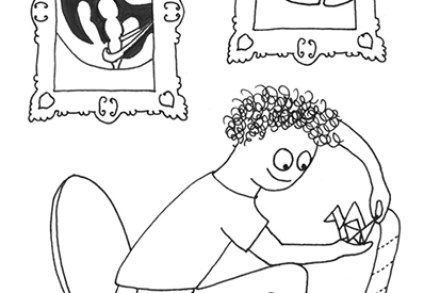
Funnily enough, after my editor sent me these three books to read, my guts started playing up. Suddenly, food seemed to go straight through me. At first I wasn’t bothered, but when it didn’t get any better I began to worry. I went to see my doctor. She told me to bring her a piece of poo to see if they needed to stick a camera up my bum. I realise this is probably the last thing you want to know, but that’s the whole point about the gut: no one wants to talk about it, or even think about it, until something goes wrong. These books set out to break this taboo, and they’re full of fascinating things I didn’t know. I had no idea that reading about crapping could be so absorbing. It brings a whole new meaning to the term ‘toilet book’.
The more deceived

From our UK edition

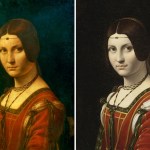
Louis the Decorator and his chums in the antiques trade use the word ‘airport’ adjectivally and disparagingly. It signifies industrially produced folkloric objects (prayer mats, knobkerries, masks, toupins, necklaces, tribal amulets, djellabas etc) which are typically sold by hawkers to departing holidaymakers. This is the basest level of fakery and is ignored by the otherwise doggedly catholic Noah Charney. Its defining characteristic, however, is tellingly akin to that of the multi-million-dollar scams that fascinate him in The Art of Forgery. The duped party is often not all that duped.

The beginning of the end

From our UK edition

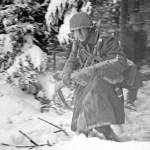
Christmas Eve 1944 found thousands of Allied — mostly American — troops dug into trenches and foxholes along the Belgian front, where they sucked at frozen rations and, in some places, listened to their enemies singing ‘Stille Nacht’. Their more fortunate colleagues in command posts gathered around Christmas trees decorated with strips of the aluminium foil more usually dropped from planes to jam enemy radar signals. The following morning a wave of Junkers dropping magnesium flares led the German Christmas Day onslaught, soon answered by American P-47 Thunderbolt fighter bombers, dropping napalm ‘blaze bombs’ or strafing with machine guns.

Behind the beat

From our UK edition

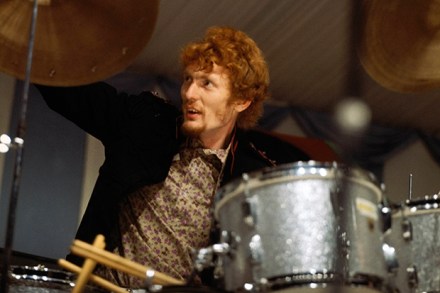
Tony Barrell can’t play the drums, but he’s in awe of those who can. ‘A band without a drummer is like a rocking chair that somebody has cruelly bolted to the floor,’ he writes in Born to Drum’s introduction. ‘While it may appear to rock, it actually doesn’t.’ Those who thrill to the sounds of anyone from Black Sabbath to the Buddy Rich Big Band would agree, but Barrell also aims to reach readers to whom names like these mean nothing with an inquiry more psychological than musical, namely: who would be a drummer?

No man is an island

From our UK edition

Bit of Kant, bit of Kierkegaard, bit of motorcycle maintenance. That’s one take on The World Beyond Your Head, Matthew Crawford’s philosophical polemic about how virtual reality is impinging on real reality. Actually, his targets in this book are Descartes and John Locke, with whom, he reckons, the rot started when it comes to thinking about the human person as a cerebral calculating machine, divorced from his own body and from the world around him. But he’s got it in for corporate capitalism, too, and its manipulation of our attention by hijacking every communal space — aural and visual — to get us to buy things. Perhaps I’m not quite winning you round here to this book, which I really, really like, and really, really want you to read. Let me try again.

All the pomp of family life

From our UK edition

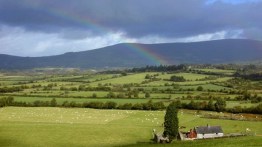
The Green Road is a novel in two parts about leaving and returning home. A big house called Ardeevin, walking distance from an unnamed town on the coastline of County Clare, is home to the Madigan family. At the centre of the family is Rosaleen Madigan, the matriarch: ‘A woman who did nothing and expected everything. She sat in this house, year after year, and she expected.’ The novel begins with the thwarting of one of Rosaleen’s expectations. She has taken to her bed in 1980 after Dan, the eldest of her four children, has announced that he is going to become a priest. Each of the first four chapters focuses on a Madigan sibling — Hanna, Dan, Constance, Emmet — and maps the escape routes they take out of rural Ireland in adult life.

The devil’s devoted disciple

From our UK edition

It is ironic that this weighty biography of Hitler’s evil genius of a propaganda minister is published on the day of a general election filled with Joseph Goebbels’s hallmarks: mendacity, media manipulation and the big lie. Seventy years after the spectacular suicide of Goebbels and his wife Magda, and their murder of their six children, in the Berlin bunker, the ‘little doctor’ is still a byword for the black arts of political spin and politicians regularly accuse each other of telling fibs ‘worthy of Goebbels’.

Two wheels good

From our UK edition

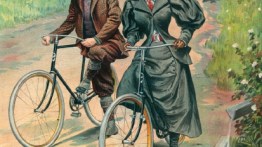
Bicycles — in Britain, anyway — are the Marmite means of transport. I am among the bicycle-lovers, almost religious and certainly addicted in my need to have a daily bike ride. But I can see why people — and drivers in particular — hate some of us: for our smugness, our need to keep on moving through red lights and along pavements. It isn’t like this in Holland, where bicycling is so embedded in daily life that most drivers are bicyclists and vice versa; where mutual understanding leads to mutual respect. Why do bicycles have this effect? Of intense affection among some, hatred among others; of mass use in some countries, limited use in others? Paul Smethurst could have answered the question. And his book does have some juicy little statistics in it.

A passion for men and intrigue

From our UK edition

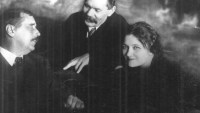
Moura Budberg (1892–1974) had an extraordinary life. She was born in the Poltava region of Ukraine, and as a young woman she danced at the Sanssouci Palace at Potsdam with the Russian Tsar and the German Kaiser. In her twenties by 1917, she had a well-placed aristocratic husband, two children and several fine homes in different countries. This might have been enough for most of us, but for Moura it was merely a preamble — we are only on page 15. Revolution, espionage, embezzlement, murder, executions, plenty of intimacy and arrests by several different nations take us through a few more chapters.

Blown to blazes

From our UK edition

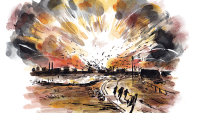
The story is an interesting one. Gunpowder had to be manufactured. In 1916 one of the places dedicated to the dangerous and difficult task was remote Kent. A fire broke out and led to a series of huge explosions. Deaths and injuries were not widely specified at the time for reasons of morale, but 109 men and boys were killed. The explosives industry was a necessary, profitable but immensely dangerous one. It took the 1654 Delft explosion — in which Carel Fabritius was killed — for society to realise that explosives should probably not be manufactured in cities. The Kent disaster took place a couple of miles from Faversham, and the works had been built at a safe distance from the town precisely to limit the number of casualties in case of disaster.

Wilde about the boy

From our UK edition

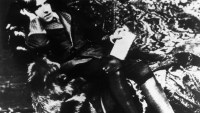
The prodigious brilliance, blaring public ruin, dismal martyrdom and posthumous glory of Oscar Wilde’s reputation are almost too familiar. The facts have been rehashed in numerous biographies, and dramatised by such actors as Robert Morley, Peter Finch, Rupert Everett and Stephen Fry. The only way to attack the subject with any hope of surprise is by an oblique sideways move from an unexpected angle. This was Robert Maguire’s method in Ceremonies of Bravery (2013), an intriguing account of Wilde’s friendship with the man-about-town Carlos Blacker and their connection with the Dreyfus affair in France. Another enjoyably tangential contribution is Linda Stratmann’s recent The Marquess of Queensberry: Wilde’s Nemesis.

Full of sound and fury

From our UK edition

John Knox, Cranmer complained, was ‘one of those unquiet spirits, which can like nothing but that is after their own fancy, and cease not to make trouble and disquietness’. Yet this awkward cuss, son of a merchant in Haddington and initially a young Roman Catholic priest, became a pillar of the Reformation in Europe and the inspiration for Presbyterianism in Scotland. The recent Scottish political television debates remind us also that his strident tone is still fashionable in Scotland. The black and white judgments proclaimed rather than discussed, and the winning of arguments by out-shouting opponents, are exactly in the style of Knox. He knew precisely what reforms were needed in the church.

A break from sabre-thrusting

From our UK edition

Allan Mallinson’s historical series concerning Matthew Hervey, the well-bred, thoughtful soldier, details a world where men are practical and not too clever; where the only sensible vote is Tory; where Moors make ‘uncommonly good cymbalists’. Everything gleams, buffed up to a shining surface: it is a fantasy of empire and glory. Two thirds of the way through this, the 12th book, our hero finds himself at the site of the Battle of Waterloo. He himself had fought there as a young cornet; now, almost 20 years later, and in command of his own regiment, he reconsiders the scene.

Blitzed on Benzedrine

From our UK edition

Lore has it that those viewing naughty books in the British Museum could once do so only with the Archbishop of Canterbury in attendance. Such pastoral care may be advisable for any institution ending up with the private archive of letters, diaries and artwork from which Joscelyn Godwin compiles this eccentric and nicely produced account of his parents’ lives from 1940 to 1948. Edward Fell Scott-Snell and Stephani Mary Allfree met in 1935 and set about cultivating Thessyros, a fantasy land Edward had already sown with overripe imagery and peopled with priapic cupids, ageing debauchees and, Godwin explains, ‘assorted gardeners, priests, and organists who gleefully seduce their willing, under-aged charges’.

Sher force of character

From our UK edition

Understandably given its bulk, Antony Sher’s Falstaff in the Royal Shakespeare Company’s recent production of Shakespeare’s two Henry IV plays had a long period of gestation before it emerged, fully formed and laughing, from under the covers of a bed also occupied by Prince Hal and a couple of prostitutes. Sher tells the story in diary form, as he did that of his Year of the King (1985), in which he described how his sensational Richard III arrived ‘before his time into this breathing world’. Falstaff was not obvious casting for one who does not profess to be a comic actor.

Snow White or black beauty?

From our UK edition

God Help the Child, Toni Morrison’s 11th novel, hearkens back to two of her earliest. Like The Bluest Eye, it is a story of internalised racism and paedophilia; like Tar Baby it is a fable about sexual and racial autonomy in the form of a love story between a beautiful, vain woman and a man who thinks she has lost her moral compass. But unlike those earlier efforts, Morrison’s latest book offers only the most inconsequential answers to questions of grave consequence. Her abiding interest has always been self-possession and self-recovery, an especially charged problem for black people in a racist culture; but this novel reads like a précis of those themes, in which conviction substitutes for complexity — a colouring book that no one bothered to colour in.

The sick man of Europe finally succumbs

From our UK edition

In a possibly apocryphal story, Henry Kissinger, while visiting Beijing in 1972 as Nixon’s national security adviser, asked Zhou Enlai, China’s premier on the significance of the French Revolution of 1789. ‘It’s too soon to tell,’ was Zhou’s answer. Zhou was not simply being enigmatic. His answer had a great deal to do with the enormous consequences that flow from cataclysmic events such as revolutions and wars, which influence the course of peoples and nations in ways that cannot be easily foreordained or traced. The Great War led to the dissolution of three European empires — Russian, Austrian and German — from which emerged unimaginable consequences for the future of Europe and indeed the world.

The raw material of fiction

From our UK edition

Saul Bellow died in 2005. He won the Nobel Prize for Literature in 1976. The first installment of Zachary Leader’s exemplary, scrupulous, dispassionate, detailed, well-read, enthralling biography runs to over 800 pages and takes us only as far as 1964. The length is important. It allows Leader to adjudicate calmly, weigh the evidence — sometimes remaining undecided — and quote Bellow freely, so that the biographical narrative is enlivened by Bellow’s prodigally gifted prose, little injections of bliss.