Book review

Time out of mind

From our UK edition

There can hardly be two novelists less alike than Sebastian Faulks and Will Self, in style and in content. Faulks writes in the grand tradition of realist fiction: a list of his themes might include the brutality and waste of war, France and, of course, romantic love. Self, meanwhile, has created dystopias in which to satirise different aspects of humanity, while conjuring with all manner of stylistic invention. The one area of shared interest has been the history of psychiatry. Here, with Faulks’s new book, their preoccupations further converge. A student of literature on the lookout for a dissertation topic could do a lot worse than The Psychotic Century: 20th Century Ideas of Mental Illness and the Traumatic Effects of War in mid-period Faulks and Self.

The trip of a lifetime

From our UK edition

Aldous Huxley reported his first psychedelic experience in The Doors of Perception (1954), a bewitching little volume that soon became the Newest Testament among the happening people. One spring morning in 1953 the 58-year-old Englishman ingested four-tenths of a gram of mescalin in his Hollywood garden and waited for the visionary moment. When he opened his eyes he saw pure California neon dust. ‘I was seeing what Adam had seen on the morning of his own creation.’ Evelyn Waugh was not alone in thinking that Huxley had gone bonkers in his American exile. (‘Huxley has done more than change climate and diet.

Hero or collaborator?

From our UK edition

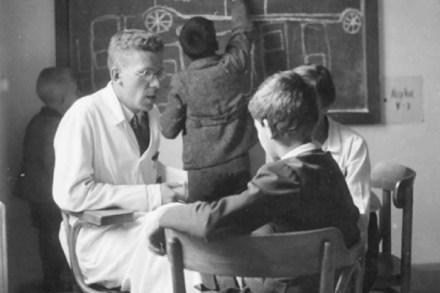
Steve Silberman’s stunning new book looks across history, back to Henry Cavendish, the 18th-century natural scientist who discovered hydrogen, Hugo Gernsbach, the early-20th-century inventor and pioneer of amateur ‘wireless’ radio, and countless other technically brilliant but socially awkward, eccentric non-conformists, members of the ‘neurotribe’ we now call the autism spectrum. He argues passionately for the ‘neurodiversity’ model rather than the medical disease model, for society to stop trying to ‘cure’ or ‘normalise’ those with autism, but to recognise them as neurologically differently wired, to accept difference, and support their disabilities when these surface in certain environments.

Battle ready

From our UK edition

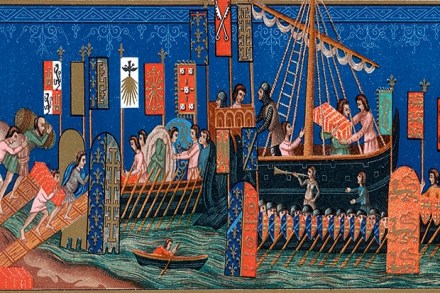
For most of history, religion and war have been the most powerful social instincts of mankind and its chief collective activities. In the crusades, they combined to create a movement of great emotional power, which convulsed Europe in the 12th century and retained its appeal to the military classes until the end of the Middle Ages. One might expect people who embarked on a great war with such intense spiritual exultation to be unconcerned with practical planning. And there were some who believed that these mundane matters should be left to the Holy Spirit to sort out. But they tended to come to a sticky end. For most crusaders, holy war was a serious business, calling for professional organisation, ample finance and meticulous logistical preparation.

Quiet desperation

From our UK edition

Andrew Miller’s seventh novel, and the first since Pure, which won the Costa Book of the Year award, is an intensely curious affair; thick with material detail from the outset, it announces itself as a novel of closely observed and relished realism. But before too long, one begins to suspect that its specificity — much of it maritime, with excursions into other arcana such as rare guitars, or the pharmaceutical industry — is a blind, any literal reading liable to produce only bemusement. A clue comes very early on, when graduate student Maud Stamp falls 20 feet from a dry-docked boat; to her shocked companion, Tim, she briefly appears to have become a corpse.

On the way to the Forum

From our UK edition

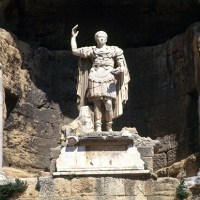
It’s strange that tourists rarely visit the most famous site in Roman history. The spot in Pompey’s assembly hall where Julius Caesar was murdered on the Ides of March, 44 bc, is right in the middle of Rome, in Largo di Torre Argentina. When I was there, the tourists were only interested in the feral cats that stroll across the murder scene. Jochen Bleicken shrewdly begins this long, occasionally heavygoing but unequalled biography with that murder. It’s only because Caesar appointed his great-nephew Gaius Octavius (known later as Augustus) as his adopted son and heir that the latter rose to such heights. But for that crucial adoption, Augustus wasn’t that posh.

Universal appeal

From our UK edition

As a novelist, Iain Pears doesn’t repeat himself, and he gives with a generous hand. In Arcadia, he provides a dystopian vision of the 23rd century, scholarly espionage set in Cold War Oxford, and an Arts-and-Crafts pastoral called Anterwold, which involves swords and scholars and may or may not be the product of the imagination of one of the characters elsewhere. All this (and much else) is somehow connected to an 18th-century text known as The Devil’s Handwriting containing a mathematical formulation that wasn’t invented until five centuries later. Confused? It gets far more complicated. Arcadia is not so much a novel as a cornucopia of narratives. These unfold through three interlocking universes and involve the viewpoints of ten characters.

The history man

From our UK edition

History for Gore Vidal was a vehicle to be ridden in triumph, perhaps as in an out-take from Ben-Hur, which he worked on during one of his stints as a Hollywood hack, camping up the script to annoy Charlton Heston. Not only did he ride the Vehicle of History, but as its amanuensis and avatar, born and raised to the purple, in his mind he somehow was History, and of his many achievements the greatest was to persuade others to share that belief. His career presents the realised fantasy of the charismatic narcissist, which is to be taken at one’s own estimation. The American writer and academic Jay Parini, who was a friend of his from the 1980s, remembers him saying, ‘I might have been president’, but the presidency would not have been enough.

Action this day

From our UK edition

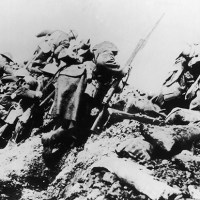
‘July 1st 1916 was the most interesting day of my life,’ Philip Howe recalled, with characteristic English dryness, half a century after taking part in the most catastrophic 24 hours in the history of the British army. Howe had been a lieutenant in the 10th West Yorkshires, which had the grim distinction of losing more men during the first day on the Somme than any other battalion: of the 1,050 that went into battle, 710 became casualties, 60 per cent of whom were killed. At the end of the day Howe was the only officer left standing, and many other battalions had suffered almost as badly.

First-rate firsts

From our UK edition

It has become something of a truism among writers’ groups and in articles offering advice on how best to secure the services of an agent or publisher that the opening of a novel is everything — the ne plus ultra of the writer’s armoury. If one can knock the reader’s socks off with the first few lines one is almost there. So I’ve decided to conduct an experiment. Before reading any of these four first novels to the end, I shall compare and mark their opening couple of pages. First in line (and chosen entirely at random) is Michela Wrong’s Borderlines. Miss Wrong (you’ll find no silly jokes from me here) has been writing non-fiction books about Africa for years. This is her first try at a novel.

The day of reckoning is nigh

From our UK edition

I think this should begin with a truth-in-journalism disclosure: I know R.W. Johnson well enough to call him Bill. Since this opens me to charges of bias, let me start by acknowledging that Professor Johnson (a former leader of the ‘Magdalen Mafia’ at Oxford and author of a witty book on the subject) is unpopular in certain circles down here in South Africa. In spite of his record — 12 books, platforms at several esteemed British publications and an engaging prose style — Johnson has been shunned by local book fairs and banished from our op-ed pages.

It happened one summer | 27 August 2015

From our UK edition

Five songs, only three of which were amplified. Thirty-five minutes, including interruptions. That’s how long Bob Dylan played for at Newport Folk Festival on Sunday 25 July 1965. Even on its own merits, it was a messy, halting set with an inadequate sound system. ‘Why did that matter?’ Elijah Wald rightly asks. ‘Why does what one musician played on one evening continue to resonate half a century later?’ Cameras documented only the stage, and memories are unreliable, so nobody can say how many in the 17,000-strong crowd booed Dylan’s noisy rock’n’roll rebirth, but one eyewitness’s claim that it ‘electrified one half of his audience and electrocuted the other’ is broadly true.

Life with old father William

From our UK edition

This intensely written memoir by Adam Mars-Jones about his Welsh father, Sir William, opens with the death of Sheila, Adam’s mother, of lung cancer in 1998: ‘She died with self-effacing briskness in little more than a month.’ Adam too is self-effacing, moving in while his mother was dying, then staying on as his father’s main carer. The second of three brothers, he explains away this generous act: ‘As an under-employed freelance, I had time to spare.’ ‘Dad’, diagnosed informally as ‘demented’, was by then a retired High Court judge granted a low rent for a large flat in Gray’s Inn. Adam lived in the flat’s converted attic. Adam is thorough and, it appears, fair.

Gothic mysteries

From our UK edition

This is a muddle of novel (originally published last year by Tartarus Press in a limited edition), though there are plenty of indications that the author will go on to do great things. I doubt if he had quite decided what he was writing — a Stephen King horror story, a book about the loss of intense Catholic faith, a serious novel about families, a Gothic mystery.… It has elements of all these, but has not settled down to be any. It is written as though at a distance from the characters, by someone observing them, perhaps ironically, perhaps fondly, never closely. Only the narrator, and his younger brother, Andrew — called Hanny — have inner lives, and their relationship is movingly described.

A rollicking satire on the way we live now

From our UK edition

Jonathan Franzen’s latest novel, Purity, comes with great expectations. Its author’s awareness of this fact is signalled by a series of lampoons of writers expected to produce ‘big books’, writers named Jonathan and an assortment of other self-referential gags, but also the fact that its eponymous heroine, Purity Tyler, is nicknamed Pip. This Pip’s expectations are played off against those of Franzen’s readers: she won’t get what she expects, of course, any more than Dickens’s original Pip did. But to a great extent, our expectations will be met: this is a ‘big book’, a rollicking, sharply observed contemporary satire of family life and cultural politics.

Red for danger

From our UK edition

‘Gentlemen prefer blondes,’ Anita Loos pronounced, ‘but gentlemen marry brunettes.’ Quite what they do with redheads she never revealed (and I’ve often wondered), but with Red: A Natural History of the Redhead, Jacky Colliss Harvey sets out to discover everything — what it takes to make a redhead, where in the world they come from and why they exist at all; whether redheads are actually different or just treated differently; how they got their reputation, what that reputation might be and whether they deserve it. The history begins some 40,000 years ago, we are told, when the gene for red hair was carried from ‘the grasslands of Central Asia’ to Europe.

Spirits of the Blitz

From our UK edition

If the early Martin Amis is instantly recognisable by way of its idiosyncratic slang (‘rug-rethink’, ‘going tonto’ etc) then the later Pat Barker can be similarly identified by its finely wrought accounts of physical trauma. ‘Afterwards, it was the horses she remembered,’ runs a specimen sentence from the new novel, ‘galloping towards them out of the orange-streaked darkness, their manes and tails on fire.’ Noonday’s Blitz-era setting — the horses are in flight from a bombed-out brewery — gives Barker ample opportunity to do what she does best: intent descriptions of splayed limbs that are sometimes engaged in the act of love, occasionally the subjects of paintings or, more often, casualties of war.

Liberating Marianne

From our UK edition

In Marianne in Chains, his last book on Occupied France, Robert Gildea offered an original view of life in that country between 1940 and 1944, arguing that outside the cities it had not always been as bad, nor had the Vichy regime always been as reactionary, as was subsequently claimed. Confining his research to three departments in the Loire valley, Gildea also suggested that for most people most of the time the Resistance was a dangerous irrelevance, to be avoided wherever possible. These conclusions were presented at a conference in Tours where they caused a minor uproar among French specialists. Gildea, professor of modern history at Oxford University, now turns to a much bigger subject.