Book review

Would even Blair have put Felix Dennis in the Lords?

From our UK edition

This is not only an authorised but a commissioned biography. Felix Dennis, the tiny, depraved, manipulative media mogul, was hardly going to let a free hand choose the adjectives that defined him. The author recalls his initial fright at being contacted: “Of course I’d be delighted to speak to Felix,” I said, my voice an octave higher than normal.

David Mitchell is in a genre of his own

From our UK edition

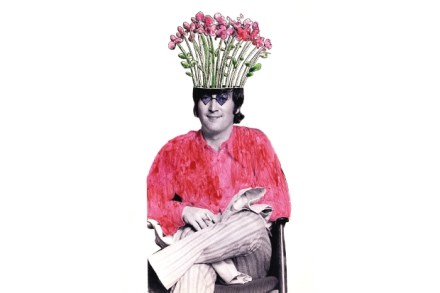
David Mitchell’s new book, Slade House, is not quite a novel and not really a collection of short stories. It is, rather, a puzzle and an amusement. A member of the same family as last year’s The Bone Clocks, it also has a slight connection to his 2010 novel, The Thousand Autumns of Jacob de Zoet. Mitchell has said in interviews that he thinks of his books being volumes in one mega work, or ‘übernovel’, and like his earlier fictions, Slade House meditates on varieties of predation, a theme explored to most moving effect in Cloud Atlas and Ghostwritten. The territory here is more straightforwardly supernatural, although the otherworldly high jinks are balanced by Mitchell’s generous touch with characters from Britain’s economic and social margins.

Charlotte Brontë: Cinderella or ugly sister?

From our UK edition

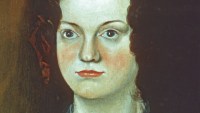
Preparations for next year’s bicentennial celebrations of the birth of Charlotte Brontë haven’t exactly got off to a flying start. At Haworth Parsonage the Brontë Society is in disarray after Bonnie Greer, its resigning president, used one of her Jimmy Choo shoes as a gavel to try to bring the membership to order, and subsequently castigated some members as ‘malevolent lamebrains’.

The swastika was always in plain sight

From our UK edition

In 1940, when Stephen Spender heard a German bomber diving down towards London, he calmed himself by imagining that there were no houses, and that the bomber was ‘gyring and diving over an empty plain covered in darkness’. The image consoled Spender with his ‘smallness as a target, compared with the immensity of London’. But it also exposed the ‘submission of human beings to the mechanical forces that they had called into being’. It seemed to Spender that entire nations were gripped by the ‘magnetic force of power’. People ‘no longer had wills of their own’. As Tolstoy complained in the second epilogue to War and Peace, this sort of thinking is tautological.

Mary Beard minds her S, P, Q and R

From our UK edition

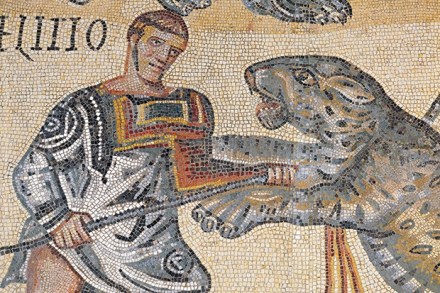
Having rattled and routed Mark Antony and his bewitching Egyptian at the battle of Actium in 31 BC, Octavian was on his way home to Rome when he was confronted by some punter. The man produced a talking raven, which obligingly squawked, ‘Greetings, Caesar, our victorious commander!’ Octavian was delighted at this evidence of loyalty, and rewarded the bird-trainer accordingly. However, it later emerged that the man had had another raven in reserve, which he had taught to croak, ‘Greetings, Antony, our victorious commander!’ He hadn’t been taking any chances. Nor, in a sense, does Mary Beard in her ambidextrous history of Ancient Rome, whose title proclaims her bifurcated programme.

The polyphonous Babel of global music

From our UK edition

‘Following custom, when the Siamese conquered the Khmer they carried off much of the population, including most of their musicians, to be resettled in what is now Thailand.’ The history of music isn’t a story of chords and scores, instruments or their players. Music’s story is one of wars, invasions and revolutions, religion, monarchy and nationhood. Whether you look at the histories of Africa or Iran, Europe or Uzbekistan, the narratives are the same: colourful, bloody, complicated. Music is not an aesthetic response, an artistic translation of life; music and musicians are society itself. It’s a principle that acts as the guiding thread through the labyrinth of traditions and terminologies that make up The Other Classical Musics.

The greatest surprise about Nigeria on its centenary is that it exists at all

From our UK edition

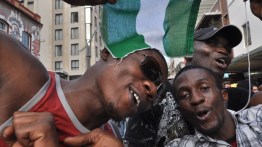
A giant was born in 1914, an African giant. The same year European powers set about each other in the trenches a framework was laid out for a nation that over the next century would grow into Africa’s mightiest economy, one with a population so prodigious it will soon overtake every other barring China and India. The founding on 1 January that year of the colony of Nigeria was an act of extreme imperial chutzpah. Desert emirates in the north and coastal kingdoms in the south had for years been under nominal control as British protectorates, but for London to unite such diversity was to believe a mosaic has no cracks. The story of Nigeria, first under Britain, later as an African nation independent since 1960, has largely been the story of those cracks.

Curtain call for Ruth Rendell

From our UK edition

Ruth Rendell’s final novel, Dark Corners, is about how psychological necessity can drive perfectly ordinary people either to terrible deeds or to unwitting acts of great courage — and extraordinary things can happen quite by chance to anyone. Carl, the central character, is a young man pleased with his life. He has written a novel that has been published, inherited his father’s small mews house in Maida Vale with its furniture and, significantly, a large supply of alternative remedies in the bathroom cabinet, and has a beautiful, kindly girlfriend called Nicola. He does not have a job, but he does have a tenant, Dermot, on the top floor who pays him £1,200 a month — enough for Carl to contemplate life as a writer.

Margaret Thatcher’s most surprising virtue: imagination

From our UK edition

In almost every one of the many biographies of Margaret Thatcher that now exist, the story is told of her being congratulated for her good luck in winning a prize when she was nine — either for reciting poetry or for playing the piano. She indignantly replied, ‘I wasn’t lucky. I deserved it.’ Now, in Charles Moore’s biography, we reach the splendid zenith of Mrs Thatcher’s career in the form of her second administration of 1983–7. We have to ask the question again: was she lucky, or did she deserve it? Clearly, one of the chief reasons that she was re-elected in 1983 after a period of staggering unpopularity was the Falklands triumph of 1982, with which Moore concluded his first volume.

Beyond the call of duty: the kindness of strangers is a pleasing mystery

From our UK edition

When I applied to medical school, an experienced doctor offered me some advice: ‘Don’t give them reason to think you’re a “wounded healer”. They’re suspicious of that.’ The term is Carl Jung’s, by which he meant that personal difficulty is a powerful spur for joining a caring profession, but the results of such motivations are not always constructive. If you appear too altruistic, questions may surface about whether you might, in some way, be damaged. So what about those people who don’t just do their job, but dedicate their lives to helping others? The New Yorker staff writer Larissa MacFarquhar examines our ambivalence about goodness in her brilliantly thoughtful new book.

Green is the colour of happiness

From our UK edition

According to this wonderfully thought-provoking book, human attachment to plants was much more evident in the 19th century than it is now. In those days people showed genuine wonder at their ‘strange existences and unquantifiable powers’, especially the British, who fashioned the most ambitious glass building of the age —the Crystal Palace in Hyde Park — drawing on the weird architecture of the amazonica lily as a blueprint. Richard Mabey suggests that these are more prosaic times, where trees are invariably seen as primary producers, economic heavy-lifters or practical oxygen-supply operatives, or merely as a vegetative background to the planet’s real agents: ourselves and other animals.

Lover and fighter

From our UK edition

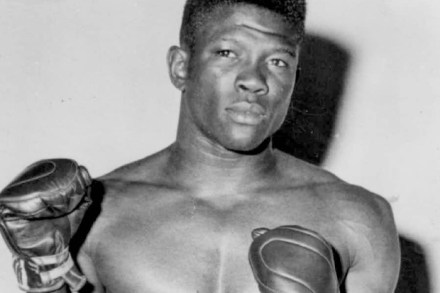
I don’t like boxing. If I ever get into a boxing ring, I’ll be in the corner with the governor of California, Edmund ‘Pat’ Brown, who in 1963 called for ‘the abolition of this barbaric spectacle’ because another man had just been beaten to death in the ring. That man was Davey Moore, who had defended boxing before it killed him on the grounds that no one stopped the Indianapolis 500 when racing drivers get killed. But another dead man is the focus of this book: our hero is the captivating, frustrating, brutal Emile Griffith, who we meet at the age of 22, ‘happy and beautiful’, and who one year later battered to death the Cuban fighter Benny Paret, the first man whose death was shown live on television (the second was Lee Harvey Oswald).

To wit, deWitt

From our UK edition

Patrick deWitt is a Canadian writer whose second novel, a picaresque and darkly comic western called The Sisters Brothers, was much praised and shortlisted for the Man Booker prize in 2011. For the follow-up, deWitt has produced a picaresque and darkly comic middle-European fairy tale called Undermajordomo Minor. Instead of brothers named Sisters, it features a lone anti-hero with a girl’s name: Lucy (Lucien) Minor. As is traditional in storybook narratives, Lucy leaves his village of birth to seek his fortune — well, not to seek his fortune so much as just because he hates his village and everyone in it. He accepts a position assisting the caretaker (i.e. majordomo) of the castle of the Baron von Aux.

What is written down

From our UK edition

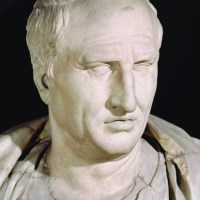
Marcus Tullius Cicero was the ancient master of the ‘save’ key. He composed more letters, speeches and philosophy books than most writers of any epoch; but more important than any particular work was that so much survived to define his time. He had a secretary, Tiro, who can reasonably be given the credit for researching, correcting, copying and casting out his master’s words. In Robert Harris’s three novels of Cicero’s life, Marcus Tullius Tiro, the freed slave who took his name as well as dictation from his boss, gets his full reward.

The politics of prediction

From our UK edition

Forecasts have been fundamental to mankind’s journey from a small tribe on the African savannah to a species that can sling objects across the solar system with extreme precision. In physics we have developed models that are extremely accurate across vastly different scales from the sub-atomic to the visible universe. In politics we have bumbled along making the same sort of errors repeatedly. Until the 20th century, medicine was more like politics than physics. Its forecasts were often bogus and its record grim. In the 1920s, statisticians invaded medicine and devised randomised controlled trials. Doctors, hating the challenge to their prestige, resisted but lost. Evidence-based medicine became routine and saved millions of lives. A similar battle has begun in politics.

Two serious ladies

From our UK edition

‘You understand, Lenú, what happens to people: we have too much stuff inside and it swells us, breaks us.’ The line comes from the third of Elena Ferrante’s Neapolitan novels, but it offers a fair summary of a sequence that concludes in this fourth volume. Set in Italy between the 1950s and the present, and documenting the turbulent friendship between two women from the same working-class quarter of Naples, these books by a still-unidentified pseudonymous writer rattle like pressure-cookers with anger, outrage, frustration, jealousy and spleen.

Poet as predator

From our UK edition

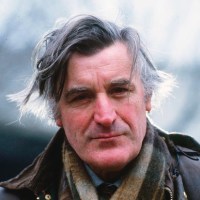
In Testaments Betrayed, Milan Kundera says: ‘Biographers know nothing about the intimate sex lives of their own wives, but they think they know all about Stendhal’s or Faulkner’s.’ In The Silent Woman: Sylvia Plath and Ted Hughes, Janet Malcolm says: ‘The transgressive nature of biography is rarely acknowledged, but it is the only explanation for biography’s status as a popular genre.’ She also shrewdly remarks on the ‘mantle of judiciousness’ that biographers are forced to deploy. Jonathan Bate informs us that over a period of five years he has read and taken notes on nearly 100,000 pages of Ted Hughes manuscripts.