Harriet Waugh

Curtain call for Ruth Rendell

From our UK edition

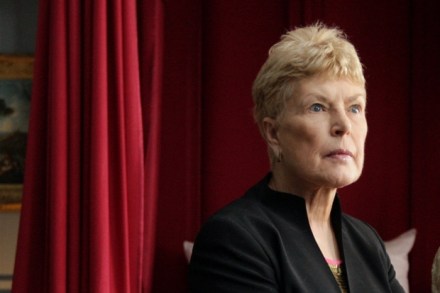
Ruth Rendell’s final novel, Dark Corners, is about how psychological necessity can drive perfectly ordinary people either to terrible deeds or to unwitting acts of great courage — and extraordinary things can happen quite by chance to anyone. Carl, the central character, is a young man pleased with his life. He has written a novel that has been published, inherited his father’s small mews house in Maida Vale with its furniture and, significantly, a large supply of alternative remedies in the bathroom cabinet, and has a beautiful, kindly girlfriend called Nicola. He does not have a job, but he does have a tenant, Dermot, on the top floor who pays him £1,200 a month — enough for Carl to contemplate life as a writer.
Mysteries of Paris

From our UK edition

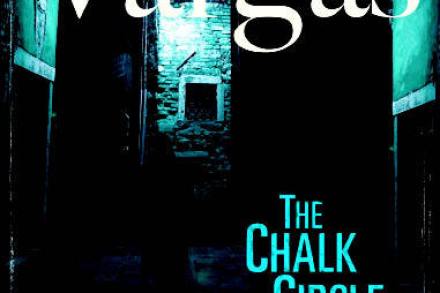
Fred Vargas — nom-de-plume of the French archaeologist and historian Frédérique Audoin-Rouzeau — took to writing crime novels in 1991. Among the many unusual aspects of her books is the English take on the French titles. L’Homme à l’envers appears as Seeking Whom He May Devour, Pars vite et reviens tard as Have Mercy on Us All while Sous les vents de Neptune becomes Wash This Blood Clean From My Hand. These English versions possess a sort of genius which I find irresistible. The novels have also been translated out of the order in which they were written.

A beastly upbringing

From our UK edition

Minotaur in Love is Fraser Harrison’s second novel. His first, High on the Hog, published in 1991, set around a family Christmas in the country, was funny and moving. Minotaur in Love is altogether odder. Written in epistolary form, the Minotaur of the title is Bruno, a publisher, who tries to explain his strangeness to a female former colleague. He does this in a journal, starting with his birth shortly after the accidental death of his five-year-old sister. He has the distinct feeling that his father dislikes him, and he attributes this to his father’s unassuageable grief. Their estrangement becomes obvious when the ten-year-old Bruno, on his brand- new birthday bicycle, follows his father on the latter’s weekly pilgrimage to his daughter’s grave.

Heroines and horrors

From our UK edition

It is possible that my interest in this book was heightened by the fact that, in as much as I am anything, I am an aunt. I have 14 nephews and nieces, a step-nephew and -niece and 20 great-nephews and -nieces — as well as two stepchildren who I feel very aunt-like towards. A few years ago, one of my nieces was paid by the Sunday Telegraph to write about travelling somewhere with an aunt (shades of Graham Greene), and off we went for a day and a night to the Ritz in Madrid with a photographer and had a whale of a time. But I am not sure whether any of my nephews and nieces would write about me with quite the affectionate appreciation that Rupert Christiansen clearly feels for his Aunt Janet, whose death inspired this volume.

Recent crime books

From our UK edition

The Stranger House by Reginald Hill (HarperCollins, £12.99) is not a Dalziel and Pascoe detective novel but a highly enjoyable gothic confection. Two strangers are brought reluctantly together in the village of Illthwaite in Cumbria. Sam Flood, a small, red-headed Australian woman of 24, is about to take up a post at Cambridge as a mathematician but stops off at this gloomy village to explore her ancestry. Specifically she wants to find out more about her grandmother, also called Sam Flood, who was sent as an orphaned child to make a new life in Australia in 1960 but who did not long survive the experience. The only thing she knows about her is that she had once lived in Illthwaite.

Recent crime novels

From our UK edition

Rumpole is back with us. In Rumpole and the Penge Bungalow Murders by John Mortimer (Viking, £16.99) Rumpole is writing his memoirs and looks back on his first murder case when, as a pupil in a lazy barristers’ chambers, he takes over the defence of a young man accused of murdering his father and his father’s closest wartime friend. The chambers are lead by C. H. Wystan, QC, the father of Hilda (She Who Must Be Obeyed), and the reader learns for the first time how Rumpole succumbs to her demands and marries her. Very funny it is too. Henning Mankell appears to be getting bored with his policeman hero, the middle-aged, pessimistic Kurt Wallander.

Seven of the best

From our UK edition

Call the Dying is the seventh novel in Andrew Taylor’s Lydmouth series. He started it in 1994 and by setting it in the 1950s he recreates the English detective novel in what is perhaps its heyday but with subtle additions. In the first couple of novels the reader is aware of 1950s dress, behaviour and drab, postwar atmosphere far more than in contemporary novels of that time. There is the added realism of frustrated lives and hidden sexuality played out against the background of the moral mores of the era. Now, though, some of the picturesque aspects of the novels have diminished.

The cad with the toothbrush technique

From our UK edition

Of Nicci French’s six novels three deal with the subjugation of women by an aberrant man. Now the seventh tips the scale by making four out of seven. At least in the last novel, The Land of the Living, and in Secret Smile the heroines do not knuckle under; but one cannot help wondering whose fantasies — worst fear for women or a de Sade-style inclination in men — the husband and wife team that is Nicci French is addressing. I would guess that it is mostly women who read the novels, as they have yet to have a male protagonist. Miranda, the heroine of Secret Smile, is a nice girl in the building trade. Pretty, a bit dusty and paint-spattered, she meets her nemesis on a skating-rink.

Closely related deaths

From our UK edition

Good Morning, Midnight is an excellent novel by that mistress of introspective sensitivity, Jean Rhys. Reginald Hill hijacks the title for his far less morbid new detective novel starring that trinity of beings, Detective Superintendent Andy Dalziel, Detective Inspector Peter Pascoe and Sergeant Wield. Good Morning, Midnight is, however, definitely Pascoe’s case. Dalziel plays an entirely subsidiary role displaying bellicose discomfiture as Peter attempts to wrongfoot him and prove that a clear case of suicide is murder. We know that it is suicide because we witness antique dealer Pal Maciver killing himself. The novel is set a few weeks after the denouement of Reginald Hill’s previous novel, Death’s Jest-Book.

Howard’s end reconsidered

From our UK edition

Minette Walters is an unusually uneven writer. Although we know she is just one person it is as though there are two writers taking it in turns to produce the novels. Her last one, Fox Evil, was a histrionic, scrappy affair, while Disordered Minds is far more intriguing, and has characters that seriously engage your interest since what they are, in the wide spectrum of good and evil, is as much at the heart of the mystery as the gradually accumulating evidence. Two people come together to re-examine the facts that led to the conviction for murder in 1970 of a retarded young man called Howard Stamp. His reclusive aunt, Grace, like him afflicted with a cleft palate, was stabbed to death in her house. She had cuts on her legs and thighs before being dispatched in a frenzied attack.

The hunter hunted

From our UK edition

Abbie Devereaux, the heroine of Land of the Living, finds herself hooded and bound and a prisoner of a man who is just a whispering voice. She has a violent headache and cannot remember anything about how she has come to be lying on concrete in this damp, smelly place, or even anything leading up to her present situation. The man, who feeds her four spoonfuls of bland gluck daily and pulls down her trousers and puts her shuffling, hand-cuffed body onto a bucket once a day for her to relieve herself, smells of onions and dirt. He makes it plain that once she is sufficiently broken he will kill her. He does not rape or fondle her. We have all been there in fiction too many times before. Luckily for us, Abbie escapes and the rest of the novel begins.

Recent crime novels | 1 February 2003

From our UK edition

For the last few years Ruth Rendell has used her Chief Inspector Wexford detective novels to explore social issues that have been much in the papers. This has unfortunately made for unoriginal story lines with obvious villains in an all too familiar terrain. It is a pleasure therefore to be able to report that The Babes in the Wood (Hutchinson, £16.99) returns to more traditional territory. The novel is set during the perpetual rain that we suffered last year. Kingsmarkham, the Sussex town where Wexford bestrides the police force, is in danger of flooding. The river having broken through its banks is threatening the environs of the town, which includes Wexford's home. From his sitting-room Wexford can see the creeping tide inching up the garden.

The end of something good

From our UK edition

Two running stories are brought to a close in Death's Jest-Book. The first was introduced in the novel in which we first met Ellie, Peter Pascoe's future wife. An Advancement of Learning, published in 1971, has that great team - politically correct Sergeant Peter Pascoe and fat, slobbish, thuggish Superintendent Andy Dalziel - investigating a series of murders in the academic institution where Ellie teaches. A pattern emerges when they come across the charismatic, psychopathic, clever young student, Franny Roote. It is not entirely clear at the end how guilty Roote is of murder. He does, however, go to a secure mental hospital before trans- ferring to prison. Those who go to prison usually come out, and Roote knows how to use the system.