Book review

Margaret Thatcher’s most surprising virtue: imagination

From our UK edition

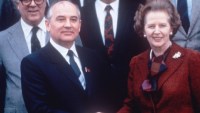
In almost every one of the many biographies of Margaret Thatcher that now exist, the story is told of her being congratulated for her good luck in winning a prize when she was nine — either for reciting poetry or for playing the piano. She indignantly replied, ‘I wasn’t lucky. I deserved it.’ Now, in Charles Moore’s biography, we reach the splendid zenith of Mrs Thatcher’s career in the form of her second administration of 1983–7. We have to ask the question again: was she lucky, or did she deserve it? Clearly, one of the chief reasons that she was re-elected in 1983 after a period of staggering unpopularity was the Falklands triumph of 1982, with which Moore concluded his first volume.

Beyond the call of duty: the kindness of strangers is a pleasing mystery

From our UK edition

When I applied to medical school, an experienced doctor offered me some advice: ‘Don’t give them reason to think you’re a “wounded healer”. They’re suspicious of that.’ The term is Carl Jung’s, by which he meant that personal difficulty is a powerful spur for joining a caring profession, but the results of such motivations are not always constructive. If you appear too altruistic, questions may surface about whether you might, in some way, be damaged. So what about those people who don’t just do their job, but dedicate their lives to helping others? The New Yorker staff writer Larissa MacFarquhar examines our ambivalence about goodness in her brilliantly thoughtful new book.

Green is the colour of happiness

From our UK edition

According to this wonderfully thought-provoking book, human attachment to plants was much more evident in the 19th century than it is now. In those days people showed genuine wonder at their ‘strange existences and unquantifiable powers’, especially the British, who fashioned the most ambitious glass building of the age —the Crystal Palace in Hyde Park — drawing on the weird architecture of the amazonica lily as a blueprint. Richard Mabey suggests that these are more prosaic times, where trees are invariably seen as primary producers, economic heavy-lifters or practical oxygen-supply operatives, or merely as a vegetative background to the planet’s real agents: ourselves and other animals.

Lover and fighter

From our UK edition

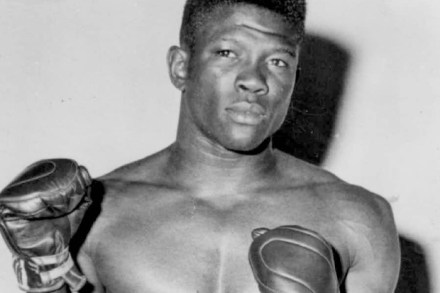
I don’t like boxing. If I ever get into a boxing ring, I’ll be in the corner with the governor of California, Edmund ‘Pat’ Brown, who in 1963 called for ‘the abolition of this barbaric spectacle’ because another man had just been beaten to death in the ring. That man was Davey Moore, who had defended boxing before it killed him on the grounds that no one stopped the Indianapolis 500 when racing drivers get killed. But another dead man is the focus of this book: our hero is the captivating, frustrating, brutal Emile Griffith, who we meet at the age of 22, ‘happy and beautiful’, and who one year later battered to death the Cuban fighter Benny Paret, the first man whose death was shown live on television (the second was Lee Harvey Oswald).

To wit, deWitt

From our UK edition

Patrick deWitt is a Canadian writer whose second novel, a picaresque and darkly comic western called The Sisters Brothers, was much praised and shortlisted for the Man Booker prize in 2011. For the follow-up, deWitt has produced a picaresque and darkly comic middle-European fairy tale called Undermajordomo Minor. Instead of brothers named Sisters, it features a lone anti-hero with a girl’s name: Lucy (Lucien) Minor. As is traditional in storybook narratives, Lucy leaves his village of birth to seek his fortune — well, not to seek his fortune so much as just because he hates his village and everyone in it. He accepts a position assisting the caretaker (i.e. majordomo) of the castle of the Baron von Aux.

What is written down

From our UK edition

Marcus Tullius Cicero was the ancient master of the ‘save’ key. He composed more letters, speeches and philosophy books than most writers of any epoch; but more important than any particular work was that so much survived to define his time. He had a secretary, Tiro, who can reasonably be given the credit for researching, correcting, copying and casting out his master’s words. In Robert Harris’s three novels of Cicero’s life, Marcus Tullius Tiro, the freed slave who took his name as well as dictation from his boss, gets his full reward.

The politics of prediction

From our UK edition

Forecasts have been fundamental to mankind’s journey from a small tribe on the African savannah to a species that can sling objects across the solar system with extreme precision. In physics we have developed models that are extremely accurate across vastly different scales from the sub-atomic to the visible universe. In politics we have bumbled along making the same sort of errors repeatedly. Until the 20th century, medicine was more like politics than physics. Its forecasts were often bogus and its record grim. In the 1920s, statisticians invaded medicine and devised randomised controlled trials. Doctors, hating the challenge to their prestige, resisted but lost. Evidence-based medicine became routine and saved millions of lives. A similar battle has begun in politics.

Two serious ladies

From our UK edition

‘You understand, Lenú, what happens to people: we have too much stuff inside and it swells us, breaks us.’ The line comes from the third of Elena Ferrante’s Neapolitan novels, but it offers a fair summary of a sequence that concludes in this fourth volume. Set in Italy between the 1950s and the present, and documenting the turbulent friendship between two women from the same working-class quarter of Naples, these books by a still-unidentified pseudonymous writer rattle like pressure-cookers with anger, outrage, frustration, jealousy and spleen.

Poet as predator

From our UK edition

In Testaments Betrayed, Milan Kundera says: ‘Biographers know nothing about the intimate sex lives of their own wives, but they think they know all about Stendhal’s or Faulkner’s.’ In The Silent Woman: Sylvia Plath and Ted Hughes, Janet Malcolm says: ‘The transgressive nature of biography is rarely acknowledged, but it is the only explanation for biography’s status as a popular genre.’ She also shrewdly remarks on the ‘mantle of judiciousness’ that biographers are forced to deploy. Jonathan Bate informs us that over a period of five years he has read and taken notes on nearly 100,000 pages of Ted Hughes manuscripts.

Tree devotion

From our UK edition

I have never written much about the one-acre shaw of native trees I planted in 1994, even though it is the delight of my heart, especially when the wild cherries flame in autumn. That’s because I am well aware that en masse tree-planting is a niche activity, open only to the fortunate few. But no one can have envied Thomas Pakenham when, in 1961, he unexpectedly inherited Tullynally Castle in County Westmeath in central Ireland, with its 1,500-acre ‘demesne’ — a third of it park and garden — since he was heavily burdened with death duties. It took nearly 30 years to pay off the debts, before he could begin to concentrate on the delight of his heart, which is planting, caring for and observing the ways of trees as well as travelling the world to look at them.

How cool is Britannia?

From our UK edition

Is it true that, having lost an empire, we reinvented ourselves as an island of entertainers? Do we channel the same rigour and vigour into film and music and literature as once went into conquering continents? Is there a residual colonialist bias in our arts, seen, for instance, in our cinematic penchant for creating patriotic period dramas such as Henry V or The King’s Speech? How much of our cultural success depends on the US market and the accident of a shared language? To what extent does our cultural expression reflect not our idea of ourselves but an American distortion?

The voice of Crow

From our UK edition

A dead parent, the interrogation of a literary inheritance, and over everything, a bird: Max Porter is apparently unafraid to step into massive shoes. Not just the colossal ones belonging to Ted Hughes, whose ‘Crow’ poems are the jumping-off point for this free-verse novella about a bereaved Hughes scholar visited by Hughes’s corvine manifestation, but also those of Helen Macdonald. H is for Hawk, her memoir of loss, writing, recovery and nature, drawing ingeniously on the life and work of T.H. White, covered this territory with ferocious honesty and eloquence. The comparison is impossible to avoid, and not kind to Porter. That’s somewhat unfair, since Grief is the Thing with Feathers is fiction, and cannot compete with the rawness of real grief written down.

Complicated, but unfussy

From our UK edition

Amory Clay, photographer and photo-journalist, was born in 1908, only two years after Logan Mountstuart, writer, poseur and ‘scribivelard’. Amory died in 1983; Logan in 1991. Though shaped by the same era, their accounts of their lives are tonally worlds apart. Logan is flamboyant, self-regarding, lyrical, self-pitying; Amory plainer, braver, yet less self-revealing. Both, of course, are fictional, and both are protagonists woven by William Boyd into novels where they rub shoulders with historical characters. Amory, however, born into an era in which Vivians, Evelyns and Beverleys could be of either sex, is female. Boyd’s representation of a certain sort of female voice is pitch-perfect, chiefly because he is not trying too hard to signal Amory’s femininity.

Cry havoc

From our UK edition

If you love dogs and or live with one — I declare an interest on both counts — there is enough here about what the authors too often call ‘doggies’ to keep you interested. But what I liked about this book, despite its trickle of cute language, is that the title exactly tells the story. The dogs indeed went to war, and they were trained to do unpleasant things, including committing suicide by charging into German strongholds carrying bombs, seeking out and identifying landmines, finding bodies under rubble, and guarding bases. But according to Clare and Christy Campbell, war dogs’ effectiveness, despite much heroic, sometimes false, publicity, is doubtful.

Lines of beauty | 24 September 2015

From our UK edition

David Jones (1895–1974) was a remarkable figure: artist and poet, he was a great original in both disciplines. His was an art of ‘gathering things in’ that engaged imaginatively with history and myth, with his Welsh heritage and the Christian religion. But art also comes out of conflict, and the tension between the two sides of Jones’s creative nature was the motive force that powered so much, both visual and written. Thus it can be misleading to separate his writing from his painting, for they form and express a single vision. However, Jones is presently most celebrated for his writing, particularly his first world war epic poem, In Parenthesis.

Sibling rivalries

From our UK edition

In The Past (set chiefly in the present) four middle-aged siblings spend an eventful summer holiday in the Devon country house vacated by their dead grandparents. When Alice, a failed actress, turns up with an unannounced male guest who’s still at university, her footloose ways vex the others — particularly the youngest, Fran, a harassed teacher with two small children, Ivy and Arthur. Then there’s demure Harriet, the eldest sibling, who needed to grow up fast when their mother Jill died young. Her secret diary shows how far her selflessness edges into repression, not least after she accidentally spies on her brother Roland in bed with his latest wife, a taut Argentinian named Pilar.

Pillar of the Victorian age

From our UK edition

Briefing his illustrator for the jacket of A Handful of Dust (1934), Evelyn Waugh asked for a country house in ‘the worst possible 1860’. The result was a neoGothic extravaganza with a pinnacled entrance tower and spiky dormer windows — just the sort of thing that might have come from the drawing board of George Gilbert Scott, the most eminent architect of that time. Scott’s Kelham Hall in Nottinghamshire, its bright red brick distantly visible from the western side of the carriage as the train heads north from Newark, gives the picture perfectly. And if you strain to spot Kelham amidst its trees, no one could miss Scott’s Midland Hotel at St Pancras —same style, but twice as big — or that staggering object, the Albert Memorial.

Theatre of politics

From our UK edition

We don’t usually pay all that much attention, as James Shapiro points out, to the Jacobean Shakespeare. We’re in the habit of thinking of him as an Elizabethan playwright: look in most cradle-to-grave biographies for ‘what Shakespeare was doing after James came to the throne in 1603 and there usually aren’t many pages left to read’. That’s to scant his decade-long engagement with the dawning of the Stuart era. Also to ignore that, as Shapiro argues, only three cultural artefacts created during the first decade of King James’s reign still matter 400 years later: the King James Bible, the mythology of the Gunpowder Plot, and Shakespeare’s late plays. Shakespeare, as 1606 began, was 41.